Empire of Brazil · 1808-1889

Brazil: from colony to empire to republic

Brazil takes a path unlike its neighbours: a European court moves to Rio, a prince declares independence and becomes emperor, and slavery lasts until 1888. Students trace how Brazil became independent with little fighting and why freedom came so late.

Length
50 minutes
Ages
12–15
On the map
3 steps, AD 1808 to AD 1888
Live lesson
7 rounds, 3 on the map
Homework
The same rounds, a week long
Worksheet
Two A4 pages, with Classroom
Slides
22 slides, with Classroom
You need
A projector; phones for live
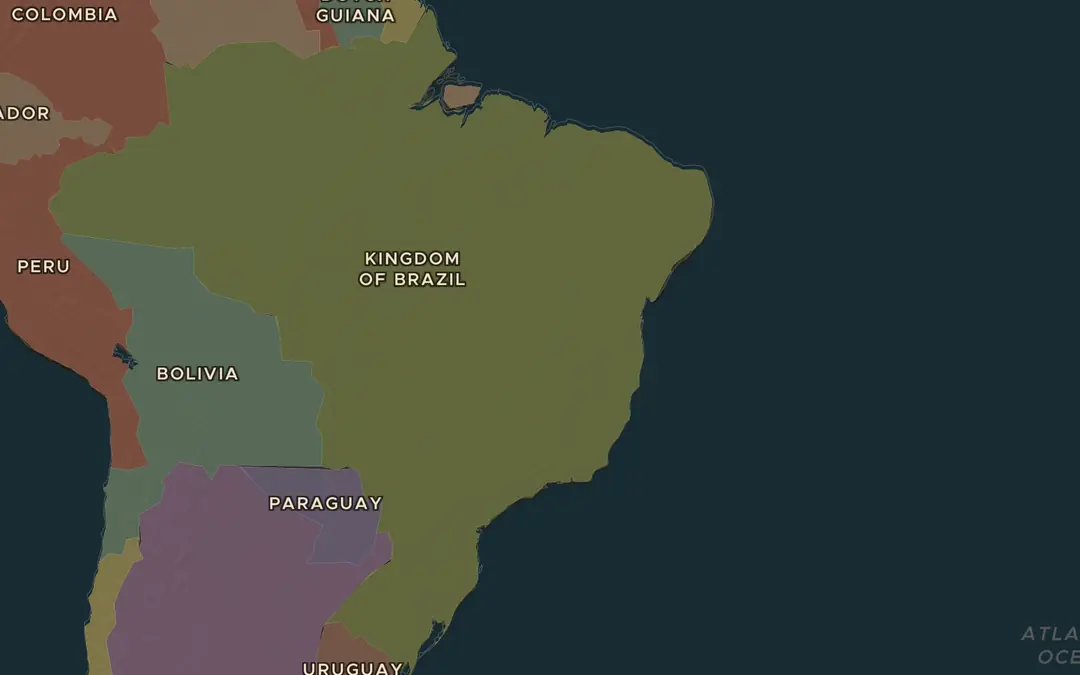
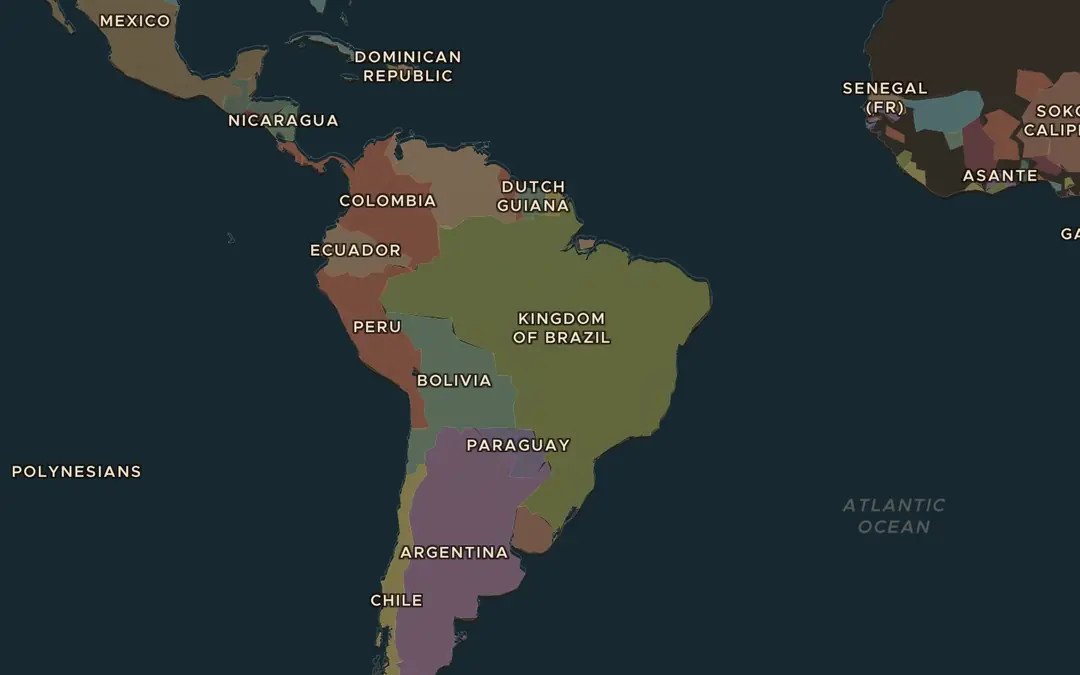
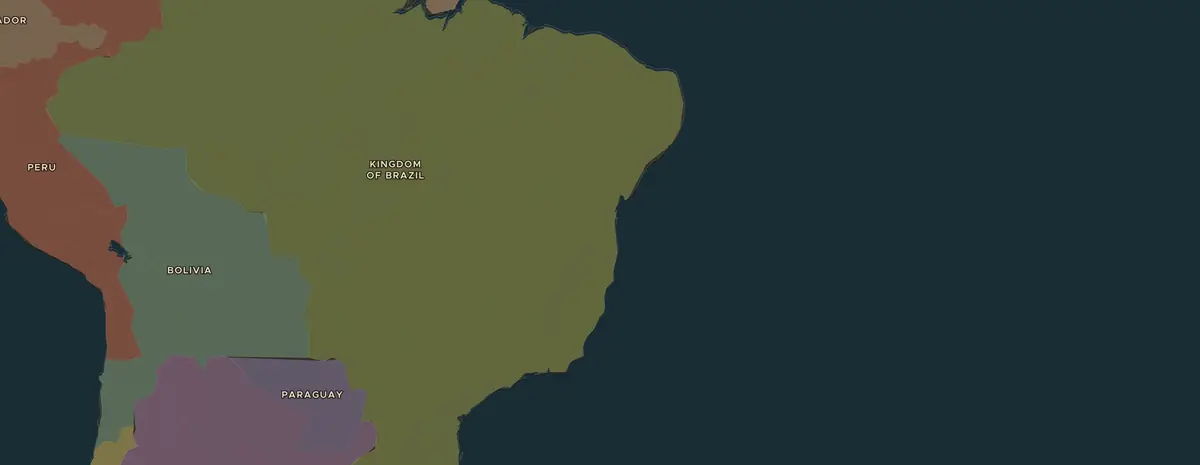
Plate 407Empire of Brazil, AD 1880. The letters mark the three map steps of this lesson.

A call from history · new

Prince Pedro is on the line. The class decides.

January 1822, the morning after receiving orders from Lisbon
Rio de Janeiro, Brazil

“You must decide whether to obey Portugal’s orders and return to Europe, or remain in Brazil against the wishes of the Portuguese government. Staying could anger the king and Portuguese officials, but leaving might disappoint many Brazilians who want more freedom. Your decision could shape Brazil’s future.”

Should I stay in Brazil or return to Portugal as ordered? The caller speaks English, in their own voice, from a short brief of textbook facts, knows nothing of what came later and never tells the outcome; the screen does, after the call. On the live board the telephone rings the whole class: the teacher answers on the room's microphone, and students write to the caller from their phones.

Sign in to take the call

Calls come with Pro (5 a month) and Classroom (20 a month, ringing the whole class). How calls work

Live lesson · new in Classroom

Teach it live. The class answers on their phones.

Put the board on the projector. Students join with a six-digit code, no account needed, and tap the map: where was the frontier, where did the grain come from. Their pins drop in together when you reveal, and the closest student takes the round.

€19 per month: every lesson live, every worksheet, cancel anytime. Rome at its height runs live for free.

A live lesson on the projector: the class's pins on the map around Alexandria, the closest students listed beside it A student's phone: the question and a map to tap
7 rounds
3 places to find on the map, quiz questions, a class vote and a one-line answer.
About 15 minutes
Run it as the map step, or to open the discussion. You move on with the space bar.
A report
Every answer, per student and per round, to read back or print after the lesson.

Or as homework · new

No lesson hour to spare? Set it as homework.

The same 7 rounds, without the board: each student walks through them alone on their phone, sees every answer at once with the explanation, and the report fills in as they go. Open for a week, with a code and a link you can paste anywhere.

Homework comes with Classroom, like the live lesson. The free lesson can be set as homework by everyone.

Empire of BrazilBrazil: from colony to empire to republic

Slides · new

The whole lesson as a deck.

22 slides: the plate, the 3 map steps with their pictures and a link to the live map, the discussion questions, the quiz with the answer on the next slide, and the worksheet. Speaker notes carry what to say. It is a .pptx, so it opens in PowerPoint, Keynote and Google Slides, and you can change anything.

Preview: the first 4 slides

€19 per month: the deck of every lesson, every worksheet, every live lesson. Rome at its height comes whole for free.

1

Introduction

5 min

Read aloud

Brazil takes a path unlike its neighbours: a European court moves to Rio, a prince declares independence and becomes emperor, and slavery lasts until 1888. Students trace how Brazil became independent with little fighting and why freedom came so late.

By the end of the lesson, students can

  • Explain why the Portuguese court moved to Brazil in 1808 and what that changed.
  • Describe how Brazil became an independent empire in 1822.
  • Explain how enslaved people, abolitionists and the law ended slavery in Brazil in 1888.
2

Explore the map

15 min

Project the map, or let students follow on their own devices. Each step opens the map at the right year and place.

The map in AD 1808 a

AD 1808

A royal voyage

Open the map in 1808 and zoom out over the Atlantic. Find Lisbon and Rio de Janeiro. The Portuguese court sailed between them to escape Napoleon. How long do you think the voyage took?

Open this view on the map
The map in AD 1880 b

AD 1880

A giant country

Open the map in 1880 and zoom out over South America. Compare the size of Brazil with its neighbours. How many countries border it?

Open this view on the map
The map in AD 1888 c

AD 1888

Ask about freedom

Type "When did Brazil abolish slavery?" in Ask the atlas and watch where the map goes. Why might ending slavery be hardest in the country that had received the most enslaved Africans?

Open this view on the map
3

Class discussion

15 min

Pick two or three. They run from what happened to why it mattered.

  1. Why would a king move his whole court from Europe to a colony?
  2. Brazil won independence with little fighting, while Spanish America fought for years. What made the difference?
  3. Brazil received more enslaved Africans than any other country in the Americas. How did that shape its society?
  4. Enslaved people resisted through revolts, escapes to quilombos and court cases. Why are these stories important for understanding abolition?
  5. The monarchy fell in 1889, just a year after abolition. Do you see a connection?
4

Game round

10 min

No Rule History ruler comes from Brazil. Play Napoleon Bonaparte: his invasion of Portugal in 1807 sent the Portuguese court across the ocean. Discuss: how did Napoleon's decisions in Europe end up making Rio de Janeiro a capital?

Open Rule History
5

Worksheet

5 min

This worksheet comes with Classroom

€19 per month unlocks every worksheet, the slides of every lesson, every live lesson and the class workspace. The free lesson prints without a subscription.