The Dutch Golden Age
A small republic becomes a world power through water, trade and ships. Students trace the trade network and discuss both the wealth and its dark side.
Learning objectives
- Explain how a small country built a global trade network in the 1600s.
- Point out three places on the map where the Dutch Republic had trading posts.
- Name one positive and one negative consequence of that trade empire.
On the map
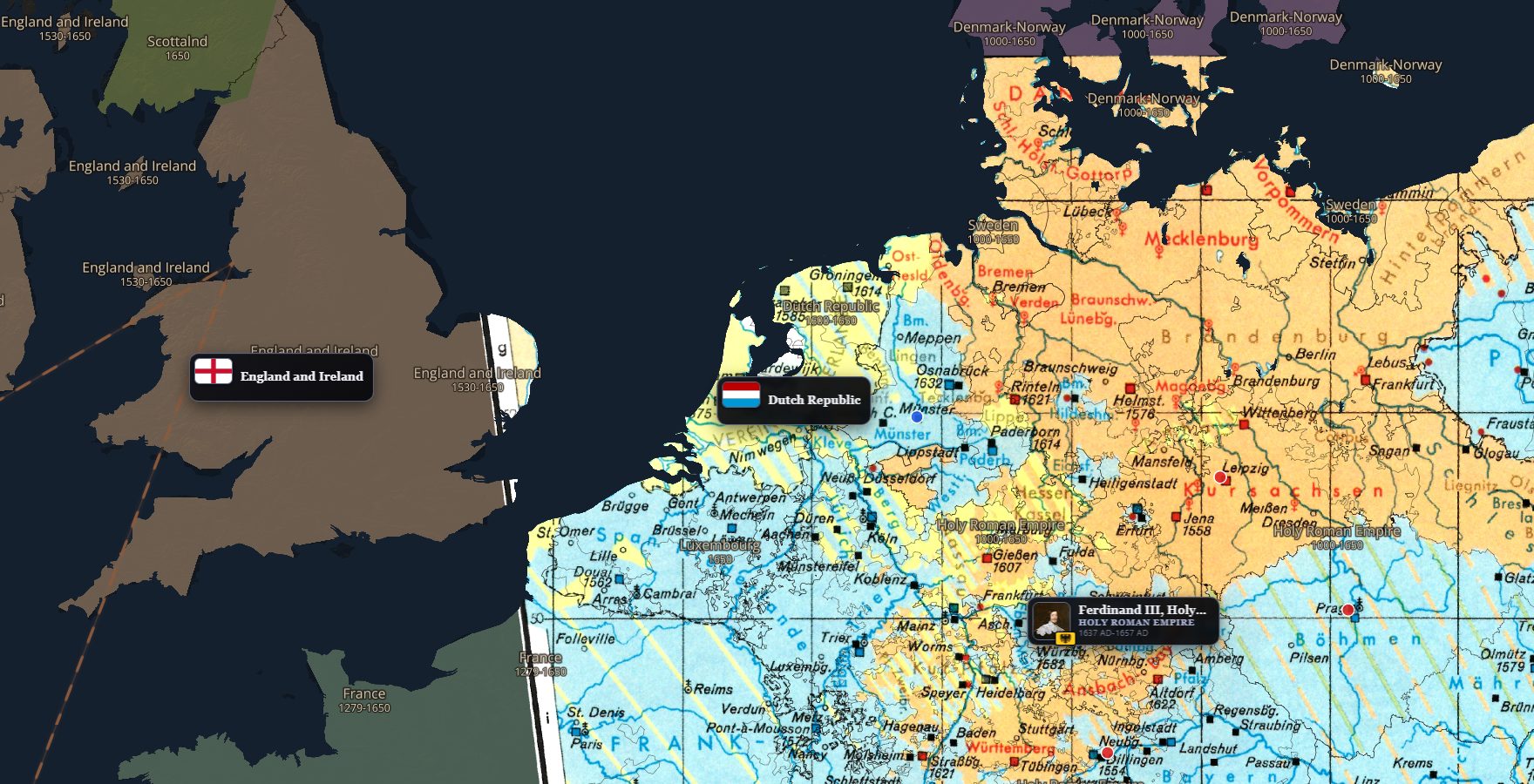
Open the map in 1650 on the Low Countries. Compare the Republic's size with France and Spain. What do you notice?
Open the map here1650 AD
Turn on the trade routes layer and zoom out to the world. Follow a Dutch route east. Which products came back on those ships?
Open the map here1650 AD
Look at the Atlantic routes between Africa and the Americas. What was traded there, and who paid the price?
Open the map here1650 AD
Discussion questions
- Why could a country this small become this rich? Name at least two reasons.
- The VOC is sometimes called the first multinational. What made it different from a normal trading company?
- Amsterdam's canals were built in this period. What does a city's architecture tell you about its economy?
- The same century brought wealth to the Republic and slavery to its colonies. How should we remember such a period?
- What ended the Golden Age? Look at the map around 1672.
Game round
Rule History: rule as a Dutch stadhouder or VOC governor. Afterwards, discuss: which choices were profitable but wrong by today's standards?
Open Rule HistoryWorksheet
This worksheet is part of Classroom
Unlock every worksheet, ad-free classes and assignable games for €19 per month. The free lesson's worksheet prints without a subscription.