Revolutions of 1848 · 1848-1849

1848: the springtime of peoples

In 1848 revolution spreads from Palermo and Paris to Vienna, Berlin, Milan and Budapest. Kings flee, parliaments meet, serfs are freed, and within two years most of the old rulers are back. Students map a year of revolutions and ask what changed.

Length
50 minutes
Ages
13–16
On the map
3 steps, AD 1848
Live lesson
7 rounds, 3 on the map
Homework
The same rounds, a week long
Worksheet
Two A4 pages, with Classroom
Slides
22 slides, with Classroom
You need
A projector; phones for live
Plate 424Revolutions of 1848, AD 1848. The letters mark the three map steps of this lesson.

A call from history · new

Friedrich Wilhelm IV is on the line. The class decides.

Early April 1849
Berlin, Prussia

“You must decide whether to accept the crown of a united Germany, offered by the elected Frankfurt Parliament, or to refuse it. Accepting could make you the first emperor of a new Germany, but it would mean accepting a constitution written by the parliament and risking conflict with other German princes and Austria. Refusing means the parliament may fail, and German unity might not happen now.”

Should I accept the crown and the constitution from the Frankfurt Parliament, or refuse them? The caller speaks English, in their own voice, from a short brief of textbook facts, knows nothing of what came later and never tells the outcome; the screen does, after the call. On the live board the telephone rings the whole class: the teacher answers on the room's microphone, and students write to the caller from their phones.

Sign in to take the call

Calls come with Pro (5 a month) and Classroom (20 a month, ringing the whole class). How calls work

Live lesson · new in Classroom

Teach it live. The class answers on their phones.

Put the board on the projector. Students join with a six-digit code, no account needed, and tap the map: where was the frontier, where did the grain come from. Their pins drop in together when you reveal, and the closest student takes the round.

€19 per month: every lesson live, every worksheet, cancel anytime. Rome at its height runs live for free.

A live lesson on the projector: the class's pins on the map around Alexandria, the closest students listed beside it A student's phone: the question and a map to tap
7 rounds
3 places to find on the map, quiz questions, a class vote and a one-line answer.
About 15 minutes
Run it as the map step, or to open the discussion. You move on with the space bar.
A report
Every answer, per student and per round, to read back or print after the lesson.

Or as homework · new

No lesson hour to spare? Set it as homework.

The same 7 rounds, without the board: each student walks through them alone on their phone, sees every answer at once with the explanation, and the report fills in as they go. Open for a week, with a code and a link you can paste anywhere.

Homework comes with Classroom, like the live lesson. The free lesson can be set as homework by everyone.

Revolutions of 18481848: the springtime of peoples

Slides · new

The whole lesson as a deck.

22 slides: the plate, the 3 map steps with their pictures and a link to the live map, the discussion questions, the quiz with the answer on the next slide, and the worksheet. Speaker notes carry what to say. It is a .pptx, so it opens in PowerPoint, Keynote and Google Slides, and you can change anything.

Preview: the first 4 slides

€19 per month: the deck of every lesson, every worksheet, every live lesson. Rome at its height comes whole for free.

1

Introduction

5 min

Read aloud

In 1848 revolution spreads from Palermo and Paris to Vienna, Berlin, Milan and Budapest. Kings flee, parliaments meet, serfs are freed, and within two years most of the old rulers are back. Students map a year of revolutions and ask what changed.

By the end of the lesson, students can

  • Map the spread of the revolutions of 1848 across Europe.
  • Explain what liberals, nationalists and workers wanted in 1848.
  • Judge why most revolutions failed and what still changed.
2

Explore the map

15 min

Project the map, or let students follow on their own devices. Each step opens the map at the right year and place.

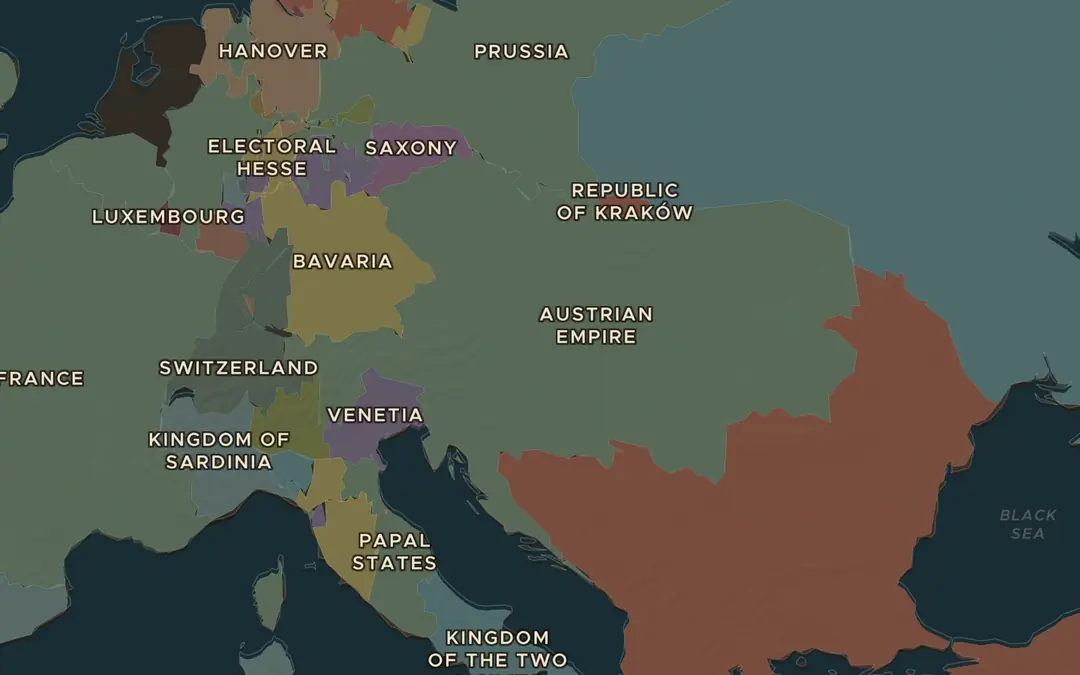
The map in AD 1848 a

AD 1848

Europe before the storm

Open the map in 1848 and zoom out over Europe. The borders still look like 1815. Find Paris, Vienna, Berlin, Milan and Budapest. Which of them were capitals of their own state?

Open this view on the map
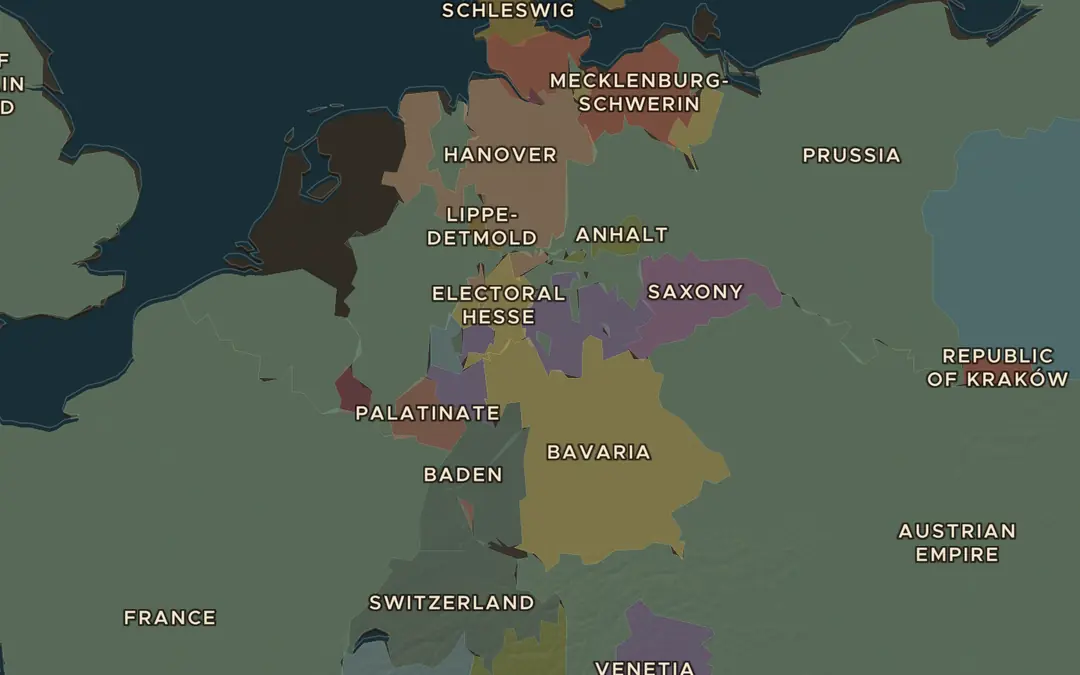
The map in AD 1848 b

AD 1848

The German states

Zoom in on the German lands and count the states you can see. Find Frankfurt. Why would a parliament for all Germans meet in a city that was not a royal capital?

Open this view on the map
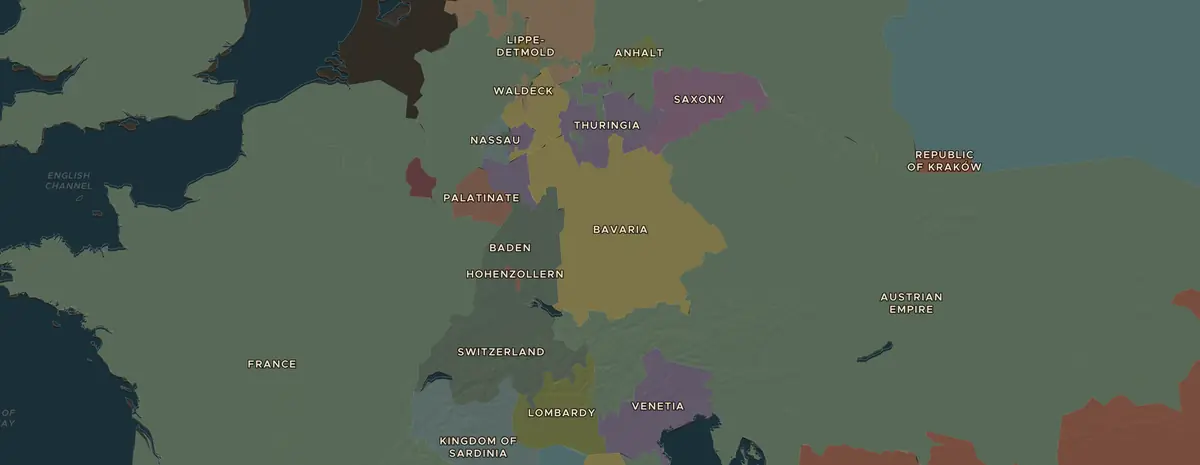
The map in AD 1848 c

AD 1848

An empire of many peoples

Zoom in on the Austrian Empire. Germans, Hungarians, Czechs, Poles, Italians, Croats and others lived in it. Why would nationalism be dangerous for this empire?

Open this view on the map
3

Class discussion

15 min

Pick two or three. They run from what happened to why it mattered.

  1. Bad harvests and hunger in 1845-1847 came just before the revolutions. How can hunger lead to revolution?
  2. Liberals wanted constitutions, nationalists wanted their own nations, workers wanted jobs and bread. Why could these groups not stay united?
  3. The Frankfurt Parliament offered the German crown to the king of Prussia, and he refused it. Why would a king refuse a crown?
  4. Austria ended serfdom in 1848, and France ended slavery in its colonies. Was 1848 really a failure?
  5. In 1848 news spread from city to city by newspaper, letter and train. How do revolutions spread today?
4

Game round

10 min

Play Rule History as Napoleon Bonaparte. In December 1848 French voters elected his nephew, Louis-Napoleon, as president, and in 1852 he made himself emperor. Discuss: why did a famous name win so many votes in a new democracy?

Open Rule History
5

Worksheet

5 min

This worksheet comes with Classroom

€19 per month unlocks every worksheet, the slides of every lesson, every live lesson and the class workspace. The free lesson prints without a subscription.