Ottoman Empire · about 1450-1700

Coffee and the coffeehouse

Coffee began as a drink of Sufis in Yemen and became a worldwide habit. Students follow the bean from the Red Sea to Istanbul and London, and find out why rulers both loved and feared the coffeehouse.

Length
45 minutes
Ages
11–14
On the map
3 steps, AD 1500 to AD 1652
Live lesson
7 rounds, 3 on the map
Homework
The same rounds, a week long
Worksheet
Two A4 pages, with Classroom
Slides
22 slides, with Classroom
You need
A projector; phones for live
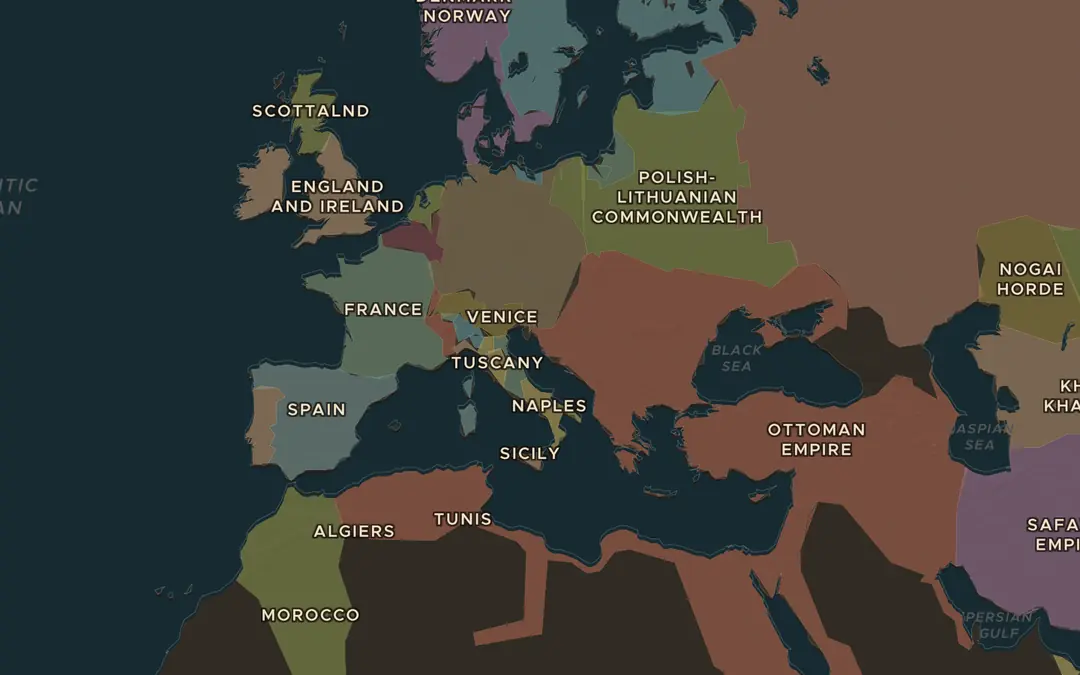
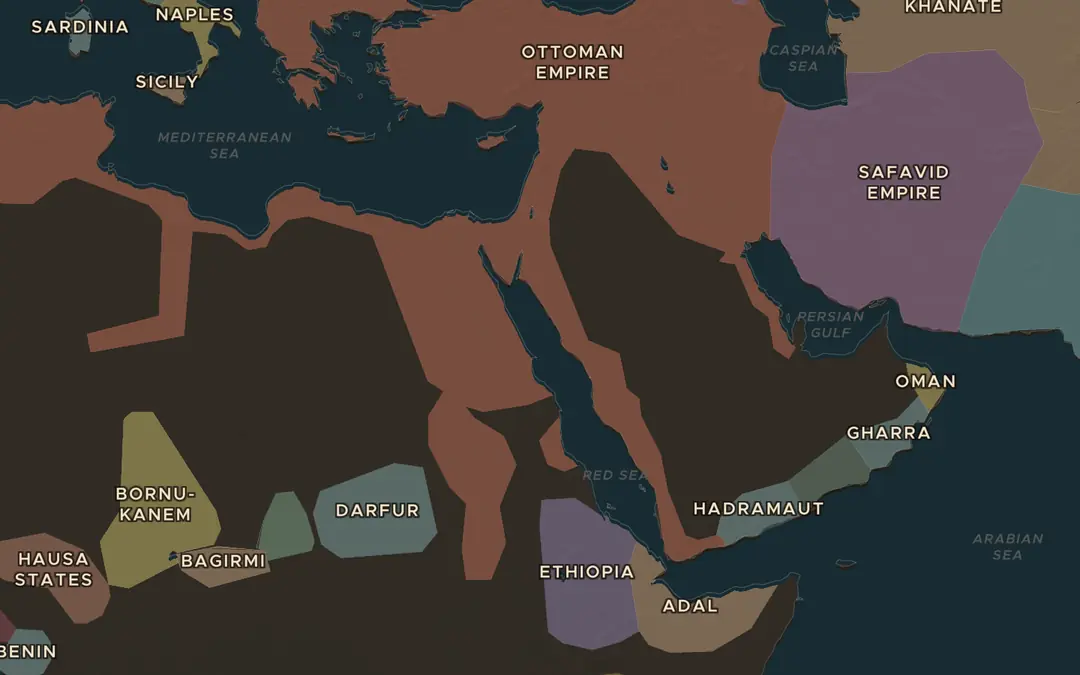
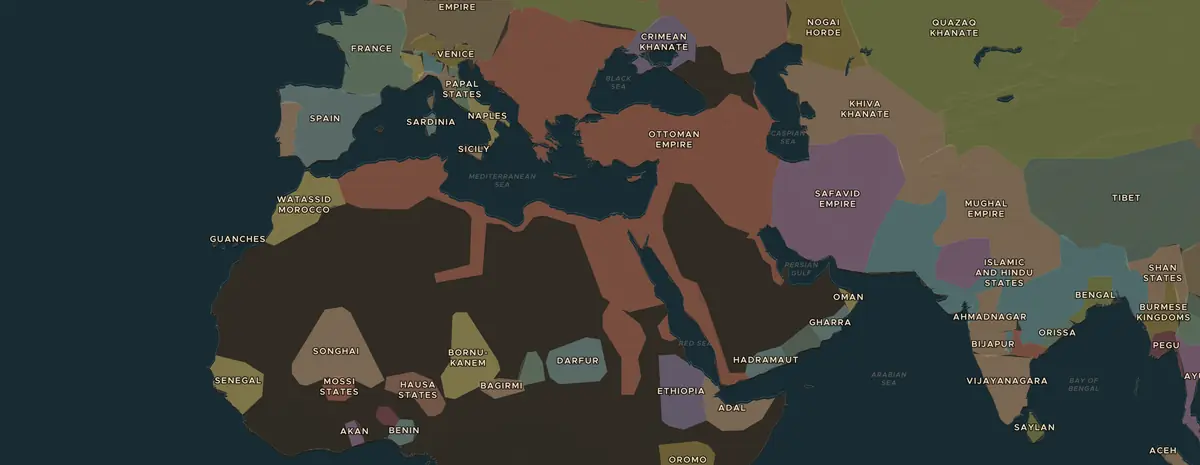
Plate 298Ottoman Empire, AD 1600. The letters mark the three map steps of this lesson.

A call from history · new

Sultan Murad IV is on the line. The class decides.

The day after the great fire in Istanbul, 1633
Topkapi Palace, Istanbul

“You must decide whether to allow coffeehouses to continue or to ban them. Supporters say they are places for news and friendship, but critics warn they spread gossip and unrest. Rumors say the recent fire started near a coffeehouse.”

Should I order the closing of all coffeehouses in Istanbul, or allow them to remain open? The caller speaks English, in their own voice, from a short brief of textbook facts, knows nothing of what came later and never tells the outcome; the screen does, after the call. On the live board the telephone rings the whole class: the teacher answers on the room's microphone, and students write to the caller from their phones.

Sign in to take the call

Calls come with Pro (5 a month) and Classroom (20 a month, ringing the whole class). How calls work

Live lesson · new in Classroom

Teach it live. The class answers on their phones.

Put the board on the projector. Students join with a six-digit code, no account needed, and tap the map: where was the frontier, where did the grain come from. Their pins drop in together when you reveal, and the closest student takes the round.

€19 per month: every lesson live, every worksheet, cancel anytime. Rome at its height runs live for free.

A live lesson on the projector: the class's pins on the map around Alexandria, the closest students listed beside it A student's phone: the question and a map to tap
7 rounds
3 places to find on the map, quiz questions, a class vote and a one-line answer.
About 15 minutes
Run it as the map step, or to open the discussion. You move on with the space bar.
A report
Every answer, per student and per round, to read back or print after the lesson.

Or as homework · new

No lesson hour to spare? Set it as homework.

The same 7 rounds, without the board: each student walks through them alone on their phone, sees every answer at once with the explanation, and the report fills in as they go. Open for a week, with a code and a link you can paste anywhere.

Homework comes with Classroom, like the live lesson. The free lesson can be set as homework by everyone.

Ottoman EmpireCoffee and the coffeehouse

Slides · new

The whole lesson as a deck.

22 slides: the plate, the 3 map steps with their pictures and a link to the live map, the discussion questions, the quiz with the answer on the next slide, and the worksheet. Speaker notes carry what to say. It is a .pptx, so it opens in PowerPoint, Keynote and Google Slides, and you can change anything.

Preview: the first 4 slides

€19 per month: the deck of every lesson, every worksheet, every live lesson. Rome at its height comes whole for free.

1

Introduction

5 min

Read aloud

Coffee began as a drink of Sufis in Yemen and became a worldwide habit. Students follow the bean from the Red Sea to Istanbul and London, and find out why rulers both loved and feared the coffeehouse.

By the end of the lesson, students can

  • Trace the spread of coffee from Yemen to Istanbul and Europe on the map.
  • Describe what happened in an Ottoman coffeehouse.
  • Explain why some rulers tried to ban coffee or coffeehouses.
2

Explore the map

12 min

Project the map, or let students follow on their own devices. Each step opens the map at the right year and place.

The map in AD 1500 a

AD 1500

Where coffee began

Open the map in 1500 and zoom in on the south-west corner of Arabia and the hills of Ethiopia across the Red Sea. The coffee plant grew wild in Ethiopia. Which narrow strait separates the two coasts?

Open this view on the map
The map in AD 1530 b

AD 1530

Up the Red Sea

Zoom out. Coffee beans traveled from Mocha up the Red Sea to Jeddah and Cairo, then on to Istanbul. Trace this path. Which empire controlled most of it after 1517?

Open this view on the map
The map in AD 1652 c

AD 1652

To Europe

Move to 1652, the year London got its first coffeehouse. Turn on the Cities layer and find Istanbul, Venice and London. How might the drink have traveled between them?

Open this view on the map
3

Class discussion

14 min

Pick two or three. They run from what happened to why it mattered.

  1. Sufis in Yemen drank coffee to stay awake for night prayers. How did a religious habit become a worldwide drink?
  2. The governor of Mecca banned coffee in 1511, but the ban did not last. Why do bans on popular things often fail?
  3. Ottoman coffeehouses were places to talk, play games and hear the news. Why might some rulers have feared them?
  4. In London, coffeehouses became places for business, such as shipping insurance. How can a meeting place change an economy?
  5. Who profited from coffee in 1600, and who profited in 1750, after the Dutch began growing it on Java?
4

Game round

9 min

Play one round of Rule History as Suleiman the Magnificent, in whose reign the first coffeehouses opened in Istanbul. Discuss: should a ruler control places where people meet and talk freely?

Open Rule History
5

Worksheet

5 min

This worksheet comes with Classroom

€19 per month unlocks every worksheet, the slides of every lesson, every live lesson and the class workspace. The free lesson prints without a subscription.