Tudor England · 1558-1603

Elizabeth I and the Spanish Armada

In 1588 Philip II sends a great fleet to carry an army to England. Students follow the Armada from Lisbon up the Channel to Gravelines and home around Scotland and Ireland, and ask what decided its fate: English ships, Spanish plans or the weather.

Teach it live New Open on the map Slides preview
Length
50 minutes
Ages
10–13
On the map
3 steps, AD 1592
Live lesson
7 rounds, 3 on the map
Homework
The same rounds, a week long
Worksheet
Two A4 pages, with Classroom
Slides
22 slides, with Classroom
You need
A projector; phones for live
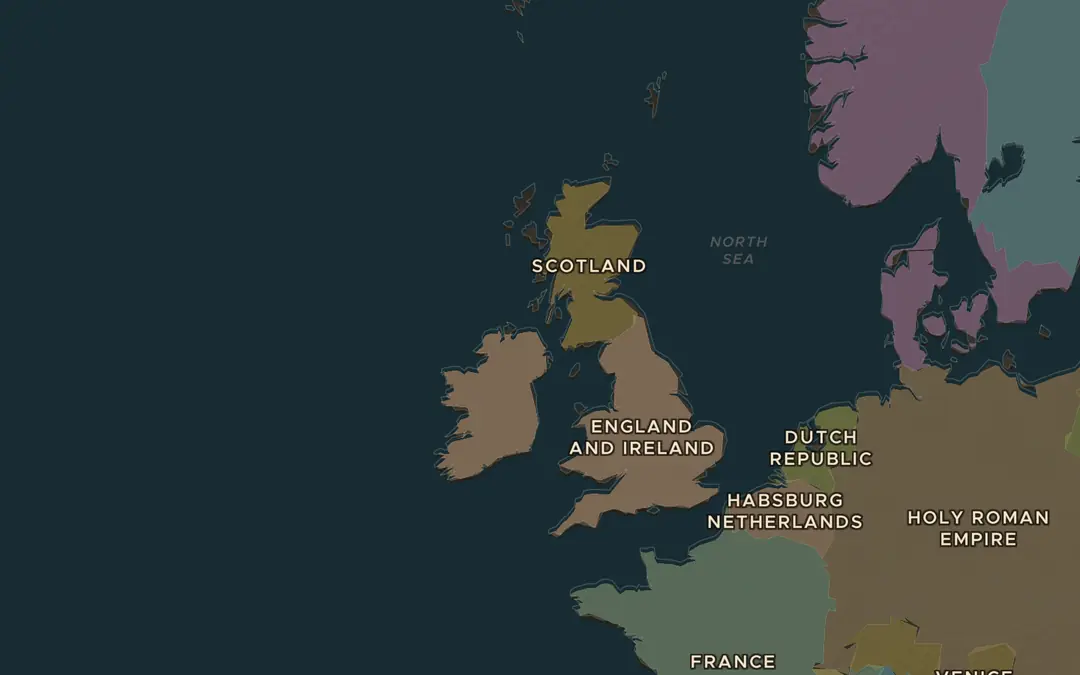
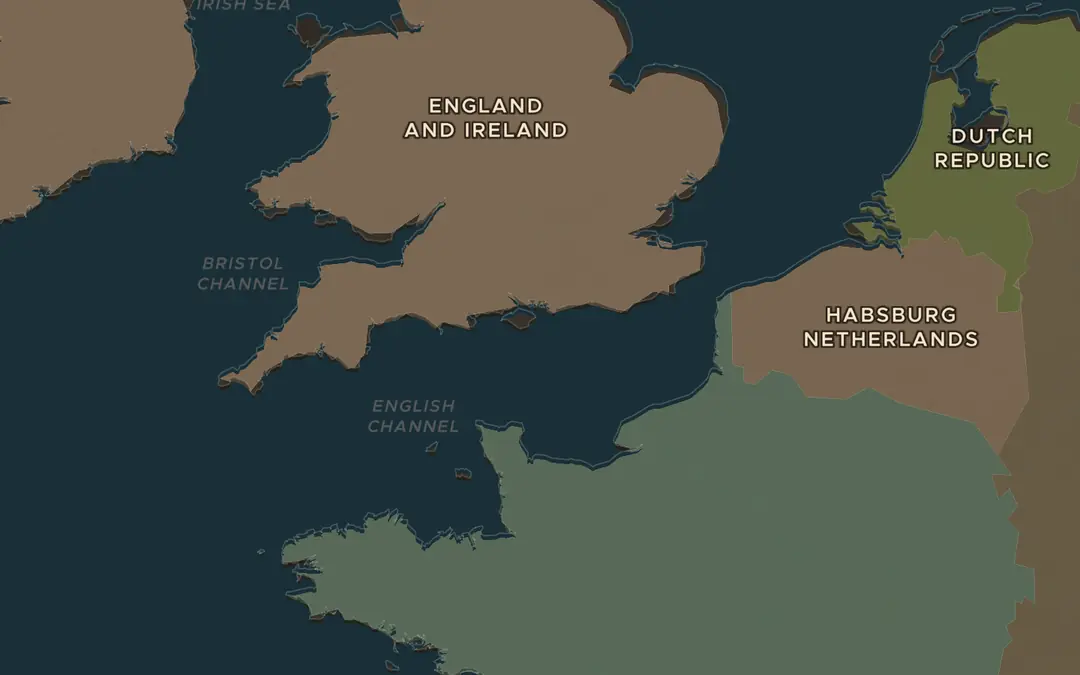
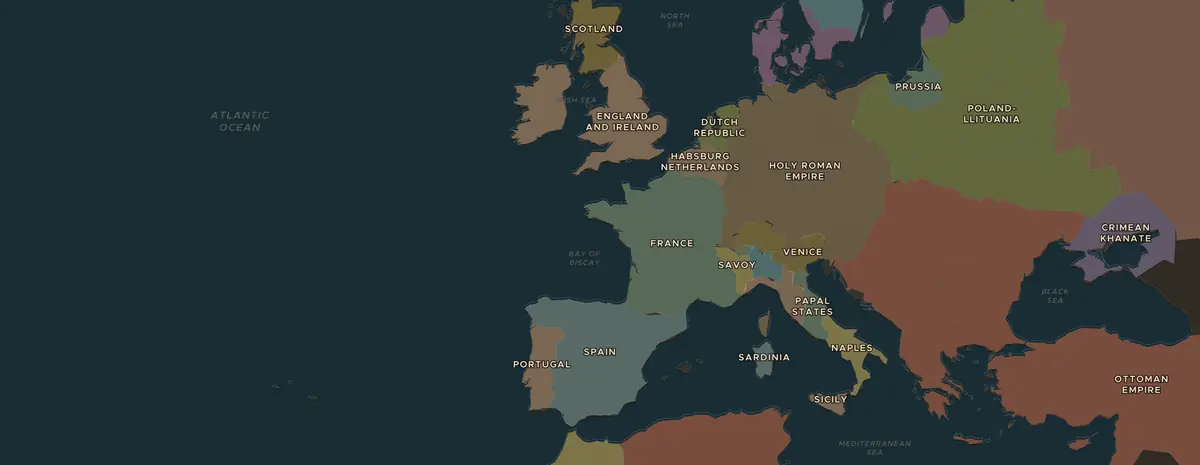
Plate 339Tudor England, AD 1592. The letters mark the three map steps of this lesson.

A call from history · new

the Duke of Medina Sidonia is on the line. The class decides.

The morning of 8 August 1588, just off Gravelines
Off the coast of Gravelines, Flanders

“You must decide whether to try to bring the scattered Spanish ships back together and continue the attack, or to lead the fleet away to safety by sailing north around Scotland and Ireland. The English are pressing hard, the weather is worsening, and many of our ships are damaged or low on supplies.”

Should I try to regroup and fight, or should I order the Armada to retreat northwards to save as many ships as possible? The caller speaks English, in their own voice, from a short brief of textbook facts, knows nothing of what came later and never tells the outcome; the screen does, after the call. On the live board the telephone rings the whole class: the teacher answers on the room's microphone, and students write to the caller from their phones.

Sign in to take the call

Calls come with Pro (5 a month) and Classroom (20 a month, ringing the whole class). How calls work

Live lesson · new in Classroom

Teach it live. The class answers on their phones.

Put the board on the projector. Students join with a six-digit code, no account needed, and tap the map: where was the frontier, where did the grain come from. Their pins drop in together when you reveal, and the closest student takes the round.

€19 per month: every lesson live, every worksheet, cancel anytime. Rome at its height runs live for free.

A live lesson on the projector: the class's pins on the map around Alexandria, the closest students listed beside it A student's phone: the question and a map to tap
7 rounds
3 places to find on the map, quiz questions, a class vote and a one-line answer.
About 15 minutes
Run it as the map step, or to open the discussion. You move on with the space bar.
A report
Every answer, per student and per round, to read back or print after the lesson.

Or as homework · new

No lesson hour to spare? Set it as homework.

The same 7 rounds, without the board: each student walks through them alone on their phone, sees every answer at once with the explanation, and the report fills in as they go. Open for a week, with a code and a link you can paste anywhere.

Homework comes with Classroom, like the live lesson. The free lesson can be set as homework by everyone.

Tudor EnglandElizabeth I and the Spanish Armada

Slides · new

The whole lesson as a deck.

22 slides: the plate, the 3 map steps with their pictures and a link to the live map, the discussion questions, the quiz with the answer on the next slide, and the worksheet. Speaker notes carry what to say. It is a .pptx, so it opens in PowerPoint, Keynote and Google Slides, and you can change anything.

Preview: the first 4 slides

€19 per month: the deck of every lesson, every worksheet, every live lesson. Rome at its height comes whole for free.

1

Introduction

5 min

Read aloud

In 1588 Philip II sends a great fleet to carry an army to England. Students follow the Armada from Lisbon up the Channel to Gravelines and home around Scotland and Ireland, and ask what decided its fate: English ships, Spanish plans or the weather.

By the end of the lesson, students can

  • Explain why Philip II sent the Armada against England in 1588.
  • Trace the route of the Armada on the map from Lisbon and back to Spain.
  • Weigh three reasons why the Armada failed.
2

Explore the map

15 min

Project the map, or let students follow on their own devices. Each step opens the map at the right year and place.

The map in AD 1592 a

AD 1592

Two rival kingdoms

Open the map in 1592 and zoom out over western Europe. Find England, Spain and Portugal. Philip II had also become king of Portugal in 1580. Why did that make his fleet stronger?

Open this view on the map
The map in AD 1592 b

AD 1592

Up the Channel

Zoom in on the English Channel. Follow the coast from Plymouth to Calais. Where would a fleet want to pick up an army from the Spanish Netherlands?

Open this view on the map
The map in AD 1592 c

AD 1592

The long way home

Zoom out to see Scotland and Ireland. Trace the Armada's route home around the north of Scotland and down the west of Ireland. Why was this so dangerous for big ships in autumn?

Open this view on the map
3

Class discussion

15 min

Pick two or three. They run from what happened to why it mattered.

  1. Philip II had once been married to Elizabeth's sister Mary I. Why did he become England's enemy?
  2. English ships were smaller and quicker; Spanish ships carried more soldiers. How did that shape the fighting?
  3. The English sent fireships into the Armada at Calais. Why were they so frightening to wooden ships at anchor?
  4. An English medal said God blew and the Spanish were scattered. How much did the weather decide?
  5. How did the victory change the way English people saw their queen and their country?
4

Game round

10 min

Play a round of Rule History as Elizabeth I and face the decisions of 1587-1588 yourself. Afterwards, discuss: which of her choices was the riskiest, and did it pay off?

Open Rule History
5

Worksheet

5 min

This worksheet comes with Classroom

€19 per month unlocks every worksheet, the slides of every lesson, every live lesson and the class workspace. The free lesson prints without a subscription.