1453: the city falls
The conquest of Constantinople ends one empire and announces another. Students watch the Ottoman rise on the map and weigh what 1453 changed for Europe.
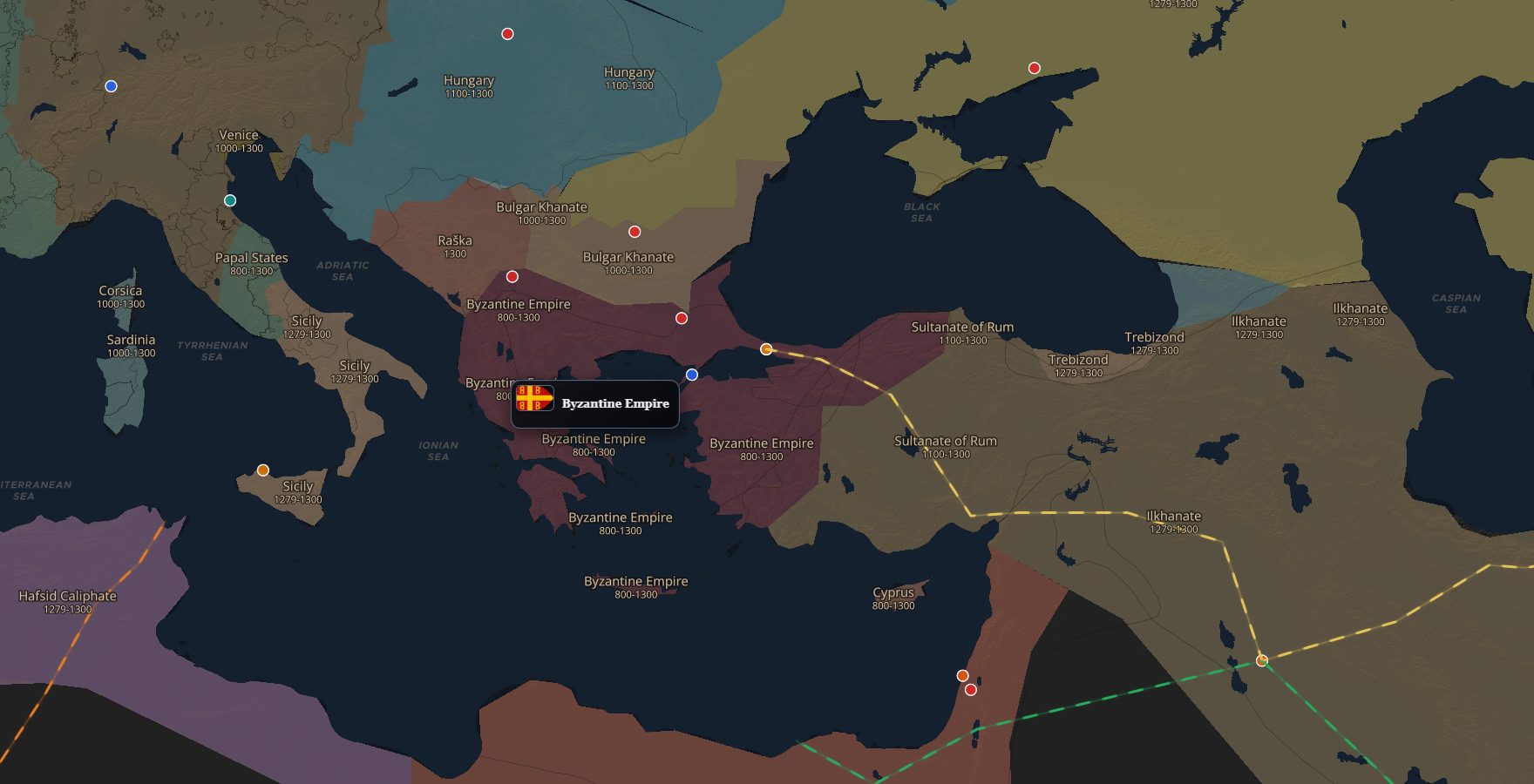
Learning objectives
- Describe the growth of the Ottoman Empire between 1300 and 1683 using the map.
- Explain why the fall of Constantinople in 1453 counts as a turning point.
- Connect the Ottoman control of trade routes to the European age of exploration.
On the map
Open the map in 1300 on Anatolia. Find the small Ottoman state among its neighbours. What is left of the Byzantine Empire?
Open the map here1300 AD
Zoom in on Constantinople in 1453. Look at its position on the strait. Why was this the most defendable - and most desirable - city of its time?
Open the map here1453 AD
Jump to 1683. Follow the border: which European capital do the Ottomans besiege in this year?
Open the map here1683 AD
Discussion questions
- Constantinople had walls that held for a thousand years. What changed in 1453 that made them fall?
- The Ottomans controlled the land routes to Asia. What did European traders do in response?
- Mehmed II called himself "Kayser-i Rum" - Caesar of Rome. Why would an Ottoman sultan want a Roman title?
- Istanbul lies in both Europe and Asia. How do you see that double identity in its history?
- Was 1453 a bigger shock for Europe or a bigger opportunity?
Game round
Rule History: students rule as a sultan in the 1500s. After the round, discuss which real decisions (trade, tolerance, conquest) made the empire last so long.
Open Rule HistoryWorksheet
This worksheet is part of Classroom
Unlock every worksheet, ad-free classes and assignable games for €19 per month. The free lesson's worksheet prints without a subscription.