Roman Republic · 107-79 BC

Marius and Sulla: generals against the Republic

Marius opened the legions to poor volunteers and was consul seven times; his rival Sulla marched his army on Rome itself. Students trace how soldiers came to be loyal to their generals instead of to the state.

Length
50 minutes
Ages
13–16
On the map
3 steps, 107 BC to 88 BC
Live lesson
7 rounds, 3 on the map
Homework
The same rounds, a week long
Worksheet
Two A4 pages, with Classroom
Slides
22 slides, with Classroom
You need
A projector; phones for live
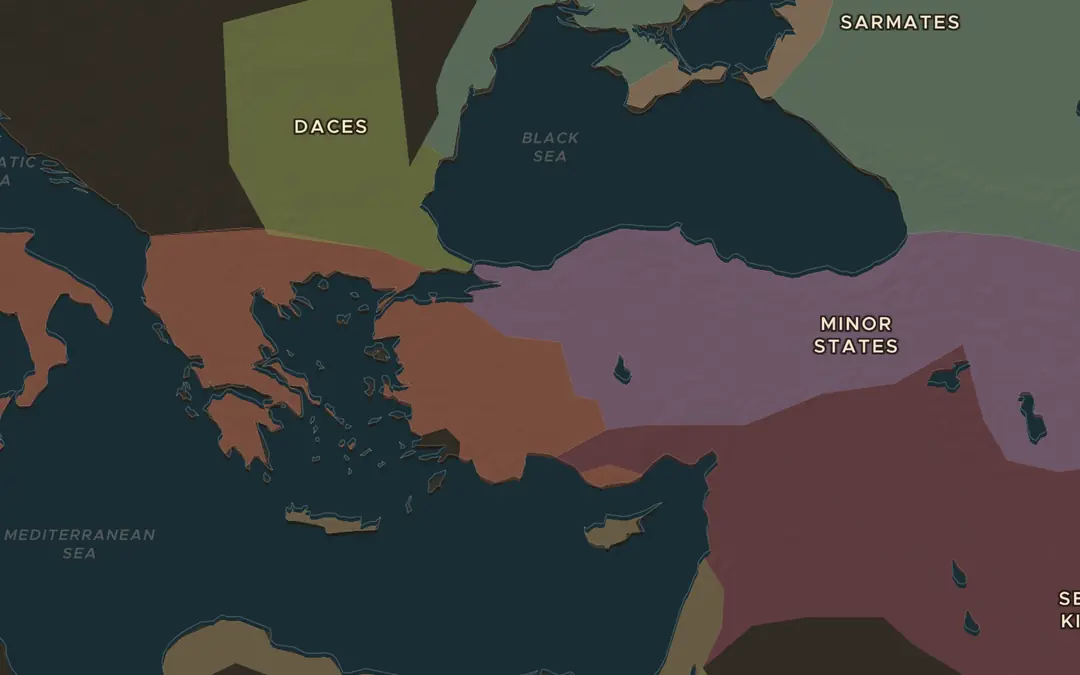
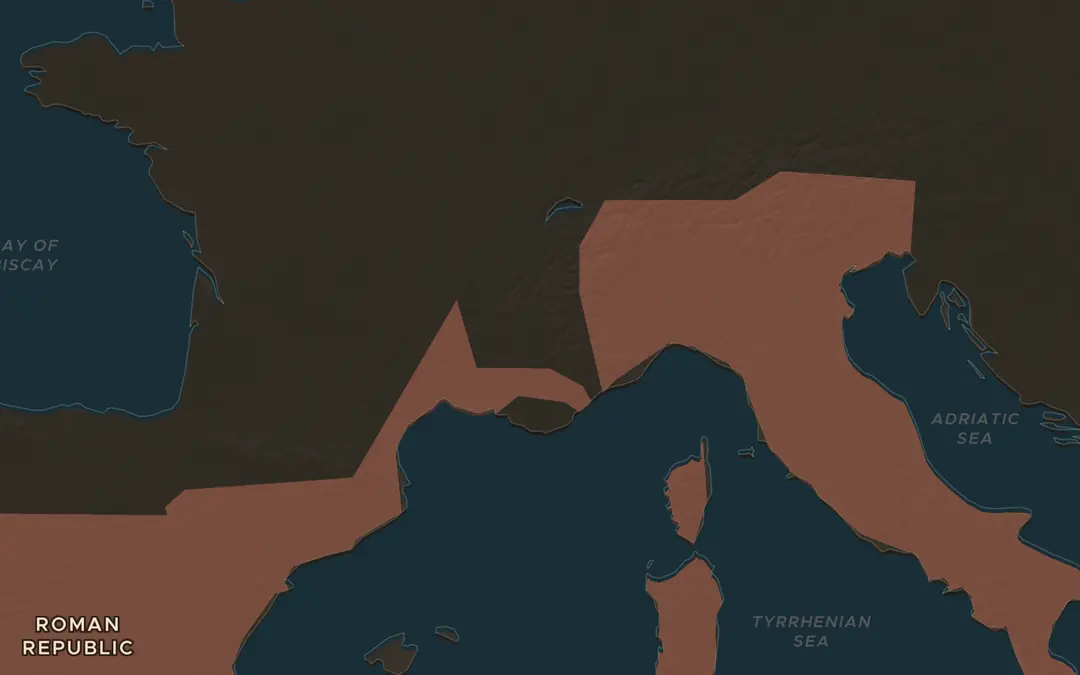
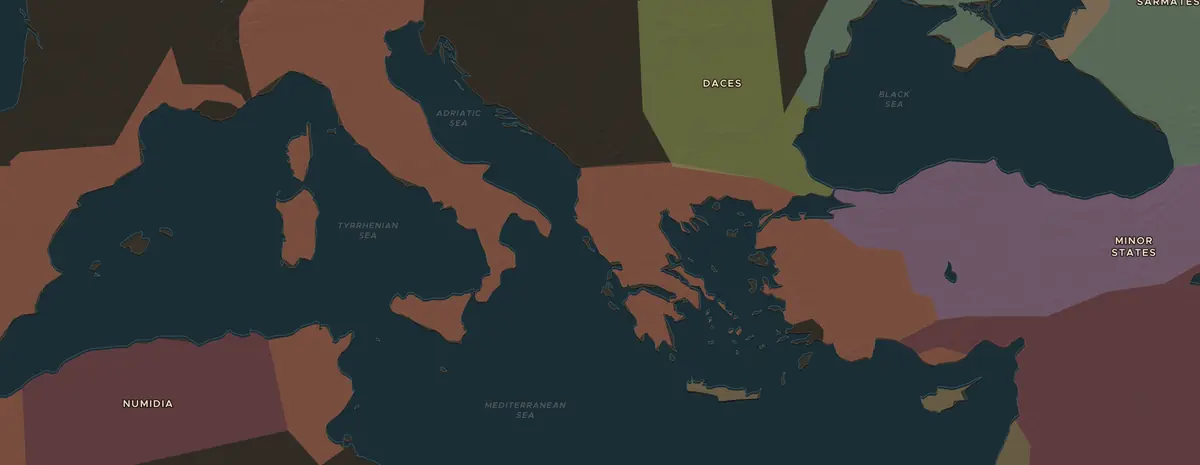
Plate 114Roman Republic, 100 BC. The letters mark the three map steps of this lesson.

A call from history · new

Lucius Cornelius Sulla is on the line. The class decides.

Late summer, 88 BC
Military camp near Nola, Campania, Italy

“You must decide if I should obey the assembly and surrender my command to Marius, as tradition demands, or lead my loyal legions toward Rome to keep my command. Marching on Rome breaks the ancient rule that no general brings troops into the city. If I resist, I risk civil war.”

Should I give up my command peacefully, or should I march my army on Rome to keep it? The caller speaks English, in their own voice, from a short brief of textbook facts, knows nothing of what came later and never tells the outcome; the screen does, after the call. On the live board the telephone rings the whole class: the teacher answers on the room's microphone, and students write to the caller from their phones.

Sign in to take the call

Calls come with Pro (5 a month) and Classroom (20 a month, ringing the whole class). How calls work

Live lesson · new in Classroom

Teach it live. The class answers on their phones.

Put the board on the projector. Students join with a six-digit code, no account needed, and tap the map: where was the frontier, where did the grain come from. Their pins drop in together when you reveal, and the closest student takes the round.

€19 per month: every lesson live, every worksheet, cancel anytime. Rome at its height runs live for free.

A live lesson on the projector: the class's pins on the map around Alexandria, the closest students listed beside it A student's phone: the question and a map to tap
7 rounds
3 places to find on the map, quiz questions, a class vote and a one-line answer.
About 15 minutes
Run it as the map step, or to open the discussion. You move on with the space bar.
A report
Every answer, per student and per round, to read back or print after the lesson.

Or as homework · new

No lesson hour to spare? Set it as homework.

The same 7 rounds, without the board: each student walks through them alone on their phone, sees every answer at once with the explanation, and the report fills in as they go. Open for a week, with a code and a link you can paste anywhere.

Homework comes with Classroom, like the live lesson. The free lesson can be set as homework by everyone.

Roman RepublicMarius and Sulla: generals against the Republic

Slides · new

The whole lesson as a deck.

22 slides: the plate, the 3 map steps with their pictures and a link to the live map, the discussion questions, the quiz with the answer on the next slide, and the worksheet. Speaker notes carry what to say. It is a .pptx, so it opens in PowerPoint, Keynote and Google Slides, and you can change anything.

Preview: the first 4 slides

€19 per month: the deck of every lesson, every worksheet, every live lesson. Rome at its height comes whole for free.

The Senate · 107 BC

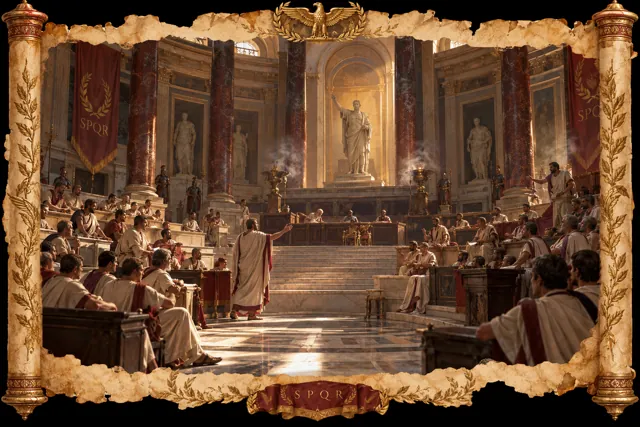
Debate it in the Senate: “Give Numidia to Marius”

That the Senate assign the Numidian war to the consul Gaius Marius, instead of prolonging the command of Quintus Metellus.

The class speaks as Gaius Marius against Marcus Aemilius Scaurus and Lucius Caecilius Metellus, who answer aloud in their own voices and vote at the end. Two speeches are free; with Pro or Classroom the floor is yours. The Senate speaks English.

Open the motion

Real motion from 107 BC. Put the Senate on the projector and let the class argue it out, then compare with what happened.

1

Introduction

5 min

Read aloud

Marius opened the legions to poor volunteers and was consul seven times; his rival Sulla marched his army on Rome itself. Students trace how soldiers came to be loyal to their generals instead of to the state.

By the end of the lesson, students can

  • Describe how Marius changed who could serve in the Roman army.
  • Locate the wars of Marius against Jugurtha and the Teutones, and Sulla's war against Mithridates.
  • Explain why Sulla's march on Rome in 88 BC broke a basic rule of the Republic.
2

Explore the map

15 min

Project the map, or let students follow on their own devices. Each step opens the map at the right year and place.

The map in 107 BC a

107 BC

War in Numidia

Open the map in 107 BC and find Numidia in North Africa. Marius became consul promising to finish the war against its king, Jugurtha. Why did many Romans blame the Senate for this long war?

Open this view on the map
The map in 102 BC b

102 BC

Invaders from the north

Pan to southern Gaul and northern Italy. The Cimbri and Teutones, peoples from northern Europe, beat several Roman armies here. Find the Roman lands they threatened.

Open this view on the map
The map in 88 BC c

88 BC

War in the east

Pan east to Asia Minor. In 88 BC King Mithridates of Pontus attacked the Roman province of Asia. Who should lead the army against him: Sulla or Marius?

Open this view on the map
3

Class discussion

15 min

Pick two or three. They run from what happened to why it mattered.

  1. Before Marius, soldiers had to own property. Why might a poor volunteer be more loyal to his general than to the Senate?
  2. Marius was consul seven times, though Romans expected a ten-year gap between terms. Why did they break their own rule for him?
  3. Almost all of Sulla's officers refused to march on Rome in 88 BC, but his soldiers followed him. What does that tell you?
  4. Sulla posted lists of enemies who could be killed for a reward. How does fear change a society?
  5. Sulla made himself dictator, then gave up power and retired. Why do you think he stepped down?
4

Game round

10 min

Play the Julius Caesar round in Rule History. Caesar's aunt was married to Marius, and as a young man Caesar had to hide from Sulla. Discuss: when Caesar stood at the Rubicon, what had he learned from Marius and Sulla?

Open Rule History
5

Worksheet

5 min

This worksheet comes with Classroom

€19 per month unlocks every worksheet, the slides of every lesson, every live lesson and the class workspace. The free lesson prints without a subscription.