Thirty Years' War · 1643-1648

The Peace of Westphalia

Envoys from across Europe spend years negotiating in two towns in Westphalia. Students map the peace that ended the Thirty Years' War, recognised two independent states and changed the rules of the empire, and discuss why it became so famous.

Duur
50 minuten
Leeftijd
13–16
Op de kaart
3 stappen, 1648 n.Chr. tot 1650 n.Chr.
Live les
7 rondes, 3 op de kaart
Huiswerk
Dezelfde rondes, een week lang
Werkblad
Twee A4’s, bij Classroom
Dia’s
22 dia’s, bij Classroom
Je hebt nodig
Een beamer; telefoons voor live
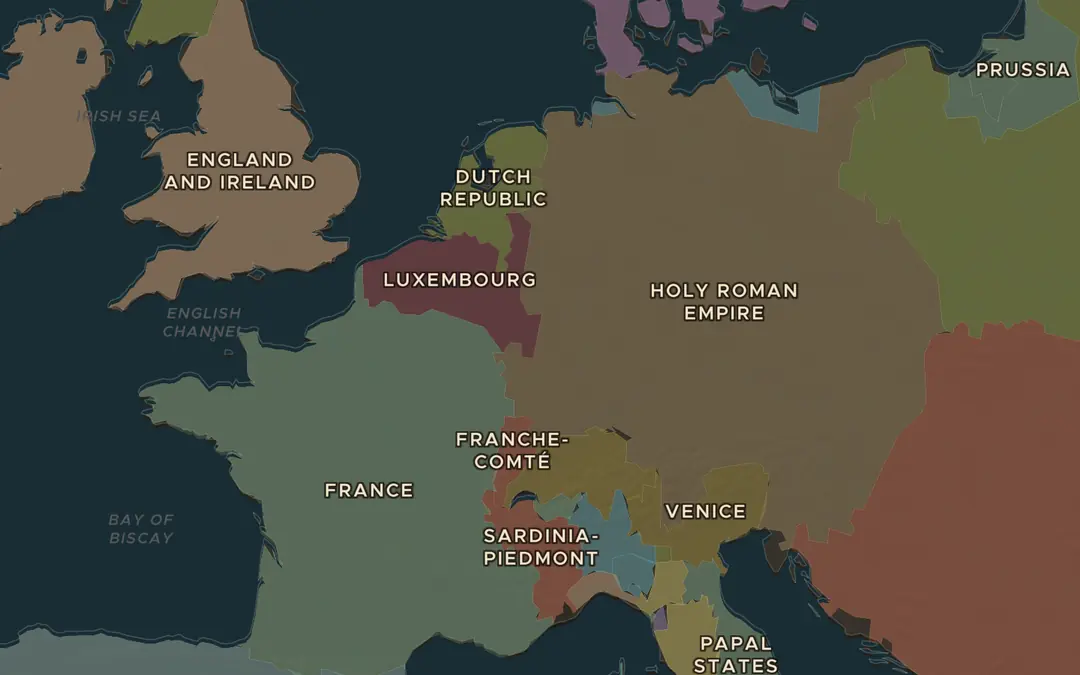
Kaartplaat 353Thirty Years' War, 1648 n.Chr.. De letters geven de drie kaartstappen van deze les aan.

Een telefoontje uit het verleden · nieuw

Johann Adam von Bicken hangt aan de lijn. De klas beslist.

Early autumn, 1648, during the final days of the peace talks
Münster, Westphalia

“You must decide whether to urge your prince to accept the current terms of peace, even though they mean losing some influence to France and Sweden, and granting more religious rights to Protestants. Or you can hold out for better terms, risking more delay and possibly renewed fighting. Both choices have serious consequences for our land and people.”

Should I advise my prince to accept the peace terms now, or keep negotiating for a better deal? De beller spreekt Engels, met zijn of haar eigen stem, vanuit een korte samenvatting van feiten uit het lesboek, weet niets van wat later gebeurde en vertelt nooit de afloop; dat zie je na het gesprek op het scherm. Op het livebord rinkelt de telefoon voor de hele klas: de docent neemt op via de microfoon, leerlingen sturen hun antwoord via hun telefoon.

Log in om het telefoontje op te nemen

Telefoontjes zitten bij Pro (5 per maand) en Classroom (20 per maand, voor de hele klas). Hoe telefoontjes werken

Live les · nieuw in Classroom

Geef live les. De klas antwoordt via hun telefoon.

Zet het bord op de beamer. Leerlingen doen mee met een zescijferige code, geen account nodig, en tikken op de kaart: waar lag de grens, waar kwam het graan vandaan. Hun pins verschijnen tegelijk als je onthult, en de leerling die het dichtstbij zit wint de ronde.

€19 per maand: elke les live, alle werkbladen, maandelijks opzegbaar. Rome op zijn grootst loopt gratis live.

Een live les op het digibord: de pins van de klas op de kaart rond Alexandrië, met de dichtstbijzijnde leerlingen ernaast. Op de telefoon van de leerling: de vraag en een kaart om op te tikken.
7 rondes
3 plekken zoeken op de kaart, quizvragen, een klassenstemming en een kort antwoord.
Ongeveer 15 minuten
Gebruik het als kaartopdracht of als start van het gesprek. Je gaat verder met de spatiebalk.
Een rapport
Alle antwoorden, per leerling en per ronde, om terug te lezen of te printen na de les.

Of als huiswerk · nieuw

Geen lestijd over? Zet het als huiswerk klaar.

Dezelfde 7 rondes, zonder digibord: elke leerling doorloopt ze zelf op de telefoon, ziet meteen alle antwoorden met uitleg, en het rapport vult zich automatisch. Een week open, met een code en een link die je overal kunt delen.

Huiswerk hoort bij Classroom, net als de live les. De gratis les kan iedereen als huiswerk geven.

Thirty Years' WarThe Peace of Westphalia

Dia’s · nieuw

De hele les als presentatie.

22 slides: het titelblad, de 3 kaartstappen met afbeeldingen en een link naar de live kaart, de gespreksvragen, de quiz met het antwoord op de volgende slide, en het werkblad. In de sprekersnotities staat wat je kunt zeggen. Het is een .pptx, dus werkt in PowerPoint, Keynote en Google Slides, en je kunt alles aanpassen.

Voorbeeld: de eerste 4 slides

€19 per maand: de presentatie van elke les, alle werkbladen, elke live les. Rome op zijn grootst is helemaal gratis beschikbaar.

1

Introductie

5 min

Lees voor

Envoys from across Europe spend years negotiating in two towns in Westphalia. Students map the peace that ended the Thirty Years' War, recognised two independent states and changed the rules of the empire, and discuss why it became so famous.

Aan het eind van de les kunnen leerlingen

  • Explain why the peace talks were held in two towns, Münster and Osnabrück.
  • Name three changes the Peace of Westphalia made to the map of Europe.
  • Explain the idea of state sovereignty and why historians debate its link to 1648.
2

Ontdek de kaart

15 min

Projecteer de kaart, of laat leerlingen zelf meekijken. Elke stap opent de kaart op het juiste jaar en de juiste plek.

De kaart in 1648 n.Chr. a

1648 n.Chr.

Two towns, one peace

Open the map in 1648 and turn on Historical Events. Find the Peace of Westphalia marker at Münster. Then find Osnabrück about 50 km to the north-east. Why might Catholic and Protestant envoys meet in different towns?

Open dit beeld op de kaart
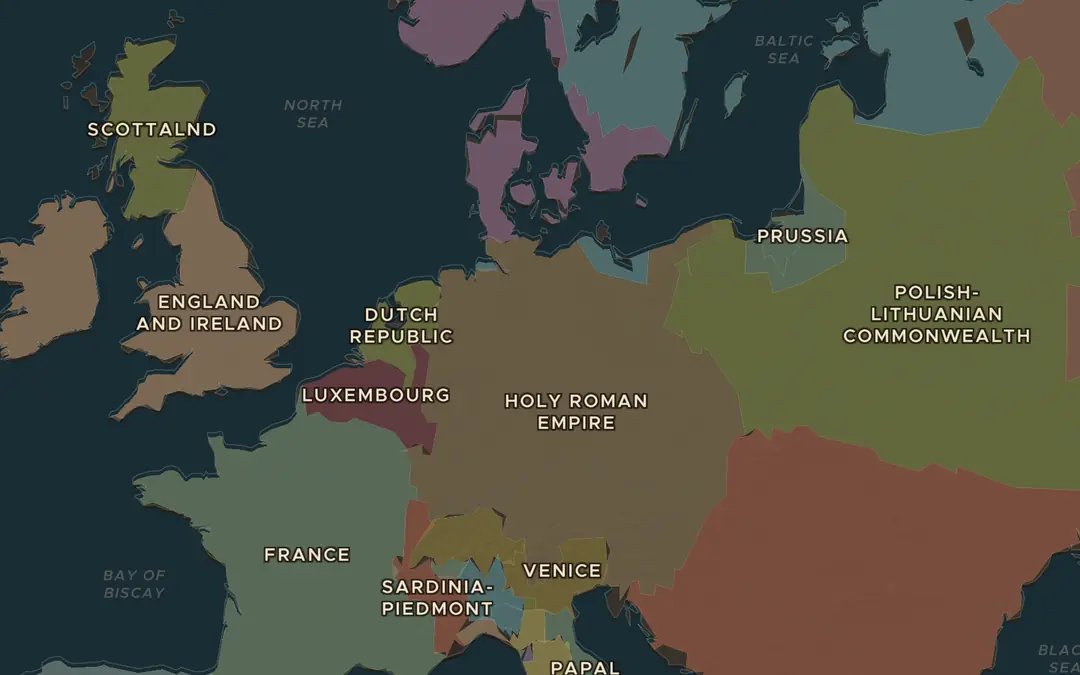
De kaart in 1650 n.Chr. b

1650 n.Chr.

Winners at the edges

Compare the map in 1600 and 1650. Look at Sweden on the southern Baltic coast. Which lands has it gained? Then find Alsace on the upper Rhine, which went mostly to France.

Open dit beeld op de kaart
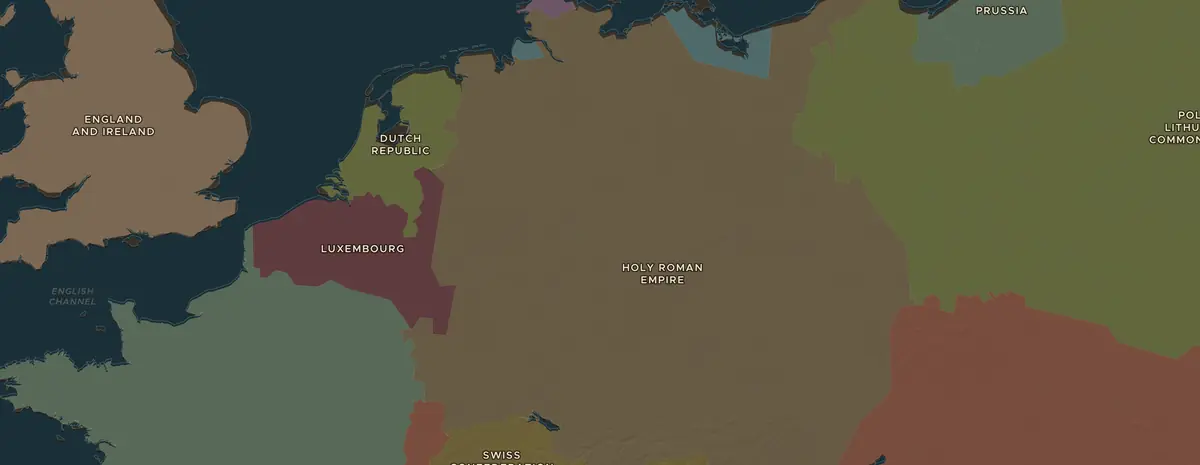
De kaart in 1650 n.Chr. c

1650 n.Chr.

Independent at last

Stay in 1650 and find the Swiss Confederation and the Dutch Republic. In 1648 both were recognised as fully independent of the empire. Where are they on the empire's borders?

Open dit beeld op de kaart
3

Klassengesprek

15 min

Kies er twee of drie. Ze gaan van wat er gebeurde naar waarom het belangrijk was.

  1. Why did it take years to agree on peace, while the fighting went on?
  2. The peace gave Calvinists the same rights as Lutherans and Catholics. Why was that important?
  3. France and Sweden, two outside powers, gained the most. Why could they demand so much?
  4. Many say Westphalia created the rule that states should not interfere in each other's affairs. Why do some historians doubt this?
  5. Millions of people died in the war. What lessons might rulers have drawn in 1648?
4

Spelronde

10 min

Play a round of Rule History as Tokugawa Ieyasu, whose shogunate kept Japan at peace for more than 250 years. Discuss: compare a peace imposed by one strong ruler with a peace negotiated by many states, as at Westphalia. Which lasts longer, and why?

Open Rule History
5

Werkblad

5 min

Dit werkblad hoort bij Classroom

Voor €19 per maand krijg je alle werkbladen, slides van elke les, elke live les en het klaslokaal. De gratis les kun je altijd printen.