
 a
Islands of the Taíno
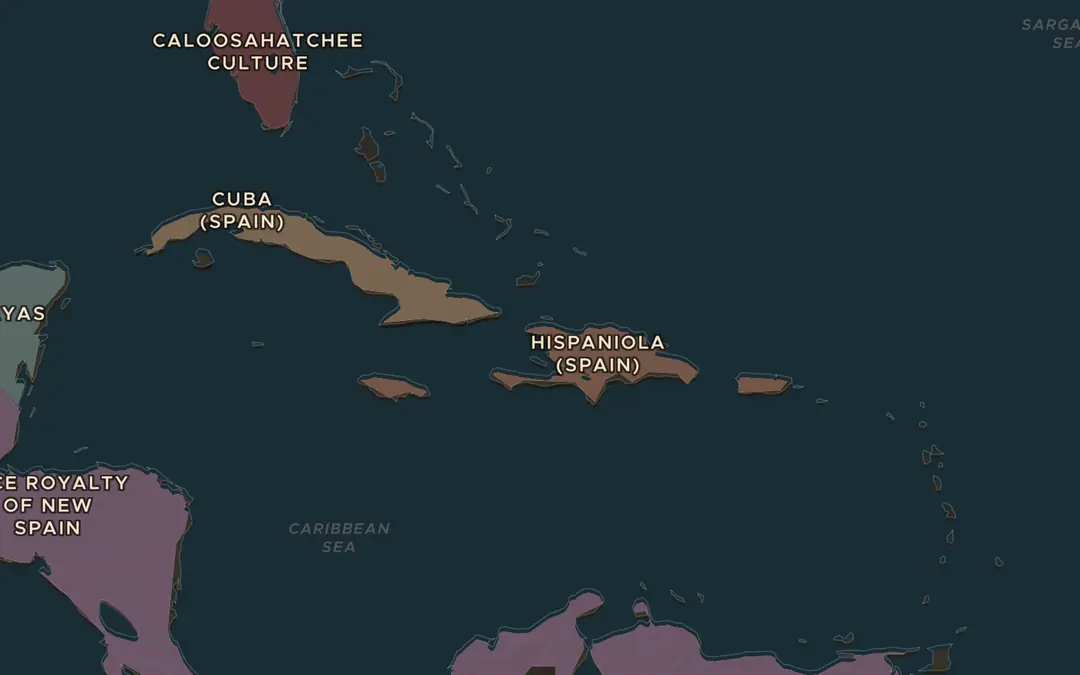
Open the map in 1492 over the Caribbean. Find the Taino labels on Cuba, Hispaniola and Jamaica, and Boriken Taino on Puerto Rico. How might islanders travel between them?
Open dit beeld op de kaartSpanish Caribbean · 1492-1542
The Taíno of the Caribbean were the first people in the Americas to live under Spanish rule. Students explore Taíno society, the forced-labour system that devastated it, the Taíno leaders who resisted, and the friar who changed his mind.
Een telefoontje uit het verleden · nieuw
Summer, 1514
Santo Domingo, Hispaniola
“You must decide whether to stay silent or to use your sermon to denounce the mistreatment and forced labor of the Taíno under the encomienda system. Speaking out could anger the colonists and put your position at risk, but staying silent means the abuses may continue unchallenged.”
Should I use my sermon to condemn the treatment of the Taíno, or keep quiet to avoid trouble? De beller spreekt Engels, met zijn of haar eigen stem, vanuit een korte samenvatting van feiten uit het lesboek, weet niets van wat later gebeurde en vertelt nooit de afloop; dat zie je na het gesprek op het scherm. Op het livebord rinkelt de telefoon voor de hele klas: de docent neemt op via de microfoon, leerlingen sturen hun antwoord via hun telefoon.
Telefoontjes zitten bij Pro (5 per maand) en Classroom (20 per maand, voor de hele klas). Hoe telefoontjes werken
Live les · nieuw in Classroom
Zet het bord op de beamer. Leerlingen doen mee met een zescijferige code, geen account nodig, en tikken op de kaart: waar lag de grens, waar kwam het graan vandaan. Hun pins verschijnen tegelijk als je onthult, en de leerling die het dichtstbij zit wint de ronde.
€19 per maand: elke les live, alle werkbladen, maandelijks opzegbaar. Rome op zijn grootst loopt gratis live.


Of als huiswerk · nieuw
Dezelfde 7 rondes, zonder digibord: elke leerling doorloopt ze zelf op de telefoon, ziet meteen alle antwoorden met uitleg, en het rapport vult zich automatisch. Een week open, met een code en een link die je overal kunt delen.
Huiswerk hoort bij Classroom, net als de live les. De gratis les kan iedereen als huiswerk geven.
 Spanish CaribbeanHispaniola: the Taíno and the first Spanish colony
Dia’s · nieuw
22 slides: het titelblad, de 3 kaartstappen met afbeeldingen en een link naar de live kaart, de gespreksvragen, de quiz met het antwoord op de volgende slide, en het werkblad. In de sprekersnotities staat wat je kunt zeggen. Het is een .pptx, dus werkt in PowerPoint, Keynote en Google Slides, en je kunt alles aanpassen.
€19 per maand: de presentatie van elke les, alle werkbladen, elke live les. Rome op zijn grootst is helemaal gratis beschikbaar.
Lees voor
The Taíno of the Caribbean were the first people in the Americas to live under Spanish rule. Students explore Taíno society, the forced-labour system that devastated it, the Taíno leaders who resisted, and the friar who changed his mind.
Aan het eind van de les kunnen leerlingen
Projecteer de kaart, of laat leerlingen zelf meekijken. Elke stap opent de kaart op het juiste jaar en de juiste plek.
a
Open the map in 1492 over the Caribbean. Find the Taino labels on Cuba, Hispaniola and Jamaica, and Boriken Taino on Puerto Rico. How might islanders travel between them?
Open dit beeld op de kaart
b
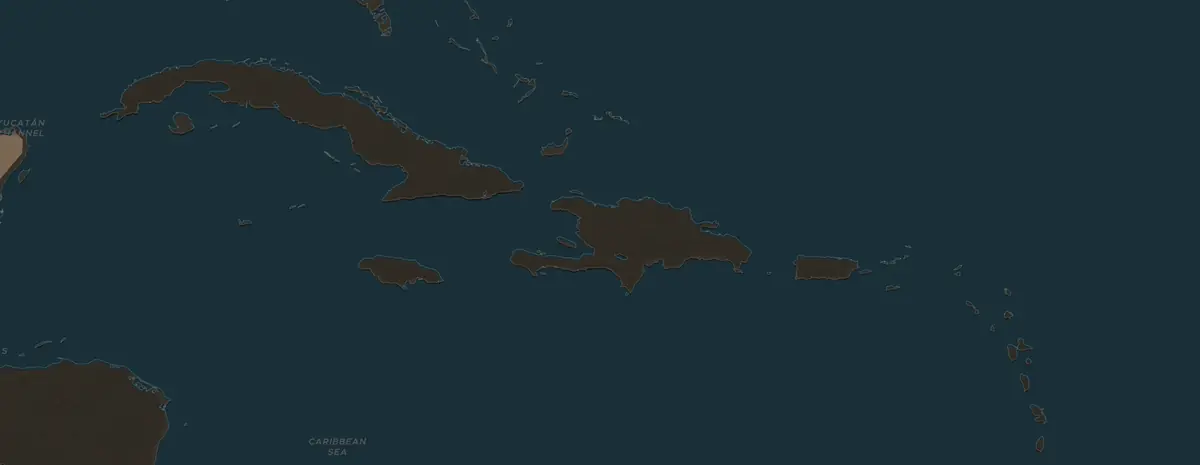
Jump to 1530 with the same view. Which labels have replaced the Taíno names? What does this change on the map hide about the people who lived there?
Open dit beeld op de kaart
c
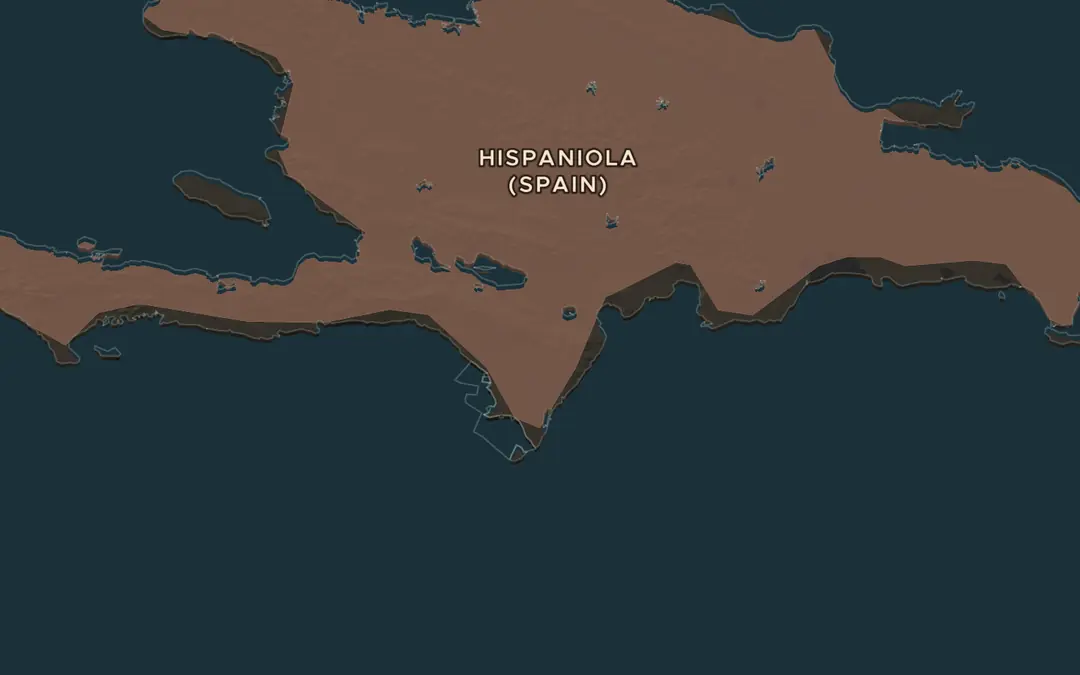
Zoom in on the Bahoruco mountains in the south-west of Hispaniola. From 1519 to 1533 the Taíno leader Enriquillo resisted the Spaniards here. Why were these mountains a good refuge?
Open dit beeld op de kaartKies er twee of drie. Ze gaan van wat er gebeurde naar waarom het belangrijk was.
No Spanish king is in Rule History. Play one round as Suleiman the Magnificent, who ruled at the same time as Charles V, the king who signed Spain's New Laws of 1542. Afterwards, discuss: how much can a ruler far away really control what happens in his colonies?
Open Rule HistoryVoor €19 per maand krijg je alle werkbladen, slides van elke les, elke live les en het klaslokaal. De gratis les kun je altijd printen.