Qin and Han dynasties, China · 209-202 BC

From Qin to Han: rebels and a commoner emperor

One year after the First Emperor died, farmers late for duty rose in revolt. Within three years the Qin were gone, and by 202 BC a village official named Liu Bang had founded the Han dynasty. Students find out why one dynasty fell so fast and the next lasted 400 years.

Length
45 minutes
Ages
12–15
On the map
3 steps, 209 BC to 200 BC
Live lesson
7 rounds, 3 on the map
Homework
The same rounds, a week long
Worksheet
Two A4 pages, with Classroom
Slides
22 slides, with Classroom
You need
A projector; phones for live
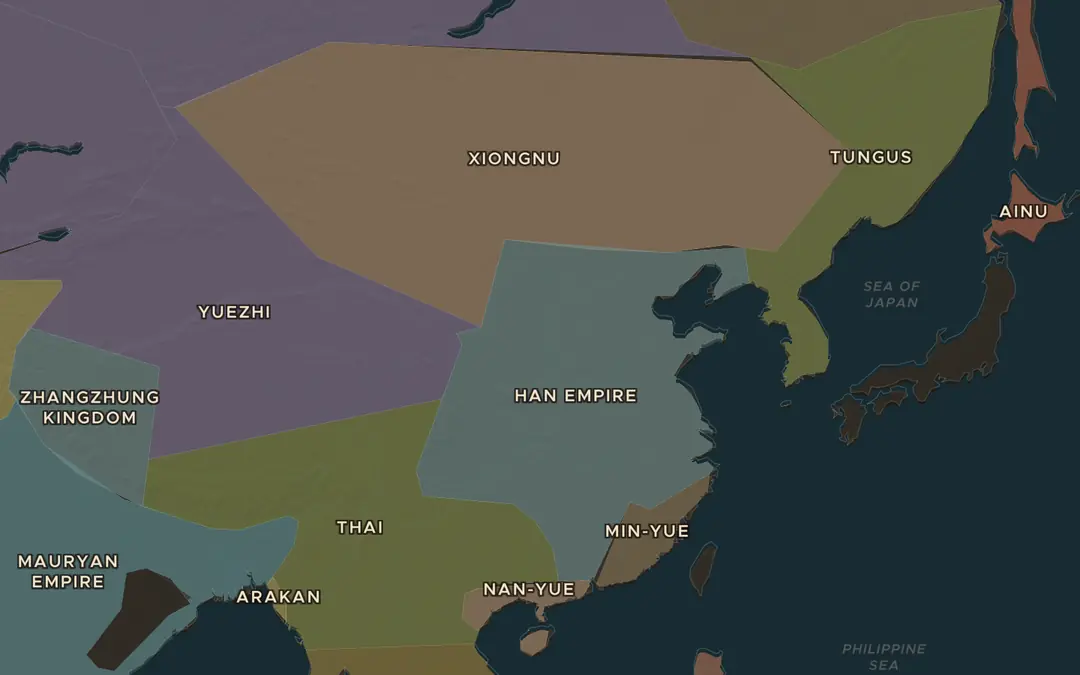
Plate 103Qin and Han dynasties, China, 202 BC. The letters mark the three map steps of this lesson.

A call from history · new

Liu Bang is on the line. The class decides.

Just after entering Xianyang, the Qin capital, in the winter of 206 BC
Xianyang, near present-day Xi'an, China

“You must decide how to treat the people of the former Qin heartland. The Qin dynasty ruled with strict laws and severe punishments, but their system kept order. If you keep these harsh laws, the people may continue to suffer and rebel. If you change them, you risk losing control.”

Should I keep the Qin system as it is, or make the laws and punishments lighter to win the people's support? The caller speaks English, in their own voice, from a short brief of textbook facts, knows nothing of what came later and never tells the outcome; the screen does, after the call. On the live board the telephone rings the whole class: the teacher answers on the room's microphone, and students write to the caller from their phones.

Sign in to take the call

Calls come with Pro (5 a month) and Classroom (20 a month, ringing the whole class). How calls work

Live lesson · new in Classroom

Teach it live. The class answers on their phones.

Put the board on the projector. Students join with a six-digit code, no account needed, and tap the map: where was the frontier, where did the grain come from. Their pins drop in together when you reveal, and the closest student takes the round.

€19 per month: every lesson live, every worksheet, cancel anytime. Rome at its height runs live for free.

A live lesson on the projector: the class's pins on the map around Alexandria, the closest students listed beside it A student's phone: the question and a map to tap
7 rounds
3 places to find on the map, quiz questions, a class vote and a one-line answer.
About 15 minutes
Run it as the map step, or to open the discussion. You move on with the space bar.
A report
Every answer, per student and per round, to read back or print after the lesson.

Or as homework · new

No lesson hour to spare? Set it as homework.

The same 7 rounds, without the board: each student walks through them alone on their phone, sees every answer at once with the explanation, and the report fills in as they go. Open for a week, with a code and a link you can paste anywhere.

Homework comes with Classroom, like the live lesson. The free lesson can be set as homework by everyone.

Qin and Han dynasties, ChinaFrom Qin to Han: rebels and a commoner emperor

Slides · new

The whole lesson as a deck.

22 slides: the plate, the 3 map steps with their pictures and a link to the live map, the discussion questions, the quiz with the answer on the next slide, and the worksheet. Speaker notes carry what to say. It is a .pptx, so it opens in PowerPoint, Keynote and Google Slides, and you can change anything.

Preview: the first 4 slides

€19 per month: the deck of every lesson, every worksheet, every live lesson. Rome at its height comes whole for free.

1

Introduction

5 min

Read aloud

One year after the First Emperor died, farmers late for duty rose in revolt. Within three years the Qin were gone, and by 202 BC a village official named Liu Bang had founded the Han dynasty. Students find out why one dynasty fell so fast and the next lasted 400 years.

By the end of the lesson, students can

  • Explain why the Qin dynasty collapsed so quickly after the First Emperor's death.
  • Compare the two rebel leaders, Xiang Yu and Liu Bang.
  • Describe what the early Han changed and what they kept from the Qin system.
2

Explore the map

12 min

Project the map, or let students follow on their own devices. Each step opens the map at the right year and place.

The map in 209 BC a

209 BC

The empire cracks

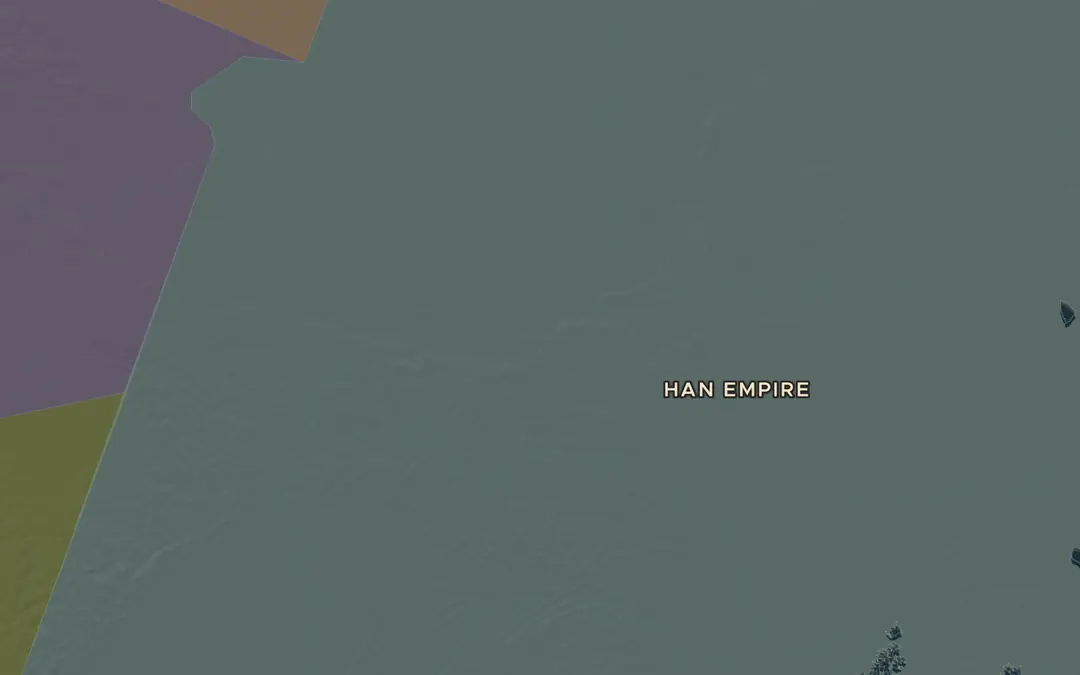
Open the map in 209 BC (the borders shown are those of 200 BC). Find the Huai River plain in the east, where the first great revolt began. Why might people far from the capital rebel first?

Open this view on the map
The map in 206 BC b

206 BC

The race to the capital

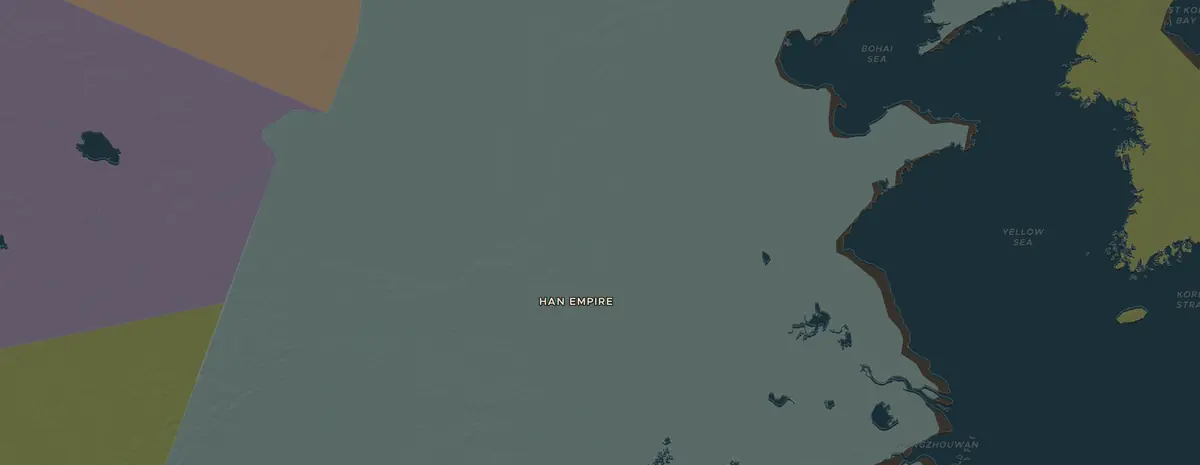
Turn on the Cities layer and find Chang'an, next to the old Qin capital. In 206 BC Liu Bang got there first and the last Qin ruler surrendered. Why was the capital the big prize?

Open this view on the map
The map in 200 BC c

200 BC

The Han begin

Jump to 200 BC and zoom out to see the whole Han Empire and the Xiongnu to the north. Which is bigger? What problem will the new emperor face first?

Open this view on the map
3

Class discussion

14 min

Pick two or three. They run from what happened to why it mattered.

  1. Chen Sheng and Wu Guang rebelled because the punishment for arriving late was death. What does this tell you about Qin law?
  2. Chen Sheng asked whether kings and nobles are born to their rank. Why was this such a dangerous question?
  3. Xiang Yu was a noble and a great general; Liu Bang was a commoner who listened to his advisers. Why did Liu Bang win?
  4. The Han kept much of the Qin government but softened its laws. Why keep a system that many people hated?
  5. The Han lasted about 400 years, the Qin only 15. What made the difference?
4

Game round

9 min

Play Hannibal Barca in Rule History: his war with Rome ended at Zama in 202 BC, the same year Liu Bang beat Xiang Yu at Gaixia. After the round, compare: what did Liu Bang do after his victory that kept his dynasty in power for four centuries?

Open Rule History
5

Worksheet

5 min

This worksheet comes with Classroom

€19 per month unlocks every worksheet, the slides of every lesson, every live lesson and the class workspace. The free lesson prints without a subscription.