Classical Greece · 431-404 BC

The Peloponnesian War: Athens against Sparta

For 27 years the two leading Greek cities fought a war that neither could win quickly: Athens ruled the sea, Sparta the land. Students follow the plague, the disaster in Sicily and the final defeat, with the historian Thucydides as their guide.

Length
50 minutes
Ages
12–15
On the map
3 steps, 431 BC to 405 BC
Live lesson
7 rounds, 3 on the map
Homework
The same rounds, a week long
Worksheet
Two A4 pages, with Classroom
Slides
22 slides, with Classroom
You need
A projector; phones for live
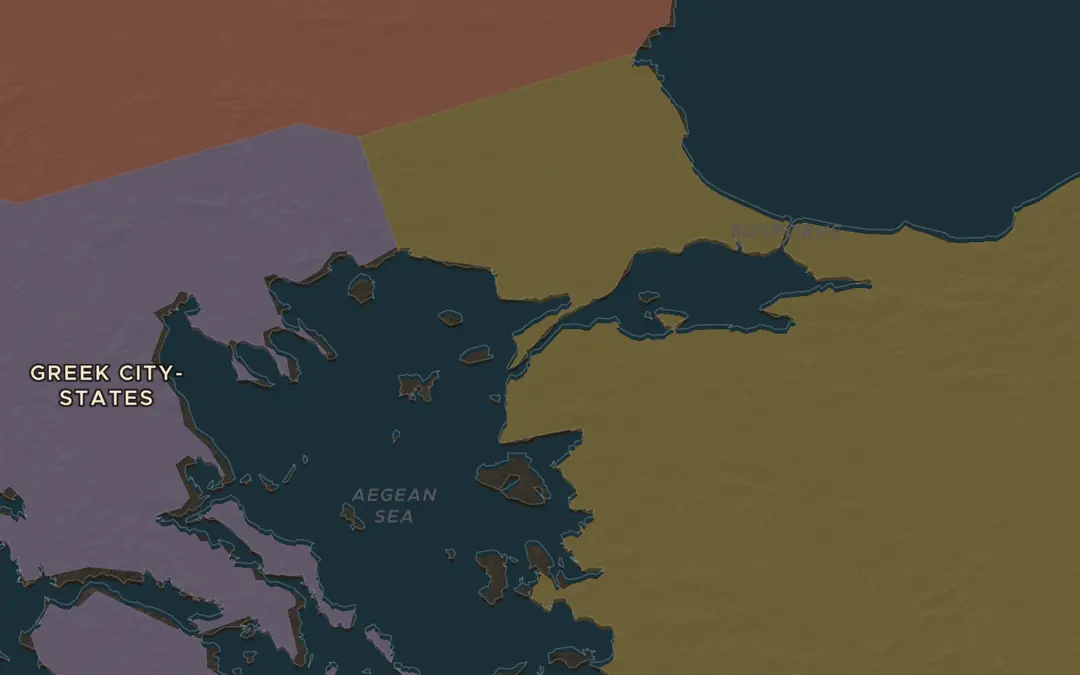
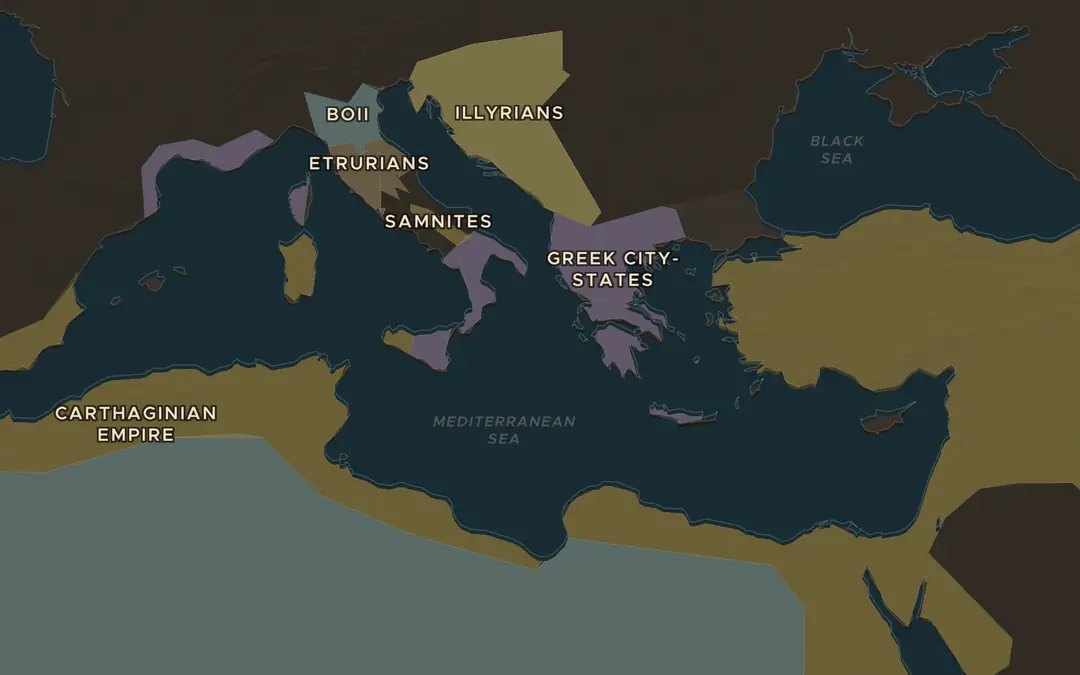
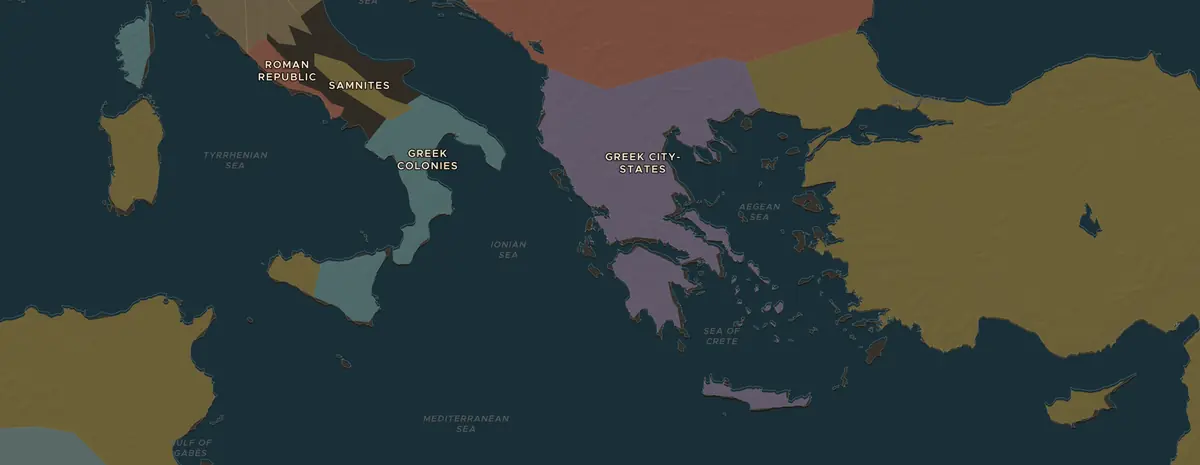
Plate 77Classical Greece, 404 BC. The letters mark the three map steps of this lesson.

A call from history · new

Nicias is on the line. The class decides.

Summer evening, 415 BC
The Pnyx, Athens

“You must decide whether to go forward with the expedition to Sicily, leading thousands of Athenians far from home, or to argue against it and risk angering the Assembly. The fleet is large and expensive, but the risks are great and Syracuse is powerful. Many believe this could bring great glory or disaster to Athens.”

Should I obey the Assembly and lead the fleet to Sicily, or try to persuade them to cancel the expedition? The caller speaks English, in their own voice, from a short brief of textbook facts, knows nothing of what came later and never tells the outcome; the screen does, after the call. On the live board the telephone rings the whole class: the teacher answers on the room's microphone, and students write to the caller from their phones.

Sign in to take the call

Calls come with Pro (5 a month) and Classroom (20 a month, ringing the whole class). How calls work

Live lesson · new in Classroom

Teach it live. The class answers on their phones.

Put the board on the projector. Students join with a six-digit code, no account needed, and tap the map: where was the frontier, where did the grain come from. Their pins drop in together when you reveal, and the closest student takes the round.

€19 per month: every lesson live, every worksheet, cancel anytime. Rome at its height runs live for free.

A live lesson on the projector: the class's pins on the map around Alexandria, the closest students listed beside it A student's phone: the question and a map to tap
7 rounds
3 places to find on the map, quiz questions, a class vote and a one-line answer.
About 15 minutes
Run it as the map step, or to open the discussion. You move on with the space bar.
A report
Every answer, per student and per round, to read back or print after the lesson.

Or as homework · new

No lesson hour to spare? Set it as homework.

The same 7 rounds, without the board: each student walks through them alone on their phone, sees every answer at once with the explanation, and the report fills in as they go. Open for a week, with a code and a link you can paste anywhere.

Homework comes with Classroom, like the live lesson. The free lesson can be set as homework by everyone.

Classical GreeceThe Peloponnesian War: Athens against Sparta

Slides · new

The whole lesson as a deck.

22 slides: the plate, the 3 map steps with their pictures and a link to the live map, the discussion questions, the quiz with the answer on the next slide, and the worksheet. Speaker notes carry what to say. It is a .pptx, so it opens in PowerPoint, Keynote and Google Slides, and you can change anything.

Preview: the first 4 slides

€19 per month: the deck of every lesson, every worksheet, every live lesson. Rome at its height comes whole for free.

1

Introduction

5 min

Read aloud

For 27 years the two leading Greek cities fought a war that neither could win quickly: Athens ruled the sea, Sparta the land. Students follow the plague, the disaster in Sicily and the final defeat, with the historian Thucydides as their guide.

By the end of the lesson, students can

  • Explain why Athens and Sparta went to war in 431 BC.
  • Describe Pericles's strategy and why the plague of 430 BC undermined it.
  • Locate Syracuse and Aegospotami and explain how each sealed Athens's fate.
2

Explore the map

15 min

Project the map, or let students follow on their own devices. Each step opens the map at the right year and place.

The map in 431 BC a

431 BC

Sea power against land power

Open the map in 431 BC. Sparta led most of the Peloponnese; Athens led the islands and coasts of the Aegean. Turn on the Cities layer and find both. Pericles planned to stay behind the walls, feed the city by sea and raid Sparta's coast. Why did neither side have an easy way to hurt the other?

Open this view on the map
The map in 415 BC b

415 BC

The Sicilian disaster

Jump to 415 BC. Athens sent its biggest fleet ever to conquer Syracuse in Sicily. Find Syracuse and measure the distance from Athens. Two years later the whole force was lost: ships sunk in the harbor, thousands of prisoners dead in the stone quarries. Why gamble so far from home?

Open this view on the map
The map in 405 BC c

405 BC

The last battle

Go to 405 BC and travel to the Hellespont. At Aegospotami the Spartan admiral Lysander, with ships paid for by Persia, caught the Athenian fleet on the beach and destroyed it. Athens starved and surrendered in 404 BC. Why was this strait, the grain route from the Black Sea, the place to end the war?

Open this view on the map
3

Class discussion

15 min

Pick two or three. They run from what happened to why it mattered.

  1. Thucydides wrote that the real cause of the war was Sparta's fear of Athens growing stronger. Can fear alone start a war?
  2. In 430 BC a plague killed perhaps a quarter of the people packed inside Athens's walls, including Pericles. How does a disaster like this change a war, and a democracy?
  3. In 416 BC Athens attacked the neutral island of Melos and, when it refused to join, killed its men and enslaved the rest. Thucydides records the Athenians saying the strong do what they can and the weak suffer what they must. Why did he include this?
  4. Persia paid for Sparta's fleet in the last years of the war. Who really decided the outcome of this Greek war?
  5. Sparta won but could not hold Greece together either; within thirty years Thebes had beaten it. Did anyone win the Peloponnesian War?
4

Game round

10 min

Play one round of Rule History as Alexander the Great, whose father conquered the exhausted Greek cities a few decades after this war. Discuss: did the Peloponnesian War make Macedon's victory possible?

Open Rule History
5

Worksheet

5 min

This worksheet comes with Classroom

€19 per month unlocks every worksheet, the slides of every lesson, every live lesson and the class workspace. The free lesson prints without a subscription.