Chavín culture · c. 900-200 BC

Chavín de Huántar: a temple in the high Andes

High in a valley of the Andes, pilgrims from the coast and the mountains gathered at the temple of Chavín de Huántar. Students explore its underground galleries, the Lanzón idol, and how one style of art spread across the Andes long before the Inca.

Length
45 minutes
Ages
11–14
On the map
3 steps, 500 BC to 400 BC
Live lesson
7 rounds, 3 on the map
Homework
The same rounds, a week long
Worksheet
Two A4 pages, with Classroom
Slides
22 slides, with Classroom
You need
A projector; phones for live
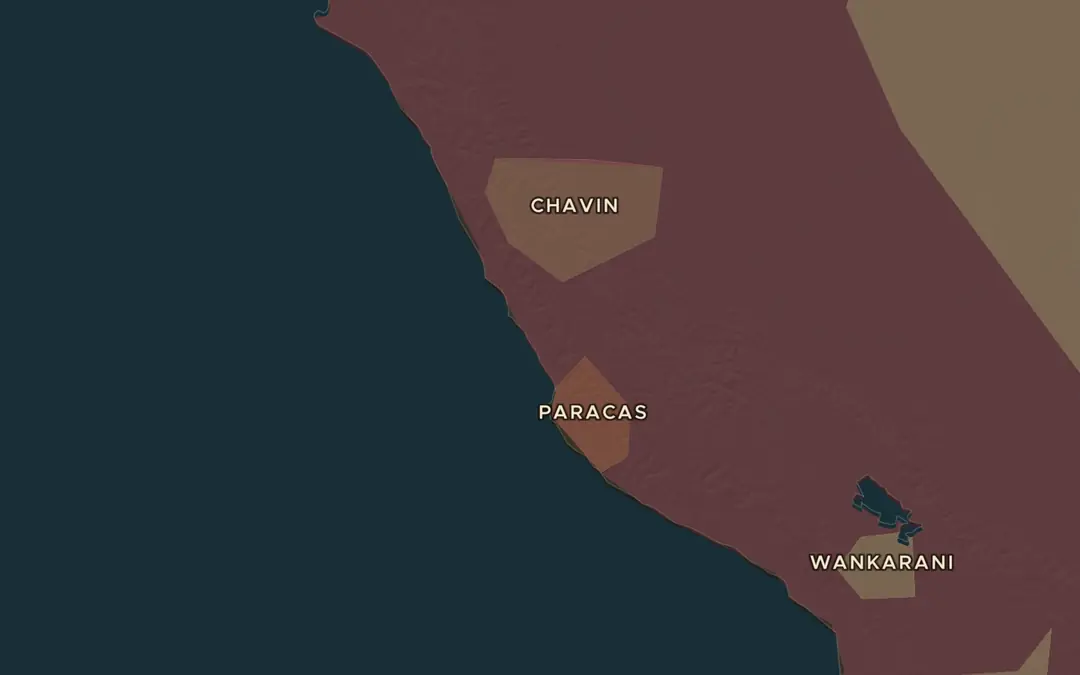
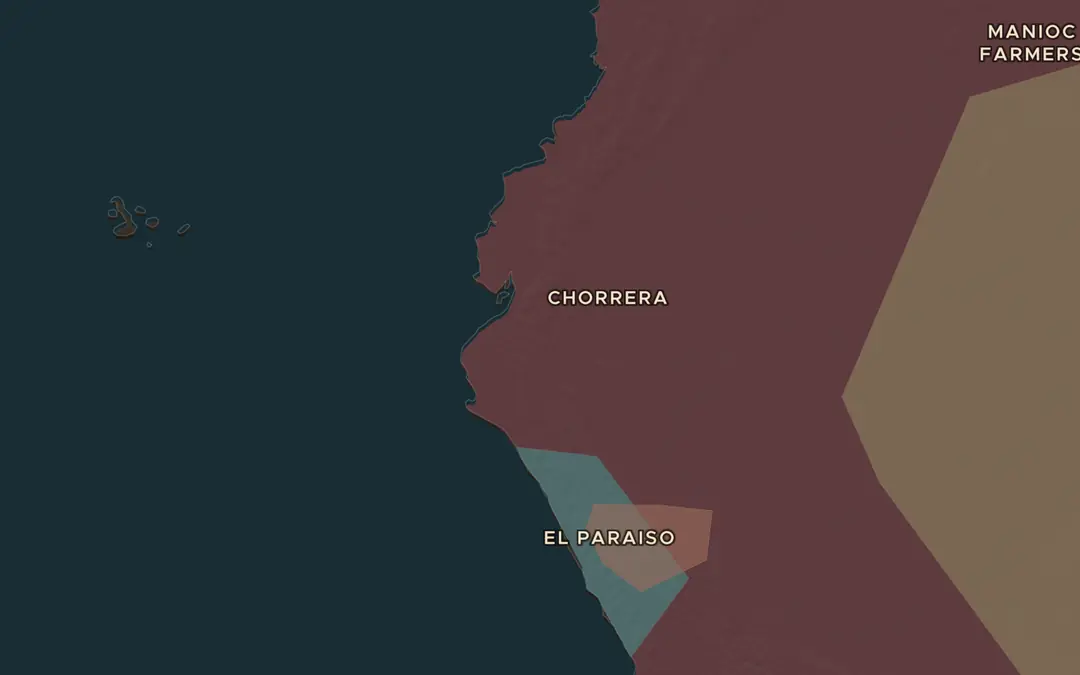
Plate 66Chavín culture, 500 BC. The letters mark the three map steps of this lesson.

A call from history · new

a Chavín artisan is on the line. The class decides.

A morning as pilgrims arrive at the temple, about 500 BC
Chavín de Huántar, high Andes, Peru

“You must decide which animals and symbols should be carved for the temple’s next offering. Should you choose animals from the high mountains, or those from the lowland forests, like jaguars and caimans, which many visitors speak of? Your choice may shape how distant pilgrims feel about the temple.”

Should I carve local mountain animals, or powerful forest animals from far away, to best welcome all pilgrims? The caller speaks English, in their own voice, from a short brief of textbook facts, knows nothing of what came later and never tells the outcome; the screen does, after the call. On the live board the telephone rings the whole class: the teacher answers on the room's microphone, and students write to the caller from their phones.

Sign in to take the call

Calls come with Pro (5 a month) and Classroom (20 a month, ringing the whole class). How calls work

Live lesson · new in Classroom

Teach it live. The class answers on their phones.

Put the board on the projector. Students join with a six-digit code, no account needed, and tap the map: where was the frontier, where did the grain come from. Their pins drop in together when you reveal, and the closest student takes the round.

€19 per month: every lesson live, every worksheet, cancel anytime. Rome at its height runs live for free.

A live lesson on the projector: the class's pins on the map around Alexandria, the closest students listed beside it A student's phone: the question and a map to tap
7 rounds
3 places to find on the map, quiz questions, a class vote and a one-line answer.
About 15 minutes
Run it as the map step, or to open the discussion. You move on with the space bar.
A report
Every answer, per student and per round, to read back or print after the lesson.

Or as homework · new

No lesson hour to spare? Set it as homework.

The same 7 rounds, without the board: each student walks through them alone on their phone, sees every answer at once with the explanation, and the report fills in as they go. Open for a week, with a code and a link you can paste anywhere.

Homework comes with Classroom, like the live lesson. The free lesson can be set as homework by everyone.

Chavín cultureChavín de Huántar: a temple in the high Andes

Slides · new

The whole lesson as a deck.

22 slides: the plate, the 3 map steps with their pictures and a link to the live map, the discussion questions, the quiz with the answer on the next slide, and the worksheet. Speaker notes carry what to say. It is a .pptx, so it opens in PowerPoint, Keynote and Google Slides, and you can change anything.

Preview: the first 4 slides

€19 per month: the deck of every lesson, every worksheet, every live lesson. Rome at its height comes whole for free.

1

Introduction

5 min

Read aloud

High in a valley of the Andes, pilgrims from the coast and the mountains gathered at the temple of Chavín de Huántar. Students explore its underground galleries, the Lanzón idol, and how one style of art spread across the Andes long before the Inca.

By the end of the lesson, students can

  • Locate Chavín de Huántar and explain why it stood between the coast and the Amazon side of the Andes.
  • Describe the temple's galleries, the Lanzón and the animals in Chavín art.
  • Explain what the spread of the Chavín style tells us about trade and religion in the Andes.
2

Explore the map

12 min

Project the map, or let students follow on their own devices. Each step opens the map at the right year and place.

The map in 500 BC a

500 BC

Between two worlds

Open the map in 500 BC and find the Chavin label in the mountains of Peru. Zoom in on Chavín de Huántar, at about 3,180 m. Look at the land to the west and the east: why is this a meeting place between the coast and the forest?

Open this view on the map
The map in 500 BC b

500 BC

Shells from the north

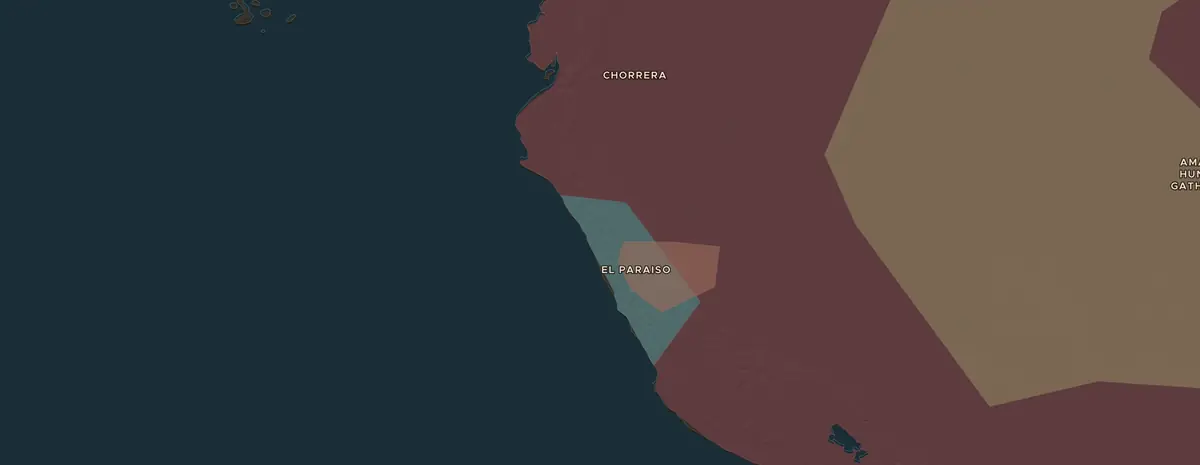
Zoom out and follow the coast north to the Chorrera label in today's Ecuador. Spondylus and conch shells from these warm waters reached Chavín. How might they have travelled more than 1,000 km?

Open this view on the map
The map in 400 BC c

400 BC

A style that spread

Jump to 400 BC and look south along the coast for the Paracas label. Chavín-style images appear on textiles found near Paracas. What do shared images tell us about how ideas moved along the Andes?

Open this view on the map
3

Class discussion

14 min

Pick two or three. They run from what happened to why it mattered.

  1. Chavín de Huántar lies where two rivers meet, on a route between the coast and the Amazon side of the mountains. Why would a temple grow at such a crossroads?
  2. Inside the temple, narrow galleries lead to the Lanzón, a carved stone about 4.5 m tall. How might a visitor have felt walking through the dark to reach it?
  3. Chavín art shows jaguars, eagles, snakes and caimans, animals of the lowland forest. Why would highland priests use forest animals as symbols?
  4. Shell trumpets found at the temple came from conch shells from the sea off Ecuador. What does that tell us about trade?
  5. The Chavín style spread over much of Peru without any sign of an army. How can religion and trade spread ideas without conquest?
4

Game round

9 min

Play one round of Rule History as Cyrus the Great, who built the Persian Empire while Chavín de Huántar drew pilgrims from across the Andes. Afterwards, compare: Cyrus spread his power with armies and roads. How did Chavín spread its influence without an empire?

Open Rule History
5

Worksheet

5 min

This worksheet comes with Classroom

€19 per month unlocks every worksheet, the slides of every lesson, every live lesson and the class workspace. The free lesson prints without a subscription.