Early Islam · 632-680

Sunni and Shia: how the split began

A disagreement about who should lead the Muslim community grew into the division between Sunni and Shia Islam. Students trace the events from 632 to Karbala in 680, with care and respect for both traditions.

Length
50 minutes
Ages
13–16
On the map
3 steps, AD 661 to AD 680
Live lesson
7 rounds, 3 on the map
Homework
The same rounds, a week long
Worksheet
Two A4 pages, with Classroom
Slides
22 slides, with Classroom
You need
A projector; phones for live
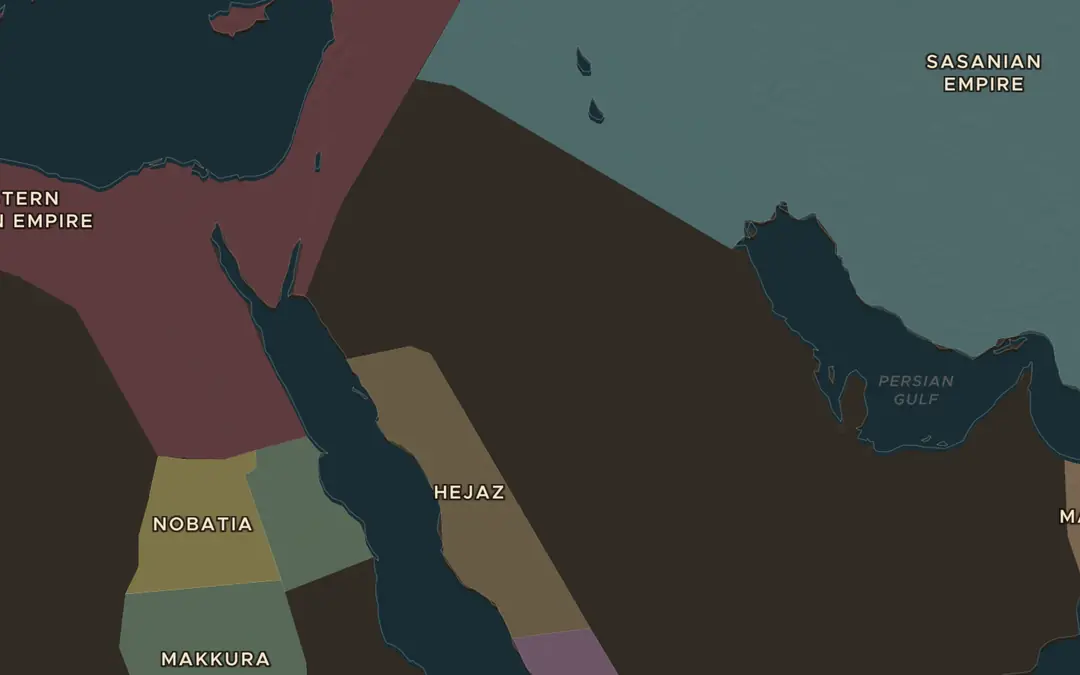
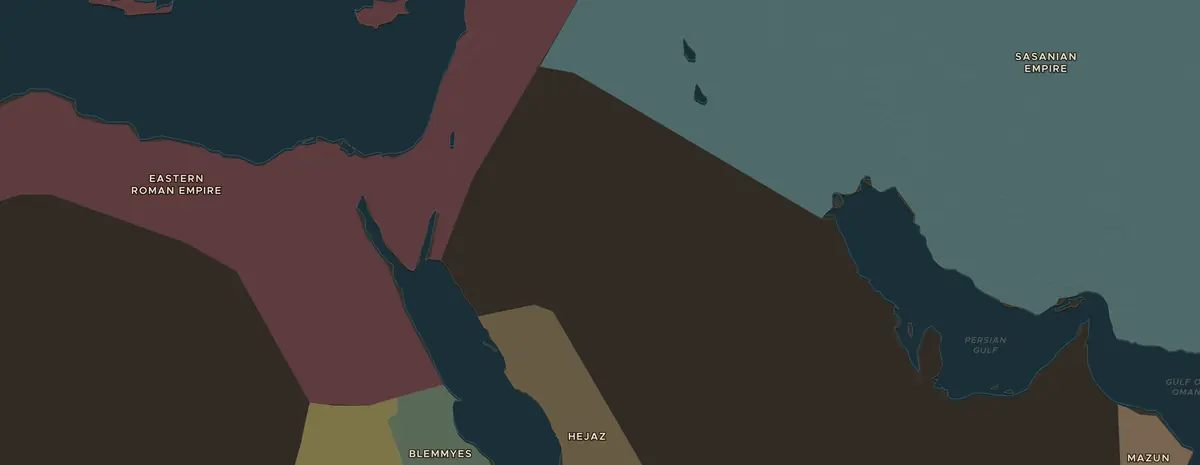
Plate 168Early Islam, AD 680. The letters mark the three map steps of this lesson.

A call from history · new

Husayn ibn Ali is on the line. The class decides.

The morning of 10 Muharram, 680
The plain of Karbala, near the Euphrates, Iraq

“You must decide whether to stand firm and face the army of Yazid, even though we are greatly outnumbered, or to try to reach an agreement and avoid bloodshed. Surrender may save lives, but could mean accepting Yazid’s rule, which many believe is unjust. Standing firm risks our lives, but may stand for our beliefs.”

Should I stand firm and refuse to pledge allegiance to Yazid, or should I try to make peace to save my family and followers? The caller speaks English, in their own voice, from a short brief of textbook facts, knows nothing of what came later and never tells the outcome; the screen does, after the call. On the live board the telephone rings the whole class: the teacher answers on the room's microphone, and students write to the caller from their phones.

Sign in to take the call

Calls come with Pro (5 a month) and Classroom (20 a month, ringing the whole class). How calls work

Live lesson · new in Classroom

Teach it live. The class answers on their phones.

Put the board on the projector. Students join with a six-digit code, no account needed, and tap the map: where was the frontier, where did the grain come from. Their pins drop in together when you reveal, and the closest student takes the round.

€19 per month: every lesson live, every worksheet, cancel anytime. Rome at its height runs live for free.

A live lesson on the projector: the class's pins on the map around Alexandria, the closest students listed beside it A student's phone: the question and a map to tap
7 rounds
3 places to find on the map, quiz questions, a class vote and a one-line answer.
About 15 minutes
Run it as the map step, or to open the discussion. You move on with the space bar.
A report
Every answer, per student and per round, to read back or print after the lesson.

Or as homework · new

No lesson hour to spare? Set it as homework.

The same 7 rounds, without the board: each student walks through them alone on their phone, sees every answer at once with the explanation, and the report fills in as they go. Open for a week, with a code and a link you can paste anywhere.

Homework comes with Classroom, like the live lesson. The free lesson can be set as homework by everyone.

Early IslamSunni and Shia: how the split began

Slides · new

The whole lesson as a deck.

22 slides: the plate, the 3 map steps with their pictures and a link to the live map, the discussion questions, the quiz with the answer on the next slide, and the worksheet. Speaker notes carry what to say. It is a .pptx, so it opens in PowerPoint, Keynote and Google Slides, and you can change anything.

Preview: the first 4 slides

€19 per month: the deck of every lesson, every worksheet, every live lesson. Rome at its height comes whole for free.

1

Introduction

5 min

Read aloud

A disagreement about who should lead the Muslim community grew into the division between Sunni and Shia Islam. Students trace the events from 632 to Karbala in 680, with care and respect for both traditions.

By the end of the lesson, students can

  • Explain the disagreement about leadership after the Prophet's death in 632.
  • Describe what happened to Husayn ibn Ali at Karbala in 680 and why it is remembered.
  • Name the main difference between Sunni and Shia Muslims today.
2

Explore the map

15 min

Project the map, or let students follow on their own devices. Each step opens the map at the right year and place.

The map in AD 661 a

AD 661

Two rival capitals

Open the map in 661 and turn on the Cities layer. Find Damascus, the base of Muawiya. Then look south-east to Iraq, where Ali ruled from Kufa. How far apart were the two rivals?

Open this view on the map
The map in AD 680 b

AD 680

The road to Kufa

Move to 680. Find Mecca, where Husayn set out, and follow the desert north-east towards Kufa in Iraq. What would a journey of more than 1,200 km across the desert require?

Open this view on the map
The map in AD 680 c

AD 680

Karbala today

The map opens at Karbala in Iraq. Millions of pilgrims visit the shrine of Husayn here every year. Why do people travel to places of memory?

Open this view on the map
3

Class discussion

15 min

Pick two or three. They run from what happened to why it mattered.

  1. After the Prophet's death, what were the two main ideas about who should lead the Muslim community?
  2. Muawiya made his son Yazid the next caliph. Why did many people see that as a big change?
  3. Why do you think the death of Husayn, the Prophet's grandson, moved so many people, then and now?
  4. Sunni and Shia Muslims share the Quran and the core beliefs of Islam. Why can a disagreement about leadership last for centuries?
  5. How can remembering an event every year, as Shia Muslims do on Ashura, hold a community together?
4

Game round

10 min

Rule History has no ruler from this conflict. Play one round as Wu Zetian, who held power in China in the same decades and also lived through fierce quarrels over who should inherit the throne. Discuss how disputes about succession shaped both states.

Open Rule History
5

Worksheet

5 min

This worksheet comes with Classroom

€19 per month unlocks every worksheet, the slides of every lesson, every live lesson and the class workspace. The free lesson prints without a subscription.