Neo-Babylonian Empire · 605-539 BC

Nebuchadnezzar and the glory of Babylon

For seventy years after Assyria fell, Babylon was the greatest city on earth. Students explore Nebuchadnezzar's blue Ishtar Gate and towering ziggurat, the exile of Judah, and the night in 539 BC when the city opened its gates to Persia.

Length
50 minutes
Ages
11–14
On the map
3 steps, 605 BC to 539 BC
Live lesson
7 rounds, 3 on the map
Homework
The same rounds, a week long
Worksheet
Two A4 pages, with Classroom
Slides
22 slides, with Classroom
You need
A projector; phones for live
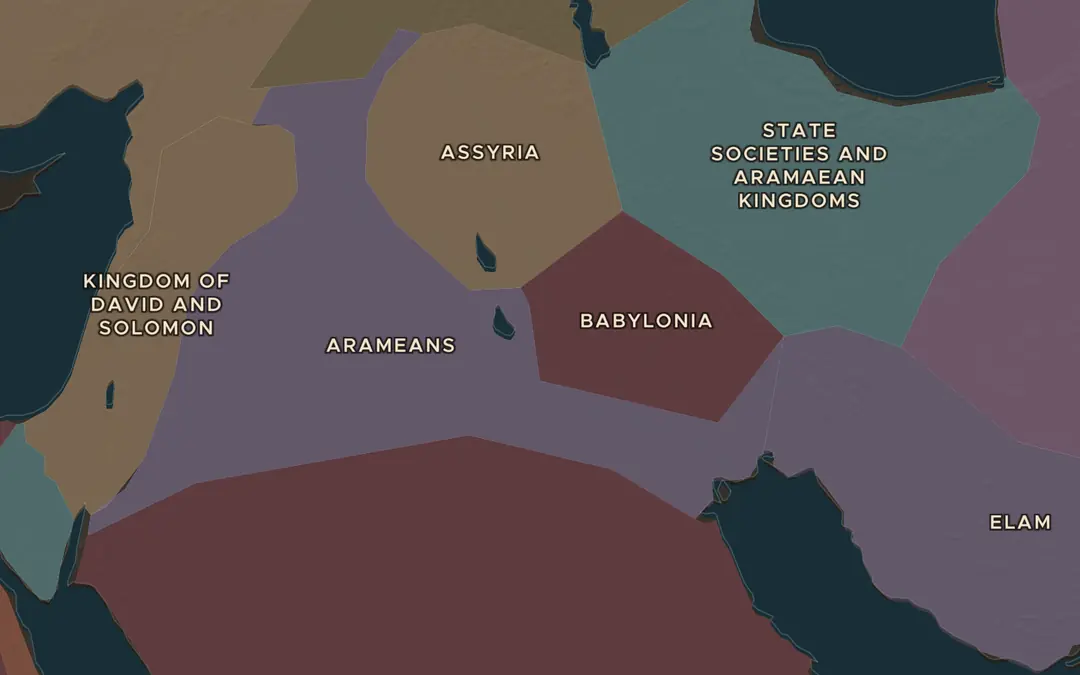
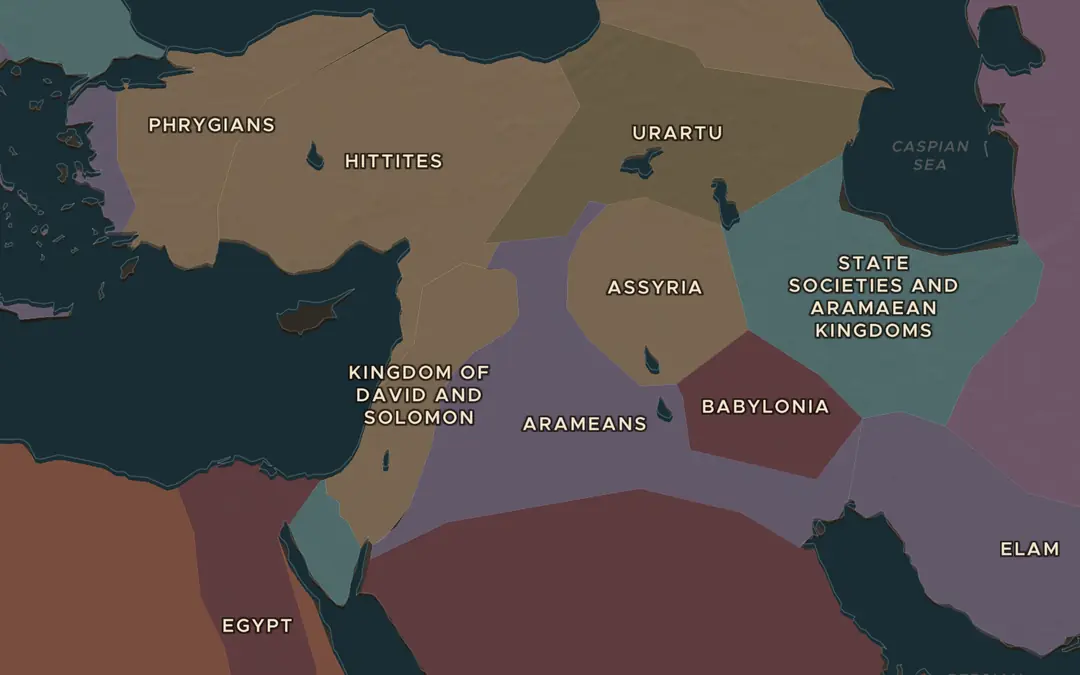
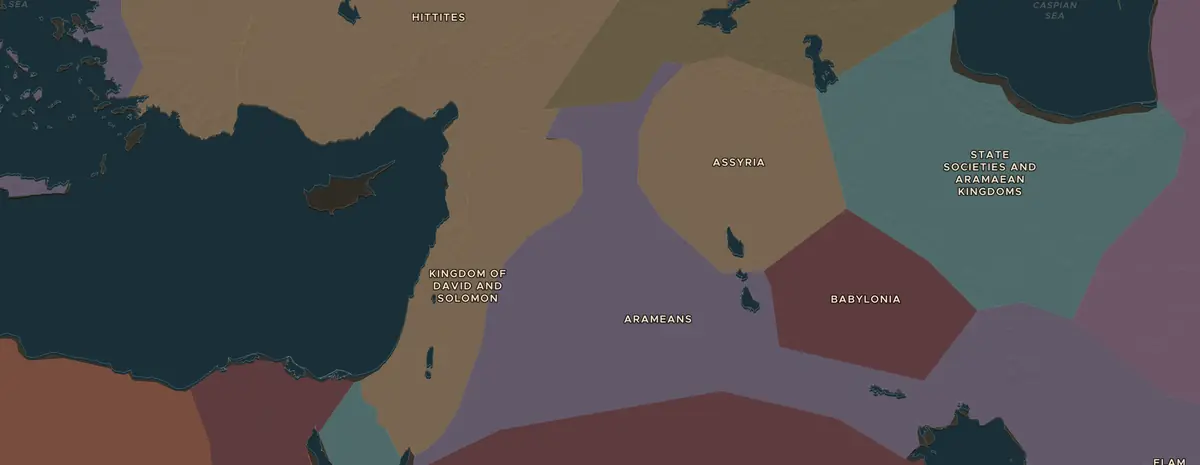
Plate 59Neo-Babylonian Empire, 600 BC. The letters mark the three map steps of this lesson.

A call from history · new

Nebuchadnezzar II is on the line. The class decides.

Summer, 587 BC, after the second revolt of Jerusalem
The royal palace, Babylon

“You must decide how to respond to Jerusalem's rebellion. Should you punish the city harshly to deter further revolts, or show mercy in hopes of gaining loyalty from its people? The fate of Jerusalem and its temple is in your hands.”

Should I destroy Jerusalem as a warning, or spare it to win over its people? The caller speaks English, in their own voice, from a short brief of textbook facts, knows nothing of what came later and never tells the outcome; the screen does, after the call. On the live board the telephone rings the whole class: the teacher answers on the room's microphone, and students write to the caller from their phones.

Sign in to take the call

Calls come with Pro (5 a month) and Classroom (20 a month, ringing the whole class). How calls work

Live lesson · new in Classroom

Teach it live. The class answers on their phones.

Put the board on the projector. Students join with a six-digit code, no account needed, and tap the map: where was the frontier, where did the grain come from. Their pins drop in together when you reveal, and the closest student takes the round.

€19 per month: every lesson live, every worksheet, cancel anytime. Rome at its height runs live for free.

A live lesson on the projector: the class's pins on the map around Alexandria, the closest students listed beside it A student's phone: the question and a map to tap
7 rounds
3 places to find on the map, quiz questions, a class vote and a one-line answer.
About 15 minutes
Run it as the map step, or to open the discussion. You move on with the space bar.
A report
Every answer, per student and per round, to read back or print after the lesson.

Or as homework · new

No lesson hour to spare? Set it as homework.

The same 7 rounds, without the board: each student walks through them alone on their phone, sees every answer at once with the explanation, and the report fills in as they go. Open for a week, with a code and a link you can paste anywhere.

Homework comes with Classroom, like the live lesson. The free lesson can be set as homework by everyone.

Neo-Babylonian EmpireNebuchadnezzar and the glory of Babylon

Slides · new

The whole lesson as a deck.

22 slides: the plate, the 3 map steps with their pictures and a link to the live map, the discussion questions, the quiz with the answer on the next slide, and the worksheet. Speaker notes carry what to say. It is a .pptx, so it opens in PowerPoint, Keynote and Google Slides, and you can change anything.

Preview: the first 4 slides

€19 per month: the deck of every lesson, every worksheet, every live lesson. Rome at its height comes whole for free.

1

Introduction

5 min

Read aloud

For seventy years after Assyria fell, Babylon was the greatest city on earth. Students explore Nebuchadnezzar's blue Ishtar Gate and towering ziggurat, the exile of Judah, and the night in 539 BC when the city opened its gates to Persia.

By the end of the lesson, students can

  • Locate Babylon on the Euphrates and describe two of its famous buildings.
  • Explain what the Babylonian exile was and why it mattered to the people of Judah.
  • Describe how Babylon fell to Cyrus in 539 BC.
2

Explore the map

15 min

Project the map, or let students follow on their own devices. Each step opens the map at the right year and place.

The map in 605 BC a

605 BC

The city of the gate

Open the map in 605 BC on Babylon with the Cities layer on. The Euphrates ran through the middle of the city. Nebuchadnezzar rebuilt the walls, the Ishtar Gate of blue glazed bricks and the ziggurat Etemenanki. Why build a capital on a river?

Open this view on the map
The map in 605 BC b

605 BC

The empire of Babylon

Zoom out in 605 BC. That year Nebuchadnezzar beat the Egyptians at Carchemish on the Euphrates and took over Assyria's old lands in the Levant. Find Carchemish (near today's Turkish-Syrian border) and Jerusalem. The map's borders here are rough: Babylon's rule reached the Mediterranean.

Open this view on the map
The map in 539 BC c

539 BC

The gates open

Jump to 539 BC. The map now shows the Persian Empire: Cyrus took Babylon in October 539 BC, by most accounts without a battle at the city itself. Turn on Historical Events (Political Events) and find "Cyrus Conquers Babylon".

Open this view on the map
3

Class discussion

15 min

Pick two or three. They run from what happened to why it mattered.

  1. Nebuchadnezzar wrote that he built his walls and gates for the gods. What other reasons might a king have for a huge building program?
  2. In 597 and 586 BC Babylon took thousands of people from Judah into exile. Why did their religion survive, and even grow stronger, far from home?
  3. The Hanging Gardens are on the list of Seven Wonders, but no Babylonian text mentions them and some scholars place them in Nineveh. How should a historian treat a famous story with no hard evidence?
  4. Babylonian astronomers kept records of the planets for centuries and gave us the 60-minute hour and the 360-degree circle. Why did astronomy matter so much to them?
  5. In 539 BC Babylon's priests seem to have welcomed Cyrus. What makes a city give up on its own king?
4

Game round

10 min

Play one round of Rule History as Cyrus the Great, standing before Babylon in 539 BC. Students decide: storm the walls or enter as a liberator? Then compare with what the Cyrus Cylinder claims really happened.

Open Rule History
5

Worksheet

5 min

This worksheet comes with Classroom

€19 per month unlocks every worksheet, the slides of every lesson, every live lesson and the class workspace. The free lesson prints without a subscription.