
 a
Mecca and its mountains
Open the map in 610 and zoom in on Mecca. Muslims believe the first revelation came in a cave on a mountain just outside the town. What kind of landscape surrounds Mecca?
Open this view on the mapEarly Islam · about 570-632
In 622 the Prophet Muhammad and his followers left Mecca for Medina. Students follow the hijra on the map and find out why this journey became year one of the Islamic calendar.
A call from history · new
Just before dawn, as I prepare to leave Mecca for Yathrib
The outskirts of Mecca, Arabia
“You must decide whether to leave Mecca, where many oppose my message and some followers have faced threats, or to remain and hope for peace. The journey to Yathrib is long and dangerous, but its people have invited us and promised protection. Staying could mean more hardship, but leaving means starting over in a new place.”
Should I lead my followers on the journey to Yathrib, or stay in Mecca and try to find a way forward here? The caller speaks English, in their own voice, from a short brief of textbook facts, knows nothing of what came later and never tells the outcome; the screen does, after the call. On the live board the telephone rings the whole class: the teacher answers on the room's microphone, and students write to the caller from their phones.
Calls come with Pro (5 a month) and Classroom (20 a month, ringing the whole class). How calls work
Live lesson · new in Classroom
Put the board on the projector. Students join with a six-digit code, no account needed, and tap the map: where was the frontier, where did the grain come from. Their pins drop in together when you reveal, and the closest student takes the round.
€19 per month: every lesson live, every worksheet, cancel anytime. Rome at its height runs live for free.


Or as homework · new
The same 7 rounds, without the board: each student walks through them alone on their phone, sees every answer at once with the explanation, and the report fills in as they go. Open for a week, with a code and a link you can paste anywhere.
Homework comes with Classroom, like the live lesson. The free lesson can be set as homework by everyone.

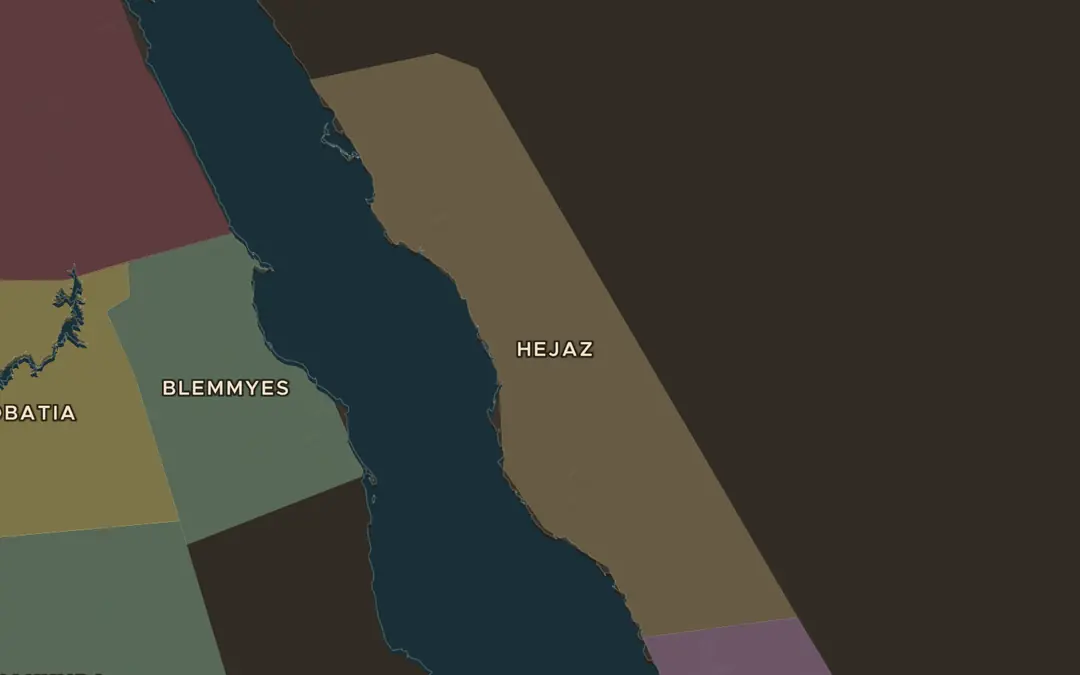
 Early IslamThe Prophet Muhammad and the hijra
Slides · new
22 slides: the plate, the 3 map steps with their pictures and a link to the live map, the discussion questions, the quiz with the answer on the next slide, and the worksheet. Speaker notes carry what to say. It is a .pptx, so it opens in PowerPoint, Keynote and Google Slides, and you can change anything.
€19 per month: the deck of every lesson, every worksheet, every live lesson. Rome at its height comes whole for free.
Read aloud
In 622 the Prophet Muhammad and his followers left Mecca for Medina. Students follow the hijra on the map and find out why this journey became year one of the Islamic calendar.
By the end of the lesson, students can
Project the map, or let students follow on their own devices. Each step opens the map at the right year and place.
a
Open the map in 610 and zoom in on Mecca. Muslims believe the first revelation came in a cave on a mountain just outside the town. What kind of landscape surrounds Mecca?
Open this view on the map
b
Move the slider to 622 and turn on Historical Events. Find the Religious Event for the hijra. How far north of Mecca is Medina? Why was the journey dangerous?
Open this view on the map
c
Open Stories and start The Islamic Caliphates. Stop at the first step, 632, the year the Prophet died. What does the story say happened next?
Open this view on the mapPick two or three. They run from what happened to why it mattered.
Rule History has no ruler from 7th-century Arabia. Play one round as Wu Zetian, who ruled Tang China a few decades later. Then compare: how did the Prophet Muhammad gain support in Medina, and how did Wu Zetian gain support at the Tang court?
Open Rule History€19 per month unlocks every worksheet, the slides of every lesson, every live lesson and the class workspace. The free lesson prints without a subscription.