Akkadian Empire · About 2334-2154 BC

Sargon of Akkad: the first empire

A cupbearer from Kish conquered the cities of Sumer and claimed to rule from the Gulf to the Mediterranean. Students follow Sargon of Akkad, meet his daughter Enheduanna, and debate why the first empire fell.

Length
50 minutes
Ages
12–15
On the map
3 steps, 2334 BC to 2200 BC
Live lesson
7 rounds, 3 on the map
Homework
The same rounds, a week long
Worksheet
Two A4 pages, with Classroom
Slides
22 slides, with Classroom
You need
A projector; phones for live
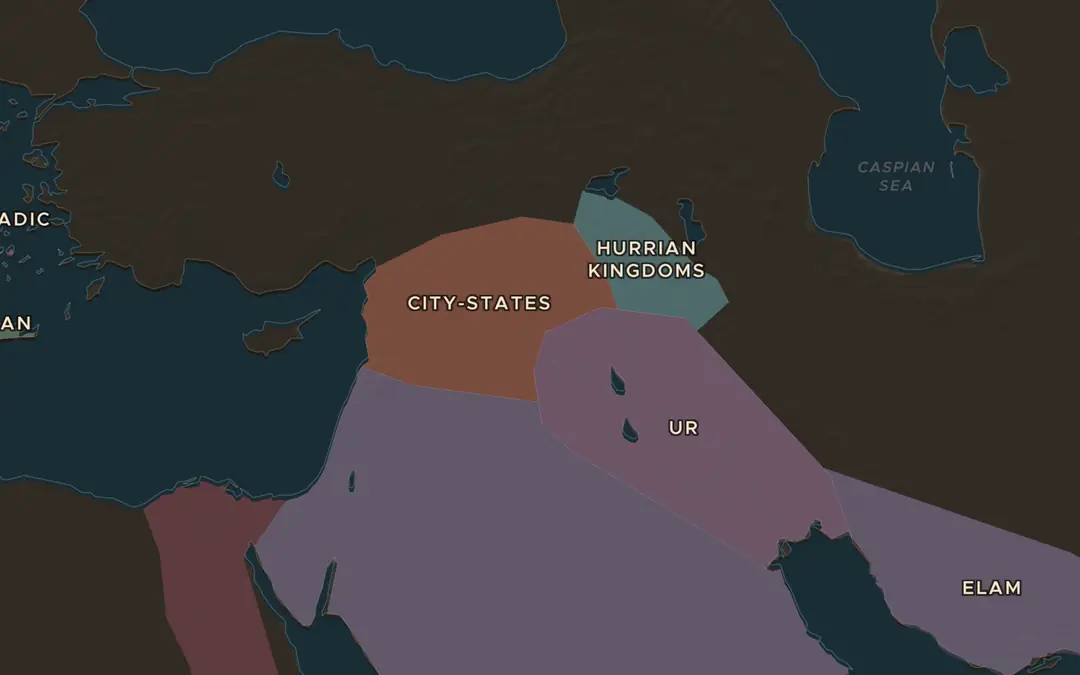
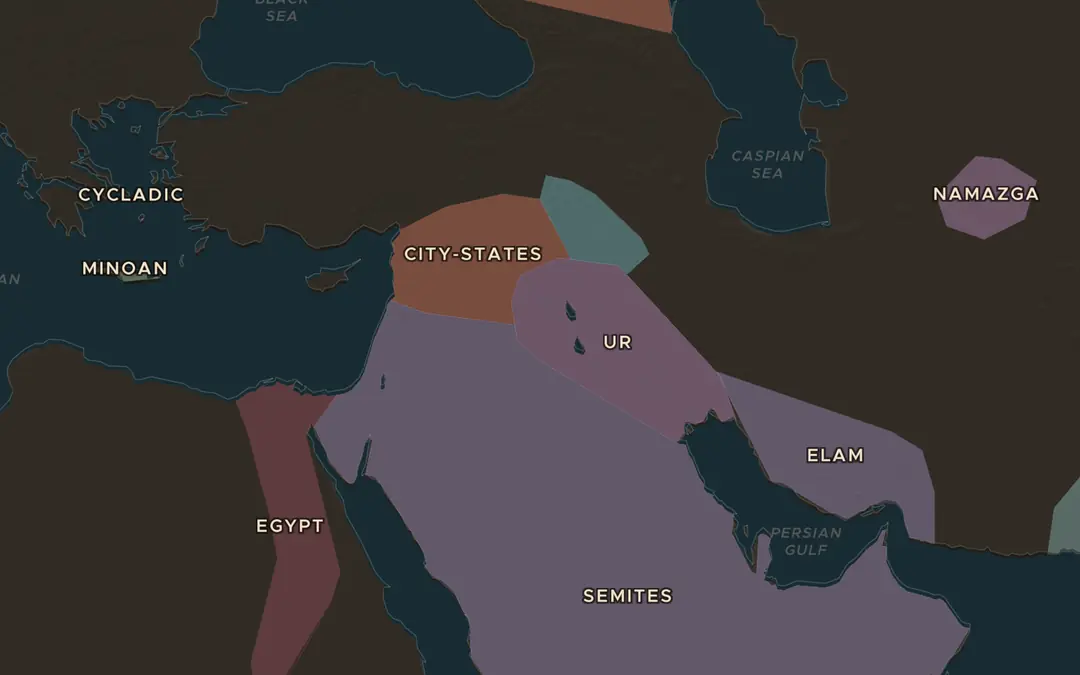
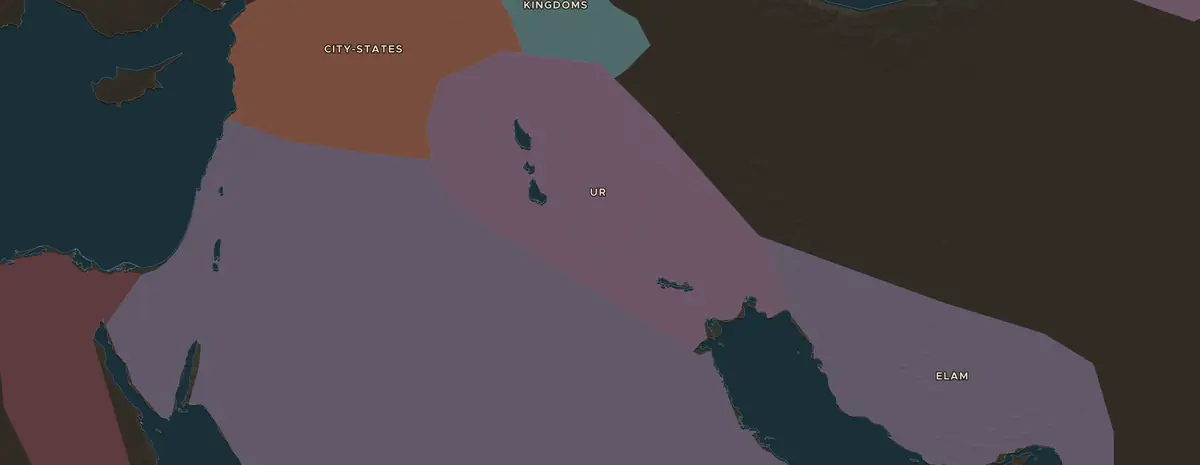
Plate 23Akkadian Empire, 2300 BC. The letters mark the three map steps of this lesson.

A call from history · new

Sargon of Akkad is on the line. The class decides.

The day after defeating Lugalzagesi of Uruk
The city of Akkad, between the Tigris and Euphrates

“You must decide how to rule over many proud and ancient cities that have their own kings, gods, and customs. If you trust local rulers, they may rebel. If you replace them with your own people, the cities may resist. You must choose how to keep the empire strong and at peace.”

Should I leave Sumerian rulers in charge, or send my own officials and family to govern the cities? The caller speaks English, in their own voice, from a short brief of textbook facts, knows nothing of what came later and never tells the outcome; the screen does, after the call. On the live board the telephone rings the whole class: the teacher answers on the room's microphone, and students write to the caller from their phones.

Sign in to take the call

Calls come with Pro (5 a month) and Classroom (20 a month, ringing the whole class). How calls work

Live lesson · new in Classroom

Teach it live. The class answers on their phones.

Put the board on the projector. Students join with a six-digit code, no account needed, and tap the map: where was the frontier, where did the grain come from. Their pins drop in together when you reveal, and the closest student takes the round.

€19 per month: every lesson live, every worksheet, cancel anytime. Rome at its height runs live for free.

A live lesson on the projector: the class's pins on the map around Alexandria, the closest students listed beside it A student's phone: the question and a map to tap
7 rounds
3 places to find on the map, quiz questions, a class vote and a one-line answer.
About 15 minutes
Run it as the map step, or to open the discussion. You move on with the space bar.
A report
Every answer, per student and per round, to read back or print after the lesson.

Or as homework · new

No lesson hour to spare? Set it as homework.

The same 7 rounds, without the board: each student walks through them alone on their phone, sees every answer at once with the explanation, and the report fills in as they go. Open for a week, with a code and a link you can paste anywhere.

Homework comes with Classroom, like the live lesson. The free lesson can be set as homework by everyone.

Akkadian EmpireSargon of Akkad: the first empire

Slides · new

The whole lesson as a deck.

22 slides: the plate, the 3 map steps with their pictures and a link to the live map, the discussion questions, the quiz with the answer on the next slide, and the worksheet. Speaker notes carry what to say. It is a .pptx, so it opens in PowerPoint, Keynote and Google Slides, and you can change anything.

Preview: the first 4 slides

€19 per month: the deck of every lesson, every worksheet, every live lesson. Rome at its height comes whole for free.

1

Introduction

5 min

Read aloud

A cupbearer from Kish conquered the cities of Sumer and claimed to rule from the Gulf to the Mediterranean. Students follow Sargon of Akkad, meet his daughter Enheduanna, and debate why the first empire fell.

By the end of the lesson, students can

  • Explain how Sargon built the Akkadian Empire and how he held it together.
  • Locate the main places of the empire, from the Lower Sea to the Upper Sea.
  • Weigh at least two explanations for the fall of the Akkadian Empire.
2

Explore the map

15 min

Project the map, or let students follow on their own devices. Each step opens the map at the right year and place.

The map in 2334 BC a

2334 BC

The rise of Akkad

Open the map in 2334 BC and turn on Historical Events. Find the marker for the rise of the Akkadian Empire. The city of Akkad itself has never been found. Where do you think it might lie?

Open this view on the map
The map in 2300 BC b

2300 BC

From sea to sea

Zoom out. Sargon boasted that he ruled from the Lower Sea to the Upper Sea: the Persian Gulf and the Mediterranean. Find both. How many weeks might an army need to march between them?

Open this view on the map
The map in 2200 BC c

2200 BC

The great drought

Jump to 2200 BC and turn on Weather of History. Read about the great drought. How might failing rains weaken an empire that needed grain for its army? Historians still debate how big a role it played.

Open this view on the map
3

Class discussion

15 min

Pick two or three. They run from what happened to why it mattered.

  1. According to legend, Sargon was not born a prince but served the king of Kish as cupbearer. Why might a ruler tell such a story about himself?
  2. Sargon put his own officials, and his daughter, in charge in conquered cities. Why was that a clever move?
  3. Akkadian became a language of government and letters across the Near East for centuries. Why does a shared language help an empire?
  4. Sargon's grandson Naram-Sin called himself a god. How might that help, or hurt, a ruler?
  5. The empire lasted less than 200 years. Was it brought down by drought, invaders or its own weakness? What would you need to know to decide?
4

Game round

10 min

Play one round of Rule History as Cyrus the Great, who also built an empire across Mesopotamia, about 1,800 years after Sargon. Compare: what did Cyrus do to keep conquered peoples loyal, and what did Sargon do?

Open Rule History
5

Worksheet

5 min

This worksheet comes with Classroom

€19 per month unlocks every worksheet, the slides of every lesson, every live lesson and the class workspace. The free lesson prints without a subscription.