
 a
A giant city
Open the map in AD 100 and turn on the Cities layer. Find Rome: the dot is sized by population. Compare it with Alexandria and Antioch. Which is biggest?
Diese Ansicht auf der Karte öffnenRoman Empire · 1-200 AD
Crowded apartment blocks, public baths, free grain and the games: students explore how ordinary people lived in Rome and its port Ostia, and who did the work that kept a city of perhaps a million people running.
Ein Anruf aus der Geschichte · neu
A busy morning in AD 100
Ostia, port of Rome
“You must decide whether to raise prices, make smaller loaves, or try to buy grain secretly from another baker. Each choice has risks: raising prices may anger customers, smaller loaves may not feed families, and buying grain on the side could get you in trouble with officials. You must weigh what is fair and what will keep your business open.”
Should I raise prices, make smaller loaves, or take a risk to get more grain? Der Anruf kommt auf Englisch, mit echter Stimme, nach einem kurzen Faktenblatt. Die Person weiß nichts von späteren Ereignissen und verrät nie den Ausgang, das macht der Bildschirm nach dem Gespräch. Im Live-Unterricht klingelt das Telefon für die ganze Klasse: Sie antworten per Mikrofon, die Schüler schreiben von ihren Handys.
Anrufe gibt es mit Pro (5 im Monat) und Classroom (20 im Monat, für die ganze Klasse). So funktionieren die Anrufe
Live-Unterricht · Neu in Classroom
Zeigen Sie das Board per Beamer. Die Schüler steigen mit einem sechsstelligen Code ein, kein Account nötig, und tippen auf der Karte: Wo war die Grenze, woher kam das Getreide? Beim Auflösen erscheinen alle Pins gleichzeitig, und wer am nächsten liegt, gewinnt die Runde.
19 € pro Monat: alle Lektionen live, alle Arbeitsblätter, jederzeit kündbar. Rom auf dem Höhepunkt seiner Macht läuft live kostenlos.


Oder als Hausaufgabe · neu
Die gleichen 7 Runden, ohne Tafel: Jeder Schüler geht sie selbstständig am Handy durch, sieht alle Antworten samt Erklärung, und der Bericht füllt sich automatisch. Eine Woche lang offen, mit Code und Link zum Teilen.
Hausaufgaben gibt es mit Classroom, wie die Live-Stunde. Die kostenlose Lektion kann jeder als Hausaufgabe aufgeben.


 Roman EmpireEveryday life in a Roman city
Folien · neu
22 Folien: das Titelblatt, die 3 Kartenrunden mit Bildern und Link zur Live-Karte, Diskussionsfragen, das Quiz mit Lösung auf der nächsten Folie und das Arbeitsblatt. In den Notizen steht, was Sie sagen können. Als .pptx, öffnet sich in PowerPoint, Keynote und Google Slides, alles anpassbar.
19 € pro Monat: alle Foliensätze, alle Arbeitsblätter, alle Live-Stunden. Rom auf dem Höhepunkt seiner Macht gibt es komplett kostenlos.
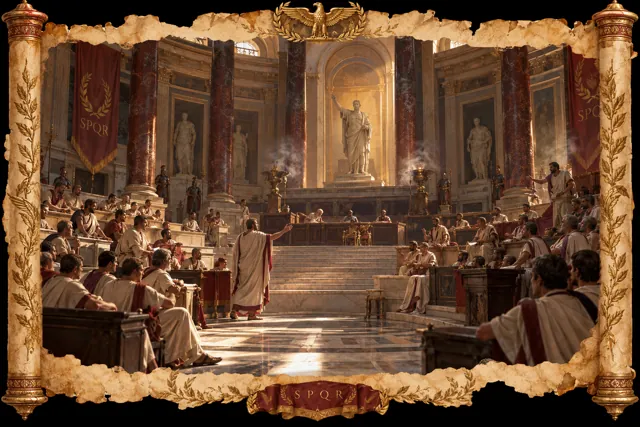
Der Senat · AD 100
That Marius Priscus, who admits taking money as proconsul of Africa, be tried for extortion only, repay what he took and be spared the graver charges of taking bribes to condemn innocent men.
Die Klasse spricht als Catius Fronto gegen Gaius Plinius Caecilius und Publius Cornelius Tacitus, Sie antworten mit eigenen Worten und stimmen am Ende ab. Zwei Reden sind kostenlos; mit Pro oder Classroom ist das Rednerpult offen. Der Senat spricht Englisch.
Echter Antrag von AD 100. Senat an die Wand werfen, die Klasse diskutieren lassen und danach mit der Geschichte vergleichen.
Vorlesen
Crowded apartment blocks, public baths, free grain and the games: students explore how ordinary people lived in Rome and its port Ostia, and who did the work that kept a city of perhaps a million people running.
Am Ende der Stunde können die Schüler
Karte projizieren oder die Schüler am eigenen Gerät folgen lassen. Jeder Schritt öffnet die Karte im passenden Jahr und Ort.
a
Open the map in AD 100 and turn on the Cities layer. Find Rome: the dot is sized by population. Compare it with Alexandria and Antioch. Which is biggest?
Diese Ansicht auf der Karte öffnen
b
Zoom in on the coast west of Rome, where the Tiber meets the sea. Grain ships unloaded at Ostia and the new harbors of Claudius and Trajan, then barges carried the grain up the river. Why not sail all the way to Rome?
Diese Ansicht auf der Karte öffnen
c
Turn on Trade Routes and Historical Events. Find the Via Appia and the markers for the Colosseum and the Pantheon. Which of these would ordinary Romans have used every day?
Diese Ansicht auf der Karte öffnenWählen Sie zwei oder drei. Sie reichen von Was geschah bis Warum war es wichtig.
Play one round of Rule History as Augustus, who rebuilt much of Rome, set up its fire brigade and put an official in charge of its grain supply. Discuss: which of your choices would have made life better for ordinary people in the city?
Rule History öffnen19 € pro Monat schaltet alle Arbeitsblätter, alle Foliensätze, alle Live-Stunden und den Klassenbereich frei. Die kostenlose Lektion kann ohne Abo gedruckt werden.