Enseña historia donde ocurrió.
516 lecciones listas para impartir, desde las primeras ciudades hasta la caída del Muro de Berlín. Cada una abre el mapa interactivo en el año y lugar exactos, con preguntas, un juego, una ficha y una clase en vivo que tu grupo juega desde sus móviles.
their phones.
Las lecciones también están en English Nederlands Deutsch Français
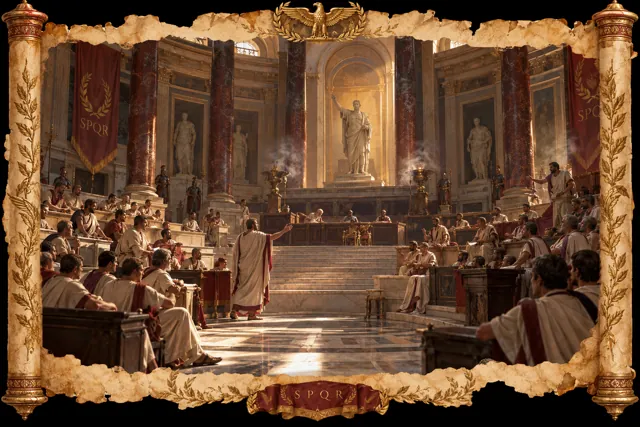 Nuevo · El Senado
Deja que tu alumnado debata en la Curia
Eligen una propuesta real, se enfrentan a Catón y Cicerón, y descubren por qué Roma votó como lo hizo.
Debatir ahora
516 lecciones, en el orden en que sucedió la historia.
Cada una es una lección completa con tres pasos en el mapa, cinco preguntas para debatir, un juego, una ficha y una clase en vivo para proyectar. La primera es gratuita, ficha incluida: pruébala antes de decidir.
516 lecciones
Prehistory and first cities
-
 1
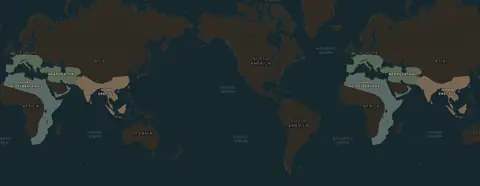
Beringia: los primeros pobladores de América
Durante la Edad de Hielo, una amplia franja de tierra unía Siberia con Alaska. Los estudiantes usarán la capa Ice Age Seas para localizar Beringia, seguirán el recorrido de los primeros pobladores hacia el sur hasta el extremo de Sudamérica y descubrirán por qué los científicos aún debaten sobre la ruta que tomaron.
PaleolíticoHace al menos 15.000 años
-
 2
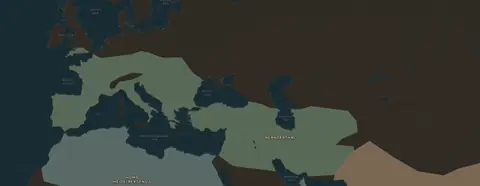
Neandertales: nuestros parientes más cercanos
Durante cientos de miles de años, Europa y Asia occidental estuvieron habitadas por otro tipo de ser humano. Los alumnos conocerán a los neandertales a través de las cuevas donde vivieron y descubrirán lo que su ADN en nosotros nos revela.
PaleolíticoHace 400.000-40.000 años
-
 3
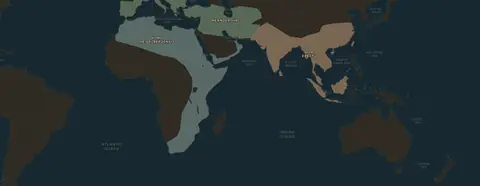
La salida de África: cómo los humanos poblaron el mundo
Nuestra especie surgió en África. Los alumnos siguen los pasos de pequeños grupos de cazadores-recolectores a lo largo de costas y mares hasta llegar a todos los continentes habitados, y utilizan la capa Ice Age Seas para descubrir el mundo por el que caminaron.
Paleolítico300.000-15.000 años antes del presente
-
 4
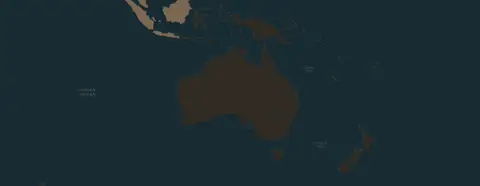
Sahul: los primeros australianos
Hace al menos 50.000 años, personas cruzaron el mar hacia un continente de la Edad de Hielo llamado Sahul. Los estudiantes exploran uno de los grandes viajes tempranos y las culturas continuas más antiguas del mundo, desde el lago Mungo hasta la sumergida Llanura de Bass.
PaleolíticoHace al menos 50.000 años
-
 5
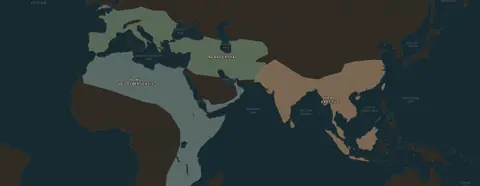
Arte rupestre de la Edad de Hielo: Lascaux, Altamira y Sulawesi
Caballos, bisontes, leones y siluetas de manos brillan en las paredes de cuevas en Francia, España e Indonesia. Los alumnos localizarán las cuevas pintadas en el mapa, descubrirán cómo trabajaban los artistas de la Edad de Hielo y debatirán por qué pintaban en la oscuridad.
Paleolítico SuperiorHace 40.000-15.000 años
-
 6
Doggerland: la tierra bajo el mar del Norte
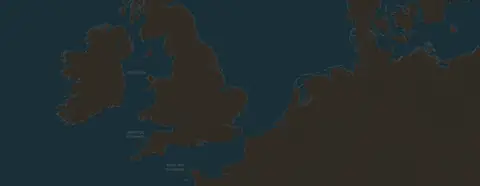
Hace miles de años, los cazadores podían caminar desde Gran Bretaña hasta Dinamarca. En esta lección, los alumnos activan la capa Ice Age Seas y observan cómo el mar del Norte cubre Doggerland. Después, reflexionan sobre lo que el aumento del nivel del mar significó para las personas que vivían allí.
MesolíticoAproximadamente 10.000-6000 a. C.
-
 7
Göbekli Tepe: los primeros monumentos
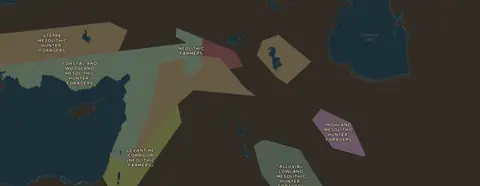
Hace unos 11.500 años, las personas levantaron anillos de enormes pilares tallados en la cima de una colina en el sureste de Anatolia. Los alumnos descubrirán quién construyó Göbekli Tepe y por qué este lugar cambió las ideas sobre el origen de la agricultura y las primeras aldeas.
Neolítico tempranoAproximadamente 9500-8000 a. C.
-
 8
Jericó y Çatalhöyük: los primeros poblados
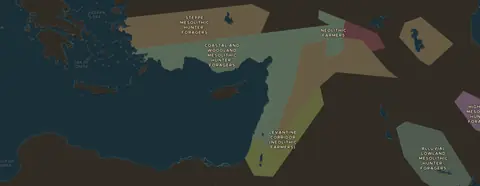
Una torre de piedra junto a un manantial en el valle del Jordán y una ciudad de miles de habitantes sin calles en la llanura de Anatolia. Los alumnos visitan dos de los asentamientos más antiguos del mundo y reflexionan sobre qué convierte a un lugar en una verdadera ciudad.
NeolíticoAproximadamente 9000-6000 a. C.
-
 9
Los primeros agricultores de la Media Luna Fértil
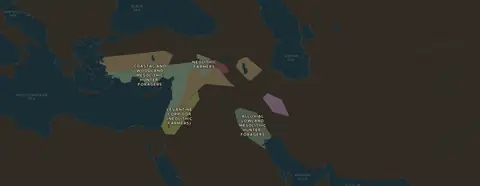
Trigo, cebada, lentejas, ovejas y cabras: los primeros agricultores de la Media Luna Fértil transformaron la vida humana. Los estudiantes seguirán el arco de colinas donde nació la agricultura, verán cómo se extendió hacia Europa y el sur de Asia, y analizarán sus ventajas y desventajas.
NeolíticoAproximadamente 10 000-6000 a. C.
-
 10
Muchos orígenes: el inicio de la agricultura en el mundo
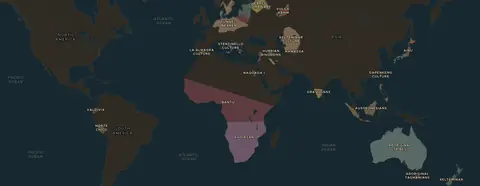
La agricultura no se inventó una sola vez. El arroz en China, el maíz en México, la patata en los Andes, el taro en Nueva Guinea: los estudiantes localizarán en el mapa los primeros centros agrícolas del mundo y descubrirán de dónde provienen los alimentos que hoy tienen en su plato.
NeolíticoAproximadamente 9000-2500 a. C.
-
 11
Uruk: la primera gran ciudad
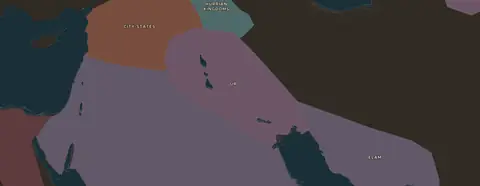
Entre el Tigris y el Éufrates, una aldea de agricultores creció hasta convertirse en Uruk, probablemente la ciudad más grande del mundo hacia el 3000 a. C. En esta lección, los estudiantes exploran cómo los canales, los templos, el comercio y la primera escritura hicieron posible la vida urbana.
SumeriaHacia 4000-3000 a. C.
-
 12
Cuneiforme: cómo nació la escritura
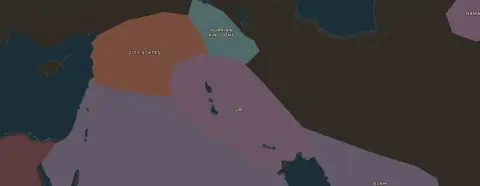
La primera escritura no fue un poema, sino un recibo. Los estudiantes siguen el rastro del cuneiforme desde las cuentas de Uruk hasta la Epopeya de Gilgamesh, crean sus propios signos y descubren cómo los expertos lograron descifrarlo de nuevo en el siglo XIX.
SumeriaAproximadamente 3400-1700 a. C.
-
 13
Ötzi: un viajero de la Edad del Cobre en los Alpes
En 1991, dos excursionistas encontraron el cuerpo de un hombre atrapado en el hielo de los Alpes. Había permanecido allí durante unos 5.300 años. Los alumnos se convierten en detectives: ¿qué nos cuentan el cuerpo, la ropa y las herramientas de Ötzi sobre la vida y la muerte en la Europa de la Edad del Cobre?
Europa en la Edad del CobreHacia el 3300 a. C.
-
 14
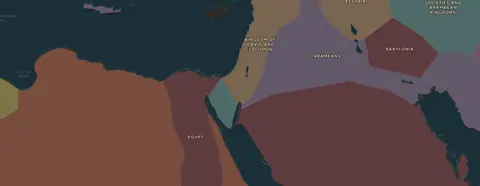
Cómo el mundo aprendió a escribir
Cuñas en arcilla, dibujos en muros de templos, grietas en huesos oraculares y, finalmente, una breve lista de letras. Los estudiantes comparan los primeros sistemas de escritura, descubren cuáles aún no podemos leer y rastrean su propio alfabeto hasta la Edad del Bronce.
Los primeros sistemas de escrituraAproximadamente 3400-1050 a. C.
-
 15
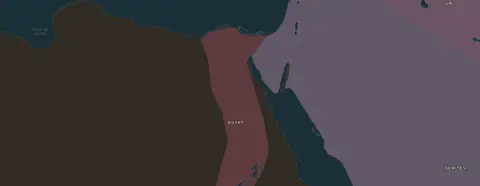
Egipto: el don del Nilo
Un estrecho valle fluvial entre dos desiertos se convirtió en uno de los primeros reinos del mundo. Los estudiantes siguen el curso del Nilo desde las cataratas hasta el delta, descubren cómo la crecida del río moldeó la vida egipcia y localizan dónde se unieron el Alto y el Bajo Egipto.
Egipto tempranoAproximadamente 3100-2700 a. C.
-
 16
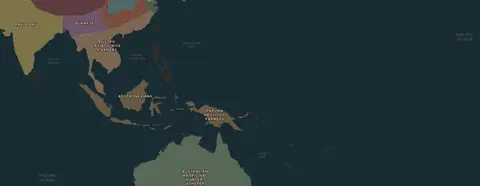
Lapita: los primeros navegantes del Pacífico abierto
Agricultores y marineros procedentes de Taiwán se expandieron por las islas del sudeste asiático. Sus descendientes, los Lapita, navegaron después hacia el Pacífico abierto, llegando a islas donde ningún ser humano había estado antes. En esta lección, los alumnos siguen una de las travesías más audaces de la historia.
Austronesios y LapitaAproximadamente 3000-1000 a. C.
-
 17
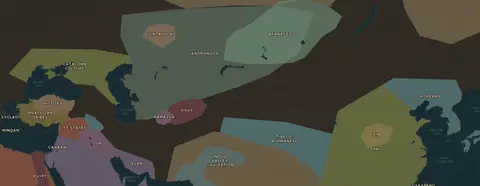
Ruedas, caballos y la estepa
La rueda apareció miles de años después de la agricultura. Los estudiantes seguirán el rastro de los carros y los caballos a través de las praderas de la estepa, descubrirán los primeros carros con ruedas de radios y verán cómo una sola invención se extendió desde Egipto hasta China.
Edad del Cobre y del BronceAproximadamente 3500-1200 a. C.
-
 18
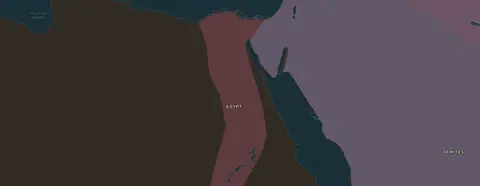
Las pirámides de Guiza
En solo un siglo, los egipcios pasaron de construir la primera pirámide escalonada de piedra a levantar la Gran Pirámide de Guiza. Los estudiantes seguirán el recorrido de la piedra desde las canteras hasta la obra, conocerán a los trabajadores que la construyeron y reflexionarán sobre lo que estas construcciones revelan sobre el poder de un faraón.
Imperio Antiguo de EgiptoAproximadamente 2650-2500 a. C.
-
 19
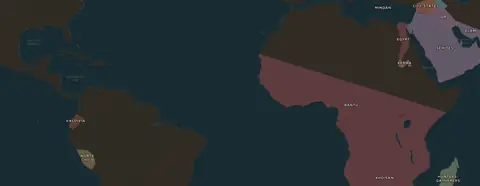
Caral: la primera ciudad de América
Mientras los egipcios construían sus primeras pirámides, en la costa desértica del Perú la gente levantaba plataformas y plazas hundidas en Caral. Los estudiantes explorarán una de las civilizaciones más antiguas de América, basada en el algodón, el pescado y el intercambio.
Norte Chico (Caral-Supe)Aproximadamente 3000-1800 a. C.
-
 20
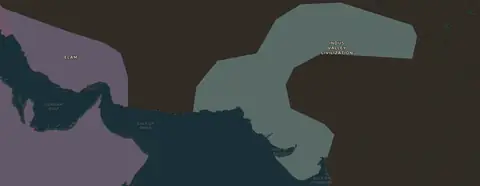
Harappa y Mohenjo-daro: las ciudades del Indo
Calles planificadas, desagües cubiertos y ladrillos de tamaño estándar: las ciudades del Indo fueron de las más organizadas del mundo antiguo, aunque aún no podemos leer su escritura. En esta lección, los alumnos exploran Harappa, Mohenjo-daro y Lothal, y reflexionan sobre por qué las ciudades se despoblaron.
Civilización del valle del IndoAproximadamente 2600-1900 a. C.
-
 21
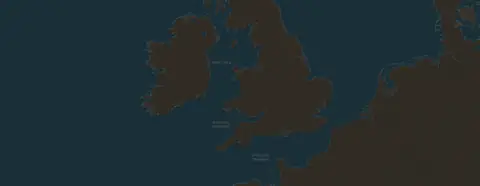
Stonehenge y los constructores de megalitos
Agricultores con herramientas de piedra y asta construyeron Stonehenge en varias etapas a lo largo de más de 1.000 años, arrastrando algunas piedras desde Gales. Los alumnos descubrirán los grandes monumentos de piedra de la Europa atlántica y analizarán distintas ideas sobre para qué servían.
Neolítico en Gran BretañaAproximadamente 3200-1500 a. C.
-
 22
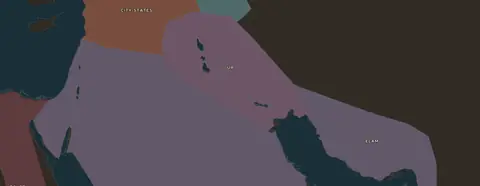
Ur y las ciudades-estado de Sumeria
Sumeria no era un solo país, sino una tierra de ciudades-estado rivales, cada una con su propio dios y gobernante. En esta lección, visitarás Ur, Nippur y Lagash, explorarás las Tumbas Reales de Ur y conocerás el código de leyes más antiguo que se conserva.
SumeriaAproximadamente 2900-2000 a. C.
-
 23
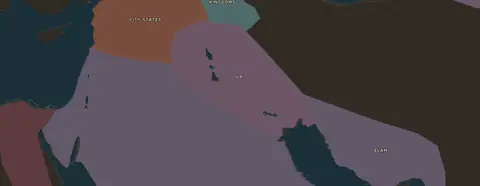
Sargón de Acad: el primer imperio
Un copero de Kish conquistó las ciudades de Sumer y afirmó gobernar desde el Golfo hasta el Mediterráneo. Los alumnos siguen los pasos de Sargón de Acad, conocen a su hija Enheduanna y debaten por qué cayó el primer imperio.
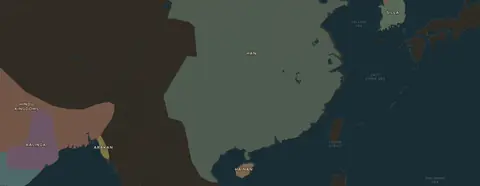
Imperio acadioAproximadamente 2334-2154 a. C.
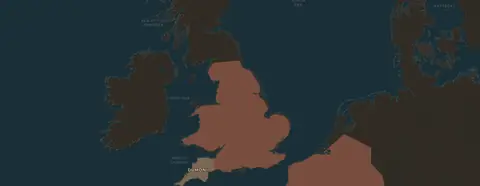
-
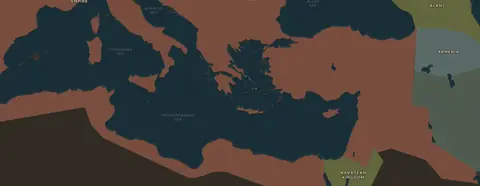
 24
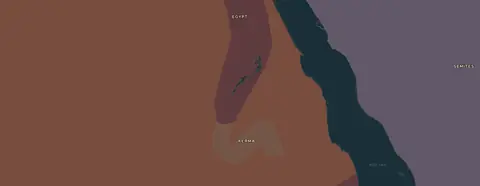
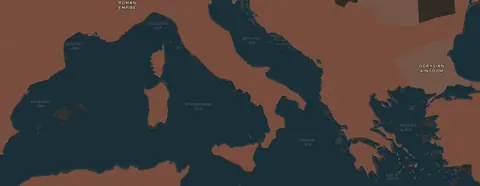
Kerma: el reino de Kush
Al sur de Egipto, más allá de los rápidos del Nilo, se encontraba Kerma, la capital de un poderoso reino africano al que los egipcios llamaban Kush. Los estudiantes explorarán su enorme templo de adobe, su comercio de oro y marfil, y su larga rivalidad con Egipto.
Reino de KermaAproximadamente 2500-1500 a. C.
-
 25
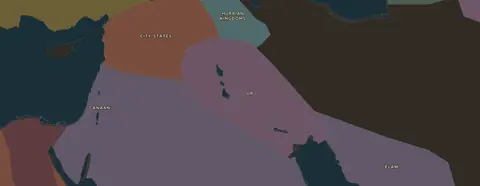
Babilonia de Hammurabi y la ley
Hammurabi convirtió Babilonia de una pequeña ciudad-estado en la capital de Mesopotamia y mandó grabar sus leyes en piedra para que todos pudieran verlas. Los alumnos localizarán sus conquistas en el mapa, leerán sus leyes y las compararán con su propia idea de justicia.
Babilonia AntiguaAproximadamente 1792-1750 a. C.
-
 26
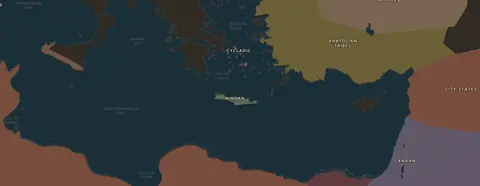
Los minoicos de Creta
Palacios con cientos de habitaciones, acróbatas saltando sobre toros en murales y una escritura que nadie ha logrado descifrar: los minoicos de Creta dominaron las rutas marítimas del Egeo. En esta lección, los estudiantes exploran Cnosos, el volcán de Thera y el misterio de la desaparición de la civilización minoica.
Edad del Bronce en el EgeoAproximadamente 2000-1450 a. C.
-
 27
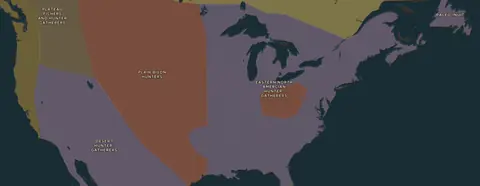
Obras de tierra: los constructores de túmulos de Norteamérica
Hace miles de años, los pueblos originarios de Norteamérica levantaron enormes anillos de tierra, túmulos funerarios y obras geométricas en el suelo. En esta lección, exploraremos Poverty Point, los Adena y los Hopewell, y un mito que intentó arrebatarles esta historia.
Bosques Orientales1700 a. C.-500 d. C.
-
 28
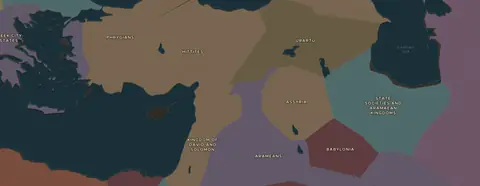
Los hititas de Hattusa
Desde una capital fortificada en el centro de Anatolia, los reyes hititas saquearon Babilonia, lucharon contra Egipto y escribieron los textos más antiguos de la familia de lenguas a la que pertenece el inglés. En esta lección, los estudiantes exploran Hattusa, conocen a la reina Puduhepa y ponen a prueba un antiguo mito sobre el hierro hitita.
Imperio hititaAproximadamente 1650-1180 a. C.
-
 29
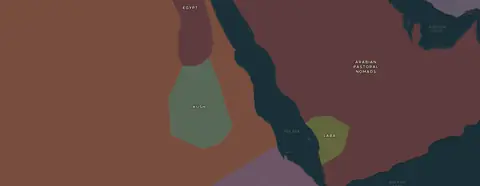
Hatshepsut: la mujer que llegó a ser faraón
Hatshepsut comenzó como regente de un joven rey y logró proclamarse faraón. Los alumnos seguirán sus obras en Tebas y la expedición de su flota a la tierra de Punt, y reflexionarán sobre por qué los gobernantes posteriores intentaron borrar su memoria.
Egipto del Imperio NuevoHacia 1479-1458 a. C.
-
 30
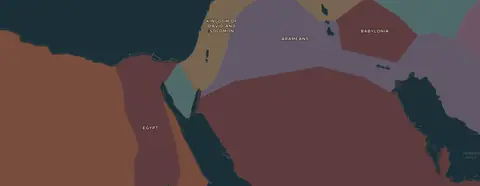
Akenatón y Amarna: una revolución religiosa
Un faraón dio la espalda a los antiguos dioses, adoró al disco solar y construyó una nueva capital en el desierto. Los alumnos exploran la ciudad de Akenatón en Amarna, leen las cartas de los reyes que le escribieron y se preguntan por qué fracasó su revolución.
Egipto del Imperio NuevoHacia 1353-1336 a. C.
-
 31
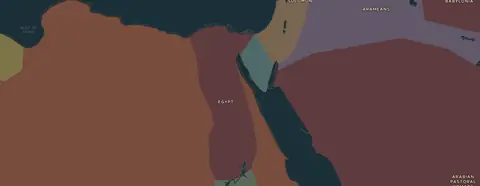
Tutankamón y el Valle de los Reyes
Un joven faraón gobernó durante unos diez años y casi fue olvidado, hasta 1922. Los estudiantes exploran las tumbas reales ocultas del Valle de los Reyes, los artesanos que las excavaron y la historia de la tumba más famosa jamás hallada.
Egipto del Imperio NuevoAproximadamente 1332-1323 a. C.
-
 32
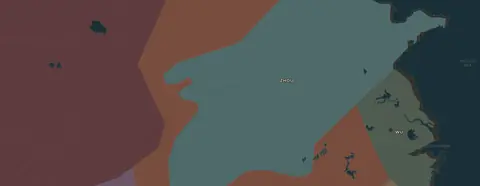
La China Shang: huesos oraculares y bronce
Los reyes Shang consultaban a sus antepasados haciendo preguntas a través de huesos que se agrietaban al fuego, y grababan las respuestas en la escritura china más antigua conocida. En esta lección, visitarás la capital Shang en Anyang, conocerás a la general Fu Hao y compararás la cultura Shang con otra muy diferente del bronce en Sanxingdui.
Dinastía ShangAproximadamente 1600-1046 a. C.
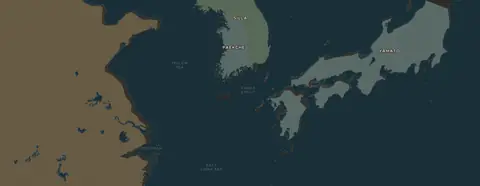
-
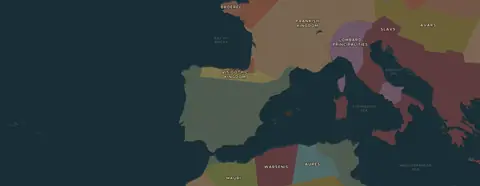
 33
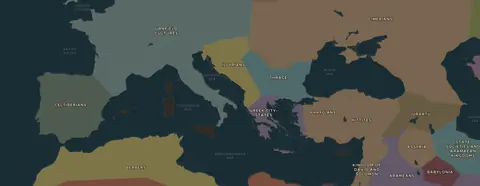
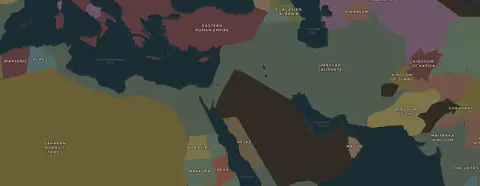
El pecio de Uluburun: el comercio en la Edad del Bronce
Hacia el año 1300 a. C., un barco cargado de cobre, estaño, vidrio, marfil y oro naufragó frente a la costa de Anatolia. Los alumnos investigan su cargamento, localizan el origen de cada objeto en el mapa y descubren lo conectados que estaban los pueblos en la Edad del Bronce.
Final de la Edad del BronceHacia 1300 a. C.
-
 34
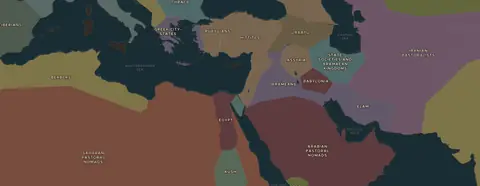
Qadesh: Ramsés II contra los hititas
En 1274 a. C., dos grandes potencias se enfrentaron en Qadesh, en la que puede haber sido la mayor batalla de carros de la historia. Ambos bandos se proclamaron vencedores. Los alumnos comparan las fuentes egipcias y hititas, y descubren cómo terminó la guerra con uno de los tratados de paz más antiguos que se conocen.
Egipto del Imperio Nuevo1274-1259 a. C.
-
 35
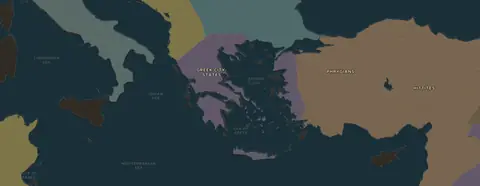
Micenas: Grecia en la época de los héroes
Palacios fortificados, máscaras de oro y tablillas llenas de recuentos de ovejas: los micénicos fueron los griegos de la Edad del Bronce. En esta lección, los estudiantes exploran Micenas, Pilos y Troya, y se preguntan cuánto de la Guerra de Troya de Homero fue real.
Grecia micénicaAproximadamente 1600-1100 a.C.
-
 36
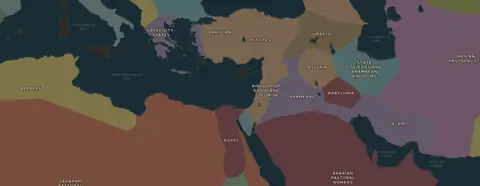
El colapso de la Edad del Bronce
En apenas cincuenta años, el Imperio hitita, los palacios micénicos y grandes puertos como Ugarit desaparecieron. Los alumnos investigan la sequía, los saqueadores, los terremotos y el colapso del comercio, y reflexionan sobre cómo un mundo interconectado pudo desmoronarse.
Final de la Edad del BronceHacia 1200-1150 a. C.
Ancient world
-
 37
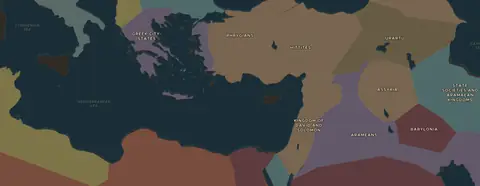
Tras el colapso de la Edad del Bronce: un mundo nuevo
Hacia el año 1200 a. C., los grandes reinos de la Edad del Bronce desaparecieron: el Imperio hitita se desvaneció, los palacios micénicos ardieron y Egipto apenas logró resistir. Los alumnos exploran el mundo más pequeño que surgió entre las ruinas, donde el hierro, el alfabeto y nuevos pueblos como los arameos comenzaron su historia.
Primera Edad del Hierro1100-900 a. C.
-
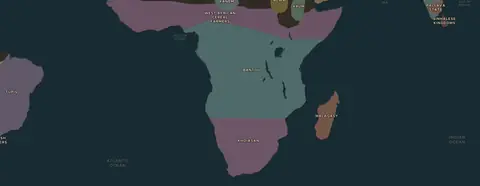 38
La expansión bantú: agricultores en movimiento
Durante muchos siglos, familias agricultoras que hablaban lenguas bantúes se expandieron desde África occidental hasta la mayor parte de África central, oriental y meridional. Los estudiantes siguen paso a paso una de las grandes migraciones de la historia.
Expansión bantúaproximadamente 1000 a. C.-500 d. C.
-
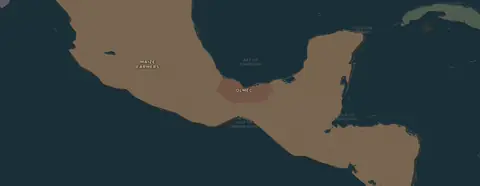 39
Los olmecas: cabezas colosales en la costa del Golfo
En la cálida y húmeda costa del Golfo de México, los olmecas tallaron enormes cabezas de piedra y construyeron los primeros grandes centros de Mesoamérica. Los estudiantes explorarán San Lorenzo y La Venta y debatirán si los olmecas fueron una "cultura madre".
Olmeca1200-400 a. C.
-
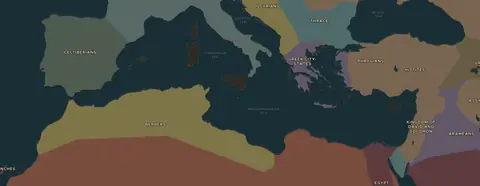 40
Los fenicios: mercaderes del mar púrpura
Desde unas pocas ciudades portuarias en la costa del actual Líbano, los fenicios navegaron por todo el Mediterráneo. Los alumnos seguirán el recorrido del cedro, la púrpura y la plata a lo largo de sus rutas y descubrirán las colonias, desde Chipre hasta España, que dejaron a su paso.
Fenicia1000-700 a. C.
-
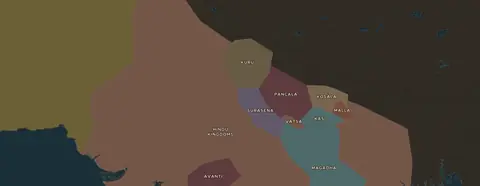 41
La época védica y los dieciséis grandes reinos
Himnos memorizados palabra por palabra durante siglos, hachas de hierro abriendo los bosques de la llanura del Ganges y dieciséis estados rivales hacia el 500 a. C. Los estudiantes exploran la época védica de la India y descubren cómo uno de los dieciséis, Magadha, empezó a superar a los demás.
India védicac. 1500-500 a. C.
-
 42
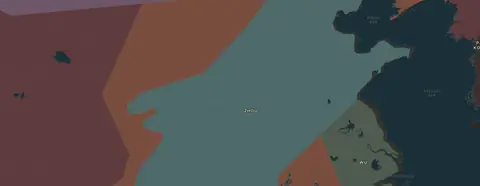
Los Zhou y el Mandato del Cielo
Hacia el año 1046 a. C., los Zhou derrocaron a los reyes Shang y explicaron su victoria con una idea poderosa: el Cielo otorga el derecho a gobernar a un rey justo y se lo quita a uno cruel. Los estudiantes descubrirán una idea que marcó la política china durante casi 3.000 años.
Dinastía Zhou, China1046-771 a. C.
-
 43
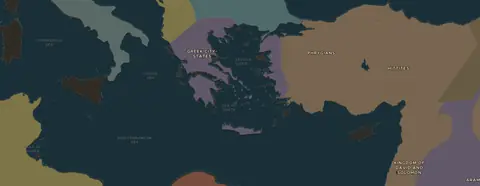
Veintidós letras: cómo se difundió el alfabeto
El alfabeto fenicio tenía solo 22 letras, todas consonantes, y cualquier persona podía aprenderlo en pocas semanas. Los alumnos seguirán su recorrido desde Biblos hasta Grecia, donde se añadieron las vocales, y después hasta Italia y las letras que usamos hoy.
Fenicia y Grecia1050-700 a. C.
-
 44
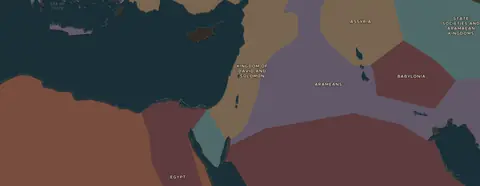
Israel y Judá: dos pequeños reinos entre imperios
La Biblia narra las historias de David y Salomón; la arqueología aporta las pruebas materiales. Los alumnos siguen el destino de los dos reinos de Israel y Judá mientras Asiria avanza, y reflexionan sobre cómo un pueblo pequeño mantuvo su identidad cuando su estado fue destruido.
Israel antiguo1000-701 a. C.
-
 45
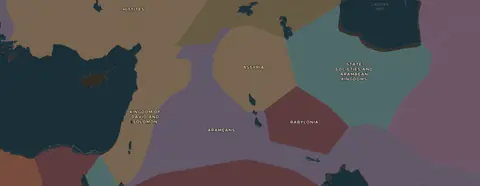
Asiria: la primera superpotencia
Desde su territorio central en el Tigris, Asiria construyó el mayor imperio que el mundo había visto hasta entonces, desde Egipto hasta Irán. En esta lección, los alumnos estudian cómo se gobernaba, por qué era temido y por qué colapsó en pocos años alrededor del 612 a. C.
Imperio neoasirio900-612 a. C.
-
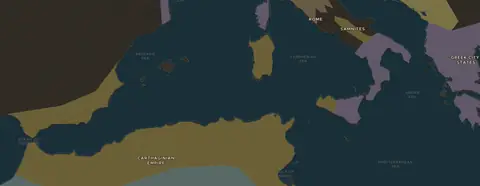 46
Cartago: un imperio comercial en el mar occidental
Mucho antes de enfrentarse a Roma, Cartago dominaba el Mediterráneo occidental con sus barcos mercantes, no con legiones. En esta lección, los alumnos exploran su doble puerto, sus enclaves desde Hispania hasta Sicilia y el viaje de Hannón por la costa de África occidental.
Cartago814-300 a. C.
-
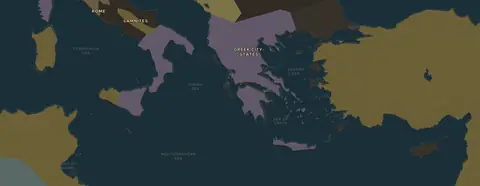 47
Los Juegos Olímpicos: una tregua cada cuatro años
Cada cuatro años, los griegos, a menudo enfrentados entre sí, dejaban las armas y viajaban a Olimpia para honrar a Zeus con carreras, luchas y carreras de carros. Los alumnos visitarán el santuario, descubrirán qué ganaba un atleta y reflexionarán sobre lo que lograban los Juegos que ningún tratado conseguía.
Grecia arcaica y clásica776-400 a. C.
-
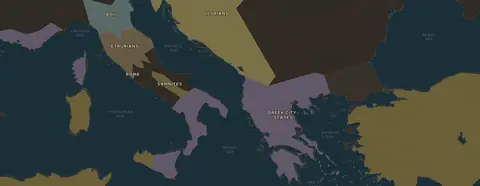 48
Rómulo y Remo: cómo nació Roma
Gemelos, una loba y una pelea en el monte Palatino: la leyenda sobre el origen de Roma es muy conocida. Los alumnos comparan el relato con los hallazgos de los arqueólogos y reflexionan sobre por qué los romanos contaban esta historia.
La Roma primitiva753 a. C.
-
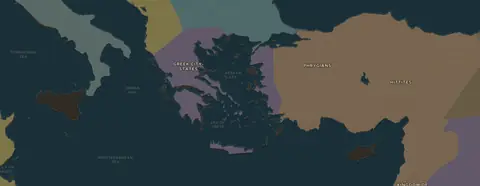 49
La polis: por qué Grecia tenía cientos de estados
Los griegos compartían una lengua, dioses y los Juegos Olímpicos, pero nunca formaron un solo país. En esta lección, los estudiantes exploran cómo las montañas y el mar dividieron Grecia en cientos de ciudades-estado, cada una con sus propias leyes, ejército y orgullo.
Grecia arcaica800-500 a. C.
-
 50
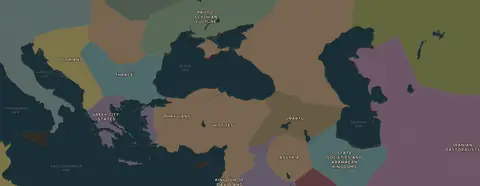
Frigia y el rey Midas: el rey real detrás de la leyenda
Todos conocen al rey cuyo toque convertía todo en oro. Pero pocos saben que Midas realmente gobernó en el centro de Anatolia hacia el año 700 a. C., que aparece en registros asirios y que su capital, Gordion, alberga un enorme túmulo funerario. En esta lección, los estudiantes aprenderán a distinguir la leyenda de las pruebas históricas.
Frigia750-690 a. C.
-
 51
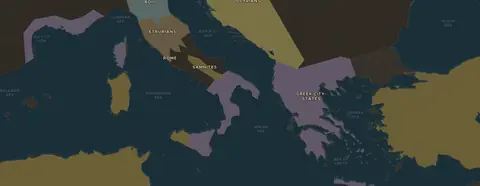
Colonias griegas: una nueva ciudad al otro lado del mar
En solo dos siglos, los griegos fundaron cientos de nuevas ciudades, desde España hasta el mar Negro. En esta lección, seguirás a los colonos que partieron de una ciudad madre superpoblada hacia Siracusa, Massalia y Bizancio, y descubrirás qué debía una colonia a su ciudad de origen.
Grecia Arcaica750-550 a. C.
-
 52
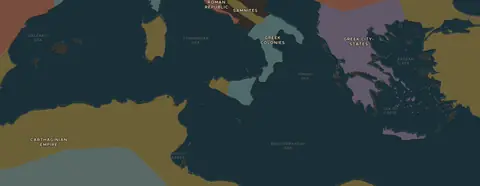
Siracusa: el gigante griego de Sicilia
La ciudad griega más rica de Occidente no estaba en Grecia. En esta lección, los estudiantes exploran Siracusa, desde su fundación por Corinto hasta el gobierno del tirano Dionisio, quien construyó la mayor fortaleza del mundo griego y cuyos ingenieros inventaron la catapulta.
Magna Grecia733-367 a. C.
-
 53
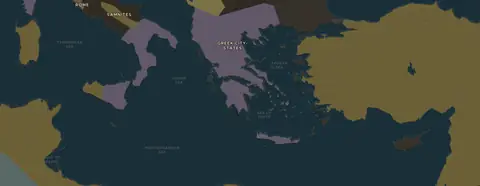
Esparta: una ciudad hecha para la guerra
Esparta no tenía murallas, ni monedas valiosas que robar y contaba con el mejor ejército de Grecia. Los estudiantes descubrirán cómo una ciudad que esclavizó a sus vecinos convirtió a cada ciudadano en soldado, qué podían hacer las mujeres espartanas que otras griegas no podían, y por qué su sistema acabó por romperse.
Grecia arcaica y clásica700-371 a. C.
-
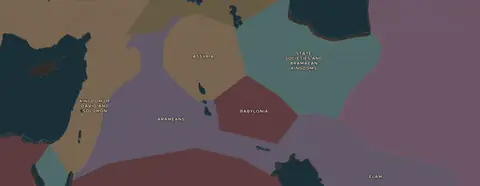 54
La biblioteca de Asurbanipal: un rey que lo coleccionó todo
El último gran rey de Asiria sabía leer y escribir, y envió escribas por todo su imperio para copiar cualquier texto que encontraran. Los estudiantes exploran su biblioteca en Nínive y la historia del diluvio de Gilgamesh, hallada entre sus ruinas.
Imperio neoasirio668-612 a. C.
-
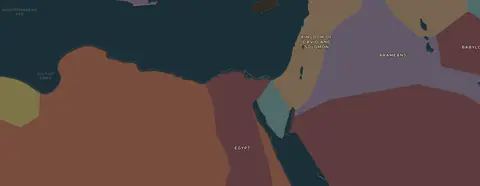 55
Los últimos faraones de Egipto: el renacimiento saíta
Tras el saqueo de Tebas por los asirios, una familia originaria de Sais reconstruyó Egipto con la ayuda de soldados y comerciantes griegos. Los alumnos exploran la figura de un faraón que intentó abrir un canal hacia el mar Rojo y envió barcos alrededor de África, hasta que los persas llegaron en 525 a. C.
Egipto en el Período Tardío664-525 a. C.
-
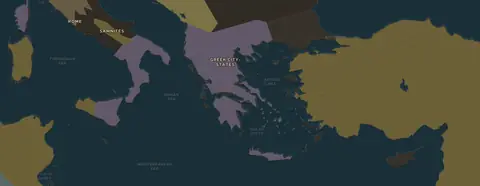 56
Delfos: el oráculo en el ombligo del mundo
Reyes y ciudades desde Lidia hasta Sicilia enviaban delegaciones a lo alto de una montaña para preguntar a una sacerdotisa qué debían hacer. Los alumnos visitan Delfos, descubren cómo funcionaba el oráculo, ponen a prueba algunas respuestas famosas y se preguntan por qué un santuario sin defensa militar fue rico y seguro durante siglos.
Grecia arcaica y clásica650-279 a. C.
-
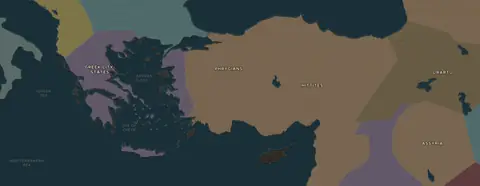 57
Lidia y las primeras monedas
En el reino de Lidia, en el oeste de Anatolia, se acuñaron las primeras monedas hacia el año 600 a. C. Los alumnos conocerán al rey Creso, famoso por su riqueza, seguirán el oro bajando por el río Pactolo y verán cómo el reino cayó ante Persia en el año 546 a. C.
Lidia650-546 a. C.
-
 58
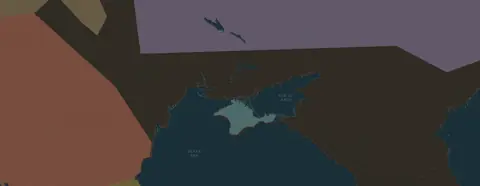
Los escitas: señores a caballo de la estepa
Al norte del mar Negro vivían pueblos nómadas que luchaban a caballo, enterraban a sus reyes bajo enormes túmulos llenos de oro y lograron vencer al Imperio persa sin librar una sola batalla. En esta lección conocerás a los escitas a través de Heródoto y de sus tumbas.
Escitia700-300 a. C.
-
 59
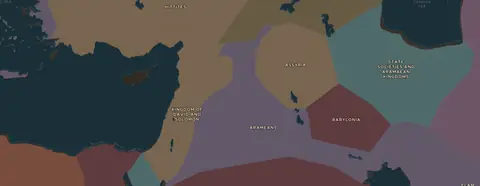
Nabucodonosor y el esplendor de Babilonia
Durante setenta años tras la caída de Asiria, Babilonia fue la ciudad más grandiosa del mundo. Los estudiantes exploran la Puerta de Ishtar, de azulejos azules, el imponente zigurat de Nabucodonosor, el exilio del pueblo de Judá y la noche del año 539 a. C. en la que la ciudad abrió sus puertas a los persas.
Imperio Neobabilónico605-539 a. C.
-
 60
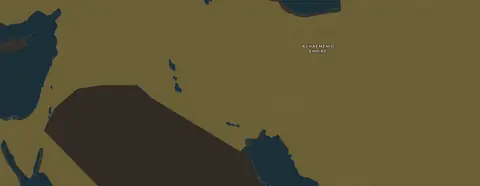
Ciro el Grande: un imperio en treinta años
Un rey de un pequeño pueblo en el sur de Irán conquistó a los medos, Lidia y Babilonia en una sola vida y creó el mayor imperio que el mundo había visto hasta entonces. Los alumnos siguen las conquistas de Ciro y reflexionan sobre por qué se le recuerda como un libertador y no como un destructor.
Persia aqueménida559-530 a. C.
-
 61
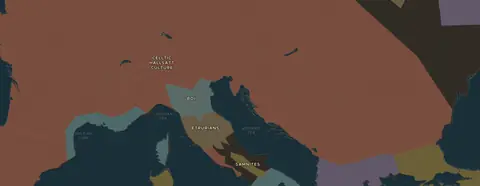
Los celtas: la sal, el hierro y los príncipes de Hallstatt
Al norte de los Alpes, los jefes tribales se enriquecieron gracias a la sal y el hierro, y fueron enterrados con carros, oro y vasijas de vino griegas. En esta lección, los estudiantes exploran las culturas de Hallstatt y La Tène, los primeros pueblos a los que los griegos llamaron celtas, y siguen a sus guerreros hasta Delfos y Anatolia.
Europa de la Edad del Hierro800-279 a. C.
-
 62
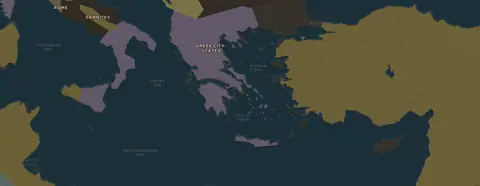
Athens invents democracy
In 508 BC the Athenians began an experiment: the people themselves would vote on laws, war and peace. Students trace the steps from Solon to Cleisthenes to Pericles, visit the hill where 6,000 citizens met, and ask who was left out.
Classical Greece594-430 BC
-
 63
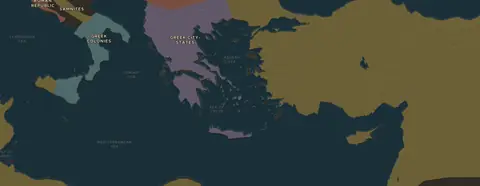
Preguntando por qué: Ciencia y filosofía griegas
En la costa de Jonia, algunos hombres empezaron a explicar el mundo sin recurrir a los dioses: agua, números, átomos. Los alumnos seguirán esta idea desde Mileto hasta la escuela médica de Cos y las escuelas de Platón y Aristóteles en Atenas, y practicarán la costumbre griega de preguntar por qué.
Grecia clásica585-335 a. C.
-
 64
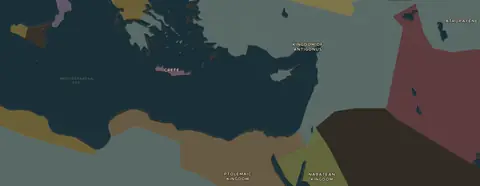
Las Siete Maravillas del mundo antiguo
Viajeros griegos de la época helenística elaboraron una lista de siete lugares que todos debían visitar. Los alumnos localizarán las siete maravillas en el mapa, desde la pirámide de Guiza hasta el faro de Alejandría, descubrirán cuáles se pueden visitar aún hoy y reflexionarán sobre qué convierte algo en una maravilla.
El mundo helenístico2560-280 a. C.
-
 65
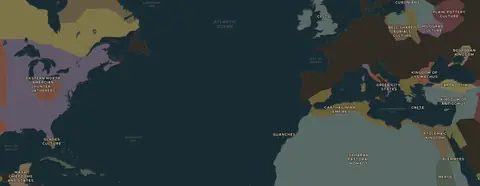
The Roman Republic: consuls, Senate and people
After the last king, Rome split power between two consuls, the Senate and the people's assemblies. Students learn how the Republic worked, and spot its ideas in governments today.
Roman Republic509 BC
-
 66
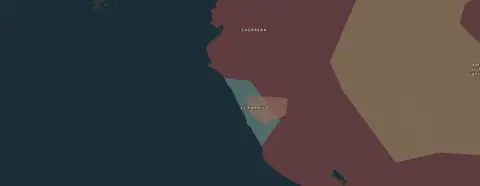
Chavín de Huántar: un templo en lo alto de los Andes
En un valle elevado de los Andes, peregrinos de la costa y de las montañas se reunían en el templo de Chavín de Huántar. Los estudiantes exploran sus galerías subterráneas, el ídolo Lanzón y cómo un estilo artístico se difundió por los Andes mucho antes de los incas.
Cultura Chavínc. 900-200 a. C.
-
 67
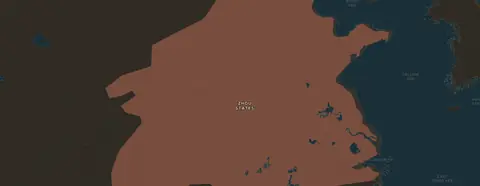
Confucius and the Hundred Schools of Thought
While the Zhou world broke into rival states, thinkers traveled from court to court with advice on how to bring back order. Students meet Confucius, Laozi and the Legalists, and debate which idea would really fix a country in chaos.
Eastern Zhou, China551-221 BC
-
 68
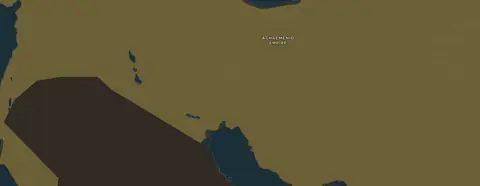
Darío: cómo gobernar un imperio de muchos pueblos
Darío I heredó un imperio que se extendía por tres continentes y en el que se hablaban decenas de lenguas. Los estudiantes analizarán las herramientas que utilizó para mantenerlo unido: provincias y gobernadores, impuestos fijos, una moneda de oro, una nueva capital en Persépolis y una inscripción tallada en un acantilado.
Persia aqueménida522-486 a. C.
-
 69
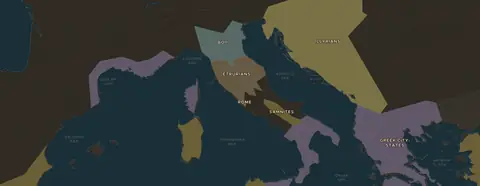
Seven kings and the Etruscans
Roman tradition counts seven kings before the Republic, the last three with Etruscan roots. Students meet Rome's powerful northern neighbors and find out what the Romans learned from them.
Early Rome753-509 BC
-
 70
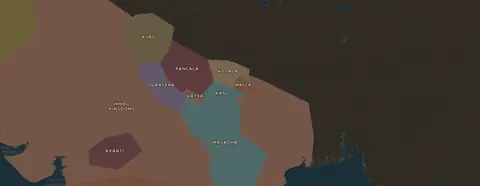
Siddhartha Gautama: el Buda y su mundo
Un príncipe abandonó su palacio para descubrir por qué las personas sufren. Tras años de búsqueda, se convirtió en el Buda, el iluminado, y dedicó el resto de su vida a enseñar en los reinos del Ganges. Los estudiantes seguirán su vida en el mapa y conocerán sus ideas.
La India antiguac. 500 a. C.
-
 71
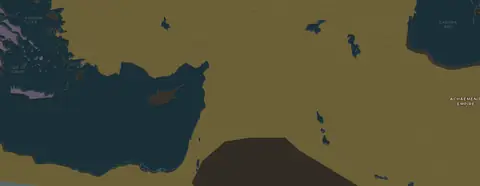
La Ruta Real: un mensaje a través de un imperio
Desde Sardes, cerca del mar Egeo, hasta Susa en Irán, la Ruta Real recorría unos 2.700 km con estaciones de descanso cada jornada. Los alumnos la miden, compiten en una carrera de relevos contra un ejército y descubren por qué para los reyes persas las carreteras eran más importantes que los muros.
Persia aqueménida500 a. C.
-
 72
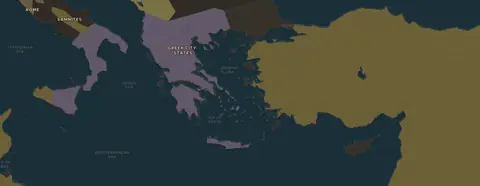
Maratón: Persia llega a Grecia
Cuando las ciudades griegas de Jonia se rebelaron contra Persia, Atenas envió veinte barcos en su ayuda. La revuelta fracasó y, en 490 a. C., el rey Darío envió una flota para castigar a Atenas. Los alumnos seguirán la cadena de acontecimientos hasta la llanura de Maratón, donde un ejército de ciudadanos, en clara inferioridad numérica, cargó contra los persas.
Guerras Médicas499-490 a. C.
-
 73
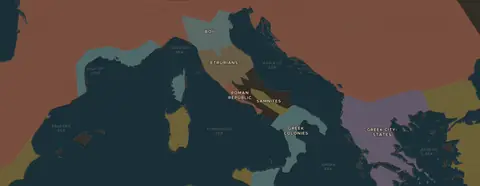
Patricios y plebeyos: la lucha por los derechos
Los ciudadanos comunes de Roma, los plebeyos, se declararon en huelga: abandonaron la ciudad y se negaron a luchar. Los alumnos seguirán cómo lograron conseguir tribunos, leyes escritas y una parte del poder.
República romana494-287 a. C.
-
 74
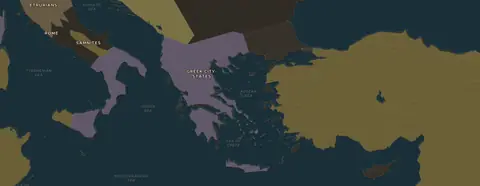
480 a. C.: Termópilas y Salamina
Diez años después de Maratón, Jerjes cruzó el Helesponto con el mayor ejército que los griegos habían visto jamás. Los alumnos seguirán su avance hasta el paso de las Termópilas, verán cómo Atenas vacía su ciudad y descubrirán cómo la guerra se decide en el estrecho de Salamina.
Guerras Médicas480-479 a. C.
-
 75
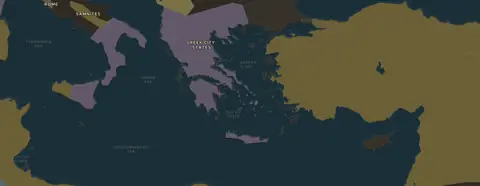
Atenas en su siglo de oro: Pericles y el Partenón
Tras las Guerras Médicas, Atenas lideró una alianza de ciudades costeras e insulares y la transformó en un imperio. Los alumnos siguen el recorrido del tributo hasta la Acrópolis, donde el Partenón se levantó en quince años, y se preguntan si el esplendor ateniense se pagó de forma justa.
Grecia Clásica478-431 a. C.
-
 76
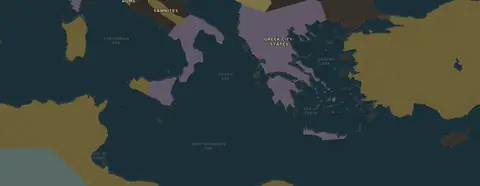
El teatro griego: tragedia y comedia para toda la ciudad
Cada primavera, Atenas detenía su actividad para celebrar un festival de obras teatrales en honor a Dioniso. Los alumnos visitan el teatro bajo la Acrópolis, conocen a Esquilo, Sófocles, Eurípides y Aristófanes, y reflexionan sobre por qué una democracia quería que sus ciudadanos asistieran juntos a tragedias.
Grecia clásica472-330 a. C.
-
 77
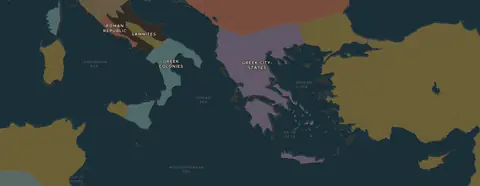
La Guerra del Peloponeso: Atenas contra Esparta
Durante 27 años, las dos ciudades más poderosas de Grecia lucharon en una guerra que ninguna pudo ganar rápidamente: Atenas dominaba el mar, Esparta la tierra. Los alumnos seguirán la peste, el desastre en Sicilia y la derrota final, guiados por el historiador Tucídides.
Grecia Clásica431-404 a.C.
-
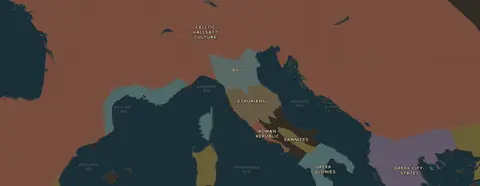 78
390 a. C.: los galos saquean Roma
Un ejército celta derrota a los romanos en el río Alia y saquea la propia Roma. Los alumnos aprenderán a distinguir entre la leyenda y las pruebas históricas, y verán cómo este desastre llevó a Roma a construir una muralla de piedra y a replantearse su defensa.
República romana390 a. C.
-
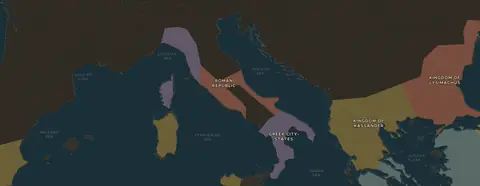 79
Las Guerras Samnitas: Roma conquista Italia
En las montañas del centro de Italia, los samnitas lucharon contra Roma durante medio siglo y llegaron a atrapar a todo un ejército romano. Los alumnos seguirán las guerras en el mapa y descubrirán cómo Roma convirtió a sus enemigos derrotados en aliados.
República Romana343-290 a. C.
-
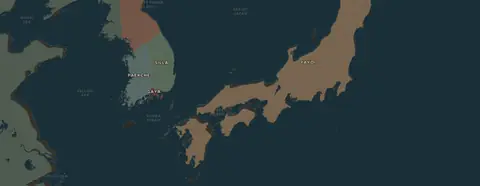 80
Japón Yayoi: arroz, bronce y la reina Himiko
El cultivo del arroz, el bronce y el hierro cruzaron el mar desde la península de Corea y transformaron Japón. Las aldeas rodeadas de fosos se convirtieron en pequeños reinos, y los registros chinos mencionan a una reina llamada Himiko. En esta lección, los estudiantes combinan la arqueología y las fuentes chinas para explorar los orígenes de Japón.
Período Yayoi, Japónc. 300 a. C. - 250 d. C.
-
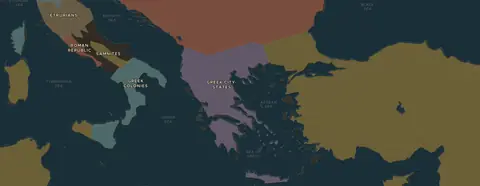 81
Filipo II: el rey que unió Grecia
El padre de Alejandro heredó un reino débil en el extremo del mundo griego y, en veinte años, lo convirtió en el dueño de Grecia. Los estudiantes estudiarán su nuevo ejército con sus largas lanzas, seguirán el rastro del oro de las minas y visitarán el campo de Queronea, donde las ciudades-estado libres fueron derrotadas.
Macedonia359-336 a. C.
-
 82
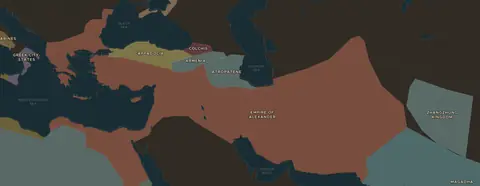
Alejandro: un imperio en diez años
De un pequeño reino griego hasta los límites de la India en solo una década. Los alumnos siguen la ruta de campaña y descubren por qué el imperio se desmoronó tan rápido como se creó.
Mundo helenístico334-323 a. C.
-
 83
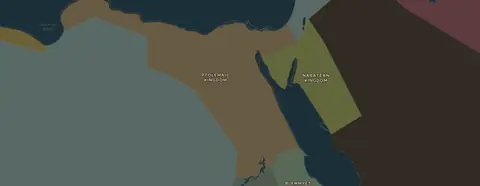
Alejandría: la biblioteca y el faro
Los Ptolomeos construyeron una ciudad griega en la costa egipcia y la llenaron con todos los libros que pudieron encontrar. En esta lección, los estudiantes exploran el Museo y la Biblioteca, el faro de la isla de Faros y al sabio que midió la Tierra con un palo y una sombra.
Egipto ptolemaico331-240 a. C.
-
 84
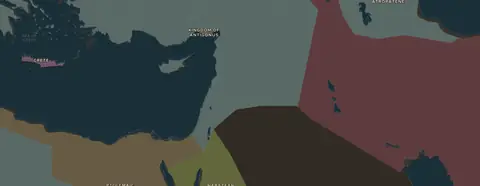
Después de Alejandro: los generales se reparten el mundo
Alejandro murió en Babilonia en 323 a. C. sin nombrar un heredero. Durante cuarenta años, sus generales lucharon por el control del imperio, hasta que solo quedaron tres reinos. Los estudiantes usan el control de tiempo para observar cómo un imperio se convierte en cinco y luego en tres, y reflexionan sobre por qué nadie pudo mantenerlo unido.
Mundo helenístico323-281 a. C.
-
 85
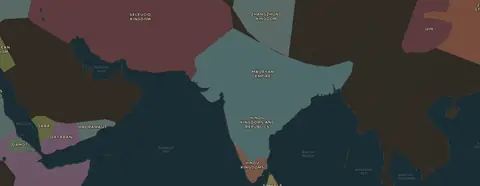
Chandragupta y el auge del Imperio Maurya
Pocos años después de la retirada de Alejandro Magno de la India, un joven líder llamado Chandragupta Maurya conquistó Magadha, expulsó a las guarniciones griegas y cambió tierras por elefantes de guerra con Seleuco. Los alumnos exploran en el mapa el nacimiento del primer gran imperio de la India.
Imperio Maurya, Indiac. 321-297 a. C.
-
 86
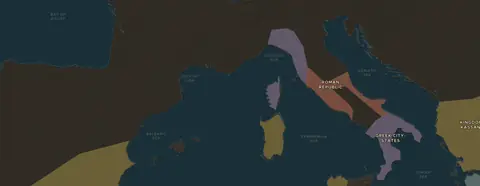
La Vía Apia: la primera gran calzada y acueducto de Roma
En el año 312 a. C., un magistrado llamado Apio Claudio inició la construcción de la primera gran calzada de Roma y su primer acueducto. Los alumnos seguirán la Vía Apia en el mapa y descubrirán cómo la ingeniería romana unió todo un imperio.
República Romana312 a. C.
-
 87
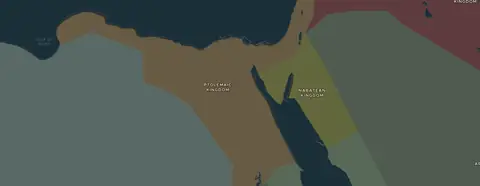
Egipto ptolemaico: reyes griegos como faraones
Durante casi tres siglos, una familia macedonia gobernó Egipto, llevando la doble corona en los templos y hablando griego en la corte. Los alumnos descubrirán cómo dos culturas compartieron un mismo reino, desde los templos de Edfu hasta la Piedra de Rosetta, tallada en tres escrituras en 196 a. C.
Egipto ptolemaico305-196 a. C.
-
 88
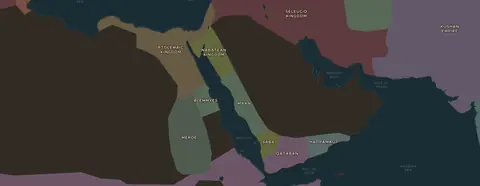
Los nabateos: Petra y la ruta del incienso
En pleno desierto de Jordania, comerciantes árabes excavaron una ciudad de tumbas en acantilados rosados y se enriquecieron transportando incienso desde Arabia hasta el Mediterráneo. Los alumnos seguirán la ruta del incienso hasta Petra, descubrirán cómo una ciudad en el desierto encontró agua y verán cómo un pueblo nómada se convirtió en un reino.
Reino nabateo312-30 a. C.
-
 89
Nok: cabezas de barro y los inicios del hierro
En las colinas del centro de Nigeria, el pueblo Nok modeló llamativas cabezas de barro y fundió hierro hace más de 2.000 años. Los estudiantes aprenderán cómo los arqueólogos reconstruyen el pasado de un pueblo que no dejó escritura.
Cultura Nokaproximadamente 500 a. C.-200 d. C.
-
 90
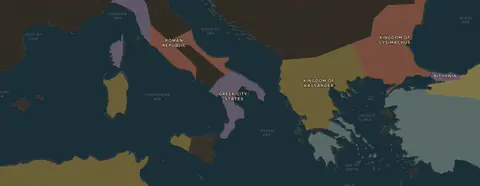
Pirro y la "victoria pírrica"
Un rey griego con elefantes de guerra venció dos veces a los romanos, pero perdió tantos soldados que su nombre se convirtió en una palabra. Los alumnos siguen a Pirro por el sur de Italia y descubren por qué Roma no se dejaba desgastar.
República Romana280-275 a.C.
-
 91
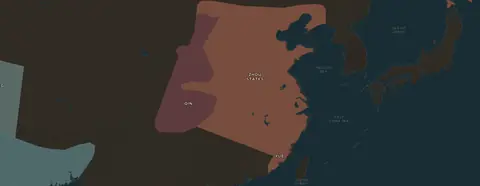
Qin Shi Huang: the First Emperor unites China
In 221 BC the king of Qin conquered the last rival state and called himself the First Emperor. In eleven years he made China one country with one script, one coin and one law. Students weigh up his achievements against the price his people paid.
Qin dynasty, China221-210 BC
-
 92
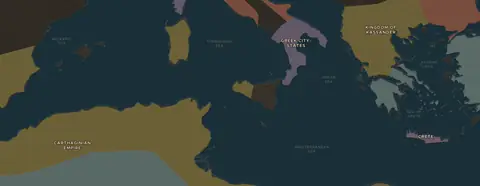
La Primera Guerra Púnica: Roma se lanza al mar
Roma casi no tenía marina cuando entró en guerra con Cartago, la gran potencia naval de Occidente, por Sicilia. Descubrirás cómo Roma construyó una flota, sobrevivió a desastres en el mar y consiguió su primera provincia.
República Romana264-241 a. C.
-
 93
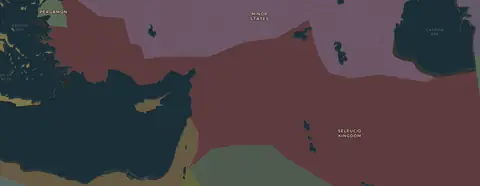
Los seléucidas: reyes griegos de Siria a Irán
El mayor de los reinos sucesores se extendía desde el mar Egeo hasta Asia Central y estaba gobernado por griegos que dirigían a decenas de pueblos distintos. Los alumnos seguirán a los seléucidas desde Babilonia hasta Antioquía, verán cómo fundaron ciudades griegas por toda Asia y observarán cómo el gigante se reduce mientras partos, romanos y rebeldes avanzan.
Mundo helenístico312-140 a. C.
-
 94
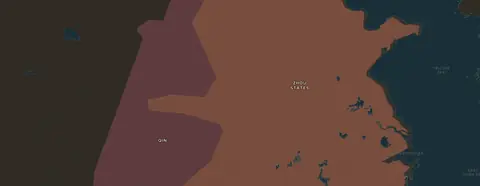
Los Reinos Combatientes: siete reinos, un vencedor
Durante unos 250 años, siete reinos lucharon por el control de China, utilizando armas de hierro, ballestas y enormes ejércitos formados por campesinos. En esta lección, los alumnos ubicarán a los rivales en el mapa y descubrirán por qué el estado occidental de Qin logró imponerse sobre los demás.
Época de los Reinos Combatientes, China475-221 a. C.
-
 95
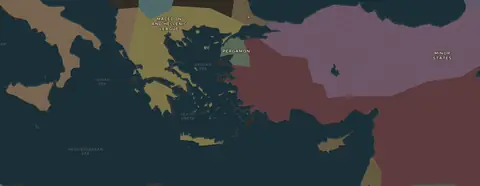
Pérgamo y Rodas: pequeños estados, grandes ideas
Entre los grandes reinos, una ciudad en una colina y una isla lograron riqueza y fama. Los estudiantes visitan Pérgamo, con su biblioteca, su altar y el pergamino, y Rodas, cuyo Coloso se alzó en el puerto solo durante 54 años. Analizan cómo sobrevivieron estos pequeños estados entre gigantes.
Mundo helenístico305-133 a. C.
-
 96
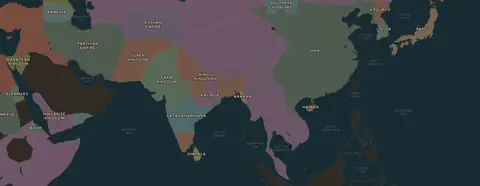
El budismo cruza Asia
Desde la llanura del Ganges, el budismo viajó con monjes y comerciantes a través de montañas, desiertos y mares: llegó a Sri Lanka, Asia Central, China, Corea y Japón. Los estudiantes observarán en el mapa cómo se fue expandiendo y descubrirán cómo una creencia puede transformarse al viajar.
Asia budista250 a. C. - 552 d. C.
-
 97
Arquímedes y los científicos helenísticos
En los dos siglos posteriores a Alejandro Magno, los científicos griegos midieron la Tierra, propusieron que gira alrededor del Sol y construyeron una máquina de bronce capaz de predecir eclipses. Los estudiantes conocerán a Arquímedes en Siracusa, a Aristarco e Hiparco, y el mecanismo de Anticitera hallado en un naufragio.
Mundo helenístico300-100 a. C.
-
 98
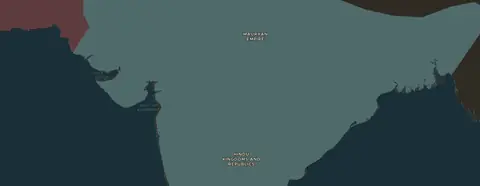
Asoka: el emperador que se arrepintió de su guerra
Tras la sangrienta conquista de Kalinga, el emperador Asoka grabó su arrepentimiento en piedra y prometió gobernar con bondad. Los estudiantes leen sus edictos en el mapa, siguen la expansión del budismo desde su imperio y debaten si merece el título de «el Grande».
Imperio Maurya, Indiac. 268-232 a. C.
-
 99
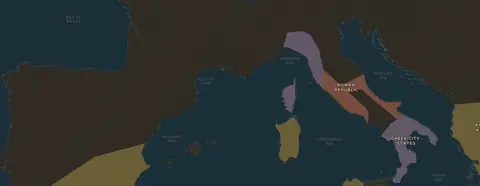
Aníbal cruza los Alpes
En el año 218 a. C., Aníbal dirigió un ejército con elefantes desde Hispania, cruzando los Pirineos y los Alpes hasta llegar a Italia. Los alumnos seguirán la ruta, analizarán las pérdidas y descubrirán por qué esta marcha sorprendió a Roma.
República romana218-217 a. C.
-
 100
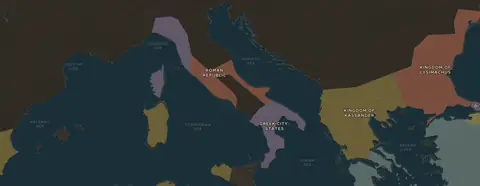
Cannae, 216 a. C.: el día más oscuro de Roma
En Cannae, Aníbal rodeó y destruyó el mayor ejército que Roma había enviado jamás al campo de batalla. Los alumnos estudian la famosa doble envoltura y luego reflexionan sobre una cuestión mayor: ¿por qué Roma no se rindió?
República Romana216 a. C.
-
 101
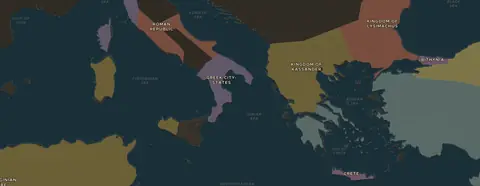
Arquímedes y el asedio de Siracusa
Cuando Siracusa se alió con Cartago, Roma la atacó por tierra y mar, y el matemático Arquímedes la defendió con sus ingenios. Los alumnos aprenderán a distinguir entre hechos y leyendas en uno de los asedios más famosos de la historia.
República Romana214-212 a. C.
-
 102
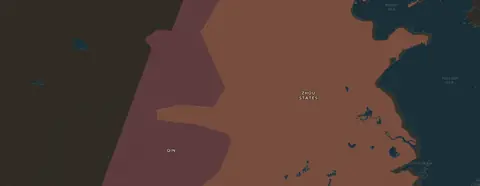
El ejército de terracota: soldados para la otra vida
En 1974, unos campesinos que cavaban un pozo cerca de Xi'an encontraron fragmentos de un soldado de barro. Debajo de sus pies se hallaban miles más, custodiando la tumba del Primer Emperador. En esta lección, los estudiantes exploran lo que este ejército enterrado revela sobre el poder, las creencias y la organización de los Qin.
Dinastía Qin, China246-210 a. C.
-
 103
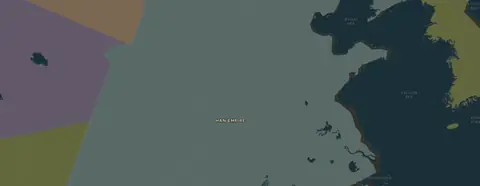
From Qin to Han: rebels and a commoner emperor
One year after the First Emperor died, farmers late for duty rose in revolt. Within three years the Qin were gone, and by 202 BC a village official named Liu Bang had founded the Han dynasty. Students find out why one dynasty fell so fast and the next lasted 400 years.
Qin and Han dynasties, China209-202 BC
-
 104
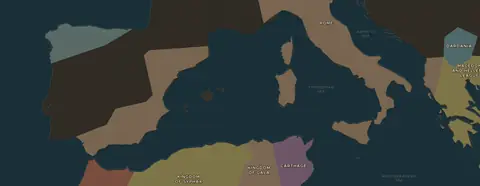
Escipión y Zama: el final de la guerra de Aníbal
Un joven general romano llevó la guerra a Hispania y luego a África, y finalmente venció a Aníbal en Zama. Los alumnos siguen la estrategia de Escipión y analizan la paz del año 201 a.C.
República Romana210-201 a.C.
-
 105
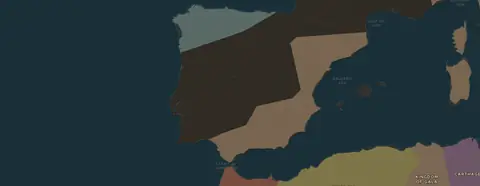
Hispania: Viriato y Numancia resisten a Roma
Roma necesitó cerca de 200 años para conquistar toda la Península Ibérica. En esta lección conocerás al líder lusitano Viriato y a la ciudad de Numancia, y analizarás la conquista desde el punto de vista de los pueblos conquistados.
República Romana155-133 a.C.
-
 106
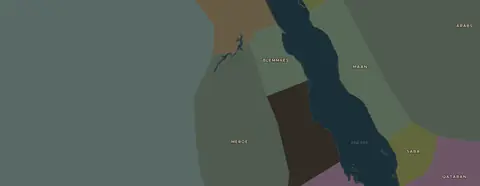
Meroe: pirámides, hierro y reinas gobernantes
Al sur de Egipto, el reino de Kush dominó el Nilo desde su ciudad real de Meroe. Descubrirás un reino de pirámides de lados empinados, talleres de hierro, su propia escritura y poderosas reinas que incluso se enfrentaron a Roma.
Reino de Kushaproximadamente 300 a. C.-350 d. C.
-
 107
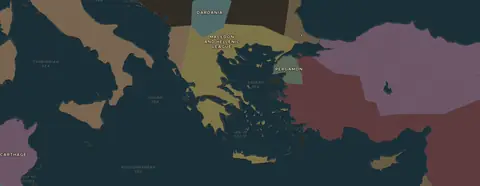
Roma conquista Grecia, Grecia conquista Roma
En unos 50 años, Roma derrotó a Macedonia y a las ciudades griegas, y en el año 146 a. C. destruyó Corinto. Sin embargo, el arte, los dioses y las ideas griegas conquistaron la vida romana. Los alumnos se preguntan: ¿quién conquistó realmente a quién?
República Romana200-146 a. C.
-
 108
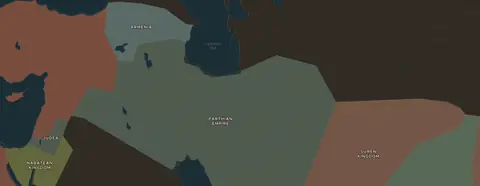
The Parthians: horse archers between Rome and China
A nomad people from the edge of the steppe took over Persia and Mesopotamia and held off Rome for almost three centuries. Students map the rise of Parthia, meet its horse archers and find out why it was so useful to stand between Rome and China.
Parthian Empire247 BC - 224 AD
-
 109
Los xiongnu: un imperio a caballo
Al norte de China, los pastores nómadas de la estepa crearon el primer gran imperio de jinetes. Su líder, Modu, incluso logró acorralar al fundador de la dinastía Han. Los alumnos comparan dos formas de vida y reflexionan sobre cómo nuestras fuentes, escritas por los enemigos Han, influyen en la historia.
Xiongnu y Han, la estepa209 a. C. - 48 d. C.
-
 110
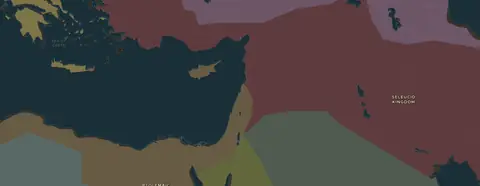
Los Macabeos: un pueblo pequeño frente a un rey griego
Cuando el rey seléucida Antíoco IV prohibió el culto judío y colocó un altar pagano en el Templo, la familia de un sacerdote de un pueblo inició una revuelta. Los estudiantes siguen a Judá Macabeo desde las colinas hasta la nueva consagración del Templo, recordada cada año en Janucá.
Judea helenística167-140 a. C.
-
 111
146 a. C.: la destrucción de Cartago
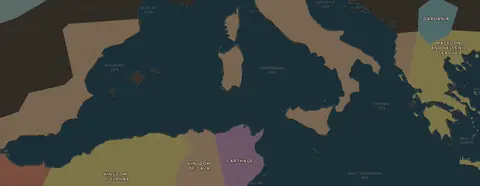
"Cartago debe ser destruida", repetía Catón al Senado. En esta lección, los alumnos investigan por qué Roma atacó a una ciudad que ya no era una amenaza, cómo resistieron los cartagineses y cómo nació el mito de los campos salados.
República Romana149-146 a. C.
-
 112
Los Gracos: tierra, reforma y violencia
Tiberio y Cayo Graco intentaron repartir tierras entre los romanos pobres, y ambos murieron víctimas de la violencia política. Los alumnos exploran cómo el éxito de Roma en el extranjero trajo problemas internos.
República romana133-121 a. C.
-
 113
Zhang Qian y la apertura de la Ruta de la Seda
Hacia el año 138 a. C., el emperador Wu envió a Zhang Qian hacia el oeste para buscar aliados contra los xiongnu. Fue capturado, logró escapar y regresó a casa 13 años después con noticias de tierras ricas que nadie en China conocía. Los estudiantes seguirán el viaje que abrió la Ruta de la Seda.
Dinastía Han, China138-101 a. C.
-
 114
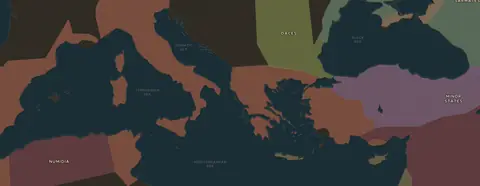
Mario y Sila: generales contra la República
Mario permitió que los ciudadanos pobres se alistaran en las legiones y fue elegido cónsul siete veces; su rival Sila llegó a marchar con su ejército sobre la propia Roma. En esta lección, los estudiantes descubrirán cómo los soldados empezaron a ser fieles a sus generales en vez de a la República.
República romana107-79 a. C.
-
 115
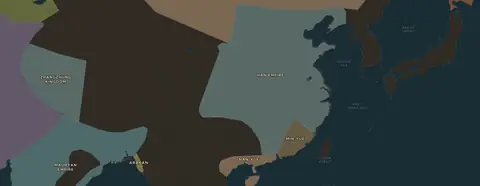
El emperador Wu y la edad de oro de los Han
El emperador Wu de la dinastía Han gobernó durante 54 años. Formó a sus funcionarios en los clásicos confucianos, envió ejércitos a las estepas y expandió el imperio hacia Corea, Vietnam y Asia Central. Los alumnos explorarán en el mapa su expansión y debatirán si sus guerras valieron el coste.
Dinastía Han, China141-87 a. C.
-
 116
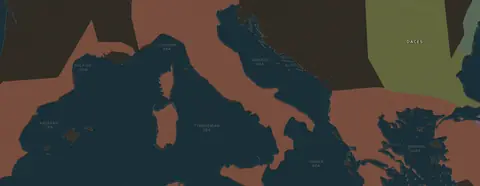
La Guerra Social: Italia lucha por la ciudadanía
Los aliados italianos de Roma habían combatido en todas sus guerras, pero no eran ciudadanos romanos. En el año 91 a.C., muchos de ellos se rebelaron y crearon su propio estado. Los alumnos exploran una guerra que Roma ganó en el campo de batalla, pero perdió en la política.
República Romana91-88 a.C.
-
 117
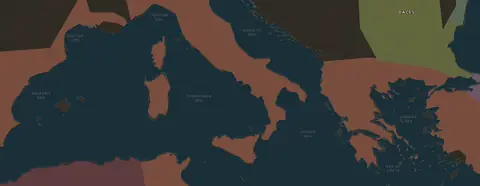
Espartaco y la gran rebelión de los esclavos
En el año 73 a. C., un gladiador tracio escapó de una escuela en Capua junto a unos 70 compañeros y pronto lideró a decenas de miles de personas. Los estudiantes conocerán la esclavitud romana desde la mirada de los esclavos y seguirán la revuelta a lo largo de Italia.
República Romana73-71 a. C.
-
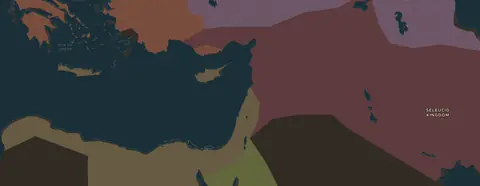 118
Pompeyo el Grande: piratas y el oriente
En apenas tres meses, Pompeyo limpió el Mediterráneo de piratas y luego redibujó el mapa del oriente, desde Ponto hasta Jerusalén. Los alumnos seguirán sus campañas y reflexionarán sobre cuánta autoridad debe tener un solo general.
República Romana67-62 a. C.
-
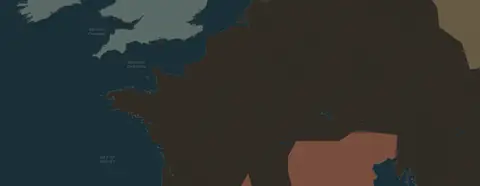 119
Caesar in Gaul
In eight years Julius Caesar conquered Gaul, crossed the Rhine and landed in Britain, then wrote his own account of it all. Students follow his campaigns, meet Vercingetorix and question a source written by the winner.
Roman Republic58-50 BC
-
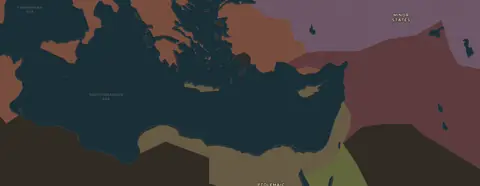 120
Cleopatra: la última reina de Egipto
La última de los Ptolomeos gobernó un reino rico pero débil junto a una Roma sumida en guerras civiles. Los alumnos siguen a Cleopatra desde un golpe de palacio en Alejandría hasta sus alianzas con César y Marco Antonio y la batalla naval de Accio, y se preguntan qué opciones tuvo realmente.
Egipto ptolemaico51-30 a. C.
-
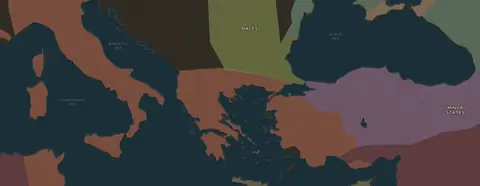 121
César: del Rubicón a los Idus de marzo
César cruzó el Rubicón, derrotó a Pompeyo, se convirtió en dictador vitalicio y fue asesinado en una reunión del Senado cinco años después. Los alumnos siguen la guerra civil por todo el Mediterráneo y debaten por qué los conspiradores decidieron matarlo.
República romana49-44 a. C.
-
 122
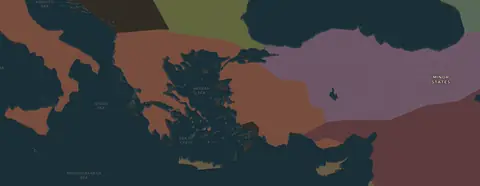
Antonio, Cleopatra y la batalla de Accio
Tras la muerte de Julio César, su heredero Octavio y su general Marco Antonio se repartieron el mundo romano. Antonio se alió con Cleopatra VII de Egipto, y el conflicto terminó en Accio. Los alumnos conocerán la historia desde el punto de vista de Roma y de Alejandría.
República Romana44-30 a. C.
-
 123
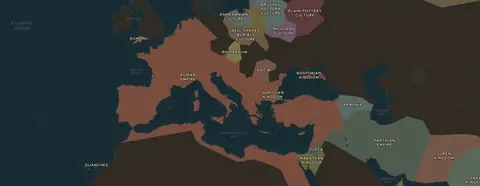
Augusto y la Pax Romana
Octavio se convirtió en Augusto, el primer emperador, aunque afirmaba restaurar la República. Los alumnos exploran cómo gobernó, qué significó la Pax Romana y quiénes pagaron el precio de la paz.
Imperio romano27 a. C.-14 d. C.
-
 124
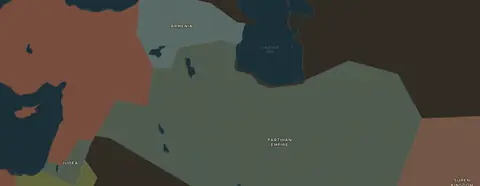
Carrhae, 53 a. C.: Roma frente a la caballería parta
Craso, el hombre más rico de Roma, marchó hacia Mesopotamia en busca de gloria. En la llanura cerca de Carrhae, un ejército parto más pequeño, formado por arqueros a caballo, destruyó sus legiones. Descubrirás por qué ocurrió esto y cómo Roma recuperó sus estandartes perdidos 33 años después.
Partia y Roma53-20 a. C.
-
 125
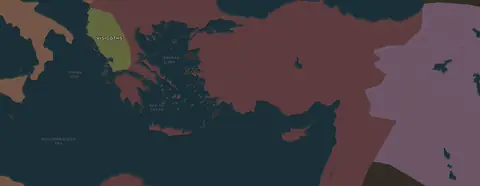
El cristianismo: de secta perseguida a religión oficial
En unos 350 años, el cristianismo pasó de ser un pequeño grupo en Judea a convertirse en la religión oficial del Imperio romano. En esta lección, los alumnos siguen su expansión por las calzadas y rutas marítimas romanas y exploran por qué Roma primero lo persiguió y luego lo adoptó.
Imperio romano30-380 d. C.
-
 126
Las hermanas Trung: Vietnam se levanta contra los Han
En el año 40 d. C., dos hermanas del delta del río Rojo, Trung Trac y Trung Nhi, reunieron un ejército, expulsaron al gobernador Han y gobernaron durante tres años. Los estudiantes ubican la revuelta en el mapa, comparan los relatos chinos y vietnamitas y reflexionan sobre por qué las hermanas siguen siendo heroínas nacionales.
Dominio Han en Vietnam40-43 d. C.
-
 127
Britania romana y el Muro de Adriano
Roma invadió Britania en el año 43 d. C., enfrentó la rebelión de Boudica y finalmente construyó un muro de costa a costa. Los alumnos exploran la Britania romana, desde las nuevas ciudades del sur hasta las voces de las tablillas de Vindolanda en la frontera.
Imperio romano43-410 d. C.
-
 128
Judea y Roma: las guerras judeo-romanas
Dos grandes rebeliones contra el dominio romano terminaron con la destrucción del Templo de Jerusalén en el año 70 d. C. y la derrota de Bar Kojba en 135. Los estudiantes exploran las causas, los cambios para el pueblo judío y cómo se recuerdan estos hechos.
Imperio romano66-135 d. C.
-
 129
Pompeya y el Vesubio, año 79 d.C.
En el año 79 d.C., el monte Vesubio sepultó Pompeya y Herculano bajo cenizas y flujos volcánicos ardientes. Los alumnos utilizan las cartas de Plinio el Joven, testigo directo, y el trabajo de los arqueólogos para reconstruir una ciudad romana y su último día.
Imperio romano79 d.C.
-
 130
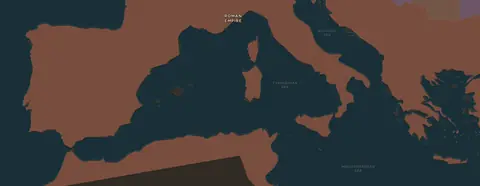
Everyday life in a Roman city
Crowded apartment blocks, public baths, free grain and the games: students explore how ordinary people lived in Rome and its port Ostia, and who did the work that kept a city of perhaps a million people running.
Roman Empire1-200 AD
-
 131
Los Kushán: encrucijada de Asia
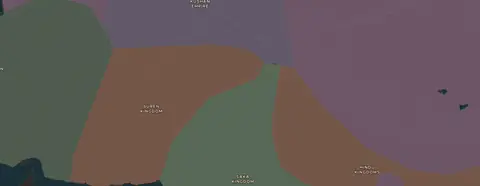
Descendientes de pueblos nómadas expulsados de China, los kushán crearon un imperio a través del Hindú Kush que conectaba el comercio de Roma, la China Han y la India al mismo tiempo. Los estudiantes utilizan monedas y tesoros para descubrir un imperio en la encrucijada de culturas del que muchos nunca han oído hablar.
Imperio Kushánc. 30-250 d. C.
-
 132
Papel, seda y terremotos: inventos de los Han
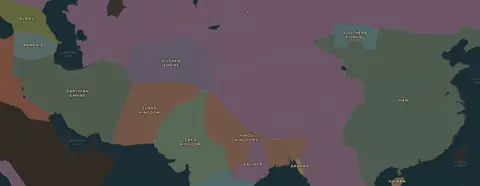
En el año 105 d.C., un funcionario de la corte llamado Cai Lun presentó una forma más económica de fabricar papel. En el 132, Zhang Heng construyó un aparato capaz de detectar terremotos lejanos. En esta lección, los estudiantes exploran cómo los inventos de los Han se difundieron por la Ruta de la Seda y cambiaron el mundo.
Han Oriental, China25-220 d.C.
-
 133
Roma en su máximo esplendorGratis
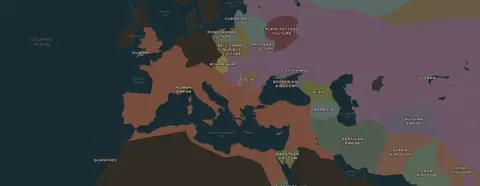
Bajo el emperador Trajano, el imperio alcanza su mayor extensión. Los alumnos exploran hasta dónde llegó realmente Roma y qué permitió mantener unido un territorio tan grande.
Imperio romano117 d. C.
-
 134
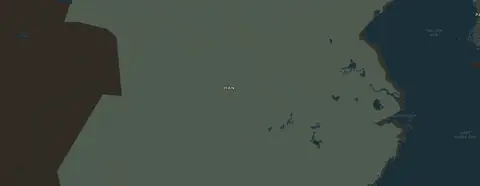
Los Tres Reinos: el final de la dinastía Han
En el año 184, unos rebeldes con pañuelos amarillos se alzaron contra la dinastía Han. Los generales que los derrotaron se convirtieron en caudillos militares y, hacia el año 220, China quedó dividida en tres reinos: Wei, Shu y Wu. En esta lección, los alumnos ubican la división en el mapa y distinguen la historia real de la famosa novela.
Final de la dinastía Han y los Tres Reinos184-280 d. C.
-
 135
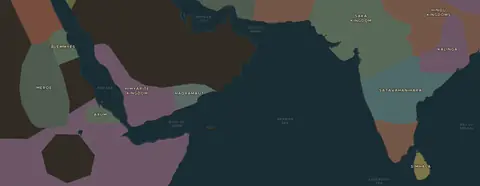
La pimienta y los monzones: India del Sur y el comercio romano
Cada verano, los barcos griegos y egipcios aprovechaban los vientos del monzón desde el mar Rojo hasta los puertos de la pimienta en el sur de la India, y regresaban con los vientos de invierno. Los estudiantes seguirán el comercio entre los reinos tamiles y Roma a través de los vientos, monedas, cerámica y poemas.
Reinos tamiles, India del Surc. 30 a.C. - 200 d.C.
-
 136
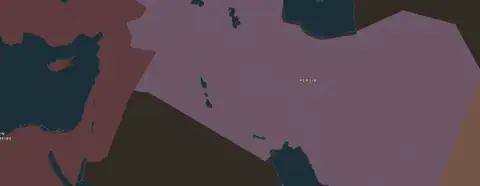
Los sasánidas: Shapur I y el emperador capturado
En el año 224, un príncipe del sur de Irán derrocó a los partos y fundó la dinastía sasánida. Su hijo, Shapur I, derrotó a tres emperadores romanos y capturó a uno de ellos. Los alumnos leerán su victoria grabada en piedra y compararán las versiones persa y romana de la historia.
Imperio sasánida224-272 d.C.
-
 137
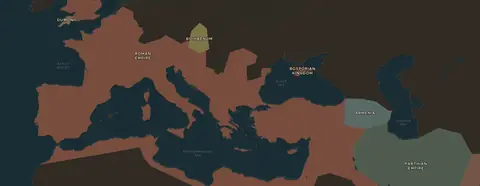
Las legiones y el limes: defendiendo las fronteras de Roma
Desde el Rin hasta el desierto sirio, legiones y tropas auxiliares protegían las fronteras del imperio. Los alumnos siguen el limes en el mapa y descubren quiénes eran los soldados y cómo era su vida.
Imperio romano9-260 d. C.
-
 138
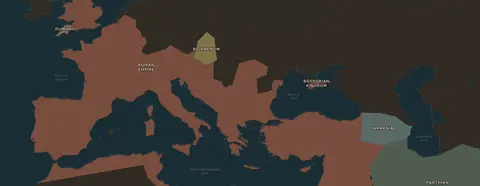
La crisis del siglo III
En unos 50 años, Roma tuvo más de 20 emperadores, perdió uno a manos de los persas y se dividió en tres partes. Los estudiantes investigan qué salió mal, desde guerras civiles e invasiones hasta epidemias y monedas sin valor, y cómo logró sobrevivir el imperio.
Imperio romano235-284 d. C.
-
 139
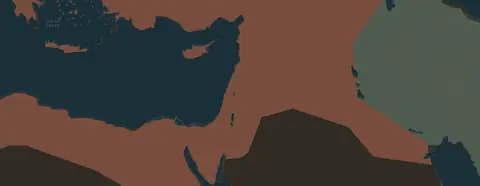
Zenobia, reina de Palmira
Una ciudad caravanera en el desierto sirio se convirtió en el centro de un reino que se extendía desde Egipto hasta Asia Menor. Los estudiantes siguen el ascenso y la caída de la reina Zenobia y reflexionan sobre cómo romanos y sirios han contado su historia.
Imperio romano260-273 d. C.
-
 140
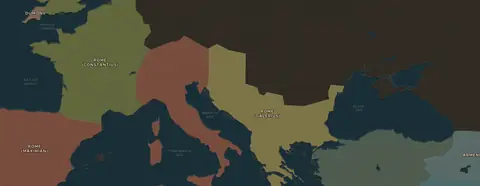
Diocleciano y el gobierno de los cuatro
Diocleciano consideró que el imperio era demasiado grande para ser gobernado por una sola persona y decidió repartirlo entre cuatro emperadores. En esta lección, los estudiantes exploran la Tetrarquía en el mapa, sus reformas del ejército, los impuestos y los precios, y la persecución de los cristianos.
Imperio romano284-305 d. C.
-
 141
Moche y Nazca: arte en el desierto
En la árida costa de Perú, dos pueblos transformaron los valles de los ríos en tierras de cultivo. Los mochicas crearon cerámica realista y enormes pirámides de adobe; los nazcas dibujaron gigantescas figuras en el suelo del desierto. Los estudiantes exploran lo que su arte nos revela, a pesar de no haber dejado escritura.
Civilizaciones andinasc. 100-800 d.C.
-
 142
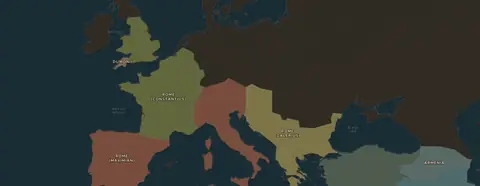
Constantino y la nueva Roma en el Bósforo
Proclamado emperador en York, Constantino luchó hasta gobernar en solitario, apoyó a la Iglesia cristiana y fundó Constantinopla. Los alumnos siguen su trayectoria en el mapa y reflexionan sobre cómo sus decisiones siguen influyendo en el mundo actual.
Imperio romano306-337 d. C.
-
 143
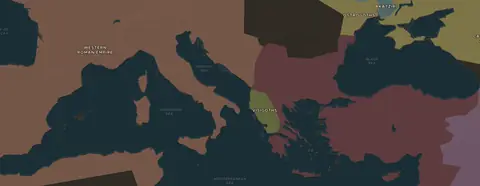
La caída de Roma
En solo un siglo, el Imperio romano de Occidente se desmorona. Usando el control de tiempo, los alumnos observan cómo desaparece una superpotencia y debaten las causas de su caída.
Antigüedad Tardía376-476 d. C.
-
 144
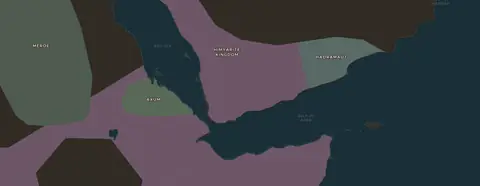
Aksum: monedas, obeliscos y una potencia del mar Rojo
Desde las tierras altas del norte de Etiopía, los reyes de Aksum comerciaban a través del mar Rojo, acuñaban monedas de oro y levantaban enormes estelas de piedra. Los alumnos conocerán un reino que un escritor persa consideró entre las cuatro grandes potencias del mundo.
Reino de Aksumaproximadamente 100-700 d.C.
-
 145
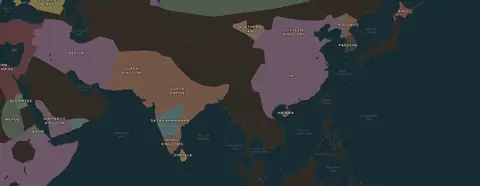
China dividida: el budismo y el camino hacia el 589
Tras el año 316, China se dividió entre reinos del norte, muchos fundados por pueblos de las estepas, y dinastías del sur a orillas del Yangtsé. En esta época de guerras, una fe extranjera, el budismo, ganó millones de seguidores. Los estudiantes explorarán templos excavados en cuevas, el viaje de un peregrino y la reunificación del año 589.
Dinastías del Norte y del Sur316-589 d. C.
-
 146
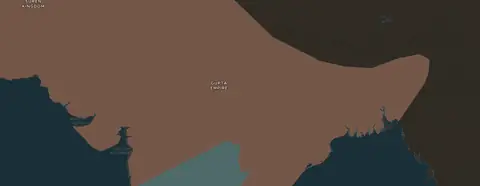
El Imperio Gupta: ¿una edad de oro para la India?
Bajo los reyes Gupta, poetas escribieron obras maestras en sánscrito, los herreros forjaron un pilar de hierro que apenas se oxida y el monasterio de Nalanda empezó a atraer estudiantes de toda Asia. En esta lección, los alumnos exploran los logros de la época y reflexionan sobre quiénes vivieron realmente en esta "edad de oro".
Imperio Gupta, Indiac. 320-550 d. C.
-
 147
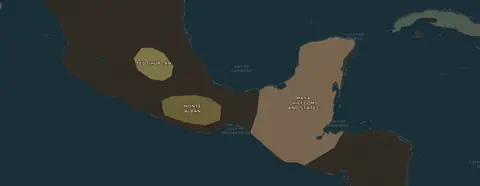
Teotihuacán: la ciudad de los dioses
Hacia el año 500 d. C., Teotihuacán, en el Valle de México, era una de las ciudades más grandes del mundo. Los estudiantes exploran sus enormes pirámides, sus barrios de migrantes y su influencia que llegó hasta la ciudad maya de Tikal.
Teotihuacánc. 100 a. C.-550 d. C.
-
 148
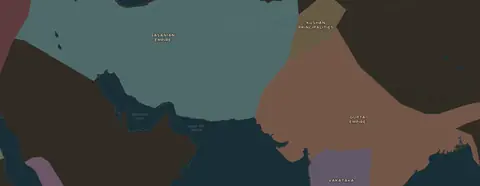
Aryabhata y los números que usamos hoy
En el año 499, un joven astrónomo de 23 años llamado Aryabhata terminó un libro sobre matemáticas y astronomía. Los sabios de la India también crearon el sistema de numeración posicional con el cero, que usamos todos los días. En esta lección, seguirás el viaje de estos números desde la India hasta Bagdad y luego a Europa.
India Gupta499 d. C.
Middle Ages
-
 149
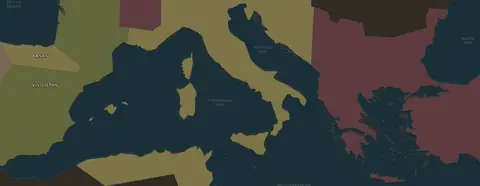
Después de Roma: los nuevos reinos de Occidente
En el año 476, el último emperador de Occidente es destituido. Los alumnos ubican en el mapa los reinos godo, franco, vándalo y anglosajón que ocuparon el lugar de Roma, y reflexionan sobre cuánto cambió realmente la vida de las personas que vivían allí.
Alta Edad Media476-526
-
 150
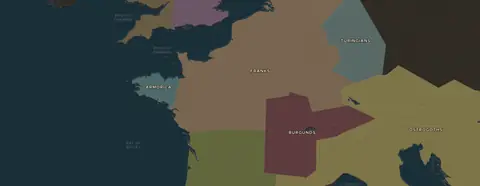
Clodoveo y el ascenso de los francos
Un joven jefe franco convierte un pequeño reino en el norte de la Galia en la mayor potencia de Occidente. Los alumnos siguen a Clodoveo desde Tournai hasta París y debaten por qué su bautismo fue tan importante para Francia y la Iglesia.
Reino Franco481-511
-
 151
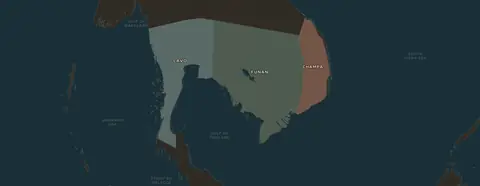
Funan y los primeros reinos del Sudeste Asiático
A medio camino entre la India y China, el reino de Funan se enriqueció gracias a los barcos, canales y mercados del delta del Mekong. Sus gobernantes adoptaron el sánscrito y los dioses indios por decisión propia. Los alumnos exploran un puerto donde se encontraron juntos un medallón romano, cuentas indias y espejos chinos.
Funan y Champac. 100-550 d. C.
-
 152
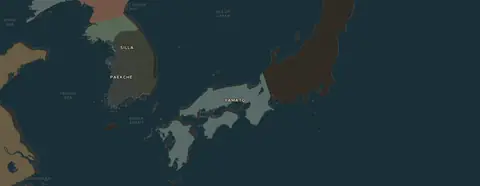
Japón Kofun: tumbas en forma de cerradura y los reyes Yamato
En Japón surgieron enormes tumbas en forma de cerradura, rodeadas de fosos y figuras de barro, mientras los grandes reyes Yamato extendían su poder. Después, el budismo llegó desde Corea. Los estudiantes descubrirán qué revelan estas tumbas y cómo Japón aprendió de sus vecinos.
Período Kofun, Japónc. 250-600 d.C.
-
 153
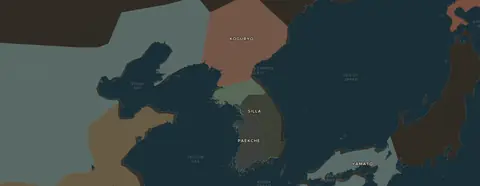
Los Tres Reinos de Corea
Goguryeo en el norte, Baekje en el suroeste y Silla en el sureste lucharon entre sí durante siglos, mientras transmitían el budismo, la escritura y el hierro a Japón. Los alumnos ubican los tres reinos, conocen al rey Gwanggaeto y analizan qué hacía fuerte a cada uno.
Goguryeo, Baekje y Sillac. 300-600 d. C.
-
 154
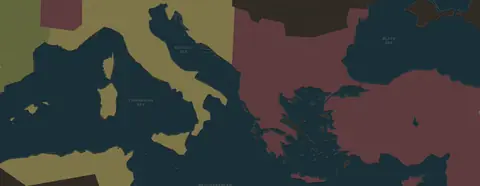
Justiniano y Teodora
El sobrino de un campesino y una antigua actriz gobiernan juntos el Imperio Romano de Oriente. Los estudiantes siguen su código de leyes, sus guerras para recuperar Occidente y el motín de 532 que casi acabó con su reinado.
Imperio Bizantino527-565
-
 155
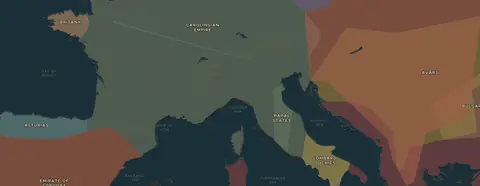
Monasterios: vivir según la Regla de San Benito
¿Por qué alguien renunciaría a su familia y sus bienes para vivir bajo una estricta regla de oración y trabajo? En esta lección, los alumnos exploran la Regla de San Benito y descubren cómo los monasterios mantuvieron vivos los libros, la agricultura y el saber en la Europa medieval temprana.
Alta Edad Media529-910
-
 156
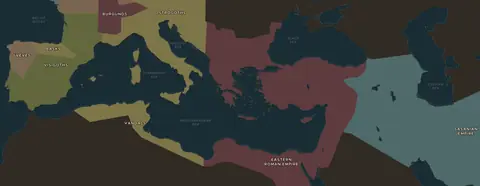
The Plague of Justinian
In 536 a strange haze dims the sun, and in 541 a new disease arrives with the grain ships from Egypt. Students track the first known pandemic of plague and weigh how much it changed Justinian's empire.
Byzantine Empire536-549
-
 157
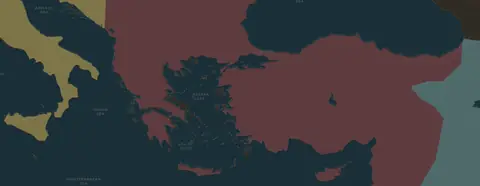
Santa Sofía: una cúpula sobre Constantinopla
Tras un motín que destruyó la antigua iglesia, Justiniano ordenó construir una nueva, que se terminó en menos de seis años. Los alumnos descubrirán cómo se levantó Santa Sofía, por qué su cúpula asombró al mundo y cómo sobrevivió al imperio que la construyó.
Imperio Bizantino532-562
-
 158
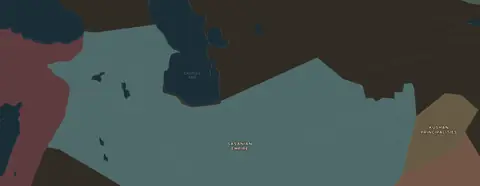
Cosroes I: la edad dorada sasánida
Cosroes I reformó los impuestos y el ejército de Persia, luchó y firmó la paz con Justiniano, derrotó a los heftalitas junto a sus aliados turcos y acogió libros, sabios y un nuevo juego llegado de la India: el ajedrez. Los estudiantes exploran un imperio en el cruce de caminos entre Roma, la India y las estepas.
Imperio sasánida531-579 d. C.
-
 159
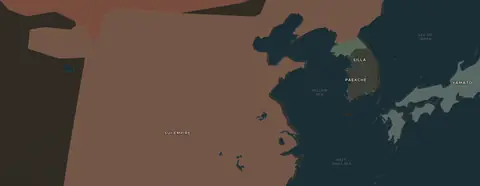
The Sui and the Grand Canal
In 589 the Sui reunited a China that had been split for centuries. Emperor Yang then joined its great rivers with the Grand Canal. Students trace the canal on the map and weigh a project that helped build China and helped bring down its builder.
Sui dynasty604-618
-
 160
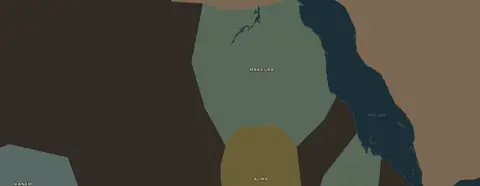
La Nubia cristiana y el tratado del Baqt
Durante casi mil años, reinos cristianos gobernaron el Nilo al sur de Egipto. En esta lección conocerás a los arqueros de Makuria, el tratado del Baqt que mantuvo la paz con el Egipto musulmán durante siglos, y la catedral pintada de Faras.
Nubia medievalaproximadamente 550-1500
-
 161
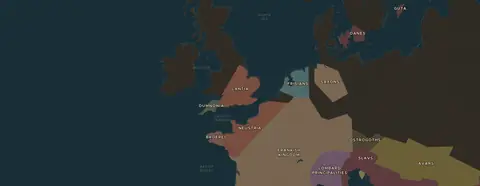
Iona, Canterbury y Whitby: las misiones a los anglosajones
Dos grupos de misioneros llegaron a los anglosajones paganos: monjes irlandeses desde el norte y monjes romanos desde el sur. Los alumnos trazarán ambas rutas y recrearán el encuentro en Whitby en 664, donde un rey tuvo que elegir entre las dos.
Inglaterra anglosajona563-664
-
 162
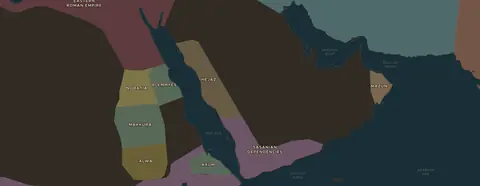
La Meca antes del Islam: caravanas y la Kaaba
Hacia el año 600, Arabia se encontraba entre dos grandes imperios agotados. En esta lección, los estudiantes exploran los oasis, las rutas de caravanas y el santuario de La Meca: el mundo en el que nació el profeta Mahoma.
Arabia preislámicaaproximadamente 500-610
-
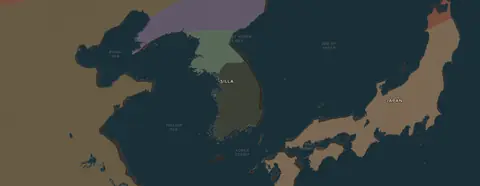 163
Silla unifica Corea
Silla, el más pequeño de los tres reinos de Corea, se alió con la China Tang, derrotó a sus rivales y luego expulsó a los propios Tang. Los estudiantes siguen las guerras en el mapa y exploran la capital budista de Silla, Gyeongju.
Silla Unificada660-935
-
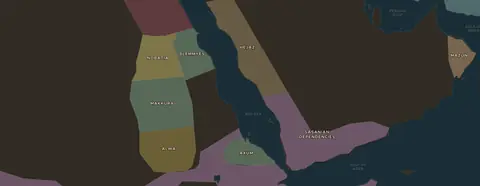 164
El Profeta Mahoma y la hégira
En el año 622, el Profeta Mahoma y sus seguidores salieron de La Meca rumbo a Medina. Los alumnos siguen la hégira en el mapa y descubren por qué este viaje marcó el año uno del calendario islámico.
Primeros tiempos del islamaprox. 570-632
-
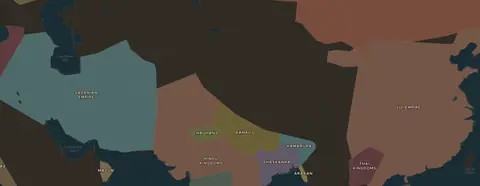 165
Xuanzang: el viaje de un monje a la India
En el año 629, el monje Xuanzang salió en secreto de China para buscar textos budistas en la India. Dieciséis años después regresó como un héroe. Los alumnos seguirán su ruta a través de desiertos y montañas y descubrirán cómo las ideas viajaban por la Ruta de la Seda.
Dinastía Tang629-645
-
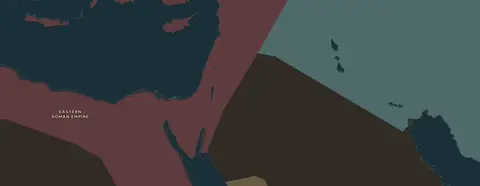 166
Fuera de Arabia: Yarmuk, Qadisiyya y las grandes conquistas
En menos de veinte años tras la muerte del Profeta, los ejércitos árabes conquistaron Siria, Irak, Egipto e Irán. Los alumnos comparan los imperios antes y después, y analizan las razones que dan los historiadores para unas conquistas tan rápidas.
Califato Rashidun633-651
-
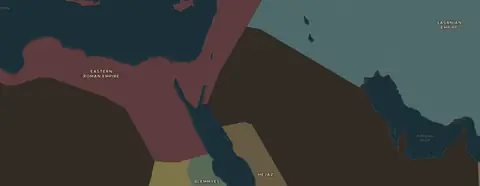 167
Los cuatro califas bien guiados
Tras la muerte del Profeta en 632, cuatro califas dirigieron la comunidad musulmana desde Medina y Kufa. Los estudiantes descubrirán cómo una pequeña comunidad se transformó en un gran estado y por qué la cuestión del liderazgo la dividió.
Califato Rashidun632-661
-
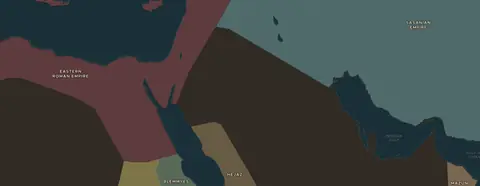 168
Suníes y chiíes: cómo comenzó la división
Un desacuerdo sobre quién debía liderar la comunidad musulmana tras la muerte del Profeta se convirtió en la división entre el islam suní y el chií. Los alumnos siguen los acontecimientos desde el año 632 hasta Karbala en 680, con cuidado y respeto hacia ambas tradiciones.
Primeros tiempos del islam632-680
-
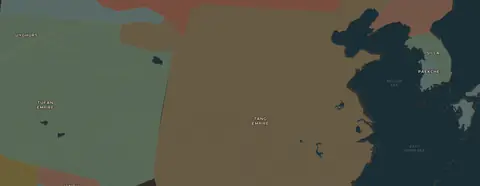 169
Wu Zetian: la única mujer que gobernó China como emperatriz reinante
Wu Zetian pasó de ser concubina en el palacio a emperatriz, y en el año 690 se convirtió en la única mujer en la historia de China que gobernó como emperatriz reinante con su propio nombre. Los estudiantes analizarán su gobierno y reflexionarán sobre por qué los historiadores posteriores la juzgaron con tanta dureza.
Dinastía Tang655-705
-
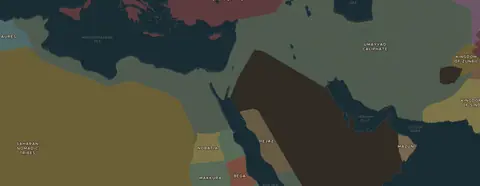 170
La Cúpula de la Roca
Terminada en los años 691-692, la Cúpula de la Roca en Jerusalén es el gran monumento islámico más antiguo que se conserva. En esta lección, los estudiantes exploran por qué se construyó, qué mensajes transmite y por qué Jerusalén es importante para tres religiones.
Califato Omeya691-692
-
 171
Wari y Tiwanaku: imperios antes de los incas
Siglos antes de los incas, dos grandes poderes dominaron el altiplano andino: Tiwanaku, junto al lago Titicaca, y Wari, en las montañas del actual Perú. En esta lección, los estudiantes comparan cómo cada uno mantuvo unido su territorio y qué aprendieron luego los incas de ellos.
Horizonte Medio Andinoc. 600-1000
-
 172
Nara: la primera gran capital de Japón
En el año 710, Japón construyó su primera gran capital, Heijo-kyo, inspirada en Chang'an de la dinastía Tang. Los estudiantes descubrirán cómo Japón adoptó la escritura china, sus leyes y el budismo, y por qué un emperador mandó levantar un Buda de bronce de unos 15 metros de altura.
Japón de Nara710-794
-
 173
711: a través del estrecho hacia Hispania
En el año 711, un comandante bereber cruzó un estrecho y un reino cayó. Los alumnos siguen la conquista de la península ibérica hasta la batalla de Poitiers en 732 y reflexionan sobre el verdadero significado de esa batalla.
Califato Omeya711-732
-
 174
Los Omeyas: un imperio gobernado desde Damasco
Desde Damasco, los califas omeyas gobernaron territorios que iban desde Hispania hasta el Indo. Los estudiantes descubrirán cómo lograron mantener unido un imperio tan extenso gracias a una capital, una lengua común, nuevas monedas y grandes construcciones.
Califato Omeya661-750
-
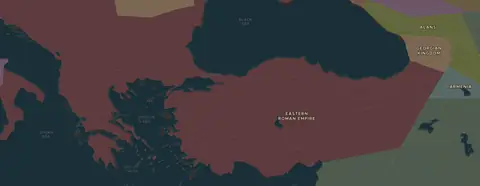 175
Los asedios árabes de Constantinopla
En dos ocasiones los califas omeyas enviaron enormes ejércitos contra Constantinopla, y en ambas fracasaron. Los alumnos descubrirán cómo las murallas, el mar, el fuego griego, los aliados y un duro invierno detuvieron el avance.
Califato Omeya674-718
-
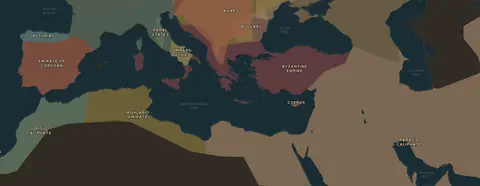 176
La batalla por los iconos en Bizancio
Durante más de un siglo, emperadores, monjes y emperatrices bizantinos debatieron apasionadamente si las imágenes sagradas eran venerables o prohibidas. Los alumnos siguen la historia de la iconoclasia desde León III hasta la emperatriz Teodora y reflexionan sobre por qué las imágenes despiertan sentimientos tan intensos.
Imperio Bizantino726-843
-
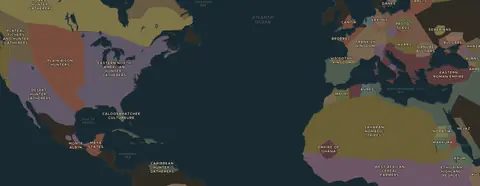 177
La escritura, los números y los calendarios mayas
Los mayas crearon el sistema de escritura más completo de la América antigua, inventaron el cero y midieron el tiempo en grandes ciclos. En esta lección, aprenderás a leer los números mayas, descubrirás cómo se descifró su escritura y debatirás quién debería custodiar los cuatro libros mayas que sobrevivieron.
Maya Clásico250-900 d.C.
-
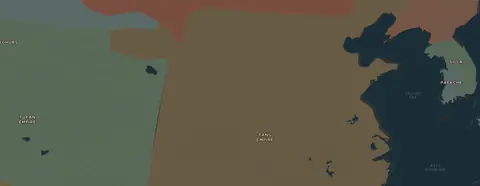 178
La rebelión de An Lushan: el sacudón de los Tang
En el año 755, un poderoso general de la frontera se rebeló contra el emperador Tang. Siguieron ocho años de guerra. Los estudiantes seguirán a los rebeldes hasta las capitales y verán cómo una dinastía puede sobrevivir a un desastre, aunque nunca vuelva a ser igual.
Dinastía Tang755-763
-
 179
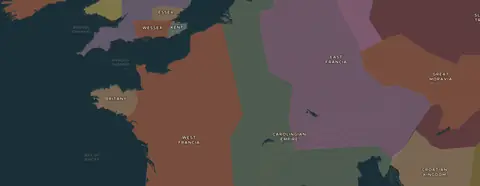
843: de un imperio a tres reinos
Los nietos de Carlomagno luchan en una guerra civil y luego dividen su imperio en tres partes. Los estudiantes comparan los mapas del año 800 y 900 y descubren cómo el Tratado de Verdún trazó fronteras que más tarde darían lugar a Francia, Alemania y las tierras disputadas entre ambas.
Imperio Carolingio814-888
-
 180
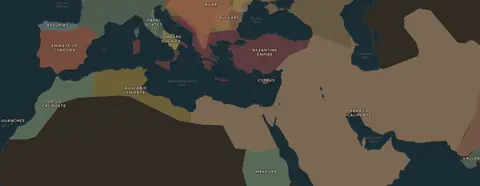
Al-Juarismi y el nacimiento del álgebra
Un sabio en Bagdad escribió el libro que nos dio la palabra "álgebra", y su nombre originó la palabra "algoritmo". Los estudiantes siguen el viaje de los números desde la India hasta Bagdad y luego a Europa, y resuelven un problema al estilo de al-Juarismi.
Califato abasíaproximadamente 780-850
-
 181
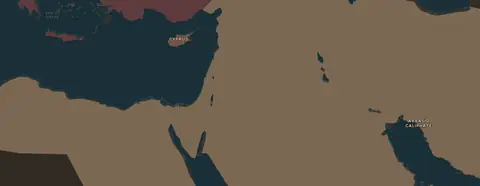
Bagdad: la Ciudad Redonda de los abasíes
En el año 762, el califa al-Mansur fundó una ciudad redonda a orillas del Tigris. En esta lección, los estudiantes exploran por qué la nueva dinastía abasí trasladó su capital a Irak y cómo Bagdad llegó a convertirse en una de las ciudades más grandes del mundo.
Califato abasí750-800
-
 182
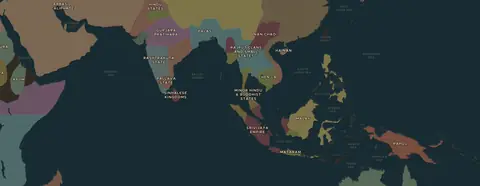
Borobudur: una montaña de piedra
En el centro de Java, los reyes Sailendra construyeron Borobudur, el mayor monumento budista del mundo, con 504 estatuas de Buda y más de 2.600 paneles tallados. Los estudiantes exploran cómo se utilizaba y cómo el budismo unía Java con Sumatra e India.
Java Sailendra780-850
-
 183
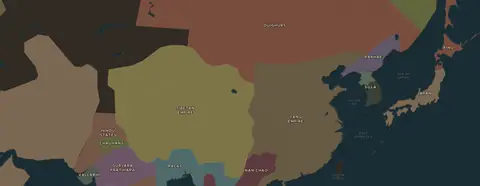
Chang'an: capital del mundo Tang
Bajo la dinastía Tang, Chang'an se convirtió en una ciudad amurallada de alrededor de un millón de habitantes, situada en el extremo oriental de la Ruta de la Seda. Los estudiantes explorarán su trazado en cuadrícula, sus mercados llenos de comerciantes extranjeros y las ciudades vecinas que imitaron su diseño.
Dinastía Tang618-907
-
 184
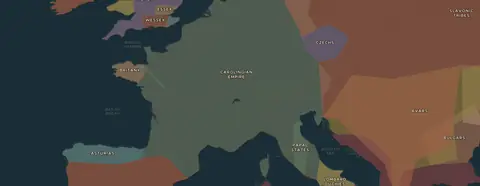
Carlomagno: emperador de Occidente
El día de Navidad del año 800, el papa corona a un rey franco como emperador en Roma. Los alumnos exploran en el mapa las guerras de Carlomagno, visitan su capital en Aquisgrán y reflexionan sobre un gobernante que impulsó la educación, pero también obligó a los pueblos conquistados a convertirse al cristianismo.
Imperio carolingio768-814
-
 185
Dunhuang: un oasis en la Ruta de la Seda
En el borde del desierto de Taklamakan, Dunhuang daba agua a las caravanas y llenó un acantilado de cuevas budistas pintadas. Descubre qué significaba un oasis para el comercio y la fe, y por qué allí se encontró el libro impreso con fecha más antiguo del mundo.
Ruta de la Seda600-1000
-
 186
Madagascar y el reino Merina
Desde las tierras altas centrales de Madagascar, los reyes Merina buscaron gobernar toda la isla. En esta lección, los estudiantes exploran una isla poblada tanto desde Asia como desde África, las reformas y conflictos de sus gobernantes, y la conquista francesa de 1895.
Reino Merina1787-1897
-
 187
Srivijaya: los dueños de los estrechos
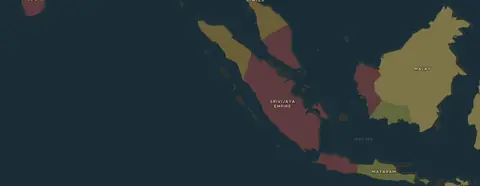
Desde Palembang, en Sumatra, los reyes de Srivijaya controlaron durante siglos las puertas marítimas entre la India y China. En esta lección, los estudiantes exploran cómo los vientos monzónicos, los puertos y el budismo crearon un imperio marítimo que dejó pocos restos de piedra.
Srivijaya671-1025
-
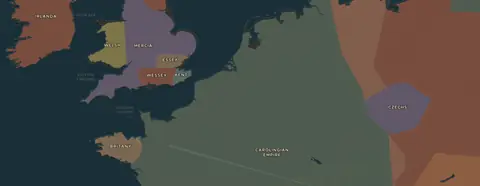 188
Sutton Hoo y los reinos anglosajones
En 1939 se desenterró un barco repleto de tesoros en un campo de Suffolk. Los alumnos utilizan los hallazgos de Sutton Hoo y el mapa para explorar los reinos anglosajones, desde un entierro real hacia el año 625 hasta el poder de Offa de Mercia.
Inglaterra anglosajona600-800
-
 189
Talas 751 y el camino del papel
En el año 751, los ejércitos abasí y chino Tang se enfrentaron cerca del río Talas. Los alumnos exploran el punto de encuentro de dos grandes imperios en la Ruta de la Seda y cómo el papel se difundió hacia Occidente, un hecho que tuvo consecuencias mucho más duraderas que la propia batalla.
Califato abasí751-800
-
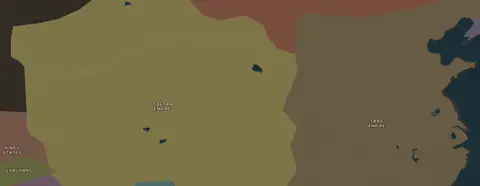 190
El Imperio tibetano en el techo del mundo
Desde la alta meseta que rodea Lhasa, los reyes tibetanos construyeron un imperio que rivalizó con la China Tang y luchó por el control de la Ruta de la Seda. Los estudiantes explorarán cómo la geografía, las alianzas matrimoniales y el budismo dieron forma al Tíbet entre los años 618 y 842.
Imperio tibetano618-842
-
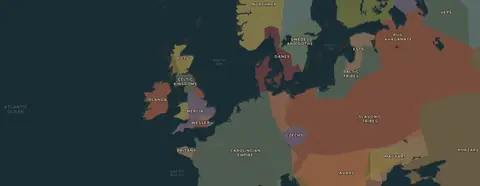 191
Comienza la Era Vikinga
En el año 793, saqueadores llegados por mar atacan el monasterio de Lindisfarne. Los alumnos conocerán a los vikingos como saqueadores, comerciantes y agricultores, ubicarán sus tierras y ciudades en el mapa y reflexionarán sobre las razones que les llevaron a cruzar el mar.
Era Vikinga793-900
-
 192
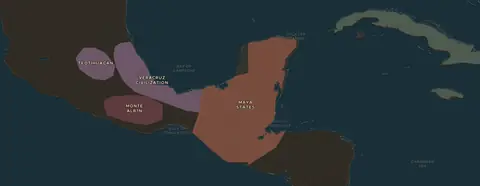
Tikal y Calakmul: ciudades-estado mayas rivales
Los mayas del periodo Clásico nunca formaron un solo imperio. Decenas de ciudades-estado, cada una con su propio rey sagrado, competían, se aliaban y luchaban entre sí. Los alumnos seguirán la gran rivalidad entre Tikal y Calakmul y reflexionarán sobre por qué las ciudades del sur se despoblaron después del año 800.
Maya Clásico250-900
-
 193
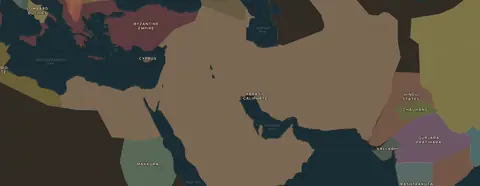
La Casa de la Sabiduría
En la Bagdad abasí, los sabios tradujeron libros griegos, persas e indios al árabe y añadieron ideas propias. Los estudiantes exploran la Casa de la Sabiduría y cómo el conocimiento viajó entre culturas.
Califato abasíaproximadamente 800-900
-
 194
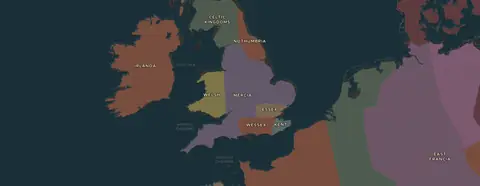
Alfredo el Grande y el Danelaw
En el año 878, un ejército danés sorprende al rey de Wessex, que logra escapar a los pantanos con un pequeño grupo. Los alumnos seguirán el regreso de Alfredo, trazarán la línea entre Wessex y el Danelaw, y reflexionarán sobre cómo un rey fugitivo llegó a ser llamado «el Grande».
Inglaterra anglosajona865-899
-
 195
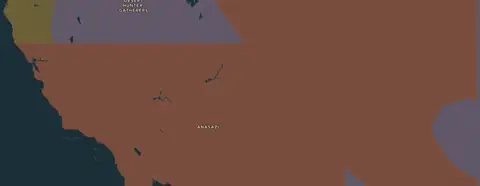
Cañón del Chaco: las grandes casas de los antiguos pueblos pueblo
En un cañón seco del suroeste de Estados Unidos, los antiguos pueblos pueblo construyeron grandes casas de piedra con cientos de habitaciones, caminos rectos y calendarios de luz. Los estudiantes exploran el Cañón del Chaco y Mesa Verde, y descubren por qué su gente se trasladó a otros lugares en vez de desaparecer.
Antiguos pueblos puebloc. 850-1300
-
 196
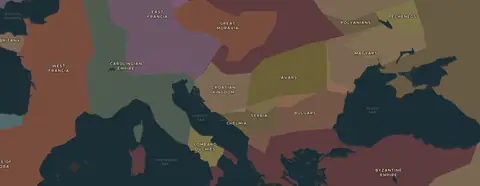
Ciril, Metodio y el alfabeto eslavo
En el año 863, dos hermanos de Tesalónica emprendieron un viaje hacia Moravia llevando un alfabeto completamente nuevo. Los alumnos descubrirán cómo una escritura creada para una misión se convirtió en el alfabeto cirílico, que hoy usan cientos de millones de personas.
Bizancio y los eslavos863-893
-
 197
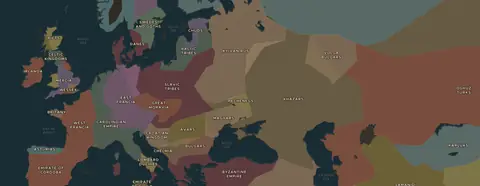
Del Báltico a Bizancio: los varegos
Comerciantes escandinavos reman, navegan y arrastran sus embarcaciones por los ríos de Europa oriental para llegar a Constantinopla y a los mercados del mundo islámico. Los alumnos seguirán las rutas fluviales, rastrearán la plata y los cautivos que circulaban por ellas, y conocerán a la Guardia varega del emperador.
Época vikinga860-1050
-
 198
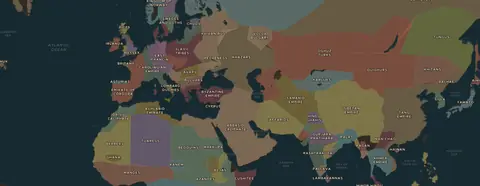
La plata en el Volga: el comercio en el mundo abasí
Monedas de plata árabes aparecen en tesoros enterrados en Suecia. Los estudiantes siguen las rutas hacia el norte por el Volga y hacia el este por mar hasta China, conocen al viajero Ibn Fadlan y reflexionan sobre quiénes se beneficiaron y quiénes sufrieron con este comercio.
Califato abasíaproximadamente 800-1000
-
 199
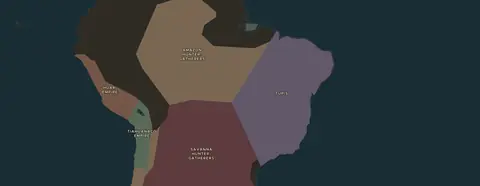
El Amazonas: ríos, jardines y los tupíes
Durante mucho tiempo, los forasteros vieron el Amazonas como una selva vacía y salvaje. Sin embargo, la arqueología cuenta otra historia: pueblos, construcciones de tierra y suelos fértiles creados por las personas. En esta lección, los estudiantes exploran la isla de Marajó, el Alto Xingú y los pueblos tupíes de la costa atlántica.
Amazoníac. 400-1542
-
 200
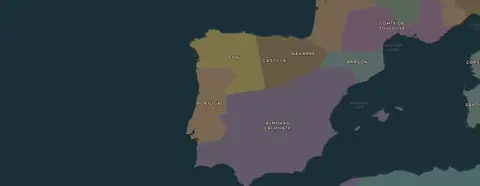
La Reconquista: los reinos cristianos de la Península Ibérica
Desde un valle montañoso en Asturias hasta las puertas de Granada, los reinos cristianos avanzan hacia el sur durante cinco siglos. Los alumnos seguirán su expansión en el mapa, conocerán a quienes vivían en la frontera y debatirán si "Reconquista" es realmente el término adecuado.
La Península Ibérica medieval722-1248
-
 201
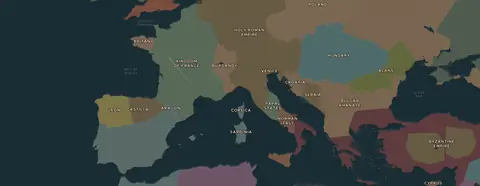
Los normandos: de colonos vikingos a reyes
Unos vikingos saqueadores se establecen en el Sena, se convierten en cristianos de habla francesa y luego conquistan Inglaterra, el sur de Italia y Sicilia. Los alumnos siguen el recorrido de los normandos por Europa y visitan Palermo, donde un rey normando gobernó a súbditos latinos, griegos y árabes.
Normandos911-1154
-
 202
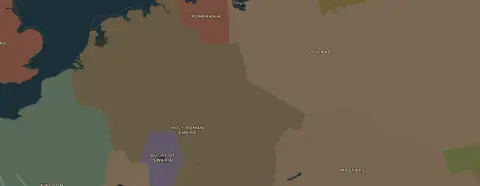
Otón el Grande y el nacimiento del Sacro Imperio Romano Germánico
En el año 955, el rey Otón derrota a los jinetes magiares cerca de Augsburgo, y en 962 el papa lo corona emperador en Roma. Los alumnos seguirán el nacimiento de lo que más tarde se llamó el Sacro Imperio Romano Germánico y verán cómo Polonia y Hungría se integraron en la Europa cristiana latina.
Sacro Imperio Romano Germánico936-1001
-
 203
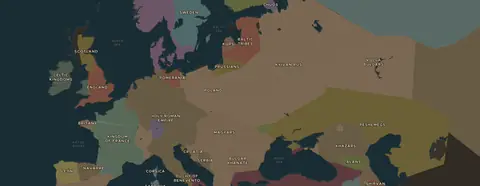
988: Kiev elige una fe
Hacia el año 988, el príncipe Vladímir de Kiev se bautiza y ordena a su pueblo sumergirse en las aguas del Dniéper. Los estudiantes investigan por qué eligió el cristianismo de Constantinopla y cómo esa decisión marcó el destino de la Rus de Kiev bajo el reinado de su hijo Yaroslav el Sabio.
Rus de Kiev957-1054
-
 204
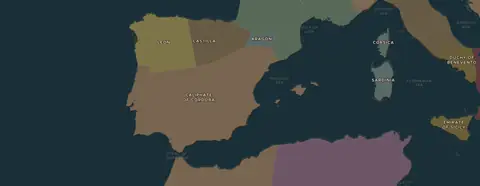
Córdoba, joya de al-Ándalus
Un príncipe omeya que escapó de una masacre fundó un nuevo estado en la península ibérica. Los alumnos exploran Córdoba, su Gran Mezquita y la convivencia de sus habitantes de tres religiones, y se preguntan hasta qué punto la vida en el califato era realmente igualitaria.
Al-Ándalus756-1031
-
 205
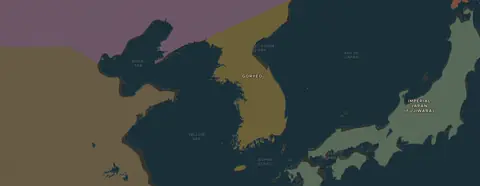
Goryeo: celadón, la Tripitaka y la imprenta de tipos metálicos
El reino de Goryeo dio nombre a Corea. Resistió invasiones de los kitán y los mongoles, creó cerámica de celadón admirada en China, talló más de 81.000 bloques de madera para imprimir y produjo el libro más antiguo conservado hecho con tipos metálicos. Los estudiantes exploran un reino de artesanía bajo presión.
Goryeo918-1392
-
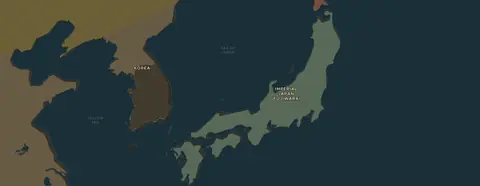 206
Japón Heian: el mundo de El cuento de Genji
En Heian-kyo, la actual Kioto, los nobles de la corte vivían dedicados a la poesía y la belleza, y una dama de la corte escribió El cuento de Genji. Los estudiantes exploran la época clásica de Japón, las familias que gobernaron tras el emperador y los guerreros que pusieron fin a ese periodo.
Japón Heian794-1185
-
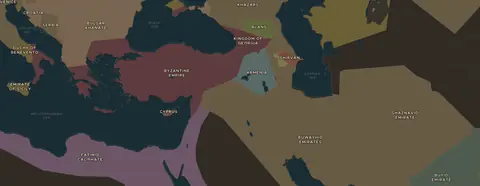 207
Ibn Sina, al-Razi y la medicina medieval
Dos médicos de tierras persas, al-Razi e Ibn Sina, escribieron libros de medicina que se usaron durante siglos, incluso en Europa. Los estudiantes seguirán sus vidas en el mapa y descubrirán cómo funcionaban los hospitales.
Edad de Oro del Islamaproximadamente 865-1037
-
 208
Ibn al-Haytham y la ciencia de la luz
En El Cairo fatimí, un sabio originario de Basora puso a prueba antiguas ideas sobre la luz mediante experimentos cuidadosos. Los estudiantes descubrirán cómo Ibn al-Haytham cambió nuestra manera de entender la visión y por qué es importante comprobar las ideas.
Califato fatimíaproximadamente 965-1040
-
 209
Islandia, Groenlandia y Vinlandia
Los pueblos nórdicos navegaron cada vez más hacia el oeste: primero a Islandia, después a Groenlandia y, hacia el año 1000, a la costa de América del Norte. Los alumnos seguirán su viaje isla por isla, conocerán a los pueblos que ya vivían allí y reflexionarán sobre por qué se abandonó Vinlandia.
Época vikinga870-1021
-
 210
Los Chola: reyes del mar en el sur de la India
Desde el delta del Kaveri, Rajaraja I y su hijo Rajendra I construyeron un imperio que llegó hasta Sri Lanka, el Ganges y, por mar, a los puertos de Srivijaya. Los alumnos exploran sus enormes templos, el arte en bronce y sus poderosas flotas.
Imperio Chola985-1044
-
 211
Los fatimíes fundan El Cairo
Una dinastía chií del norte de África conquistó Egipto y fundó una nueva capital: al-Qahira, El Cairo. En esta lección, los alumnos exploran El Cairo fatimí, al-Azhar y el comercio que hizo rica a Egipto, en una época con tres califas rivales.
Califato fatimí909-1171
-
 212
El Imperio de Ghana: la tierra del oro
Mucho antes de que existiera el país moderno de Ghana, un imperio llamado Wagadu se hizo rico en el extremo sur de las rutas comerciales del Sahara. Los estudiantes leerán lo que escribió un geógrafo árabe en 1068 y descubrirán cómo un rey controlaba el oro sin extraerlo él mismo.
Imperio de Ghanaaproximadamente 700-1200
-
 213
Tula y Chichén Itzá: el enigma tolteca
Dos ciudades separadas por más de 1,000 km, Tula en el centro de México y Chichén Itzá en el norte maya, comparten columnas de guerreros y símbolos de serpiente. Los estudiantes exploran ambas ciudades y analizan las pruebas: ¿conquista, comercio o ideas compartidas?
Toltecac. 900-1150
-
 214
Canuto y el imperio del Mar del Norte
En 1016, un príncipe danés conquista la corona inglesa y pronto gobierna también Dinamarca y Noruega. Los alumnos localizan en el mapa el imperio de Canuto alrededor del Mar del Norte, analizan cómo un conquistador vikingo gobernó como rey cristiano y exploran la famosa leyenda de las olas.
Época vikinga1013-1042
-
 215
1054: la ruptura entre Oriente y Occidente
En julio de 1054, enviados del papa depositaron un documento de excomunión sobre el altar de Santa Sofía. Los alumnos exploran las diferencias que habían surgido entre el Occidente latino y el Oriente griego, y se preguntan si 1054 fue una ruptura repentina o una separación lenta.
La Iglesia medieval1054
-
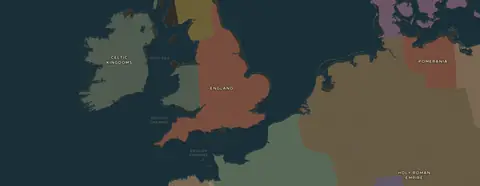 216
1066: el año en que Inglaterra cambió de manos
En 1066, tres hombres reclaman la corona inglesa y dos ejércitos invaden el país en pocas semanas. Los alumnos siguen la carrera de Harold desde Stamford Bridge hasta Hastings, analizan el Tapiz de Bayeux como fuente histórica y descubren cómo los castillos y el Libro Domesday consolidaron el dominio normando.
Inglaterra normanda1066-1087
-
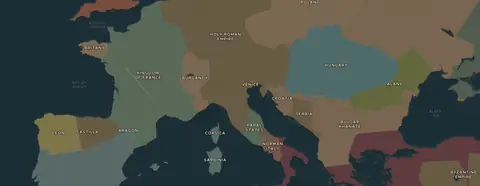 217
El papa contra el emperador: el camino a Canossa
En enero de 1077, el rey de Alemania espera durante tres días bajo la nieve frente a un castillo en Italia, suplicando el perdón del papa. Los estudiantes analizarán la lucha por el derecho a elegir obispos y por qué este conflicto sacudió la Europa medieval.
Sacro Imperio Romano Germánico1075-1122
-
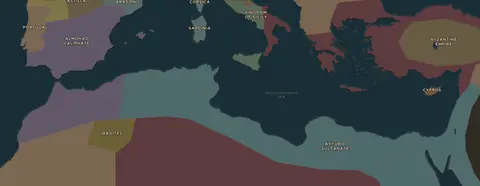 218
Toledo, Averroes y Maimónides
Mientras los reyes luchaban por el control de la península, el saber cruzaba fronteras. En esta lección conocerás a los traductores de Toledo, al filósofo musulmán Ibn Rushd (Averroes) y al sabio judío Maimónides, ambos nacidos en Córdoba.
Al-Ándalus1085-1212
-
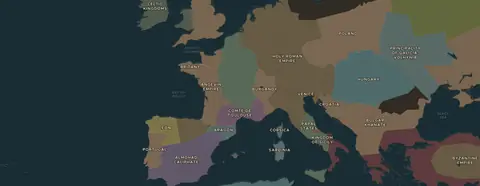 219
Las primeras universidades
En Bolonia, París y Oxford, estudiantes y maestros se unieron para formar una nueva comunidad: la universidad. Descubrirás qué estudiaban los sabios medievales, cómo las traducciones del árabe transformaron el saber europeo y cuánto de ese legado sigue presente en la escuela actual.
Plena Edad Media1088-1300
-
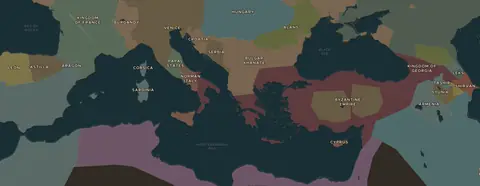 220
La Primera Cruzada
En 1095, el papa Urbano II llama a los caballeros de Occidente a marchar hacia Oriente. Los alumnos siguen la Primera Cruzada desde Clermont hasta Constantinopla y Tierra Santa, y la observan desde la perspectiva de cruzados, bizantinos, judíos y musulmanes, debatiendo cómo debe recordarse este acontecimiento.
Cruzadas1095-1099
-
 221
Las Cruzadas vistas desde el lado musulmán
En 1097, ejércitos de Europa occidental marcharon hacia un Oriente Medio dividido. Los estudiantes analizarán la Primera Cruzada a través de los ojos de los habitantes de Siria y verán cómo gobernantes como Zengi y Nur al-Din lograron unirlos poco a poco.
Las Cruzadas1097-1154
-
 222
Cahokia: la gran ciudad del Misisipi
Hacia el año 1100, la mayor ciudad al norte de México se encontraba cerca de las orillas del río Misisipi. En esta lección, los estudiantes exploran los enormes montículos de Cahokia, su gran plaza, su calendario solar y las ciudades misisipianas que compartían su modo de vida.
Cultura misisipianac. 1050-1350
-
 223
Dai Viet: holding off two empires
In 938 the Viet won independence from China at the Bach Dang River. Over the next five centuries Dai Viet beat back Song, Mongol and Ming armies while borrowing Chinese schools and laws. Students explore how a small kingdom held off giants.
Dai Viet938-1428
-
 224
Jenne-jeno: a city without a king?
On the floodplain of the Niger, a town grew into a busy city long before any famous empire. Archaeologists found crafts, trade goods from far away and no palace. Students weigh the evidence for a city without a king.
Middle Nigerabout 250 BC-AD 1400
-
 225
Jewish life in medieval Europe
Jewish communities lived in the towns of medieval Europe as scholars, merchants and doctors, but also faced growing laws, accusations and expulsions. Students meet Rashi of Troyes, map where communities lived and were forced to leave, and discuss how this history should be remembered.
Medieval Europe1000-1400
-
 226
Kaifeng and the first paper money
The Northern Song capital Kaifeng was a city of canals, night markets and printers. In 1024 the Song printed the first government paper money. Students explore how money made of paper worked, and what happened when the city fell in 1127.
Song dynasty960-1127
-
 227
Kanem-Bornu: a kingdom around Lake Chad
One royal family ruled around Lake Chad for more than 700 years. Students follow the kingdom of Kanem-Bornu as it turned to Islam, moved its heartland across the lake and bought muskets through Ottoman Tripoli.
Kanem-Bornuabout 1085-1600
-
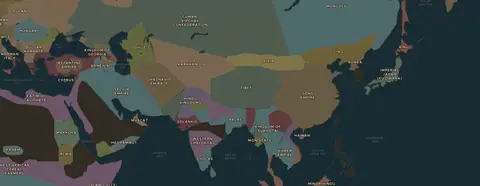 228
Song China: printing, compass and gunpowder
Under the Song dynasty, China printed books with movable type, steered ships by compass and wrote down the first recipe for gunpowder. Students explore the inventions and ask why they changed the world so slowly.
Song dynasty960-1279
-
 229
The Seljuks and Manzikert
Turkish horsemen from Central Asia took over the heart of the Islamic world and beat a Byzantine emperor at Manzikert in 1071. Students explore how this opened Anatolia to the Turks and led to the Crusades.
Seljuk Empire1037-1092
-
 230
Reaching for heaven: the Gothic cathedrals
Around 1140 an abbot near Paris rebuilds his church with pointed arches and walls of colored glass. Students explore the new Gothic style, learn how flying buttresses let walls rise higher, and ask why towns spent generations building cathedrals.
High Middle Ages1140-1250
-
 231
Saladin and the road to Jerusalem
A Kurdish officer united Egypt and Syria, won the Battle of Hattin and took Jerusalem in 1187. Students follow Saladin on the map and play his hardest decisions in Rule History.
Ayyubid Sultanate1169-1193
-
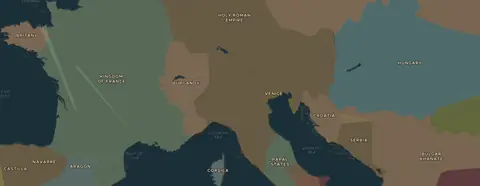 232
Barbarossa and the cities of Italy
Emperor Frederick Barbarossa marches into Italy to make its rich cities obey him, and they band together against him. Students map the Lombard League, replay the battle of Legnano in 1176 and discuss why self-governing cities mattered for Europe.
Holy Roman Empire1152-1190
-
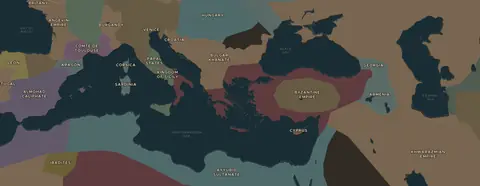 233
Richard the Lionheart and the Third Crusade
After Saladin takes Jerusalem in 1187, the kings of England and France and the German emperor set out to win it back. Students follow the Third Crusade by land and sea, meet Richard and Saladin through the sources, and ask why it ended in a truce.
Crusades1187-1192
-
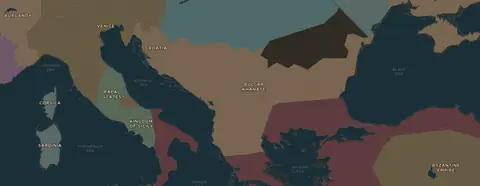 234
1204: the crusade that sacked Constantinople
A crusade meant for Egypt ends with crusaders looting the greatest Christian city in the world. Students trace the money, the ships and the decisions that led the Fourth Crusade to Constantinople in 1204, and follow the Byzantine states that fought back.
Crusades1202-1261
-
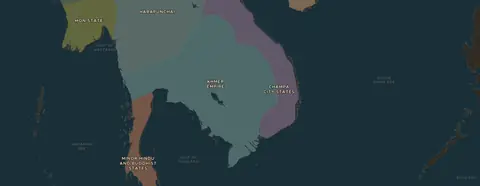 235
Angkor: city of the Khmer kings
For six centuries Khmer kings ruled mainland Southeast Asia from Angkor, beside the great lake Tonle Sap. Students explore Angkor Wat and Angkor Thom, the water that fed the city, and the debate over why it was left behind.
Khmer Empire802-1431
-
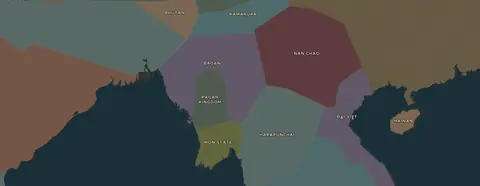 236
Bagan: el reino de los templos
En una llanura seca junto al río Irawadi, los reyes y el pueblo de Bagan construyeron más de 10.000 templos y pagodas. En esta lección, descubrirás cómo el budismo theravada dio forma al primer gran reino birmano y por qué se desintegró tras las invasiones mongolas.
Reino de Pagan1044-1287
-
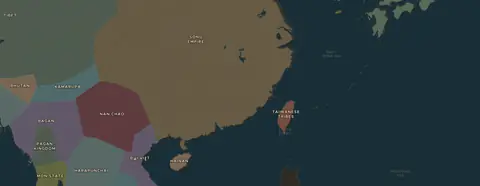 237
Hangzhou and the Southern Song
After losing the north in 1127, the Song rebuilt their state in the south around Hangzhou, sea trade and China's first permanent navy. Students see how the Southern Song thrived for 150 years and how the Mongols finally ended it.
Song dynasty1127-1279
-
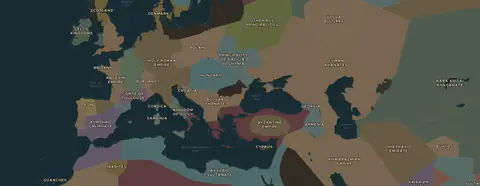 238
Knights of the cross: crusader states and military orders
After 1099 four small crusader states cling to the coast of the eastern Mediterranean, defended by monk-knights such as the Templars and Hospitallers. Students locate the states and their castles, and follow the orders after the last crusader city fell in 1291.
Crusades1099-1291
-
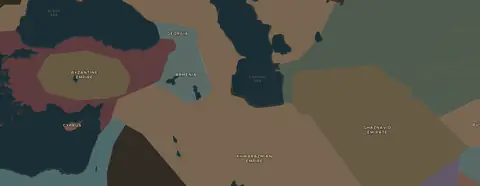 239
Konya, Rumi y el Sultanato de Rum
En el corazón de Anatolia, los sultanes selyúcidas construyeron caminos, posadas y mezquitas, y un poeta refugiado llamado Rumi escribió versos que aún se leen en todo el mundo. Los estudiantes exploran el Sultanato de Rum y su capital, Konya.
Sultanato de Rum1077-1308
-
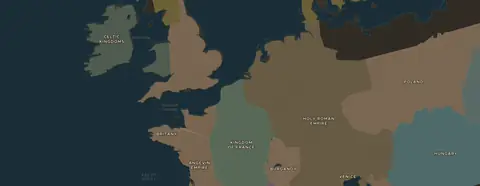 240
Life on the manor: those who prayed, fought and worked
Around the year 1030 a French bishop wrote that society had three orders: those who pray, those who fight and those who work. Students step into a medieval village, follow the farming year and ask how much freedom a peasant really had.
High Middle Ages1000-1300
-
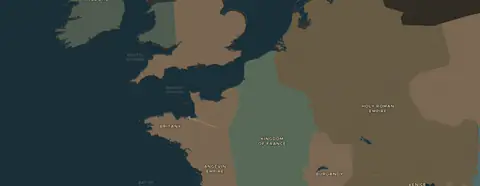 241
Magna Carta: the king under the law
In June 1215 King John seals a charter in a meadow beside the Thames, promising to rule by the law. Students explore why the barons forced him, read the most famous clauses and ask who Magna Carta really protected.
Medieval England1199-1225
-
 242
Sundiata and the founding of Mali
A boy who could not walk grew up to unite the Mande peoples and found the Mali Empire. Students hear the epic of Sundiata as the griots tell it and ask how much oral history can tell us about the past.
Mali Empireabout 1235-1255
-
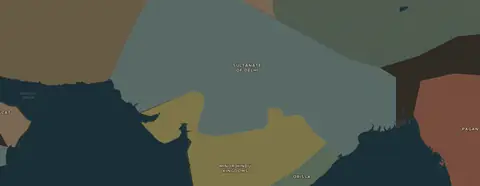 243
El Sultanato de Delhi
Durante tres siglos, cinco dinastías de sultanes gobernaron el norte de la India desde Delhi. Un antiguo esclavo-soldado fundó el sultanato, una mujer llegó a gobernarlo y sus ejércitos resistieron los ataques de los mongoles. Los estudiantes explorarán un estado donde se encontraron las culturas persa, túrquica e india.
Sultanato de Delhi1206-1526
-
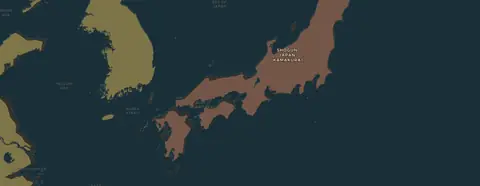 244
The samurai take power: the Kamakura shogunate
After the Genpei War, Minamoto no Yoritomo set up a warrior government in Kamakura, far from the emperor's court. Students explore how the samurai came to rule Japan for almost 700 years, and why the first shogunate fell in 1333.
Kamakura Japan1180-1333
-
 245
Genghis Khan unites the steppe
A boy from a broken family on the Mongolian steppe became Genghis Khan, ruler of all the Mongols, in 1206. Students follow his rise on the map, look at how he built an army unlike any other, and weigh how different peoples remember him.
Mongol Empire1162-1227
-
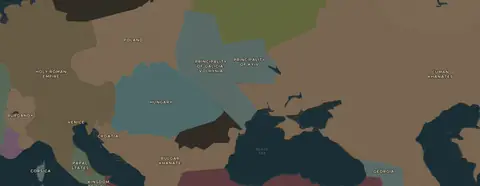 246
The Mongols in Eastern Europe
Between 1237 and 1242 Mongol armies under Batu Khan sweep through the Rus principalities and into Poland and Hungary, then suddenly turn back. Students follow the campaign on the map, weigh why the Mongols withdrew, and see how the Golden Horde ruled the Rus for two centuries.
Mongol Empire1237-1242
-
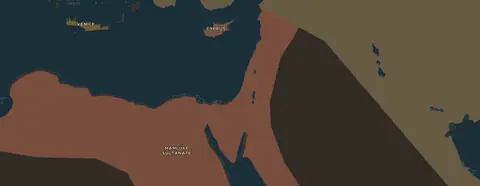 247
Ain Jalut: the Mamluks stop the Mongols
In 1260 the Mamluks of Egypt, soldiers who had once been enslaved boys, defeated a Mongol army at Ain Jalut. Students explore who the Mamluks were and why this battle is called a turning point.
Mamluk Sultanate1250-1291
-
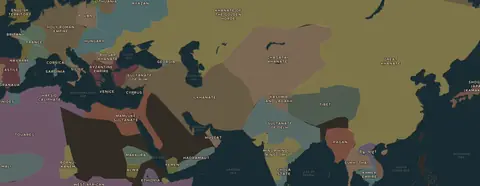 248
Marco Polo: the road to Kublai Khan
In 1271 a 17-year-old Venetian set out with his father and uncle for the court of Kublai Khan. Students follow Marco Polo's journey on the map, look at Yuan China through his eyes and ask how far we can trust his famous book.
Yuan dynasty1271-1295
-
 249
Kamikaze: the Mongol invasions of Japan
Twice Kublai Khan sent fleets across the sea to conquer Japan, and twice they failed. Students look at the strait, the defences of Hakata Bay and the storms the Japanese called kamikaze, the divine wind.
Kamakura Japan1274-1281
-
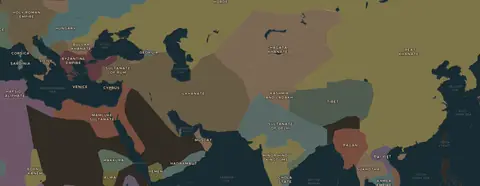 250
1258: the fall of Abbasid Baghdad
In 1258 a Mongol army took Baghdad and ended five centuries of Abbasid rule there. Students explore what was lost, what survived, and how historians remember a disaster whose death toll is still uncertain.
Mongol Empire1253-1261
-
 251
Castles: Edward I and the conquest of Wales
Between 1277 and 1295 King Edward I rings north Wales with some of the mightiest castles ever built. Students see how castles grew from earth and timber mounds into stone fortresses, and look at the conquest through Welsh as well as English eyes.
Medieval Britain1277-1295
-
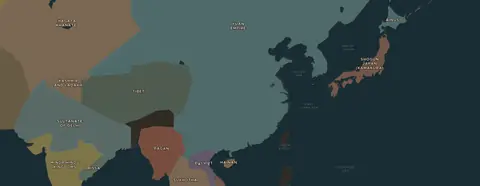 252
Kublai Khan and the Yuan dynasty
Genghis Khan's grandson Kublai conquered the Song and became the first Mongol to rule all of China. Students explore his two capitals, his failed wars at sea and why the Yuan dynasty lasted less than a century.
Yuan dynasty1260-1368
-
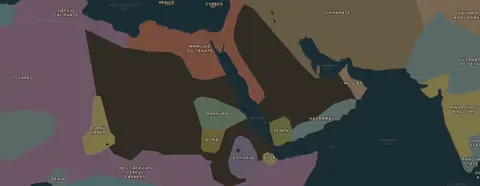 253
Lalibela: churches carved from rock
High in the Ethiopian mountains, King Lalibela had eleven churches cut down into solid rock. Students find out how they were made, why a king might build a new Jerusalem in Africa, and why pilgrims still come today.
Zagwe Ethiopiaabout 1180-1270
-
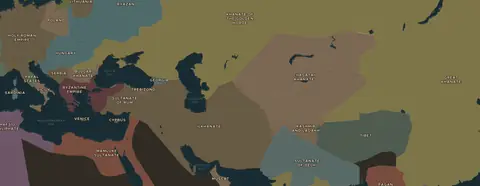 254
The Mongol Empire: the largest land empire
Within 70 years of Genghis Khan's rise, his heirs ruled from Korea to eastern Europe. Students explore the largest land empire in history, how relay stations and passports held it together, and why it split into four khanates.
Mongol Empire1227-1294
-
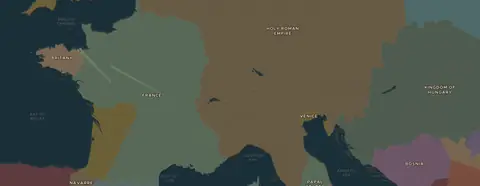 255
The Swiss Confederacy: an alliance of valleys
In 1291 three Alpine valleys promise to help each other against anyone who attacks them. Students see how a pass through the Alps made the valleys important, how farmers beat Habsburg knights, and how to tell the history from the legend of William Tell.
Late Middle Ages1291-1415
-
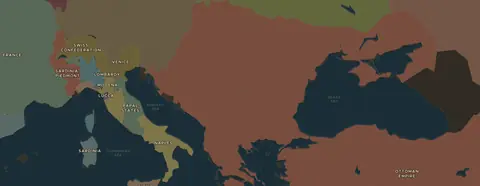 256
1453: the city falls
The conquest of Constantinople ends one empire and announces another. Students watch the Ottoman rise on the map and weigh what 1453 changed for Europe.
Ottoman Empire1300-1683
-
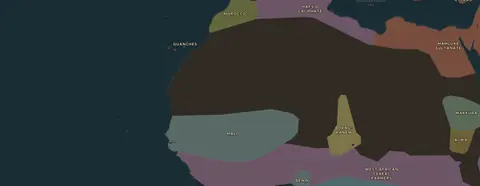 257
Gold for salt: crossing the Sahara
Camel caravans crossed the largest hot desert on Earth to trade West African gold for Saharan salt. Students follow the caravans, meet the people who guided them and see how goods, faith and writing travelled together.
Trans-Saharan tradeabout 300-1600
-
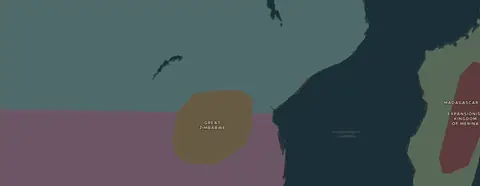 258
Great Zimbabwe: the city of stone
On a granite plateau in southern Africa, the ancestors of the Shona built huge walls of stone without mortar. Students explore a city that grew rich on cattle and gold, and the colonial myths that tried to deny who built it.
Great Zimbabweabout 1100-1450
-
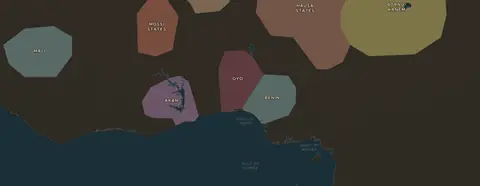 259
Ife and Oyo: the Yoruba kingdoms
Ife, the sacred city of the Yoruba, produced some of the finest metal sculpture in the world. Later Oyo built a cavalry empire with a council that could depose its king. Students explore art, power and checks on power.
Yoruba kingdomsabout 1100-1836
-
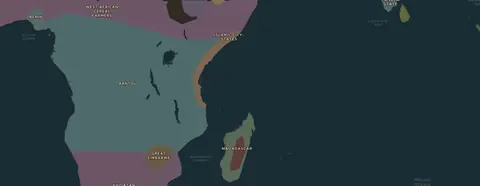 260
Kilwa and the Swahili coast
Stone towns along the East African coast traded gold, ivory and cloth across the Indian Ocean on the monsoon winds. Students visit Kilwa, which Ibn Battuta called one of the most beautiful towns in the world.
Swahili city-statesabout 1000-1505
-
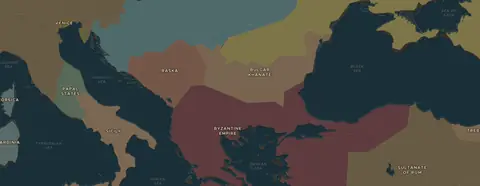 261
Kosovo 1389: battle and memory
On the Field of Blackbirds in 1389 a Serbian-led army meets the Ottoman sultan Murad I, and both leaders die. Students place the battle in the Ottoman advance into the Balkans and explore how one battle became a powerful story of memory.
Medieval Balkans1371-1389
-
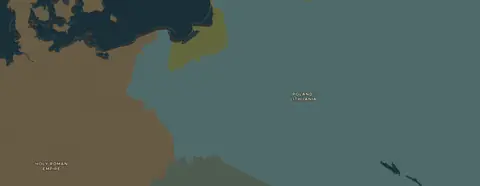 262
Poland-Lithuania: a union of crowns
In 1385 the pagan Grand Duke of Lithuania agrees to be baptized and to marry the young queen of Poland. Students follow how this union created one of Europe's largest states and how it defeated the Teutonic Knights at Grunwald in 1410.
Late Middle Ages1385-1410
-
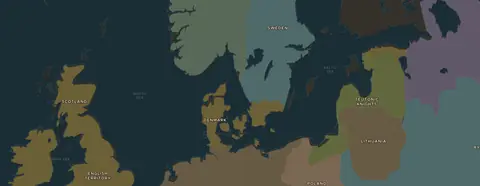 263
The Hanseatic League: merchants of the North
From Lübeck, German merchant towns build a trading network that stretches from London and Bruges to Bergen and Novgorod. Students follow the Hanseatic trade route, load a cog with herring, furs and grain, and see how merchants without a king could beat a kingdom.
Hanseatic League1159-1400
-
 264
Towns, markets and guilds
After 1100 towns grow fast across Europe. Students visit the cloth towns of Flanders and the great fairs of Champagne, join a guild as an apprentice, and ask why a medieval saying linked town life with freedom.
High Middle Ages1100-1300
-
 265
Venice and Genoa: rival sea republics
Two merchant republics without kings compete for the trade of the Mediterranean and the Black Sea. Students map the colonies of Venice and Genoa, follow Marco Polo from Venice, and replay the war of Chioggia that settled their long rivalry.
Italian sea republics1100-1381
-
 266
Wallace, Bruce and Scottish independence
In 1296 Edward I of England invades Scotland and carries off the stone on which its kings were crowned. Students follow William Wallace and Robert the Bruce from Stirling Bridge to Bannockburn and read the Declaration of Arbroath as an early statement of a people's freedom.
Medieval Scotland1296-1328
-
 267
Avignon and the Great Schism of the West
For almost 70 years the popes live in Avignon, and then for almost 40 years there are two popes, and finally three. Students map which kingdoms followed which pope and see how a church council in Constance ended the split in 1417.
Late Middle Ages1309-1417
-
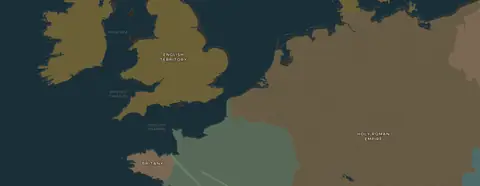 268
The Great Famine of 1315-1317
In 1315 the rain will not stop. For three years harvests rot in the fields across northern Europe, and then a cattle plague follows. Students link weather, food and power, and ask how a society copes when the harvest fails.
Late Middle Ages1315-1322
-
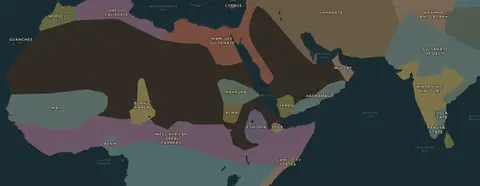 269
Mamluk Cairo: mother of the world
Under the Mamluks, Cairo became the greatest city of the Islamic world, rich from the spice trade between India and Venice. Students explore its markets, the visit of Mansa Musa, the Black Death and the Portuguese threat.
Mamluk Sultanate1250-1517
-
 270
Mansa Musa's journey to Mecca
In 1324 the ruler of Mali crossed the Sahara on pilgrimage with so much gold that its value fell in Cairo. Students follow the most famous royal journey of the Middle Ages and ask what Mali gained from it.
Mali Empire1324-1325
-
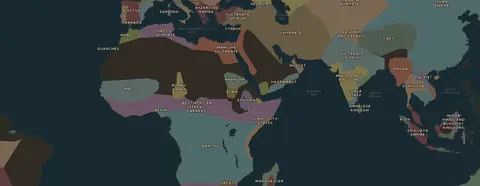 271
Ibn Battuta: 29 years on the road
A young scholar from Tangier set out for Mecca in 1325 and spent most of the next 29 years on the road, from China to West Africa. Students follow Ibn Battuta's journey on the map and test his story like historians.
Medieval Islamic world1325-1354
-
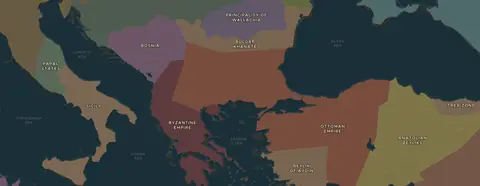 272
From Osman to Bayezid: the first Ottomans
Around 1300 the Ottomans were one small Turkish state among many. Within a century they ruled lands on two continents. Students trace this rise on the map and weigh the reasons historians give for it.
Ottoman Empire1299-1402
-
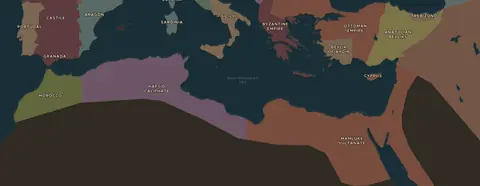 273
Ibn Khaldun and the rise and fall of dynasties
Born in Tunis and shaped by the Black Death, Ibn Khaldun asked why dynasties rise and fall. Students follow his life from Tunis to Cairo, meet his idea of group solidarity and test it on empires they know.
Medieval North Africa1332-1406
-
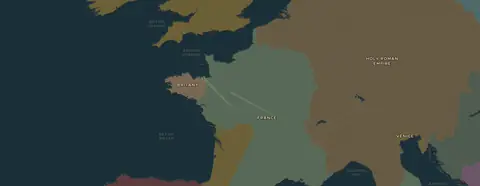 274
The Hundred Years' War
For more than a century the kings of England claim the crown of France. Students follow the war from Sluys and Crécy to Agincourt, see why longbows mattered, and ask who really paid the price of a war fought mostly on French soil.
Late Middle Ages1337-1453
-
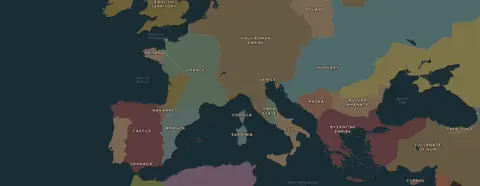 275
The Black Death
In 1347 ships from the Black Sea bring plague to Sicily, and within five years it has crossed all of Europe. Students watch the Black Death spread on the map, trace it along the trade routes and weigh how it changed the lives of the survivors.
Late Middle Ages1346-1353
-
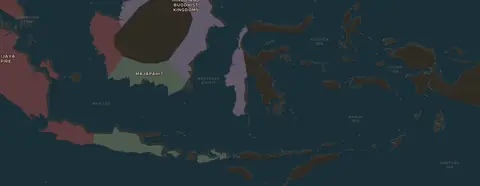 276
Majapahit: an island empire
Founded in 1293 by a prince who outwitted a Mongol fleet, Majapahit grew from East Java into the greatest power of the islands under its chief minister Gajah Mada. Students explore a sea empire of rice, spices and court poetry.
Majapahit1293-1527
-
 277
Zhu Yuanzhang: from beggar monk to Ming emperor
A peasant boy who lost his family to famine joined a rebellion against the Mongol Yuan and became the first Ming emperor in 1368. Students trace his rise on the map and weigh a ruler who rebuilt China's farms and purged his own officials.
Ming dynasty1351-1398
-
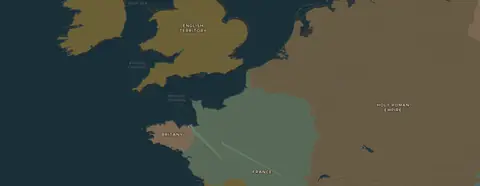 278
When peasants rose: 1358 and 1381
After the Black Death, the survivors want better pay and more freedom, and the lords want the old ways back. Students compare the French Jacquerie of 1358 with the English Peasants' Revolt of 1381 and ask what the rebels wanted and what they won.
Late Middle Ages1358-1381
-
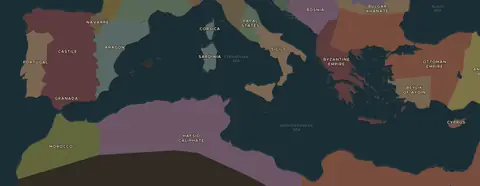 279
Granada and the Alhambra
For 250 years the small kingdom of Granada survived as the last Muslim state in Iberia. Students explore the Alhambra, the surrender of 1492, and what happened to the Muslims and Jews of Spain afterwards.
Nasrid Granada1238-1492
-
 280
Jan Hus and the Hussites
A Prague preacher criticizes the wealth of the Church and preaches in Czech. Burned at Constance in 1415, Jan Hus becomes the hero of a movement that beats five crusades. Students follow the Hussites and ask what makes people fight for their beliefs.
Late Middle Ages1402-1436
-
 281
Timur and the blue domes of Samarkand
Timur conquered from Delhi to Ankara and filled his capital Samarkand with domes and gardens built by craftsmen from many lands. His grandson Ulugh Beg made it a city of science. Students weigh a conqueror who built one city by ruining others.
Timurid Empire1370-1449
-
 282
Zheng He's treasure fleets
Between 1405 and 1433 the admiral Zheng He led seven huge Ming fleets across the Indian Ocean, as far as Arabia and East Africa. Students follow the voyages on the map and ask why China then turned its back on the sea.
Ming dynasty1405-1433
-
 283
The Forbidden City: Beijing becomes the capital
The Yongle emperor moved the Ming capital north to Beijing and built the Forbidden City at its heart. Students explore why an emperor would put his capital close to the frontier, and how the Grand Canal kept it fed.
Ming dynasty1402-1424
-
 284
Joan of Arc
A teenage farm girl from Domrémy says saints have told her to save France. Students follow Joan from her village to Orléans and Reims, examine her trial through the records, and discuss why so many different people have claimed her as their heroine.
Late Middle Ages1412-1431
Early modern
-
 285
Gutenberg and the printing press
In Mainz, a metalworker combines movable metal type, oil-based ink and a press. Within fifty years printers work in more than two hundred towns. Students watch printing spread across the map and ask what changes when books become cheap.
Renaissance Europe1450-1500
-
 286
Sejong the Great and Hangul
King Sejong of Joseon gave Korea its own alphabet in 1446, so that ordinary people could read and write. Students explore the new dynasty and its capital, Sejong's scientists and the debate over Hangul at his court.
Joseon Korea1392-1450
-
 287
Around the world in three years
Columbus sails west, Magellan's crew circles the globe. Students follow the journeys layer and discover how the world map itself was the discovery.
Age of Exploration1492-1522
-
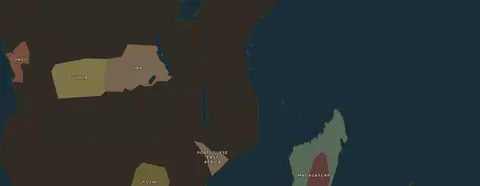 288
Fort Jesus and the Swahili coast
After Vasco da Gama, Portugal tries to control the old trading cities of the East African coast. Students follow the struggle from Malindi and Mombasa to Mozambique Island, and see how Swahili towns, Omani sailors and Portuguese soldiers fought over the coast for two centuries.
Portuguese Empire1498-1698
-
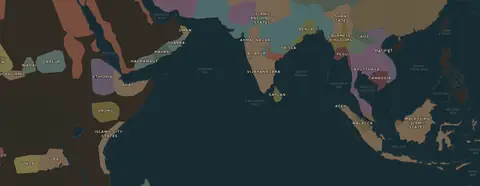 289
Portugal's sea empire in Asia
Portugal builds an empire of forts and sea lanes rather than land, from Mozambique to Goa, Malacca and Macau. Students map the chain of bases, meet the Asian rulers and merchants who already ran Indian Ocean trade, and ask how a small kingdom held it.
Portuguese Empire1505-1641
-
 290
Brazil and sugar: a plantation colony
Portuguese ships reached the coast of Brazil in 1500. Within a century the colony was the world's leading producer of sugar, grown on plantations worked first by enslaved Indigenous people and then by enslaved Africans. Students explore the Tupi, the sugar mills and Dutch Brazil.
Portuguese Brazil1500-1654
-
 291
Hispaniola: the Taíno and the first Spanish colony
The Taíno of the Caribbean were the first people in the Americas to live under Spanish rule. Students explore Taíno society, the forced-labour system that devastated it, the Taíno leaders who resisted, and the friar who changed his mind.
Spanish Caribbean1492-1542
-
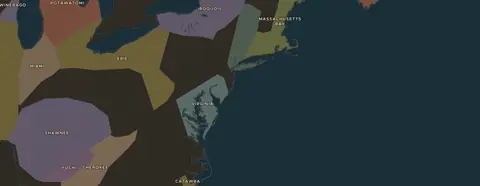 292
Jamestown and Plymouth: colonies on Native land
The first lasting English colonies in North America were built in the homelands of the Powhatan and the Wampanoag. Students explore how both sides first needed each other, why relations broke down, and how the first Thanksgiving is remembered in different ways.
English colonies1607-1676
-
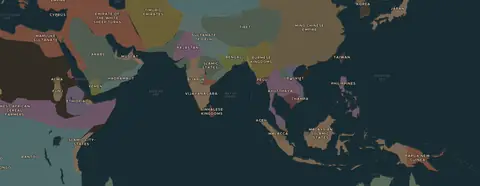 293
Malacca: the port of the monsoon winds
Around 1400 a prince from Sumatra founded Malacca on the narrow strait between the Indian Ocean and the South China Sea. Within a century it was one of the greatest ports in the world, until a Portuguese fleet took it in 1511.
Malacca Sultanate1400-1511
-
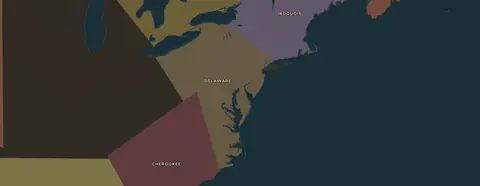 294
The Haudenosaunee: the Great Law of Peace
Before Europeans arrived, five nations south of Lake Ontario agreed to stop fighting and govern together under the Great Law of Peace. Students explore how the Haudenosaunee Confederacy worked, the power of clan mothers, and its place in American history.
Haudenosaunee Confederacybefore 1600-1722
-
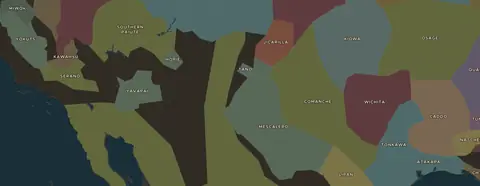 295
The Pueblo Revolt of 1680
In August 1680, Pueblo peoples across New Mexico rose together and drove out the Spanish colonists. Students explore why towns with different languages united, how knotted cords set the date, and what changed when the Spanish returned in 1692.
Spanish New Mexico1598-1692
-
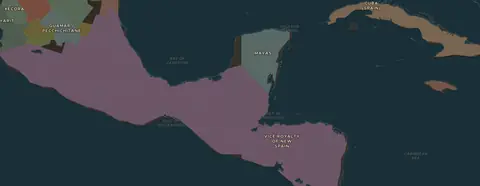 296
The long Maya resistance, 1524-1697
The Aztec capital fell in two years, but the conquest of the Maya took more than 170. Students explore why many small Maya kingdoms were so hard to conquer, from the highlands of Guatemala to the last free Maya city on Lake Petén Itzá.
Spanish conquest1524-1697
-
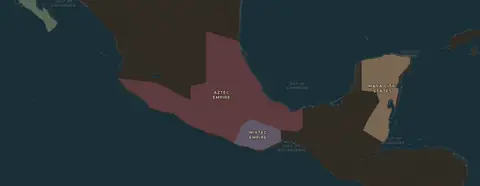 297
1521: the fall of Tenochtitlan
How did a few hundred Spaniards bring down the Aztec capital? Students follow the campaign of 1519-1521 and discover that it was won largely by Indigenous armies and by smallpox, and they read the conquest through Nahua eyes.
Spanish conquest1519-1521
-
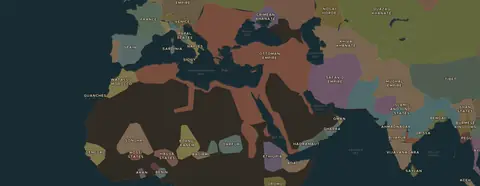 298
Coffee and the coffeehouse
Coffee began as a drink of Sufis in Yemen and became a worldwide habit. Students follow the bean from the Red Sea to Istanbul and London, and find out why rulers both loved and feared the coffeehouse.
Ottoman Empireabout 1450-1700
-
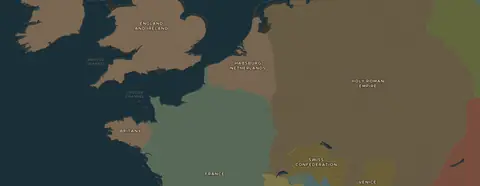 299
Erasmus and the northern Renaissance
The most famous writer in Europe has no country and no palace: Erasmus of Rotterdam moves between printers, universities and friends. Students map his life and discuss his belief that education, not war, makes a good society.
Northern Renaissance1500-1536
-
 300
Guru Nanak and the Sikh Gurus
In the Punjab, Guru Nanak taught that there is one God and that all people are equal. Over ten Gurus, Sikhism grew a holy book, the Golden Temple and the Khalsa. Students explore a new faith in the land of five rivers.
Sikhism1469-1708
-
 301
Leonardo, Michelangelo and Raphael
Three artists, three cities, one generation. Students follow Leonardo to Milan and France, Michelangelo to Florence and Rome, and Raphael into the Vatican, and discuss who paid for this art and why.
Italian Renaissance1495-1520
-
 302
Malinche: the woman who spoke for two worlds
An enslaved Nahua girl, handed to the Spaniards in 1519, became the most important interpreter of the conquest of Mexico. Students follow Malinche's journey, see how Indigenous painters showed her, and debate how she should be remembered.
Spanish conquest1519-1521
-
 303
Moctezuma II: an emperor meets strangers
In 1519 Moctezuma II ruled the most powerful state in Mesoamerica when a few hundred Spaniards landed on his coast. Students play his choices in Rule History, compare Spanish and Mexica accounts, and test a famous story many historians now doubt.
Aztec (Mexica)1502-1520
-
 304
Qhapaq Ñan: the Inca road system
Roads of some 30,000 to 40,000 km tied the Inca Empire together, across deserts, mountain passes and gorges. Students follow the roads, the relay runners who raced along them and the grass bridges that are still rebuilt every year.
Inca Empire1438-1533
-
 305
Queen Njinga of Ndongo and Matamba
For four decades Queen Njinga fought, negotiated and made alliances to keep her people free from Portuguese rule. Students follow one of the great leaders of African history and ask why she is remembered so differently.
Ndongo and Matamba1622-1663
-
 306
Selim I takes Cairo, Mecca and Medina
In two short campaigns Sultan Selim I destroyed the Mamluk Sultanate and made the Ottomans masters of Syria, Egypt and the holy cities of Islam. Students compare the map before and after 1517.
Ottoman Empire1516-1517
-
 307
Shah Ismail and the Safavid revolution
In 1501 a fourteen-year-old leader of a Sufi order was crowned shah in Tabriz and made Shia Islam the faith of his state. Students explore how Ismail changed Iran for centuries and why he clashed with the Ottomans.
Safavid Empire1501-1524
-
 308
Songhai: the great empire of the Niger
From its capital Gao, Songhai grew into one of the largest empires in African history. Students meet Sunni Ali and Askia Muhammad and find out how an army that crossed the Sahara with guns brought the empire down in 1591.
Songhai Empire1464-1591
-
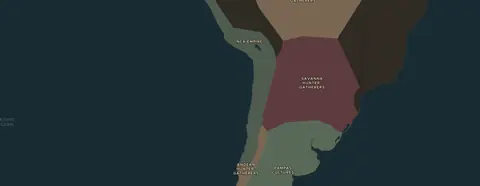 309
Tawantinsuyu: the Inca Empire
In less than a century, the Inca built the largest empire of the Americas, stretching about 4,000 km along the Andes. Students explore how Tawantinsuyu was run from Cusco without money or writing, and why Machu Picchu survived.
Inca Empire1438-1533
-
 310
Tenochtitlan: a city built on a lake
The Mexica founded Tenochtitlan on an island in Lake Texcoco in 1325. Two centuries later it was one of the largest cities in the world, linked to the shore by causeways and fed by fields built in the lake. Students explore how a city on a lake worked.
Aztec (Mexica)1325-1519
-
 311
The Aztec Empire: tribute and the Triple Alliance
In 1428 three lake cities joined forces and built an empire on tribute. Students explore how the Triple Alliance controlled hundreds of towns without governing them directly, what tribute lists reveal, and which neighbours were never conquered.
Aztec (Mexica)1428-1519
-
 312
The Italian Wars and Machiavelli
France and Spain fight over Italy for more than sixty years. In Florence an out-of-work official writes The Prince, a handbook on how rulers keep power. Students follow the armies on the map and test Machiavelli's advice.
Italian Renaissance1494-1559
-
 313
The Ming Great Wall
The Great Wall most people picture today was built by the Ming after a Mongol army captured their emperor in 1449. Students follow the wall from the desert to the sea and judge whether walls kept the Ming safe.
Ming dynasty1449-1644
-
 314
Timbuktu: a city of books
At the edge of the Sahara, Timbuktu became a city of scholars, mosques and private libraries. Students discover what its manuscripts contain, who wrote them and how families kept them safe for centuries.
Mali and Songhaiabout 1325-1591
-
 315
Vijayanagara: the City of Victory
For more than two centuries the empire of Vijayanagara ruled southern India from a great city among the boulders of Hampi. Students explore it through the eyes of foreign visitors and ask how one battle in 1565 could empty a capital.
Vijayanagara Empire1336-1565
-
 316
Babur and the birth of the Mughal Empire
Babur became a king at 11, lost his homeland, took Kabul and in 1526 won northern India at Panipat. He also wrote one of the great memoirs of history. Students follow his road from Central Asia to Delhi and Agra.
Mughal Empire1494-1530
-
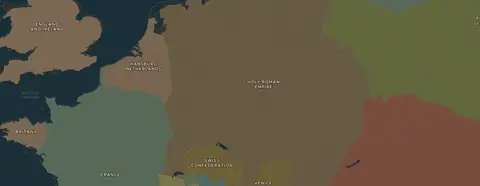 317
Luther and the Reformation
A monk in a small Saxon town challenges the most powerful institution in Europe. Students follow Luther from Wittenberg to Worms and the Wartburg, and see how printing turned one man's protest into a movement that split the Western Church.
Reformation1517-1530
-
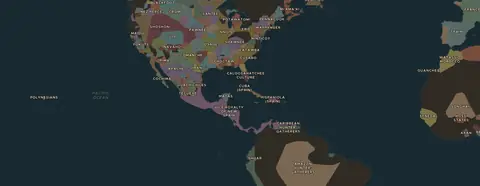 318
The great dying: epidemics in the Americas
Smallpox, measles and other diseases from Europe and Africa met people in the Americas who had never faced them. Together with war and forced labour, they caused one of the largest population collapses in history. Students explore how and why, with care.
Columbian Exchange1518-1620
-
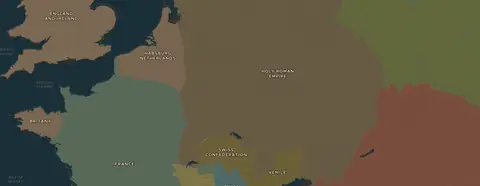 319
The German Peasants' War of 1525
Inspired partly by Reformation ideas, peasants across southern and central Germany demand an end to serfdom. Students read their Twelve Articles, follow the rising on the map and discuss why Luther turned against them.
Reformation1524-1525
-
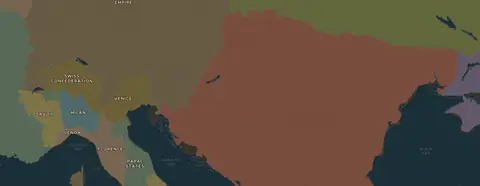 320
Mohács and the first siege of Vienna
In 1526 the Ottomans destroyed the Hungarian army at Mohács; in 1529 they stood before Vienna. Students follow the long march up the Danube and ask why the siege failed.
Ottoman Empire1526-1529
-
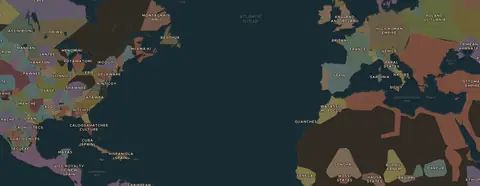 321
Charles V and the Habsburg world
Born in Ghent in 1500, Charles inherits Spain, the Low Countries, Austria, southern Italy and new lands in the Americas, and is then elected emperor. Students map the largest inheritance in European history and see why it was so hard to rule.
Habsburg Empire1519-1556
-
 322
Ethiopia and Adal: war in the Horn
In 1529 the Sultanate of Adal invaded the Christian Ethiopian Empire, and for fourteen years the Horn of Africa was at war. Ottoman muskets and Portuguese soldiers joined in. Students look at the war from both sides.
Ethiopia and Adal1529-1543
-
 323
Florence and the Medici
A family of bankers runs a republic without ever being crowned. Students explore how Medici money paid for artists and builders, and why Florence became a cradle of the Renaissance.
Italian Renaissance1434-1494
-
 324
Henry VIII and the English Reformation
A king wants a son and a new marriage; the pope says no. Students follow how Henry VIII broke with Rome, closed the monasteries and made himself head of the Church of England, and what that meant for ordinary people.
Tudor England1527-1547
-
 325
Janissaries: the sultan's soldiers
The Ottoman sultans took Christian boys from their families, converted and trained them, and made them soldiers, architects and viziers. Students look at the devshirme from the side of the families and of the empire.
Ottoman Empireabout 1380-1826
-
 326
Kongo: an African Christian kingdom
When Portuguese ships reached the Congo river, the kingdom of Kongo chose to become Christian and to trade. Students read the letters of King Afonso I, who protested against the slave trade in 1526, and follow Kongo to its defeat at Mbwila.
Kingdom of Kongo1483-1665
-
 327
Russia crosses Siberia
In less than sixty years Cossacks and fur traders cross Siberia from the Urals to the Pacific. Students watch Russia grow on the map, learn why furs drove the expansion, and meet the Indigenous peoples who paid the price.
Russian Empire1582-1689
-
 328
Sengoku: Japan's age of warring states
After 1467 Japan broke apart into domains ruled by warring lords. Portuguese guns arrived in 1543, and Oda Nobunaga and Toyotomi Hideyoshi fought their way to unity by 1590. Students follow a century of war and the rise of a new order.
Sengoku Japan1467-1590
-
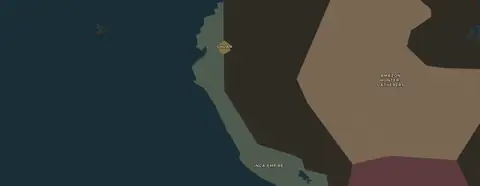 329
Cajamarca 1532: Atahualpa and Pizarro
In November 1532 the Inca ruler Atahualpa, fresh from winning a civil war, met fewer than 200 Spaniards at Cajamarca and was taken prisoner. Students explore why the empire was so vulnerable, and how an Andean artist later drew the conquest.
Inca Empire1532-1533
-
 330
Manco Inca and the free state of Vilcabamba
The conquest of Peru did not end in 1533. Manco Inca rose against the Spaniards, besieged Cusco and won a battle at Ollantaytambo, then ruled a free Inca state in the forests of Vilcabamba. Students follow 36 years of Inca resistance.
Inca resistance1536-1572
-
 331
Barbarossa, Malta and Lepanto
For forty years Ottoman and Christian fleets fought for the Mediterranean. Students follow the corsair-admiral Barbarossa, the siege of Malta and the great galley battle of Lepanto, and ask who really won.
Ottoman Empire1533-1573
-
 332
Copernicus, Galileo and a Sun-centred universe
A Polish church official puts the Sun at the centre of the universe; an Italian professor points a telescope at the sky and finds moons circling Jupiter. Students follow the new astronomy across Europe and discuss Galileo's trial in 1633.
Scientific Revolution1543-1642
-
 333
The Counter-Reformation
The Catholic Church answers the Protestants with reforms of its own. Students follow the bishops to the Council of Trent and the first Jesuits from Rome to India and Japan, and ask how a worldwide church renewed itself.
Catholic Reformation1540-1600
-
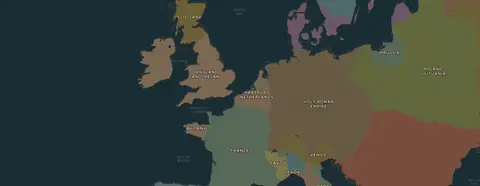 334
Calvin's Geneva
A French refugee turns a small city on Lake Geneva into a training school for Protestants from all over Europe. Students map how Calvin's ideas travelled to France, Scotland and the Netherlands, and debate life in a city with strict rules for everyone.
Reformation1536-1564
-
 335
Akbar the Great
Akbar became emperor at 13 and turned the Mughal state into a great empire. He won allies among the Rajputs, abolished a tax on non-Muslims and invited scholars of every faith to debate at his court. Students weigh his policy of "peace with all".
Mughal Empire1556-1605
-
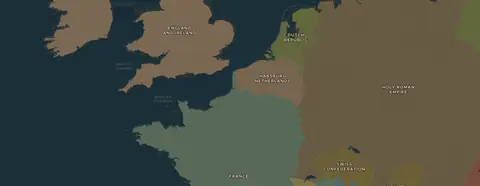 336
William of Orange and the Dutch Revolt
The Low Countries rise against Philip II of Spain over taxes, old freedoms and faith. Students follow William of Orange from nobleman to rebel leader, see Leiden saved by flooding the land, and ask why he is called the father of the Dutch nation.
Dutch Revolt1566-1584
-
 337
The French Wars of Religion
For 36 years Catholics and Protestant Huguenots fight over France. Students follow the wars from Paris to La Rochelle and Nantes and judge the Edict of Nantes, which allowed two faiths in one kingdom.
Reformation France1562-1598
-
 338
Suleiman the Magnificent and Sinan
Europe called him "the Magnificent", his own people "the Lawgiver". Students explore the reign of Suleiman, his campaigns from Belgrade to Baghdad, and the buildings of his architect Sinan.
Ottoman Empire1520-1566
-
 339
Elizabeth I and the Spanish Armada
In 1588 Philip II sends a great fleet to carry an army to England. Students follow the Armada from Lisbon up the Channel to Gravelines and home around Scotland and Ireland, and ask what decided its fate: English ships, Spanish plans or the weather.
Tudor England1558-1603
-
 340
The Imjin War and Admiral Yi Sun-sin
In 1592 Toyotomi Hideyoshi sent a huge army into Korea on its way to conquer Ming China. Korea's armies collapsed, but Admiral Yi Sun-sin won battle after battle at sea. Students follow a seven-year war and ask how it shaped three countries.
Joseon Korea1592-1598
-
 341
Benin: the Oba's kingdom and its brass plaques
In the forest of southern Nigeria, the Obas of Benin ruled a walled capital and kept a royal guild of brass casters. Students read the history told by Benin's plaques and debate where the artworks taken in 1897 belong today.
Kingdom of Beninabout 1440-1897
-
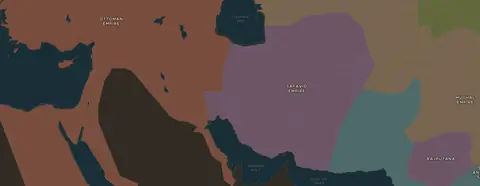 342
Shah Abbas and Isfahan, half the world
Shah Abbas rebuilt the Safavid army, won back lost lands and made Isfahan one of the most beautiful cities on earth. Students explore his great square, his silk trade and the people who paid the price of his plans.
Safavid Empire1588-1629
-
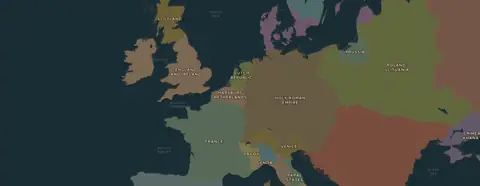 343
Shakespeare's London
A glover's son from Stratford becomes the most famous playwright in the world. Students explore the crowded London of the Globe Theatre, where courtiers, apprentices and pickpockets watched the same plays, and ask why theatre was so popular.
Elizabethan England1590-1616
-
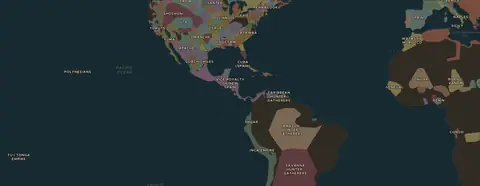 344
The Columbian Exchange: a world of new foods
After 1492, plants, animals and people crossed the oceans in both directions. Potatoes and maize fed Europe, Africa and Asia; horses and cattle changed the Americas. Students trace the exchange on the trade routes and in the food on their own plates.
Columbian Exchange1492-1700
-
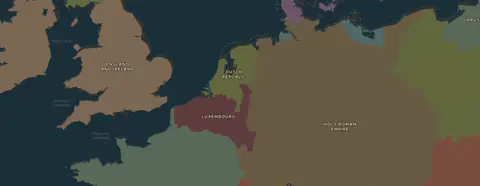 345
The Eighty Years' War and the Peace of Münster
After William's death the revolt nearly collapses, then a young republic fights Spain to a standstill. Students follow a long war of sieges, from the fall of Antwerp to the peace signed at Münster in 1648, and see how the Low Countries split in two.
Dutch Revolt1585-1648
-
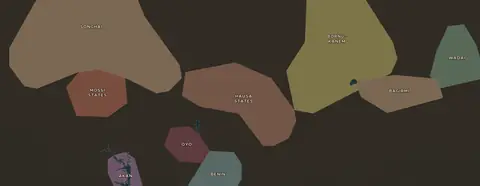 346
The Hausa cities: Kano, Katsina and Zazzau
Walled cities with busy markets, dye pits and scholars grew up across northern Nigeria. Students explore the Hausa city-states, their trade across the Sahara, and the warrior queen Amina whom history remembers but cannot pin down.
Hausa city-statesabout 1400-1800
-
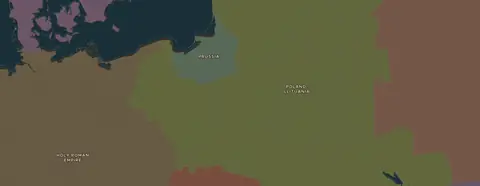 347
The Polish-Lithuanian Commonwealth
In 1569 Poland and Lithuania join to form one of the largest states in Europe, where nobles elect their king. Students map the Commonwealth, explore its religious tolerance and its noble democracy, and ask what made it strong and what made it fragile.
Polish-Lithuanian Commonwealth1569-1683
-
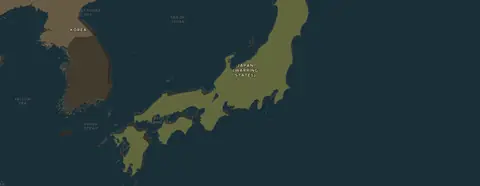 348
Tokugawa Ieyasu and the Battle of Sekigahara
When Hideyoshi died in 1598, Tokugawa Ieyasu waited, made deals and won the Battle of Sekigahara in 1600. Students follow his path to power and see how his shogunate kept Japan at peace for about 250 years.
Tokugawa Japan1598-1616
-
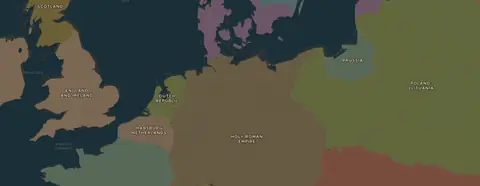 349
The Thirty Years' War begins
In 1618 Protestant nobles throw two royal officials out of a window of Prague Castle. Students follow how a revolt in Bohemia grew into a war that drew in much of Europe and devastated the German lands.
Thirty Years' War1618-1629
-
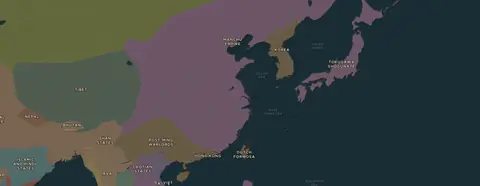 350
1644: from Ming to Qing
In 1644 rebels took Beijing, the last Ming emperor died, and the Manchus rode through the Great Wall to found the Qing dynasty. Students trace the collapse on the map and weigh the choices of rebels, generals and conquerors.
Qing dynasty1616-1683
-
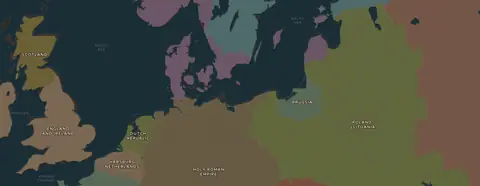 351
Gustavus Adolphus and Sweden at war
In 1630 the king of Sweden lands in Germany with a modern army. Students follow Gustavus Adolphus from the Baltic coast to victory at Breitenfeld and death at Lützen, and discuss what the war meant for the people in its path.
Thirty Years' War1630-1635
-
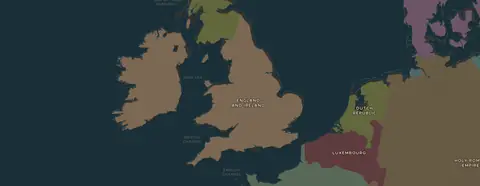 352
The English Civil War
King and Parliament go to war over money, religion and who holds power. Students follow the Civil War from Nottingham to Naseby, the trial and execution of Charles I, and the years when England had no king.
Stuart England1642-1660
-
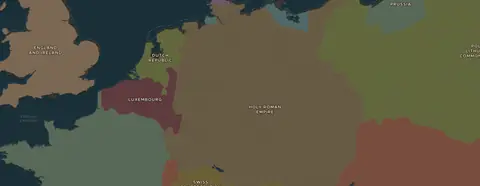 353
The Peace of Westphalia
Envoys from across Europe spend years negotiating in two towns in Westphalia. Students map the peace that ended the Thirty Years' War, recognised two independent states and changed the rules of the empire, and discuss why it became so famous.
Thirty Years' War1643-1648
-
 354
Aurangzeb, Shivaji and the Deccan wars
Under Aurangzeb the Mughal Empire reached its greatest size, yet the Maratha leader Shivaji built a kingdom of hill forts that the emperor could never defeat. Students compare two famous rivals and ask why the biggest empire was also overstretched.
Mughal Empire1658-1707
-
 355
Ayutthaya: Siam's island capital
For four centuries Ayutthaya, an island city ringed by rivers, was the capital of Siam and one of the great trading cities of Asia. Students explore its rivers, its foreign quarters and its fall in 1767, and see how Siam recovered.
Ayutthaya Kingdom1351-1767
-
 356
Lhasa and the Dalai Lamas
A Mongol khan gave the title Dalai Lama to a Tibetan teacher in 1578. Within a century the Dalai Lamas ruled Tibet from the Potala Palace. Students explore how religion and politics joined on the roof of the world, between Mongols and the Qing.
Tibet1578-1793
-
 357
New France and the fur trade
In 1608 Samuel de Champlain founded Quebec on the St. Lawrence River. New France lived from the fur trade, which depended on alliances with First Nations such as the Wendat, Algonquin and Innu. Students follow the canoe routes, the wars over furs and the Great Peace of 1701.
New France1608-1701
-
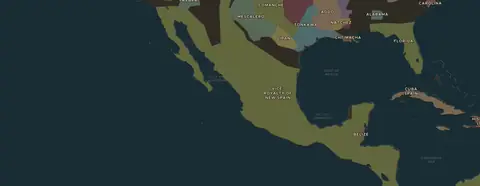 358
New Spain: life in a colonial society
From 1535 a Spanish viceroy ruled from Mexico City, built on the ruins of Tenochtitlan. Students explore a society of Indigenous towns, Spaniards, Africans and people of mixed ancestry, with its silver mines and printing presses, and a nun who fought for the right to learn.
Viceroyalty of New Spain1535-1700
-
 359
Palmares: a free kingdom in the hills of Brazil
For almost a century, people who escaped slavery built Palmares, a network of free villages in the hills of north-east Brazil. Students explore how it lived and defended itself, the choice between Ganga Zumba and Zumbi, and why 20 November is a national day in Brazil.
Portuguese Brazilc. 1605-1695
-
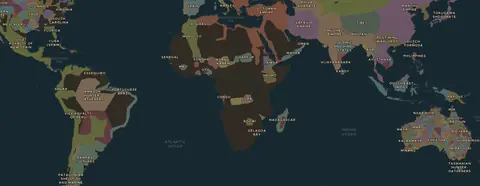 360
Potosí: the mountain of silver
In 1545 a mountain of silver was found high in the Andes. Potosí became one of the largest cities in the world, built on the forced labour of Indigenous miners, and its silver flowed to Spain, Europe and China. Students follow the silver and ask who paid for it.
Viceroyalty of Peru1545-1650
-
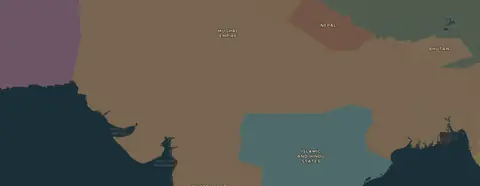 361
Shah Jahan and the Taj Mahal
When his wife Mumtaz Mahal died in 1631, the emperor Shah Jahan began the Taj Mahal, a white marble tomb on the Yamuna River. Students explore how and why it was built, and weigh the glory and the cost of Mughal building.
Mughal Empire1628-1658
-
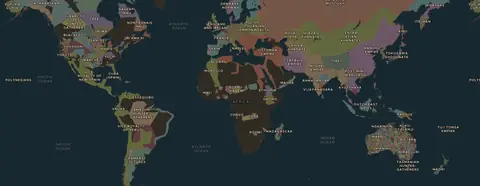 362
The Dutch Golden Age
A small republic becomes a world power through water, trade and ships. Students trace the trade network and discuss both the wealth and its dark side.
Dutch Republic1588-1672
-
 363
London's plague and Great Fire, 1665-1666
In two years London suffers its last great plague and a fire that destroys most of the old city. Students use Samuel Pepys's diary, find the village of Eyam that shut itself off to protect others, and see how London was rebuilt in brick and stone.
Stuart England1665-1666
-
 364
Newton and the age of experiment
In London a club of curious men meets to test ideas by experiment. Students explore the Royal Society, Isaac Newton's laws of motion and gravity, and how the new science travelled from Cambridge and Greenwich across Europe.
Scientific Revolution1660-1727
-
 365
The Little Ice Age in Europe
Colder winters freeze the Thames, the Baltic and the lagoon of Venice. Students use the Weather of History layer to explore frost fairs, failed harvests and a volcano in Iceland, and ask how climate shaped wars, food and daily life between 1600 and 1789.
Early modern Europe1600-1789
-
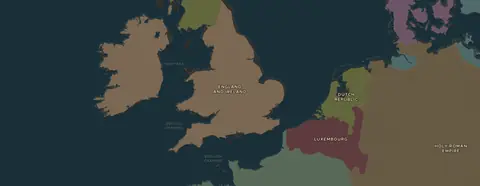 366
The Glorious Revolution of 1688
A Dutch prince sails to England with a large fleet and an army, and the king flees. Students follow William of Orange from Hellevoetsluis to Torbay and discuss the Bill of Rights, which limited royal power for good.
Stuart England1688-1689
-
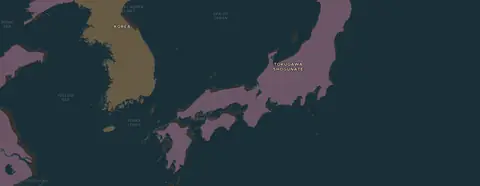 367
Edo Japan: a closed country?
From the 1630s the Tokugawa shoguns banned Christianity, expelled the Portuguese and kept the Dutch on a tiny island at Nagasaki. Students test the idea of a "closed country" on the map, and explore Edo, a city of about a million people.
Tokugawa Japan1633-1800
-
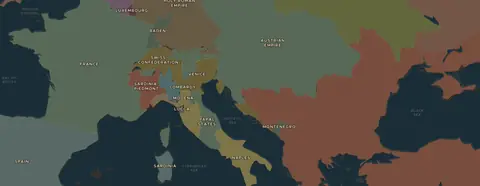 368
Karlowitz, tulips and the first Ottoman press
After losing Hungary in 1699, the Ottoman court looked anew at Europe: envoys went to Paris, tulip gardens bloomed and the first press printing in Ottoman Turkish opened in Istanbul. Students explore an empire adapting.
Ottoman Empire1699-1730
-
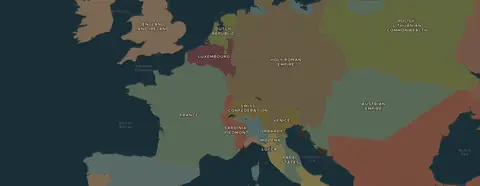 369
Louis XIV and Versailles
The Sun King turns his father's hunting lodge into the most famous palace in Europe and keeps the nobles close. Students explore how Louis XIV used buildings, ceremony and war to show absolute power, and what it cost France.
Bourbon France1643-1715
-
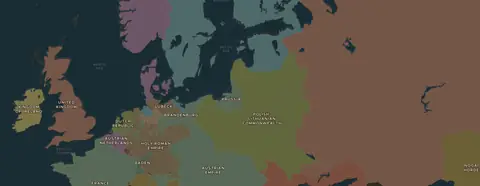 370
Peter the Great and St Petersburg
A very tall young tsar travels to Holland and England to learn shipbuilding, then builds a new capital on the marshes of the Baltic. Students follow Peter's journey and wars, and weigh the cost of his reforms for the people who built his city.
Russian Empire1682-1725
-
 371
The Atlantic slave trade and the Americas
Over more than three centuries, about 12.5 million Africans were forced onto ships bound for the Americas. Students look at where they came from and where they were taken, the plantations their labour built, and the many ways enslaved people resisted and kept their cultures alive.
Atlantic world1500s-1700s
-
 372
The East India Company in India
A London trading company arrives in Mughal India asking for permission to trade, and about 160 years later it rules Bengal. Students follow the Company from Surat, Madras and Calcutta to the battlefield of Plassey, and ask how traders became rulers, and at what cost.
East India Company1600-1785
-
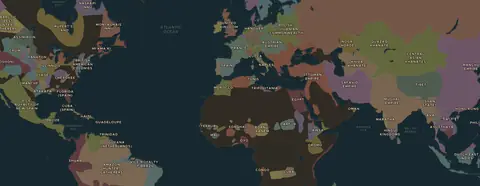 373
The Seven Years' War: a war around the world
Britain and France fight in Europe, North America, the Caribbean, West Africa and India at the same time. Students follow the war from the Ohio valley to Quebec and Plassey, and see how the Peace of Paris of 1763 redrew the map of empires.
Global empires1756-1763
-
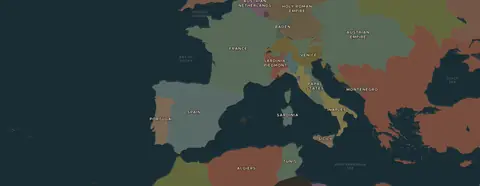 374
The War of the Spanish Succession
When the childless king of Spain dies in 1700, he leaves his empire to a grandson of Louis XIV. Much of Europe goes to war to stop France and Spain from joining. Students follow the war from Blenheim to Gibraltar and Barcelona, and see who gained what at Utrecht in 1713.
Age of Louis XIV1701-1714
-
 375
The partitions of Poland
In 23 years three neighbours divide one of Europe's largest states among themselves until it vanishes from the map. Students compare the borders of 1700 and 1800, meet the reformers of the Constitution of 3 May 1791 and Kościuszko's rising, and ask how a country can disappear.
Polish-Lithuanian Commonwealth1772-1795
-
 376
Asante and the Golden Stool
Around 1701 Osei Tutu united Akan chiefdoms into the Asante kingdom, bound together by the sacred Golden Stool. Students explore a forest empire of gold, roads and brass weights that defeated a British army in 1824.
Asante Empire1701-1874
-
 377
The American Revolution
Thirteen British colonies go to war with their king and declare that "all men are created equal". Students follow the war from Lexington to Saratoga and Yorktown, and ask what independence meant for Loyalists, enslaved people and Native nations as well as for the new United States.
American Revolution1775-1783
-
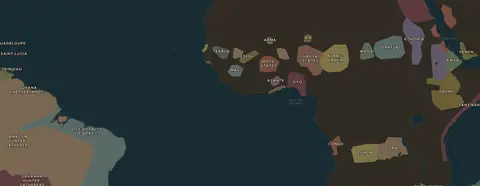 378
The Atlantic slave trade seen from Africa
Over more than three centuries about 12.5 million Africans were forced onto ships bound for the Americas. Students look at the trade from the African side: the states and ports involved, the people taken, and those who resisted.
Atlantic slave tradeabout 1500-1867
-
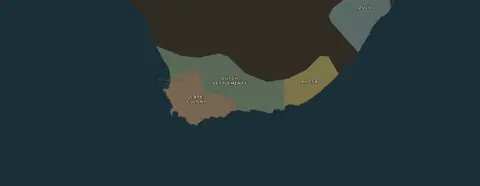 379
The Cape frontier and the Xhosa wars
A Dutch supply station at the Cape grew into a colony that pushed east onto the lands of the Khoikhoi, San and Xhosa. Students follow a hundred years of frontier wars from the side of the people who resisted.
Cape frontier1652-1879
-
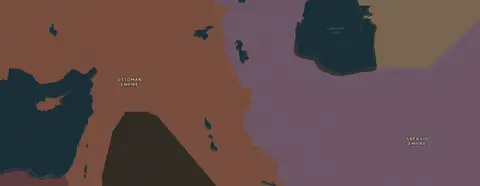 380
Drawing a border: Ottomans and Safavids
For 125 years the Sunni Ottomans and the Shia Safavids fought over Iraq, Azerbaijan and the Caucasus. Students follow the wars, see how the Treaty of Zuhab drew a lasting line, and compare it with today's border.
Ottoman and Safavid empires1514-1639
-
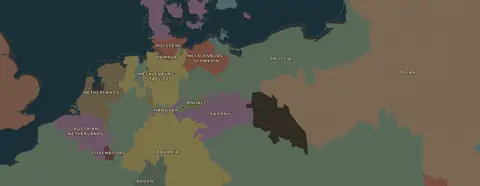 381
Frederick the Great and the rise of Prussia
A young king who loves flute music and French books seizes Silesia and turns Prussia into a great power. Students follow Frederick from Potsdam to the battlefields, and weigh the "enlightened" ruler against the man who started wars.
Kingdom of Prussia1740-1786
-
 382
Maria Theresa and Habsburg Austria
At 23 Maria Theresa inherits the Habsburg lands, and enemies attack at once. Students follow how she held her lands together, won the support of Hungary, reformed schools and government, and why she never forgave Frederick for Silesia.
Habsburg Monarchy1740-1780
-
 383
1754-1763: the war that redrew North America
France and Britain fought for control of North America, and Native nations fought for their own lands between them. Students follow the war from the Ohio valley to Quebec, the peace of 1763 that removed France from the continent, and Pontiac's War that followed.
Seven Years' War1754-1763
-
 384
Sugar, plantations and the triangular trade
Sugar turns small Caribbean islands into some of the richest colonies on Earth, built on the forced labour of enslaved Africans. Students follow the triangle of trade, see how sugar changed European diets, and meet the Maroons who fought for their freedom in the mountains.
Atlantic world1640-1789
-
 385
The Middle Passage and the Atlantic slave trade
For more than three centuries, about 12.5 million Africans were forced onto ships bound for the Americas. Students map where captives came from and where they were taken, hear the voices of those who survived, and ask how this history should be remembered.
Atlantic world1500s-1860s
-
 386
The Lisbon earthquake of 1755
On All Saints' Day 1755 an earthquake, a tsunami and fires destroy much of Lisbon. Students follow the waves across the ocean, see how the city was rebuilt with earthquake-resistant buildings, and discuss why the disaster shook Europe's thinkers.
Enlightenment1755
-
 387
Resistance and the first abolitionists
Enslaved people never accepted slavery: they revolted, ran away and went to court. By the 1780s they had allies among Quakers, writers and a new campaign in London. Students follow the struggle from Jamaica to Philadelphia and London and ask who really ended the slave trade.
Atlantic world1760-1789
-
 388
The Enlightenment: reason, rights and the Encyclopédie
In Paris salons, Edinburgh clubs and coffee houses across Europe, writers ask whether reason can improve society. Students meet Montesquieu, Voltaire, Rousseau, Beccaria and Kant, follow the Encyclopédie and ask which of their ideas still shape our laws.
Enlightenment1748-1784
-
 389
Catherine the Great
A German princess seizes the Russian throne from her husband and rules for 34 years. Students follow Catherine from St Petersburg to the Black Sea, read about her letters with French thinkers, and face the Pugachev rebellion that showed the anger of Russia's serfs.
Russian Empire1762-1796
-
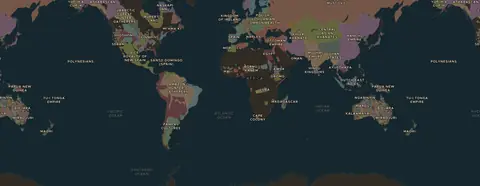 390
James Cook and the Pacific
In three voyages James Cook charts more of the Pacific than any European before him. Students follow his ships from Tahiti to New Zealand, Australia and Hawai'i, meet the Pacific navigators and Indigenous peoples he encountered, and ask what these meetings meant for both sides.
Pacific encounters1768-1779
-
 391
Dahomey: the kingdom of Abomey
From its inland capital Abomey, Dahomey fought its way to the coast, paid tribute to Oyo and grew rich and powerful through the slave trade. Students meet its women soldiers and King Behanzin, who fought the French army.
Kingdom of Dahomeyabout 1650-1894
-
 392
India in the 1700s: new powers rise
After Aurangzeb died in 1707, the Mughal Empire broke into many states. Marathas, Afghans, Mysore and a British trading company fought for India. Students follow the century on the map and ask how a company came to rule Bengal.
India1707-1799
-
 393
Napoleon: from Corsica to emperor
An artillery officer from Corsica becomes a general at 24, conquers Italy, invades Egypt and crowns himself emperor. Students follow Napoleon's rise on the map and ask how a revolution produced an emperor.
Napoleonic France1793-1804
-
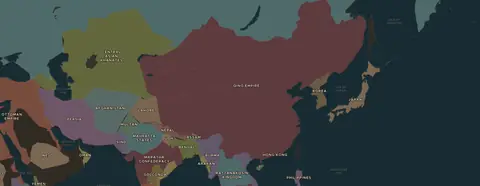 394
The High Qing: Kangxi to Qianlong
Under Kangxi, Yongzheng and Qianlong the Qing became the largest and richest state in Asia, and its population roughly doubled. Students explore the empire at its height and why Qianlong told a British envoy in 1793 that China needed nothing from Britain.
Qing dynasty1661-1799
-
 395
Australia: from penal colony to nation
In 1788 a British fleet lands convicts on the land of the Eora people. Over a century, colonies spread across a continent that had been home to Aboriginal and Torres Strait Islander peoples for tens of thousands of years. Students follow colonisation, gold and federation, and ask whose story it is.
British Empire in the Pacific1788-1901
Age of revolutions
-
 396
1789: France in revolution
A bankrupt king calls an old assembly, and within months Paris storms the Bastille and a National Assembly declares the rights of man. Students explore how a money crisis turned into a revolution.
French Revolution1789-1791
-
 397
Haiti: the revolution of the enslaved
In France's richest colony, enslaved people rise up, defeat the armies of three empires and found Haiti, the first nation born from a successful revolt of the enslaved. Students follow Toussaint Louverture and Dessalines.
Atlantic revolutions1791-1804
-
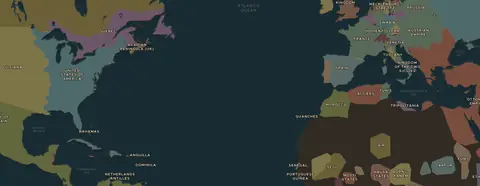 398
The Republic and the Terror
At war with half of Europe, revolutionary France abolishes its monarchy, executes its king and turns to terror against its own citizens. Students trace how fear, war and big ideas pushed the Revolution to extremes.
French Revolution1792-1794
-
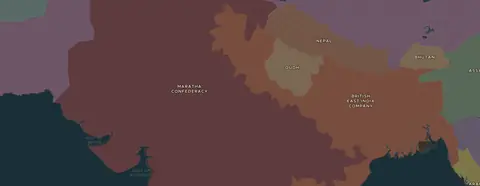 399
1857: rebellion in India
In May 1857 Indian soldiers of the East India Company rise up, and the revolt spreads across northern India. Princes, soldiers and farmers fight the Company until 1858. Students follow the rebellion, meet Rani Lakshmibai and ask what the events should be called.
Company rule in India1857-1858
-
 400
Canada: Confederation and the Métis
In 1867 four colonies unite as the Dominion of Canada and set out to stretch from sea to sea. Students follow the railway west, meet Louis Riel and the Métis, and ask who was included in the new country.
British North America1867-1885
-
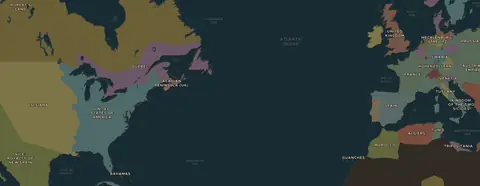 401
Cottonopolis: Manchester and the factory age
Steam engines, cotton mills and coal turn a small English town into the world's first great industrial city. Students follow cotton from the plantations of the American South to the mills of Manchester and weigh the progress and the misery of the factory age.
Industrial Revolution1780-1850
-
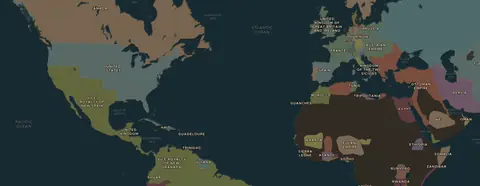 402
Ending the Atlantic slave trade
Campaigners in Britain, formerly enslaved writers and rebels in the Caribbean all fought the slave trade. Students follow the struggle from the first petitions to the end of slavery in the British colonies, and ask whose actions mattered most.
Age of abolition1787-1838
-
 403
Mexico: from Hidalgo's cry to independence
On 16 September 1810 a village priest rings his church bell and calls for revolt. Eleven years later Mexico is independent, won by poor farmers, priest-generals and a royalist officer who changed sides. Students trace the long road on the map.
Latin American independence1810-1821
-
 404
Simón Bolívar, the Liberator
Born rich in Caracas, Simón Bolívar loses battle after battle, crosses the Andes and helps free five future nations from Spain. Then he watches his dream of one great republic fall apart. Students follow his campaigns and weigh his legacy.
Latin American independence1810-1830
-
 405
The Louisiana Purchase and Lewis and Clark
In 1803 the United States doubles in size by buying Louisiana from Napoleon. Lewis, Clark, Sacagawea and their companions then travel to the Pacific and back through the lands of many Native nations. Students ask what was really bought.
Early United States1803-1806
-
 406
Napoleon's Europe: Austerlitz to Tilsit
Beaten at sea at Trafalgar, unbeatable on land at Austerlitz and Jena: by 1807 Napoleon dominates the continent and an empire of 800 years disappears. Students map Napoleon's Europe and ask how it was held together.
Napoleonic Wars1805-1810
-
 407
Brazil: from colony to empire to republic
Brazil takes a path unlike its neighbours: a European court moves to Rio, a prince declares independence and becomes emperor, and slavery lasts until 1888. Students trace how Brazil became independent with little fighting and why freedom came so late.
Empire of Brazil1808-1889
-
 408
Spain and Portugal against Napoleon
Napoleon's armies march into Portugal and Spain, the Portuguese court flees to Brazil, and Spaniards rise up in a "little war" that gives the world the word guerrilla. Students see how a war in Iberia shook two empires.
Napoleonic Wars1807-1814
-
 409
1812: the march on Moscow
In June 1812 the largest army Europe had ever seen crosses into Russia. Six months later only a small part of it comes back. Students follow the road to Moscow and back, and weigh why the campaign failed.
Napoleonic Wars1812
-
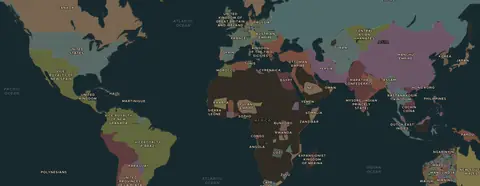 410
From Leipzig to Waterloo: Napoleon falls
Beaten at Leipzig, exiled to Elba, back for a Hundred Days and finally defeated at Waterloo: students follow Napoleon's last campaigns across the map and ask why all of Europe turned against him.
Napoleonic Wars1813-1815
-
 411
Greece breaks free
In 1821 Greeks rise against Ottoman rule. Poets, painters and volunteers across Europe take up their cause, and in 1827 three great powers destroy the Ottoman fleet. Students follow the birth of the first fully independent state carved out of the Ottoman Empire in Europe.
Ottoman Europe1821-1832
-
 412
New Zealand and the Treaty of Waitangi
In 1840 Māori chiefs and the British Crown sign the Treaty of Waitangi. But the English and Māori texts say different things, and within a generation war and land confiscation follow. Students ask what was promised and why the treaty still matters.
British Empire in the Pacific1840-1893
-
 413
San Martín crosses the Andes
In 1817 José de San Martín leads an army over the high passes of the Andes to free Chile, then sails north to Lima. Students follow one of the boldest marches in history and meet a general who walked away from power.
Latin American independence1810-1822
-
 414
Shaka and the rise of the Zulu kingdom
In about twelve years Shaka turned a small chiefdom into the most powerful kingdom of south-east Africa. Students look at his army reforms, the wars and migrations of the time, and why historians still argue about him.
Zulu kingdom1816-1828
-
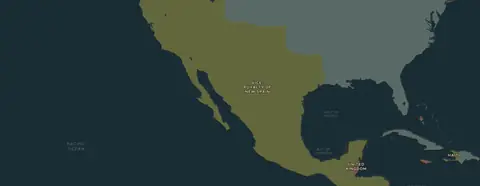 415
Texas and the Mexican-American War
Texas breaks away from Mexico in 1836 and joins the United States in 1845. A year later the two countries are at war, and by 1848 Mexico has lost about half its land. Students compare how Americans and Mexicans remember the war.
US expansion1836-1848
-
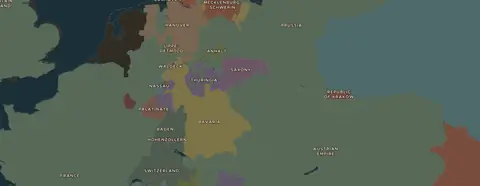 416
The Congress of Vienna redraws Europe
After 20 years of war, emperors, kings and diplomats meet in Vienna to redraw the map of Europe. Students compare the borders before and after, and judge a peace that lasted, but ignored what peoples wanted.
Restoration Europe1814-1815
-
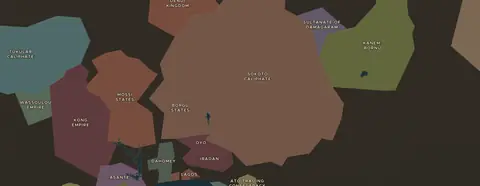 417
The Sokoto Caliphate and Nana Asma'u
In 1804 the scholar Usman dan Fodio led a jihad that overthrew the Hausa kings and created one of the largest states in Africa. Students meet him and his daughter Nana Asma'u, poet and teacher of women.
Sokoto Caliphate1804-1903
-
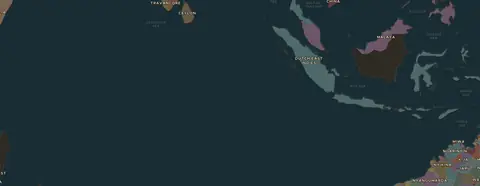 418
Java: Diponegoro and the Cultivation System
A Javanese prince leads a five-year war against Dutch rule. Then the Dutch force Javanese villages to grow coffee and sugar for export, and the profits flow to the Netherlands. Students explore the Java War, the Cultivation System and the novel that exposed it.
Dutch East Indies1825-1870
-
 419
The Trail of Tears
The Cherokee had a written language, a newspaper and a constitution, and they won their case in the Supreme Court. They were still forced from their homeland. Students follow the removal of the south-eastern nations and ask how it should be remembered.
Indian Removal1830-1839
-
 420
The railway age
In 1825 a steam locomotive pulls the first public train. Within fifty years railways cross continents from Britain to India, North America and Japan. Students trace the spread of the railway and how it changed time, travel and trade.
Industrial Revolution1825-1872
-
 421
The Opium Wars
Britain wants Chinese tea and pays with opium grown in India. When China tries to stop the drug trade, British warships force it open. Students follow the Opium Wars from Canton to Hong Kong and Shanghai, and see why China calls this the start of a "century of humiliation".
Qing China1839-1860
-
 422
The Suez Canal
In ten years, tens of thousands of Egyptian workers dig a canal between the Mediterranean and the Red Sea. The sea route from Europe to Asia shrinks by thousands of kilometres, and Egypt falls into debt and foreign control. Students ask who really gained from the canal.
Age of empire1859-1882
-
 423
The Great Famine in Ireland
When blight destroys the potato crop from 1845, about a million people in Ireland die and more than a million leave. Students follow the famine from the fields to the emigrant ships and ask why a disaster inside the world's leading industrial power was so deadly.
Victorian Britain and Ireland1845-1852
-
 424
1848: the springtime of peoples
In 1848 revolution spreads from Palermo and Paris to Vienna, Berlin, Milan and Budapest. Kings flee, parliaments meet, serfs are freed, and within two years most of the old rulers are back. Students map a year of revolutions and ask what changed.
Revolutions of 18481848-1849
-
 425
Bismarck and the making of Germany
Through three short wars in seven years, Prussia's Otto von Bismarck turns dozens of German states into one empire, proclaimed in the palace of the French kings. Students follow "blood and iron" on the map and ask whose Germany it was.
German unification1862-1871
-
 426
Italy united: Cavour, Garibaldi and the Risorgimento
In 1848 Italy is a patchwork of kingdoms, duchies and Austrian provinces. By 1871 it is one kingdom with Rome as its capital. Students follow Cavour's diplomacy, Garibaldi's Thousand and the popular votes that made Italy.
Risorgimento1848-1871
-
 427
Escaping slavery: the Underground Railroad
Thousands of enslaved people escaped north, some helped by a secret network of Black and white "conductors". Students follow the routes from the slave states to the free states and Canada, and meet Harriet Tubman, Frederick Douglass and William Still.
Antebellum United States1830-1861
-
 428
The Taiping Rebellion
A failed exam candidate who believes he is the younger brother of Jesus founds a "Heavenly Kingdom" and conquers much of southern China. Students follow one of the deadliest wars in history and ask why so many people followed Hong Xiuquan.
Qing China1850-1864
-
 429
Black ships: Japan opens up
For over 200 years Japan has kept most foreigners out. Then, in 1853, American steam warships sail into Edo Bay and demand trade. Students follow the "black ships" and see how fifteen years of crisis ended the rule of the shoguns.
Tokugawa Japan1853-1868
-
 430
The Crimean War
Russia, the Ottoman Empire, Britain and France go to war over the Black Sea. It is one of the first wars reported by telegraph and photographed, and the war of Florence Nightingale and Mary Seacole. Students explore why it began and what it changed.
Russian and Ottoman empires1853-1856
-
 431
Russia frees its serfs
After defeat in the Crimean War, Tsar Alexander II frees more than 20 million serfs in 1861. Students explore what serfdom was, why the tsar acted, why many peasants were disappointed, and why the "Tsar Liberator" was assassinated.
Russian Empire1855-1881
-
 432
1863: Emancipation and Gettysburg
In 1863 the Civil War becomes a war against slavery. The Emancipation Proclamation takes effect, Black soldiers join the Union army, and Gettysburg and Vicksburg turn the tide. Students ask how freedom and victory became linked.
American Civil War1863
-
 433
The Meiji Restoration
In 1868 a group of young samurai put the emperor back at the head of Japan and set out to build a "rich country, strong army". In one generation Japan gains railways, schools, a constitution and an empire. Students ask how, and at what cost.
Meiji Japan1868-1912
-
 434
A nation divided: the Civil War begins
Abraham Lincoln is elected, eleven Southern states leave the Union to protect slavery, and guns fire on Fort Sumter. Students map the divided country, compare the two sides and see why both expected a short war.
American Civil War1860-1862
-
 435
Victory, assassination and Reconstruction
The Union wins, Lincoln is murdered and four million people are free. For twelve years the country tries to rebuild the South with new rights for Black Americans, until those rights are taken away again. Students ask why Reconstruction is called an unfinished revolution.
Reconstruction1864-1877
-
 436
The Plains wars and Little Bighorn
Treaties promised the Lakota the Black Hills. Then gold was found. Students follow the struggle for the Great Plains from Fort Laramie to Little Bighorn, see what the end of the bison meant, and ask how the story looks from the Plains nations' side.
US expansion1851-1890
-
 437
Isandlwana 1879: the Zulu kingdom fights back
In January 1879 Britain invaded the Zulu kingdom, and at Isandlwana a Zulu army defeated a British force armed with rifles and cannon. Students follow King Cetshwayo's war from the ultimatum to the fall of Ulundi.
Anglo-Zulu War1879
-
 438
1898: Cuba, the Philippines and the end of Spain's empire
Cubans and Filipinos fight for independence from Spain. In 1898 the United States joins in, wins a short war and takes Spain's last colonies. Students ask whether 1898 brought liberation or a new kind of empire.
Age of empire1868-1902
-
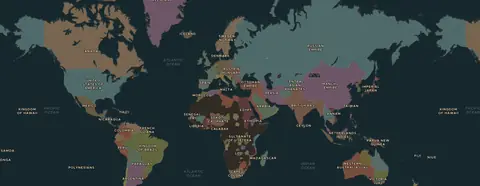 439
Gold rush and the railroad west
Gold in California brings people from every continent in 1849. Twenty years later a railroad joins the Atlantic and the Pacific. Students follow the forty-niners and the railway builders and ask who paid the price for the race west.
US expansion1848-1869
-
 440
Hawaii: from kingdom to US territory
For most of the 1800s Hawaii is an independent kingdom with a palace, a constitution and treaties with the great powers. Then sugar planters overthrow its queen. Students ask how a nation lost its independence without a war.
Pacific kingdoms1810-1898
-
 441
Moshoeshoe and the mountain kingdom
In a time of war, Moshoeshoe gathered refugees on a flat-topped mountain and built the Basotho nation. Students follow a leader who used diplomacy as much as force, and see how his kingdom became today's Lesotho.
Basotho kingdom1824-1870
-
 442
Samori Toure: resistance to French conquest
For sixteen years Samori Toure fought French armies in West Africa, buying modern rifles, making his own and even moving his whole state east. Students weigh the strategy and the costs of one of Africa's longest resistance wars.
Wassoulou Empire1882-1898
-
 443
The Aceh War
In 1873 the Netherlands attacks the independent sultanate of Aceh in northern Sumatra. The Dutch take the capital within a year, but the Acehnese fight on for three decades. Students study the longest war in Dutch colonial history and how it is remembered.
Dutch East Indies1873-1904
-
 444
The British Raj and the rise of Indian nationalism
After 1858 India is ruled by a British viceroy, with railways, famines and a small number of British officials governing hundreds of millions of people. Students follow the birth of the Indian National Congress and the protests against the partition of Bengal.
British Raj1858-1911
-
 445
The Ottoman Empire: reform and retreat
Called "the sick man of Europe" by its rivals, the Ottoman Empire tries to save itself with sweeping reforms, a constitution and railways, while it loses land in the Balkans. Students follow the Tanzimat, the crisis of 1878 and the Young Turk revolution of 1908.
Ottoman Empire1839-1908
-
 446
The Scramble for Africa and the Berlin Conference
In 1880 most of Africa is ruled by Africans. By 1914 only Ethiopia and Liberia are independent. Students compare the maps, look at the Berlin Conference, where no African was present, and at resistance such as the Ethiopian victory at Adwa.
Age of empire1881-1914
-
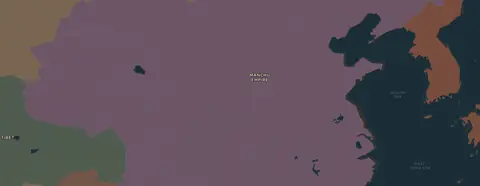 447
1911: the end of imperial China
An accidental bomb blast in Wuhan sparks an army mutiny, and within months more than 2,000 years of rule by emperors is over. Students follow the revolution of 1911, meet Sun Yat-sen and the last emperor, Puyi, and ask what kind of China came next.
Republic of China1911-1912
-
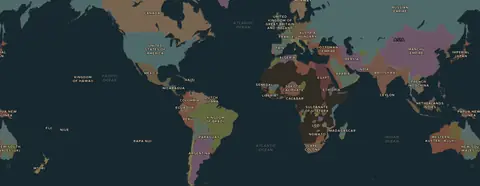 448
Across the ocean: the great migration
Between 1880 and 1914 tens of millions of Europeans cross the oceans in steamships to the Americas and beyond, while Asian migrants face new barriers. Students follow emigrants from village to port to Ellis Island and Buenos Aires, and ask why people leave home.
Age of mass migration1880-1914
-
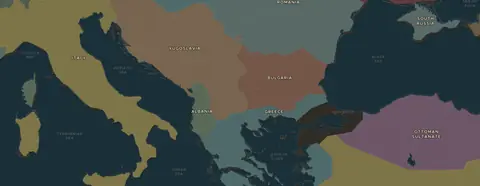 449
The Balkan Wars
In 1912 four Balkan states join forces and drive the Ottoman Empire almost out of Europe. A year later they fight each other over the spoils. Students map the wars, the birth of Albania and the road to the shots in Sarajevo in June 1914.
Balkans1912-1914
-
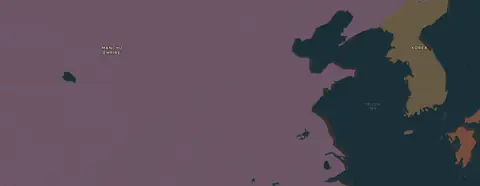 450
The Boxer Uprising
Hungry, angry young men in North China blame foreigners and Christians for their troubles. In 1900 the Boxers besiege the foreign legations in Beijing, and eight nations send armies. Students weigh the causes and the high price China paid.
Qing China1899-1901
-
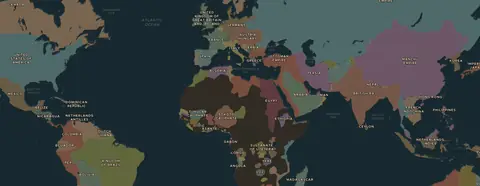 451
The Congo Free State
For 23 years King Leopold II of Belgium owns the Congo as his private state. Forced rubber collection brings him a fortune and brings terror and death to the Congolese. Students learn how the system worked and how one of the first international human rights campaigns exposed it.
Age of empire1885-1908
-
 452
Yaa Asantewaa and the War of the Golden Stool
In 1900 a British governor demanded the sacred Golden Stool of the Asante. Yaa Asantewaa, queen mother of Ejisu, led the rising that followed. Students find out why the Asante lost the war but kept the stool.
Asante resistance1900
-
 453
Russia against Japan, 1904-1905
Two empires clash over Manchuria and Korea. Japan attacks Russia's fleet at Port Arthur, wins on land at Mukden and destroys a Russian fleet that sailed halfway round the world. Students ask why this victory shook the world.
Meiji Japan1904-1905
-
 454
Maji Maji: the rising against German rule
In 1905 villagers in southern Tanzania pulled up the cotton they were forced to grow, and a rising spread across more than twenty peoples. Students learn why it began, how it was crushed and how Tanzania remembers it.
German East Africa1905-1907
-
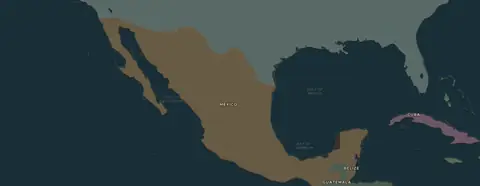 455
The Mexican Revolution begins
After about 30 years of rule by Porfirio Díaz, Mexico explodes. Madero, Zapata, Villa and Huerta fight over power and land. Students follow the first years of the revolution and ask why its leaders turned on each other.
Mexican Revolution1910-1914
Twentieth century
-
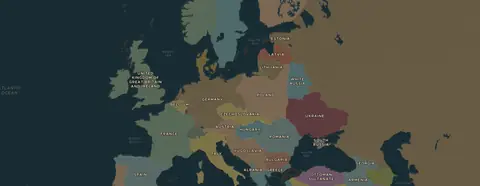 456
1914: how Europe went to war
On 28 June 1914 two shots in Sarajevo set off a chain reaction. Within six weeks the great powers of Europe were at war. Students trace the alliances on the 1914 map and ask why one murder became a world war.
First World War1914
-
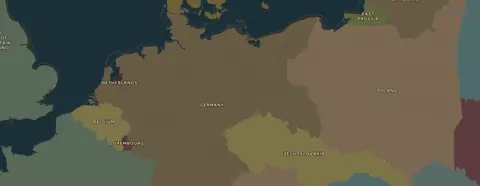 457
1917-1918: how the Great War ended
In 1917 the United States joined the war and Russia left it. In 1918 Germany made one last great attack, then collapsed. Students follow the final year to the armistice of 11 November 1918, signed in a railway carriage near Compiègne.
First World War1917-1918
-
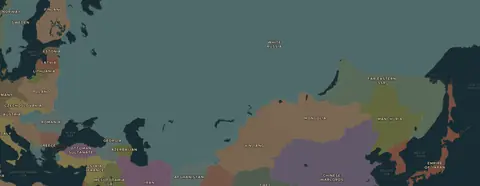 458
1917: revolution in Russia
In 1917 Russia had two revolutions. In February the tsar fell; in October Lenin's Bolsheviks seized power in Petrograd. A civil war followed, and in 1922 the Soviet Union was born. Students use the 1914 and 1920 maps to see how the empire broke apart and was rebuilt.
Russian Revolution1917-1922
-
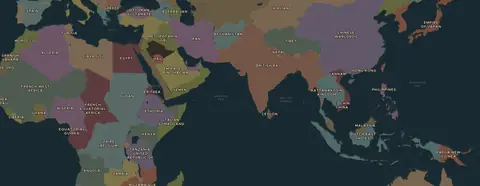 459
A world war: Africa, Asia and the Middle East
The First World War was not only fought in Europe. African soldiers and carriers fought in East Africa, Japan seized a German port in China and Arab forces rose against Ottoman rule. Students follow the war across the 1914 map of empires.
First World War1914-1918
-
 460
Adwa 1896: Ethiopia defeats Italy
On 1 March 1896 the army of Emperor Menelik II and Empress Taytu crushed an Italian invasion at Adwa. Students find out how a mistranslated treaty led to war and why the victory became a symbol for Africans everywhere.
Ethiopian Empire1889-1896
-
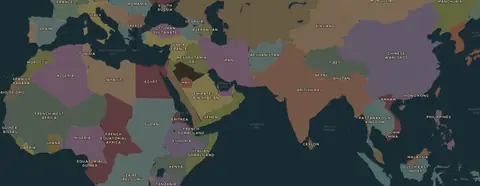 461
Gallipoli 1915: the battle for the straits
In 1915 Britain and France tried to force the Dardanelles and knock the Ottoman Empire out of the war. Eight months later they gave up. Students see why the narrow straits mattered and why Turkey, Australia and New Zealand still remember Gallipoli.
First World War1915-1916
-
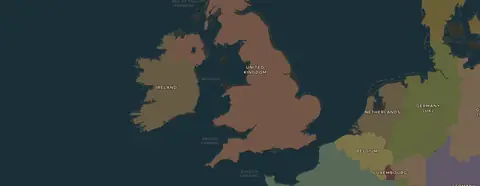 462
Ireland 1916-1922: from Easter Rising to Free State
At Easter 1916 rebels in Dublin proclaimed an Irish Republic. Six years later most of Ireland was a self-governing Free State, while six counties in the north stayed British. Students compare the 1914 and 1938 maps and weigh the hopes of nationalists and unionists.
Irish independence1916-1922
-
 463
The Western Front: four years in the trenches
After the Battle of the Marne in September 1914 the armies dug in. A line of trenches ran from the Belgian coast to the Swiss border. Students follow the front on the map and meet the soldiers who lived in it.
First World War1914-1918
-
 464
The end of the Ottoman Empire
The Ottoman Empire entered the First World War in 1914 and did not survive it. Britain and France divided its Arab lands into mandates, and from the ruins rose new states. Students compare the 1914 and 1920 maps of the Middle East and test the promises made during the war.
Ottoman Empire1914-1923
-
 465
Votes for women
In 1900 women could vote in national elections almost nowhere. Within a few years of the First World War they could in much of Europe and North America, but some countries took until 1971 and later. Students map the struggle and compare the methods of campaigners.
Twentieth century1918-1971
-
 466
How Hitler took power in Germany
Germany's first democracy, the Weimar Republic, survived revolts and hyperinflation. Then the Depression struck. Students follow the Nazi party from a failed putsch in Munich to power in Berlin, and ask how a democracy can be destroyed from within.
Interwar years1919-1934
-
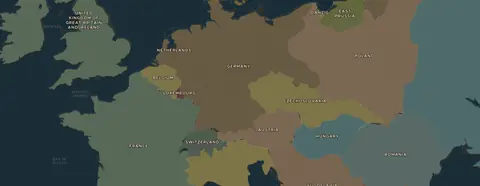 467
Versailles 1919 and the new map of Europe
In 1919 the winners met in Paris to make peace. Three empires had fallen, and new states filled the map from Finland to Yugoslavia. Students compare the 1914 and 1920 borders and judge whether the peacemakers built a lasting peace.
Interwar years1919-1920
-
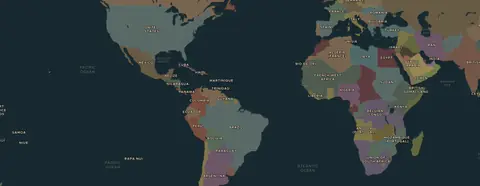 468
1929: the crash and the Great Depression
In October 1929 share prices on Wall Street crashed. Within three years factories, banks and farms failed around the world, and millions lost their jobs. Students follow the crisis from New York to Berlin and Brazil, and compare how governments responded.
Interwar years1929-1939
-
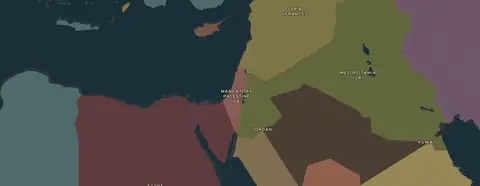 469
1948: Israel and the Palestinian Nakba
In 1947 the United Nations proposed to divide British Palestine into a Jewish and an Arab state. In May 1948 Israel declared independence, and war followed. For Israelis 1948 means independence; for Palestinians it is the Nakba, the catastrophe. Students study both stories with the map.
Middle East1947-1949
-
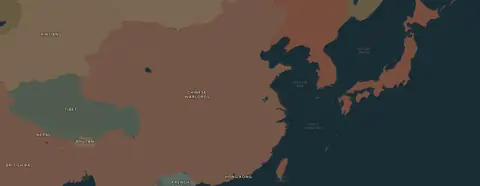 470
China divided: the Long March
In the 1920s and 1930s China was split between warlords, Chiang Kai-shek's Nationalists and the Communists. In 1934 the Communists broke out of a trap in the south and retreated thousands of kilometers to the north. Students trace the Long March and ask how a retreat became a legend.
Republic of China1927-1936
-
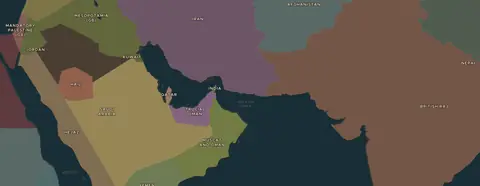 471
Gandhi and the Salt March
In March 1930 Mohandas Gandhi set out to walk about 385 km to the sea to make salt, which British law forbade. Millions followed his example. Students trace the march on the map and explore how nonviolent protest challenged an empire.
Indian independence1930-1931
-
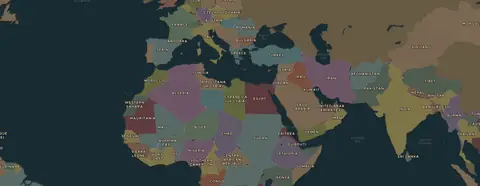 472
Mussolini and Fascist Italy
In 1922 Benito Mussolini became prime minister of Italy and soon ruled as a dictator. He promised order and the glory of ancient Rome, and in 1935 he invaded Ethiopia. Students explore how fascism took power and why the League of Nations failed to stop it.
Interwar years1922-1936
-
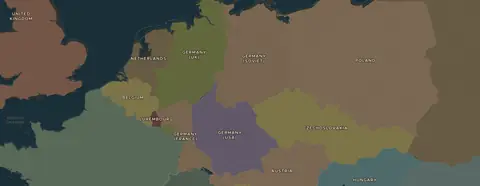 473
1939-1940: Blitzkrieg and the fall of France
In September 1939 Germany and the Soviet Union crushed Poland. In May 1940 German tanks broke through the Ardennes and reached the Channel in days, and France fell in six weeks. Students follow the fast campaigns on the map and ask why the Allies were caught by surprise.
Second World War1939-1940
-
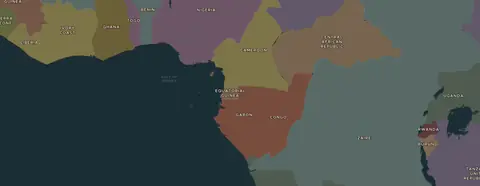 474
Africa's wave of independence, 1957-1960
In 1957 Ghana became independent. Three years later, in the "Year of Africa", seventeen more countries followed. Students compare the 1938 and 1960 maps of Africa and meet leaders such as Kwame Nkrumah and Patrice Lumumba.
Decolonization1957-1960
-
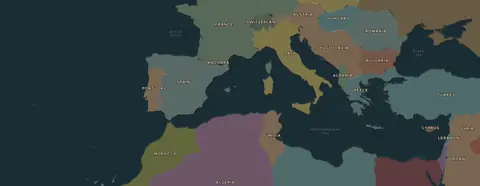 475
Algeria's war of independence
France saw Algeria not as a colony but as part of France itself. In 1954 Algerian nationalists rose in revolt, and an eight-year war followed that toppled a French government and ended in independence in 1962. Students compare the views of Algerians, French settlers and people in France.
Decolonization1954-1962
-
 476
Atatürk and the new Turkish Republic
Out of the defeated Ottoman Empire, Mustafa Kemal built a new state. After a war of independence the Republic of Turkey was proclaimed in 1923, with Ankara as its capital. Students follow the war on the map and weigh his sweeping reforms.
Turkish Republic1919-1938
-
 477
Barbarossa to Stalingrad: the war in the east
On 22 June 1941 Germany invaded the Soviet Union along a front from the Baltic to the Black Sea. It reached Leningrad and the edge of Moscow, but at Stalingrad the tide turned. Students follow the largest land war in history and its enormous human cost.
Second World War1941-1943
-
 478
D-Day and the liberation of western Europe
On 6 June 1944 Allied armies landed on five beaches in Normandy. Within three months Paris and Brussels were free; by spring 1945 the Allies crossed the Rhine. Students locate the beaches, follow the liberation on the map and weigh its cost.
Second World War1944-1945
-
 479
El Alamein and the war in North Africa
For three years armies fought back and forth along the coast of North Africa, with the Suez Canal as the prize. At El Alamein in 1942 the British Eighth Army stopped Rommel, and American landings trapped the Axis in Tunisia. Students follow the desert war on the map.
Second World War1940-1943
-
 480
Indonesia: independence and the Dutch
On 17 August 1945 Sukarno and Hatta proclaimed the independence of Indonesia. The Netherlands tried to restore its rule, and four years of war followed before the Dutch transferred sovereignty in December 1949. Students locate the key places on Java and compare Indonesian and Dutch memories.
Decolonization1945-1949
-
 481
Japan's empire in Asia, 1931-1941
In 1931 the Japanese army seized Manchuria. Six years later Japan went to war with China, and by 1941 it looked south to the oil of Southeast Asia. Students compare the 1930 and 1938 maps and follow the path that led Japan to war with the United States.
Interwar years1931-1941
-
 482
Pearl Harbor and the war in the Pacific
On 7 December 1941 Japanese planes attacked the US fleet at Pearl Harbor. In six months Japan conquered a huge area, from Burma to the Dutch East Indies. Then the tide turned at Midway. Students follow the war across the largest ocean on Earth.
Second World War1941-1945
-
 483
Stalin's Soviet Union
Joseph Stalin set out to turn the Soviet Union into an industrial power in ten years. New steel towns rose in the Urals, while peasants were forced onto collective farms and millions died in famine and terror. Students weigh progress against its human cost.
Soviet Union1928-1939
-
 484
The Battle of Britain and the Blitz
In the summer of 1940 Germany tried to win control of the skies over Britain before an invasion. The RAF, helped by radar and pilots from many nations, held on. Then came the Blitz on Britain's cities. Students explore the Channel on the map and life under the bombs.
Second World War1940-1941
-
 485
The Holocaust: persecution, rescue and resistance
Between 1933 and 1945 Nazi Germany moved step by step from excluding Jews to murdering about six million of them. Students learn how persecution grew, and use the map to find places where people resisted and rescued. Written with care for students aged 13 and older.
Second World War1933-1945
-
 486
The Netherlands under occupation
In May 1940 Germany conquered the Netherlands in five days. Five years of occupation followed: persecution, adaptation, collaboration and resistance, the Hunger Winter and finally liberation. Students locate key places on the map and explore the choices ordinary people faced.
Second World War1940-1945
-
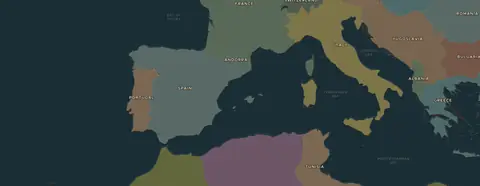 487
The Spanish Civil War
In July 1936 army officers rose against Spain's elected government. For three years Spaniards fought Spaniards, while Germany, Italy and the Soviet Union sent weapons and volunteers came from across the world. Students locate the war on the map and ask why Europe cared so much.
Interwar years1936-1939
-
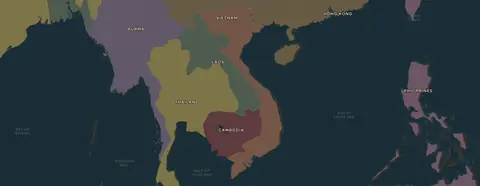 488
The Vietnam War
After defeating France in 1954, Vietnam was split in two. The United States sent more than half a million soldiers to stop communism in the South, and still lost. Students follow the war from Dien Bien Phu to the fall of Saigon and ask why it divided opinion around the world.
Cold War1954-1975
-
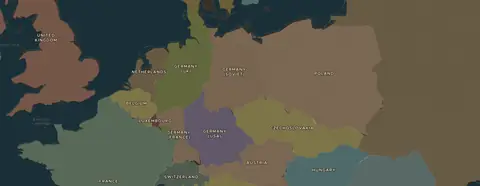 489
The road to war, 1936-1939
Step by step, Hitler broke the Treaty of Versailles: the Rhineland, Austria, the Sudetenland, Prague. Britain and France gave way until 1939. Students follow each step on the 1930 and 1938 maps and debate whether appeasement could have worked.
Interwar years1936-1939
-
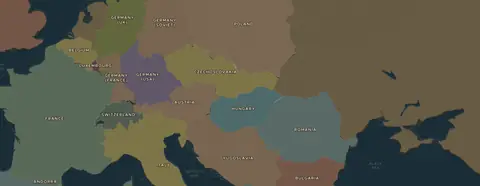 490
1945: Yalta, Berlin and the end of the war in Europe
In February 1945 Roosevelt, Churchill and Stalin met at Yalta to plan the peace. By May, Soviet troops held Berlin and Germany surrendered. The 1945 map shows Germany cut into four zones. Students see how the end of one war set the stage for the next conflict.
Second World War1945
-
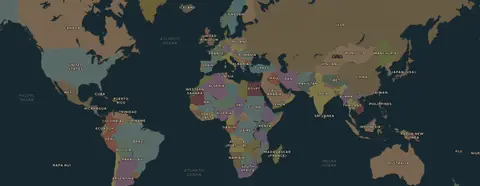 491
1945: the atomic bombs and Japan's surrender
In August 1945 the United States dropped atomic bombs on Hiroshima and Nagasaki, and the Soviet Union declared war on Japan. Japan surrendered weeks later. Students trace the secret Manhattan Project and the path to surrender, and listen to the voices of survivors.
Second World War1942-1945
-
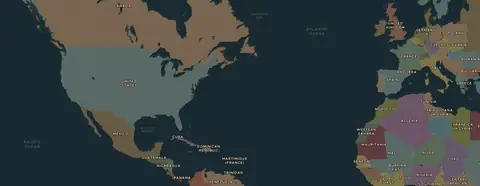 492
1945: the founding of the United Nations
Before the Second World War had even ended, delegates from 50 countries met in San Francisco to found the United Nations. Students locate the UN's main cities, test how the Security Council works and read the Universal Declaration of Human Rights of 1948.
Postwar world1945-1948
-
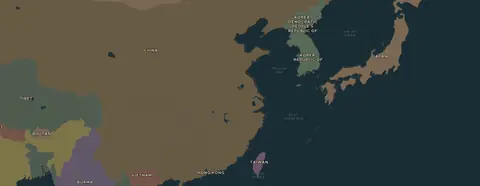 493
1949: Mao and the People's Republic of China
After Japan's defeat, China's civil war broke out again. In 1949 the Communists won, and on 1 October Mao Zedong proclaimed the People's Republic in Beijing, while the Nationalists fled to Taiwan. Students follow the end of the war on the map and see why there are still two Chinese governments.
Chinese Revolution1945-1950
-
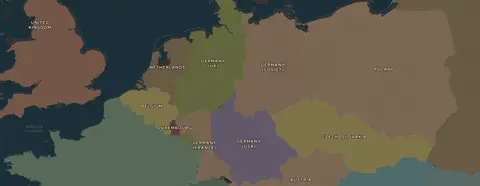 494
The Berlin Airlift, 1948-1949
In June 1948 the Soviet Union cut all land links to West Berlin. For almost a year American and British planes flew in food and coal for more than two million people. Students find Berlin inside the Soviet zone and follow the air corridors that kept the city alive.
Cold War1948-1949
-
 495
The Korean War, 1950-1953
In June 1950 North Korea invaded the South. UN troops, among them Dutch soldiers, and later Chinese armies joined the fighting, and the front swept up and down the peninsula. Three years later it ended close to where it began. Students follow the war on the map and ask why it never officially ended.
Cold War1950-1953
-
 496
1947: independence and the partition of India
In August 1947 British rule in India ended and two states were born: India and Pakistan. A new border cut through Punjab and Bengal, and millions of people fled in both directions. Students compare the 1938 and 1960 maps and hear the voices of those who had to move.
Decolonization1947-1948
-
 497
1956: Suez and Hungary
In the same weeks of 1956, Britain, France and Israel attacked Egypt over the Suez Canal, and Soviet tanks crushed a revolution in Hungary. Students follow both crises on the map and discover what they revealed about the real superpowers.
Cold War1956
-
 498
1968: the Prague Spring
In 1968 Czechoslovakia's new leader Alexander Dubček promised "socialism with a human face": free speech, open borders, honest news. In August, tanks from the Soviet Union and four allies rolled in. Students follow the Prague Spring on the map and ask what freedom was allowed behind the Iron Curtain.
Cold War1968
-
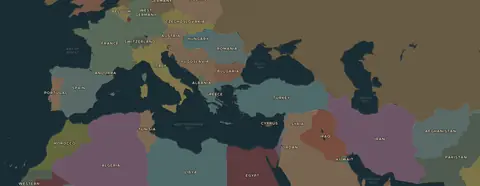 499
1979: the Iranian Revolution
In 1979 huge protests drove the Shah of Iran from his throne, and Ayatollah Khomeini returned from exile to build an Islamic republic. Students trace the story back to the coup of 1953, follow the revolution on the map and see how the hostage crisis changed Iran's relations with the West.
Middle East1953-1981
-
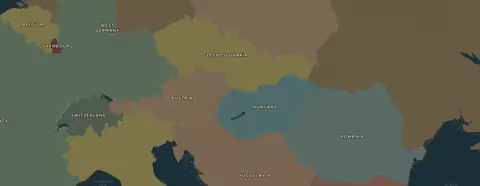 500
1989: revolutions across eastern Europe
In a single year communist rule ended in Poland, Hungary, East Germany, Czechoslovakia, Bulgaria and Romania. Most of it happened peacefully, with candles and keys; in Romania it ended in gunfire. Students follow the domino run of 1989 from Budapest to Prague and Timișoara.
Cold War1989
-
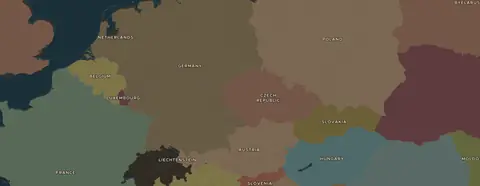 501
9 November 1989: the Wall comes down
In the summer of 1989 Hungary opened its border, East Germans fled through it, and crowds marched every Monday in Leipzig. On the evening of 9 November a confused press conference opened the Berlin Wall. Students follow the chain of events and the road to a united Germany in 1990.
Cold War1989-1990
-
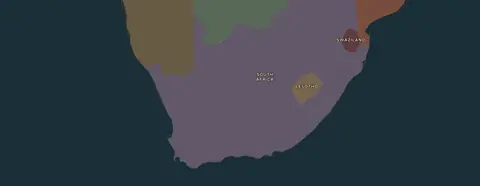 502
Apartheid in South Africa
From 1948 South Africa's government built a system of laws to separate people by race: apartheid. Students see how it worked, follow resistance from the Freedom Charter to Soweto, and find the island where Nelson Mandela spent 18 of his 27 years in prison.
Twentieth century1948-1976
-
 503
China's Cultural Revolution
In 1966 Mao Zedong called on China's young people to attack "old ideas" and anyone who stood in the way of revolution. Schools closed, Red Guards roamed the cities, and millions of young people were later sent to the countryside. Students explore ten years that China still finds hard to discuss.
People's Republic of China1966-1976
-
 504
From coal and steel to the euro: the European Union
Six countries that had just fought a war began in 1951 by sharing coal and steel. Half a century later, hundreds of millions of Europeans crossed open borders and paid in euros. Students follow the growth of the European Union on the map, from Maastricht to the big enlargement of 2004.
Post-Cold War1951-2004
-
 505
Solidarity: Poland's road to 1989
In August 1980 shipyard workers in Gdańsk went on strike and won the right to a free trade union: Solidarity. Within a year it had ten million members. Banned under martial law, it came back to win Poland's first partly free election in 1989. Students follow the first crack in the Soviet bloc.
Cold War1980-1989
-
 506
The Berlin Wall goes up
In the night of 12-13 August 1961 East German soldiers rolled out barbed wire through the middle of Berlin. Within days a wall cut the city in two. Students find Berlin inside East Germany, follow the border and hear how the Wall split families for 28 years.
Cold War1961-1963
-
 507
The Iron Curtain and the Marshall Plan
In 1946 Churchill warned that an "iron curtain" had come down across Europe. America answered with the Marshall Plan and NATO; the Soviet Union with its own bloc and the Warsaw Pact. Students draw the line on the map and see how Europe split in two.
Cold War1946-1955
-
 508
The civil rights movement in the United States
In the southern United States, Black Americans were kept apart by law and often kept from voting. From the Montgomery bus boycott to the Selma march, students follow a movement that changed the law without taking up arms, and meet Rosa Parks, Martin Luther King Jr. and the students of Little Rock.
Twentieth century1954-1968
-
 509
The space race
In 1957 the Soviet Union launched Sputnik, the first satellite. Twelve years later two Americans walked on the Moon. Students find the launch sites on the map, keep score of the "firsts" and ask how a Cold War rivalry pushed people into space.
Cold War1957-1969
-
 510
Thirteen days: the Cuban Missile Crisis
In October 1962 American spy planes found Soviet nuclear missiles on Cuba, about 150 km from Florida. For thirteen days the world stood close to nuclear war. Students follow the crisis on the map and take the decisions that Kennedy and Khrushchev faced.
Cold War1959-1962
-
 511
1991: the end of the Soviet Union
Mikhail Gorbachev tried to reform the Soviet Union with glasnost and perestroika. Instead, the Baltic republics demanded independence, a coup failed in Moscow, and on 25 December 1991 the Soviet flag came down over the Kremlin. Students compare the 1960 and 1994 maps and find fifteen new states.
Cold War1985-1991
-
 512
Mandela and the end of apartheid
On 11 February 1990 Nelson Mandela walked out of prison after 27 years. Four years of talks, violence and hope followed, and on 27 April 1994 South Africans of all races voted together for the first time. Students follow the road from prison to presidency and ask how a divided country made peace.
Twentieth century1990-1994
-
 513
Rwanda 1994: genocide, and those who did not look away
In about 100 days in 1994, Hutu extremists murdered an estimated 800,000 Tutsi and moderate Hutu in Rwanda, while the world looked on. Students learn how the genocide was prepared, why the UN pulled back, and meet the people who sheltered and rescued others. Written with care for students aged 14 and older.
Post-Cold War1994
-
 514
The wars in Yugoslavia, 1991-1999
After Tito's death, Yugoslavia broke apart. Slovenia left after ten days; Croatia and Bosnia saw years of war, the siege of Sarajevo and the genocide at Srebrenica. Students compare the 1960 and 1994 maps and ask how neighbors became enemies and how the wars were stopped.
Post-Cold War1991-1999
-
 515
China opens up: from Deng to the 2008 Olympics
From 1978 Deng Xiaoping opened China to markets and the world. Fishing villages became megacities and hundreds of millions escaped poverty, while the party kept control, as the crackdown of June 1989 showed. Students follow China's rise on the map from Shenzhen to the Beijing Olympics.
People's Republic of China1978-2008
-
 516
A connected world: globalisation, 1990-2010
Shipping containers, the internet and open markets tied the world together as never before. A phone designed in California, built in China and sold in Rotterdam became normal. Students follow goods, money and ideas across the 2010 map and weigh who gained and who lost.
Post-Cold War1990-2010
No hay lecciones que coincidan. Prueba otro nombre, lugar o año, o pídenosla.
Historia magistra vitae est.
History is life's teacher. Cicero, De Oratore
Cincuenta minutos, ya preparados.
Todas las lecciones siguen el mismo ritmo, así tu grupo sabe qué hacer desde la primera y tú solo tienes que enseñar.
- i.
Explora el mapa
Tres actividades, cada una abre el mapa en el año, lugar y escala correctos.
- ii.
Debatir
Cinco preguntas para pasar de qué ocurrió a por qué fue importante.
- iii.
Jugar
Una ronda de Rule History donde el alumnado toma las decisiones del gobernante.
- iv.
Escribir
Ficha imprimible en A4, con líneas para escribir y espacio para dibujar el mapa.
- v.
O impártela en directo
El mapa en la pizarra, la clase en sus móviles: buscan lugares en el mapa y sus pines aparecen juntos.
Todas las fichas, para todas tus clases.
Una suscripción para un docente y todos sus grupos: todas las lecciones en directo, sin anuncios, con juegos asignables y prioridad en nuevas épocas.
Todas las fichas, diapositivas y clases en directo desbloqueadas, hoy y en cada lección nueva.
¿Aún no lo tienes claro? Empieza con la lección gratuita