Faites vivre l'histoire là où elle s'est passée.
516 leçons prêtes à enseigner, des premières cités à la chute du Mur de Berlin. Chaque leçon ouvre la carte interactive à l'année et au lieu précis, avec questions, jeu, fiche et séance interactive sur les téléphones des élèves.
their phones.
Les leçons sont aussi disponibles en English Nederlands Deutsch Español
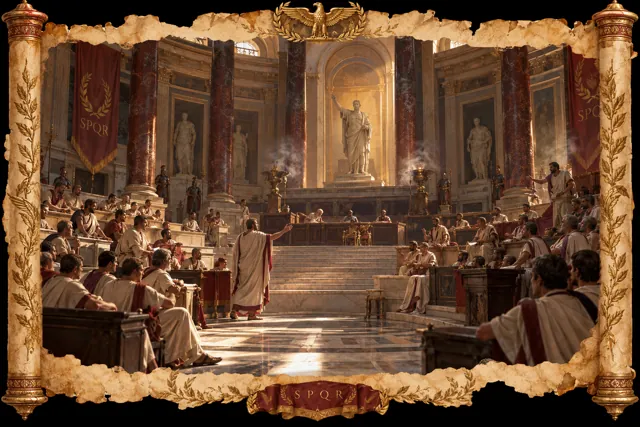 Nouveau · Le Sénat
Faites débattre vos élèves à la Curie
Ils choisissent une vraie motion, affrontent Caton et Cicéron, et découvrent pourquoi Rome a voté ainsi.
Lancer le débat
516 leçons, dans l'ordre chronologique.
Chaque leçon propose trois étapes sur la carte, cinq questions de discussion, un jeu, une fiche et une séance interactive au vidéoprojecteur. La première est gratuite, fiche incluse d testez-la avant de vous décider.
516 leçons
Prehistory and first cities
-
 1
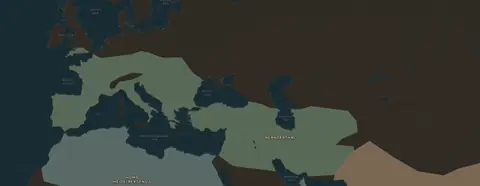
La Béringie : les premiers habitants des Amériques
À l’époque glaciaire, une vaste bande de terre reliait la Sibérie à l’Alaska. Les élèves utilisent la couche Ice Age Seas pour repérer la Béringie, suivent les premiers humains jusqu’à l’extrême sud de l’Amérique et découvrent pourquoi les scientifiques débattent encore de leur itinéraire.
PaléolithiqueIl y a au moins 15 000 ans
-
 2
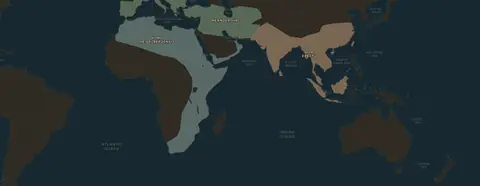
Les Néandertaliens : nos plus proches cousins
Pendant des centaines de milliers d’années, l’Europe et l’Asie occidentale ont été le territoire d’une autre humanité. Les élèves découvrent les Néandertaliens à travers les grottes où ils vivaient et apprennent ce que leur ADN, présent en nous, révèle.
Paléolithique ancien400 000 à 40 000 ans avant notre ère
-
 3
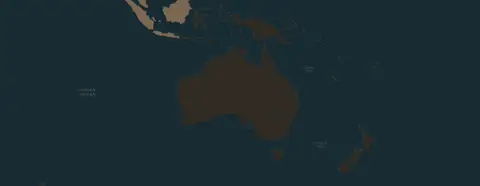
Sortir d’Afrique : comment les humains ont conquis le monde
Notre espèce est née en Afrique. Les élèves suivent de petits groupes de chasseurs-cueilleurs le long des côtes et à travers les mers jusqu’à chaque continent habité, et utilisent la couche Ice Age Seas pour découvrir le monde tel qu’il était à leur époque.
Paléolithique300 000 à 15 000 ans avant aujourd’hui
-
 4
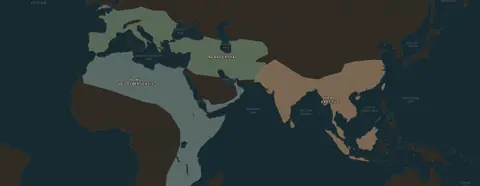
Sahul : les premiers Australiens
Il y a au moins 50 000 ans, des humains ont traversé la mer pour atteindre un continent de l’Âge de glace appelé Sahul. Les élèves découvrent l’un des grands premiers voyages et les plus anciennes cultures ininterrompues du monde, du lac Mungo à la plaine de Bass aujourd’hui submergée.
PaléolithiqueIl y a au moins 50 000 ans
-
 5
L’art des grottes à l’Âge de glace : Lascaux, Altamira et Sulawesi
Chevaux, bisons, lions et empreintes de mains illuminent les parois de grottes en France, en Espagne et en Indonésie. Les élèves localisent ces grottes ornées sur la carte, découvrent les techniques des artistes de l’Âge de glace et débattent des raisons pour lesquelles ils peignaient dans l’obscurité.
Paléolithique supérieur40 000 à 15 000 ans avant notre ère
-
 6
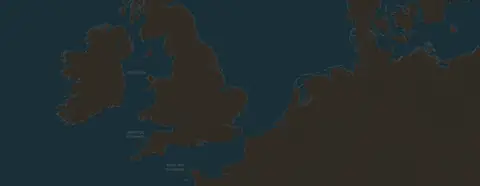
Doggerland : la terre sous la mer du Nord
Autrefois, les chasseurs pouvaient marcher de la Grande-Bretagne au Danemark. Les élèves activent la couche Ice Age Seas et observent la mer du Nord recouvrir Doggerland, puis réfléchissent à ce que la montée des eaux a signifié pour les populations qui y vivaient.
MésolithiqueEnviron 10 000 à 6 000 av. J.-C.
-
 7
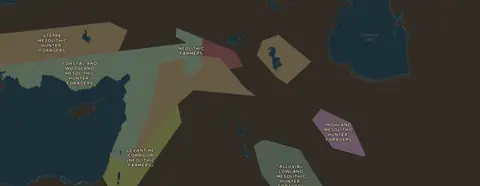
Göbekli Tepe : les premiers monuments
Il y a environ 11 500 ans, des hommes ont dressé des cercles de gigantesques piliers sculptés sur une colline du sud-est de l’Anatolie. Les élèves découvrent qui a construit Göbekli Tepe et pourquoi ce site a bouleversé nos idées sur les débuts de l’agriculture et des villages.
Néolithique ancienEnviron 9500-8000 av. J.-C.
-
 8
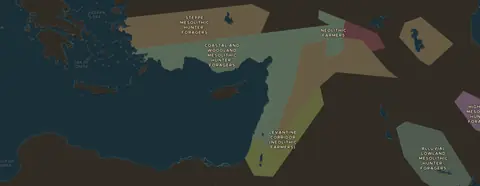
Jéricho et Çatalhöyük : les premières villes
Une tour de pierre près d’une source dans la vallée du Jourdain, et une ville de plusieurs milliers d’habitants sans rues sur la plaine d’Anatolie. Les élèves découvrent deux des plus anciennes villes du monde et s’interrogent : qu’est-ce qui fait d’un lieu une ville ?
NéolithiqueEnviron 9000-6000 av. J.-C.
-
 9
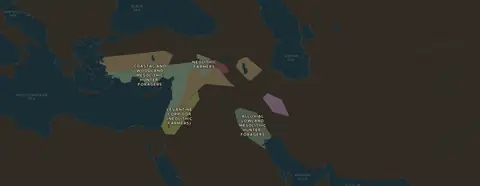
Les premiers agriculteurs du Croissant fertile
Blé, orge, lentilles, moutons et chèvres : les premiers agriculteurs du Croissant fertile ont bouleversé la vie humaine. Les élèves suivent l’arc de collines où l’agriculture est née, observent sa diffusion vers l’Europe et l’Asie du Sud, et réfléchissent à ses avantages et inconvénients.
NéolithiqueEnviron 10 000 à 6 000 av. J.-C.
-
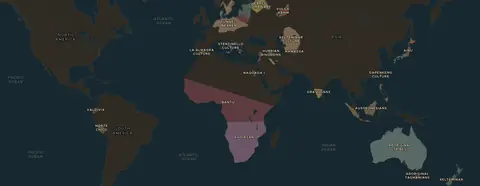 10
Plusieurs berceaux : les débuts de l’agriculture dans le monde
L’agriculture n’a pas été inventée une seule fois. Le riz en Chine, le maïs au Mexique, la pomme de terre dans les Andes, le taro en Nouvelle-Guinée : les élèves repèrent sur la carte les berceaux agricoles du monde et découvrent d’où viennent les aliments qu’ils mangent aujourd’hui.
NéolithiqueEnviron 9000-2500 av. J.-C.
-
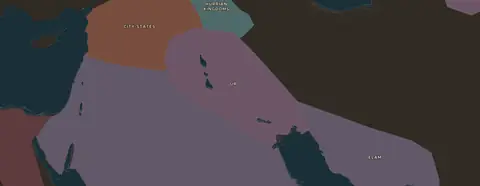 11
Uruk : la première grande ville
Entre le Tigre et l’Euphrate, un village d’agriculteurs est devenu Uruk, probablement la plus grande ville du monde vers 3000 av. J.-C. Les élèves découvrent comment les canaux, les temples, le commerce et la première écriture ont rendu la vie urbaine possible.
SumerVers 4000-3000 av. J.-C.
-
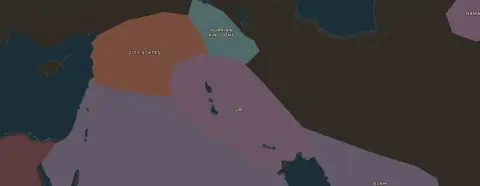 12
Cunéiforme : comment l’écriture a commencé
La toute première écriture n’était pas un poème, mais un reçu. Les élèves suivent l’histoire du cunéiforme, des comptes d’Uruk à l’Épopée de Gilgamesh, créent leurs propres signes et découvrent comment les savants ont réussi à le déchiffrer au XIXe siècle.
SumerVers 3400-1700 av. J.-C.
-
 13
Ötzi : un voyageur de l’âge du cuivre dans les Alpes
En 1991, deux randonneurs ont découvert dans la glace des Alpes le corps d’un homme qui y reposait depuis environ 5 300 ans. Les élèves mènent l’enquête : que nous apprennent le corps, les vêtements et les outils d’Ötzi sur la vie et la mort en Europe à l’âge du cuivre ?
L’Europe à l’âge du cuivreVers 3300 av. J.-C.
-
 14
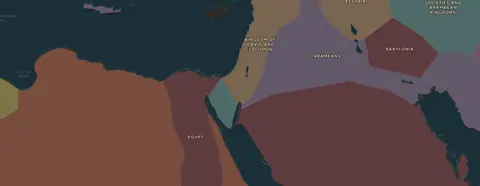
Comment le monde a appris à écrire
Des coins enfoncés dans l’argile, des images sur les murs des temples, des fissures sur des os oraculaires et, enfin, une courte liste de lettres. Les élèves comparent les premiers systèmes d’écriture, découvrent lesquels restent indéchiffrés et retracent l’origine de notre alphabet jusqu’à l’âge du bronze.
Les premiers systèmes d’écritureEnviron 3400-1050 av. J.-C.
-
 15
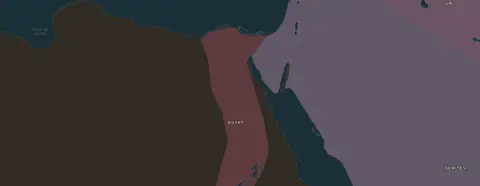
L’Égypte : don du Nil
Une étroite vallée fluviale entre deux déserts est devenue l’un des tout premiers royaumes du monde. Les élèves suivent le Nil depuis les cataractes jusqu’au delta, découvrent comment la crue du fleuve a façonné la vie égyptienne et localisent l’endroit où la Haute et la Basse-Égypte se sont unifiées.
Égypte ancienneVers 3100-2700 av. J.-C.
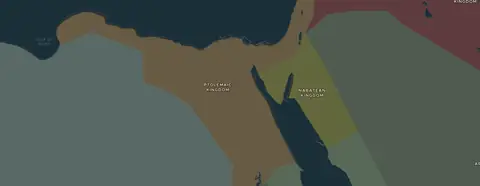
-
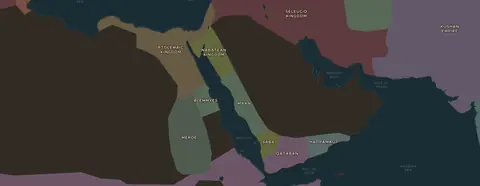
 16
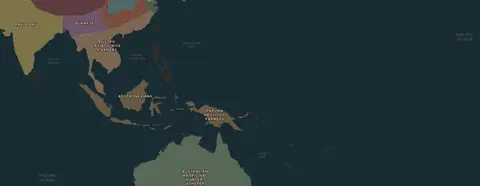
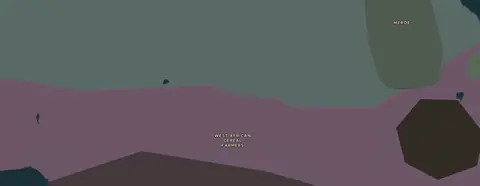
Lapita : les premiers navigateurs du Pacifique ouvert
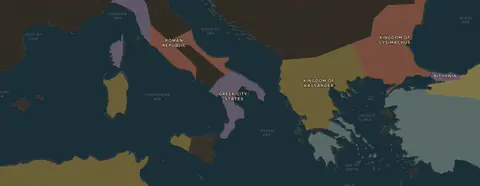
Des agriculteurs et marins venus de Taïwan se sont répandus à travers les îles d’Asie du Sud-Est. Leurs descendants, les Lapita, ont ensuite pris la mer vers le vaste Pacifique, atteignant des îles où aucun humain n’était jamais allé. Les élèves suivent l’une des plus grandes aventures de l’histoire.
Austronésiens et LapitaEnviron 3000-1000 av. J.-C.
-
 17
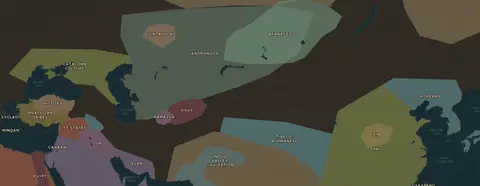
Roues, chevaux et steppes
La roue est apparue des milliers d’années après l’invention de l’agriculture. Les élèves suivent les chars et les chevaux à travers les vastes prairies de la steppe, découvrent les premiers chars à roues à rayons et voient comment une invention s’est diffusée de l’Égypte jusqu’à la Chine.
Âge du cuivre et du bronzeEnviron 3500-1200 av. J.-C.
-
 18
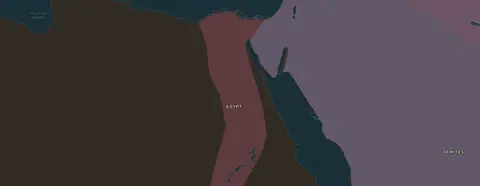
Les pyramides de Gizeh
En un siècle environ, les Égyptiens sont passés de la première pyramide à degrés en pierre à la Grande Pyramide de Gizeh. Les élèves suivent la pierre depuis les carrières jusqu’au chantier, rencontrent les ouvriers qui l’ont construite et s’interrogent sur ce que cela révèle du pouvoir d’un pharaon.
Égypte de l'Ancien EmpireEnviron 2650-2500 av. J.-C.
-
 19
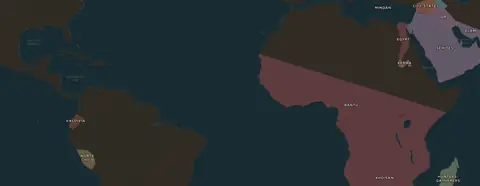
Caral : la première ville des Amériques
Au moment où les Égyptiens construisaient leurs premières pyramides, des peuples de la côte désertique du Pérou élevaient des plateformes et des places circulaires en contrebas à Caral. Les élèves découvrent l’une des plus anciennes civilisations des Amériques, fondée sur le coton, la pêche et les échanges.
Norte Chico (Caral-Supe)Environ 3000-1800 av. J.-C.
-
 20
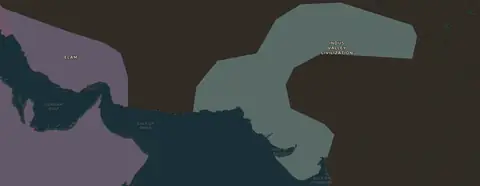
Harappa et Mohenjo-daro : les cités de l’Indus
Rues tracées au cordeau, égouts couverts et briques standardisées : les cités de l’Indus comptaient parmi les mieux organisées du monde antique, mais leur écriture reste un mystère. Les élèves découvrent Harappa, Mohenjo-daro et Lothal, et s’interrogent sur les raisons de leur abandon.
Civilisation de la vallée de l’IndusEnviron 2600-1900 av. J.-C.
-
 21
Stonehenge et les bâtisseurs de mégalithes
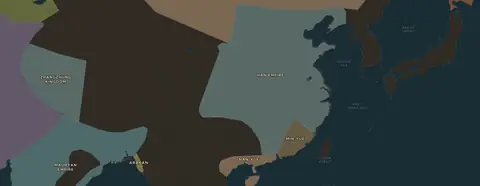
Des agriculteurs munis d’outils en pierre et en bois de cerf ont érigé Stonehenge en plusieurs étapes sur plus de 1 000 ans, traînant certains blocs depuis le Pays de Galles. Les élèves découvrent les grands monuments de pierre de l’Europe atlantique et explorent les différentes hypothèses sur leur utilité.
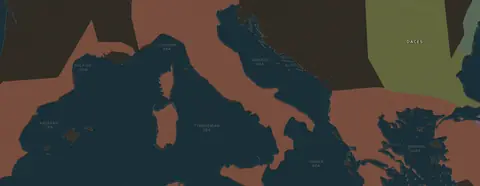
Néolithique en Grande-BretagneEnviron 3200-1500 av. J.-C.
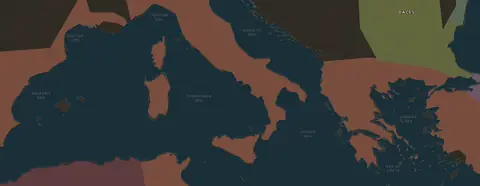
-
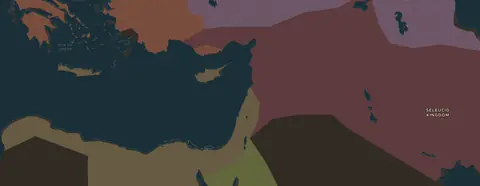
 22
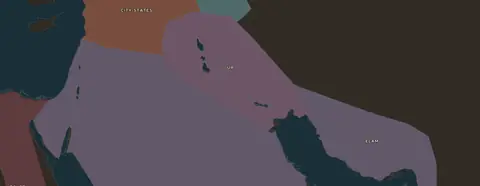
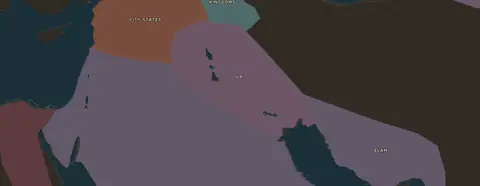
Ur et les cités-États de Sumer
Sumer n’était pas un seul pays, mais une région composée de cités-États rivales, chacune ayant son propre dieu et son propre dirigeant. Les élèves vont visiter Ur, Nippur et Lagash, explorer les tombes royales d’Ur et découvrir le plus ancien code de lois connu.
SumerEnviron 2900-2000 av. J.-C.
-
 23
Sargon d’Akkad : le premier empire
Un échanson venu de Kish conquiert les cités de Sumer et affirme régner de la mer du Golfe à la Méditerranée. Les élèves suivent Sargon d’Akkad, rencontrent sa fille Enheduanna et débattent des raisons de la chute du premier empire.
Empire d’AkkadVers 2334-2154 av. J.-C.
-
 24
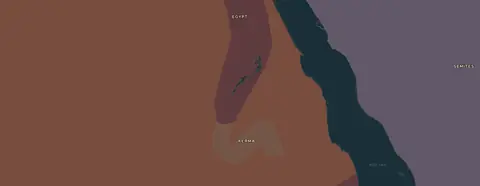
Kerma : le royaume de Kouch
Au sud de l’Égypte, au-delà des rapides du Nil, se trouvait Kerma, la capitale d’un puissant royaume africain que les Égyptiens appelaient Kouch. Les élèves découvrent son immense temple en briques de terre crue, son commerce d’or et d’ivoire, et sa longue rivalité avec l’Égypte.
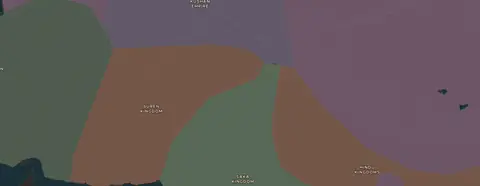
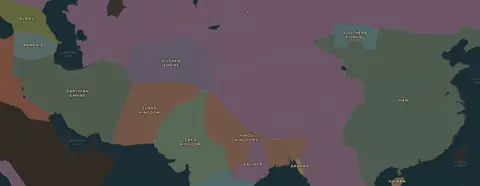
Royaume de KermaEnviron 2500-1500 av. J.-C.
-
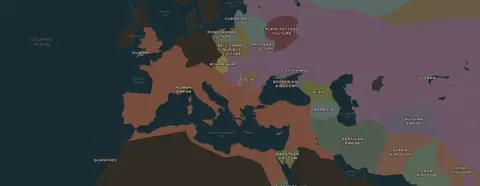
 25
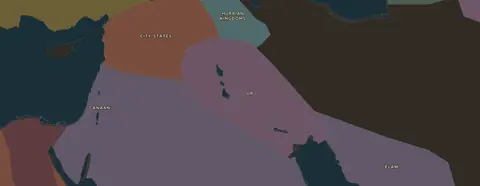
Babylone sous Hammurabi et la loi
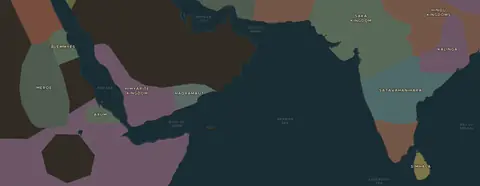
Hammurabi a transformé Babylone, petite cité-État, en capitale de la Mésopotamie et a fait graver ses lois dans la pierre pour que tous puissent les lire. Les élèves repèrent ses conquêtes sur la carte, découvrent ses lois et les comparent à leur propre idée de la justice.
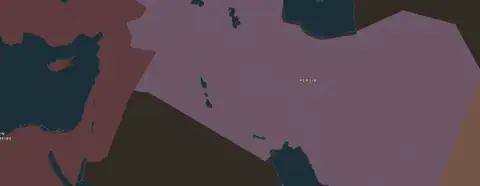
Babylonien ancienVers 1792-1750 av. J.-C.
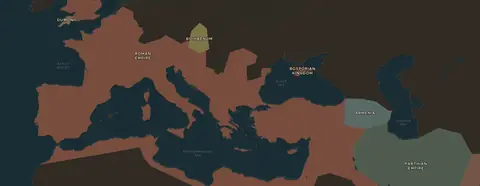
-
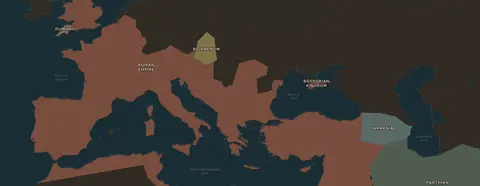
 26
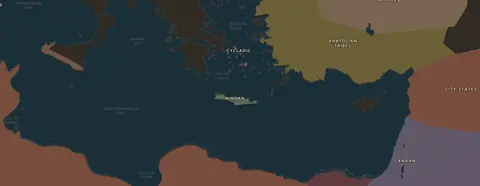
Les Minoens de Crète
Des palais aux centaines de pièces, des acrobates bondissant par-dessus des taureaux sur les fresques, une écriture que personne ne sait lire : les Minoens de Crète dominaient les routes maritimes de l’Égée. Les élèves découvrent Cnossos, le volcan de Théra et le mystère du déclin des Minoens.
Égée à l’âge du bronzeEnviron 2000-1450 av. J.-C.
-
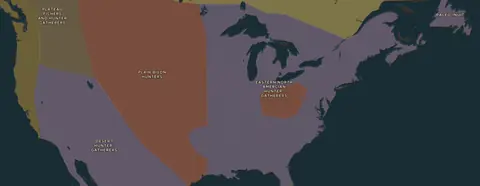 27
Les tertres : les bâtisseurs de monticules d’Amérique du Nord
Il y a des milliers d’années, des peuples autochtones d’Amérique du Nord ont érigé d’immenses cercles de terre, des tertres funéraires et des ouvrages géométriques. Les élèves découvrent Poverty Point, les Adena et les Hopewell, ainsi qu’un mythe qui a tenté de leur enlever cette histoire.
Forêts de l’Est1700 av. J.-C. - 500 apr. J.-C.
-
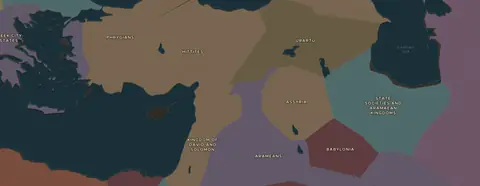 28
Les Hittites de Hattousa
Depuis leur capitale fortifiée au cœur de l’Anatolie, les rois hittites ont attaqué Babylone, affronté l’Égypte et rédigé les plus anciens textes de la famille de langues à laquelle appartient l’anglais. Les élèves découvrent Hattousa, rencontrent la reine Puduhepa et vérifient une vieille légende sur le fer hittite.
Empire hittiteEnviron 1650-1180 av. J.-C.
-
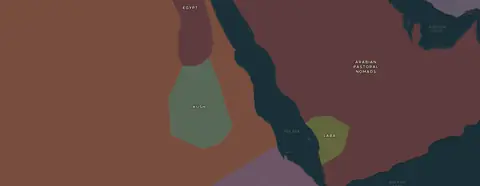 29
Hatchepsout : la femme qui devint pharaon
Hatchepsout commença comme régente pour un jeune roi, puis se proclama pharaon. Les élèves suivent ses grands chantiers à Thèbes et l’expédition de sa flotte vers le pays de Pount, et s’interrogent sur les raisons pour lesquelles des souverains postérieurs ont voulu effacer sa mémoire.
Égypte du Nouvel EmpireVers 1479-1458 av. J.-C.
-
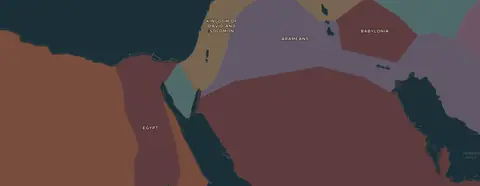 30
Akhenaton et Amarna : une révolution religieuse
Un pharaon tourne le dos aux anciens dieux, vénère le disque solaire et fonde une nouvelle capitale dans le désert. Les élèves découvrent la ville d’Akhenaton à Amarna, lisent les lettres des rois qui lui écrivaient et s’interrogent sur les raisons de l’échec de sa révolution.
Égypte du Nouvel EmpireVers 1353-1336 av. J.-C.
-
 31
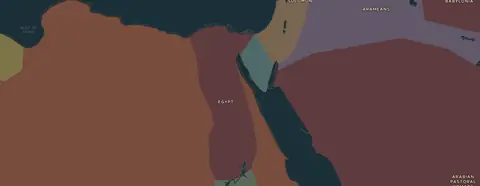
Toutankhamon et la Vallée des Rois
Un jeune pharaon a régné environ dix ans avant d’être presque oublié, jusqu’en 1922. Les élèves découvrent les tombes royales cachées de la Vallée des Rois, les artisans qui les ont creusées et l’histoire de la tombe la plus célèbre jamais retrouvée.
Égypte du Nouvel EmpireVers 1332-1323 av. J.-C.
-
 32
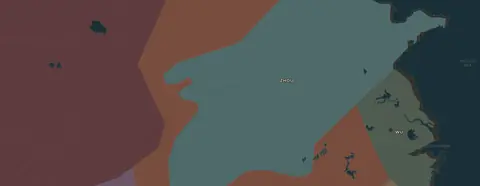
La Chine des Shang : os oraculaires et bronze
Les rois Shang interrogeaient leurs ancêtres en faisant craquer des os dans le feu, puis gravaient les réponses dans la plus ancienne écriture chinoise connue. Les élèves visitent la capitale Shang d’Anyang, rencontrent la générale Fu Hao et comparent les Shang à une autre grande civilisation du bronze à Sanxingdui.
Dynastie ShangVers 1600-1046 av. J.-C.
-
 33
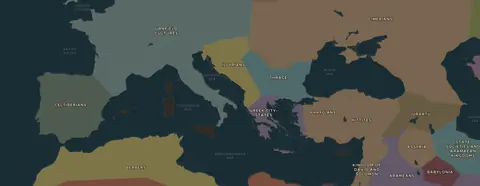
L'épave d'Uluburun : le commerce à l'âge du bronze
Vers 1300 av. J.-C., un navire chargé de cuivre, d’étain, de verre, d’ivoire et d’or a sombré au large des côtes de l’Anatolie. Les élèves vont explorer sa cargaison, retrouver l’origine de chaque objet sur la carte et découvrir à quel point le monde de l’âge du bronze était connecté.
Fin de l'âge du bronzeVers 1300 av. J.-C.
-
 34
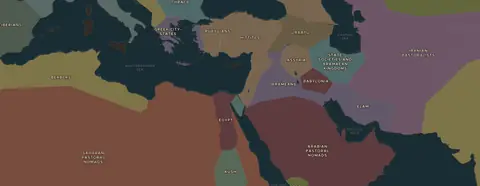
Qadesh : Ramsès II contre les Hittites
En 1274 av. J.-C., deux grandes puissances se sont affrontées à Qadesh lors de ce qui fut peut-être la plus grande bataille de chars de l’Histoire. Chacune a revendiqué la victoire. Les élèves vont comparer les sources égyptiennes et hittites, et découvrir comment la guerre s’est achevée par l’un des plus anciens traités de paix connus.
Nouvel Empire égyptien1274-1259 av. J.-C.
-
 35
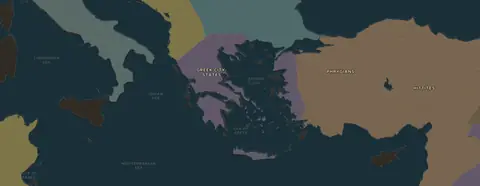
Mycènes : la Grèce à l’âge des héros
Des palais-forteresses, des masques d’or et des tablettes remplies de comptes de moutons : les Mycéniens étaient les Grecs de l’âge du bronze. Les élèves découvrent Mycènes, Pylos et Troie, et s’interrogent sur la part de vérité dans la guerre de Troie racontée par Homère.
Grèce mycénienneEnviron 1600-1100 av. J.-C.
-
 36
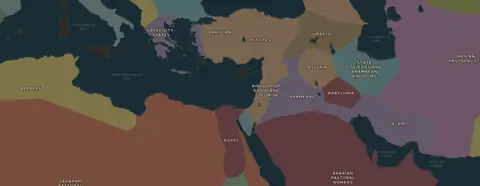
L’effondrement de l’âge du bronze
En moins de cinquante ans, l’Empire hittite, les palais mycéniens et de grands ports comme Ougarit ont disparu. Les élèves enquêtent sur la sécheresse, les envahisseurs, les séismes et l’effondrement du commerce, et réfléchissent à la façon dont un monde interconnecté a pu s’effondrer.
Fin de l’âge du bronzeVers 1200-1150 av. J.-C.
Ancient world
-
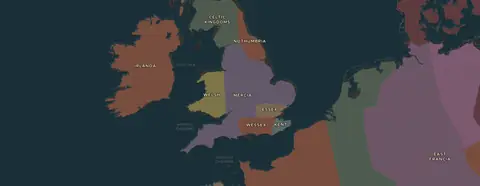
 37
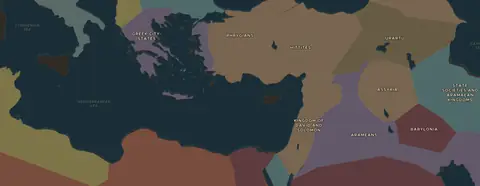
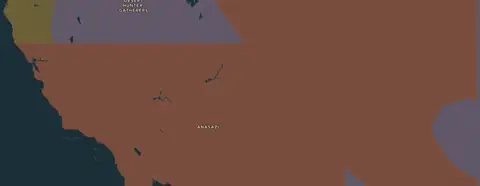
Après l’effondrement de l’âge du bronze : un nouveau monde
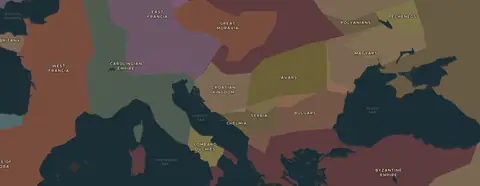
Vers 1200 av. J.-C., les grands royaumes de l’âge du bronze s’effondrent : l’Empire hittite disparaît, les palais mycéniens brûlent et l’Égypte ne survit qu’avec difficulté. Les élèves découvrent le monde plus modeste qui naît sur ces ruines, où le fer, l’alphabet et de nouveaux peuples comme les Araméens font leur apparition.
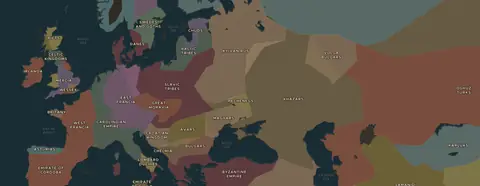
Premier âge du fer1100-900 av. J.-C.
-
 38
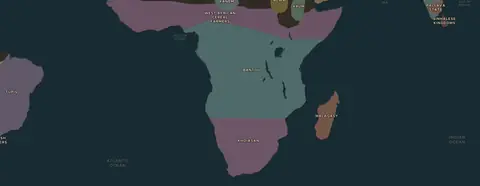
L’expansion bantoue : des agriculteurs en mouvement
Pendant de nombreux siècles, des familles d’agriculteurs parlant des langues bantoues se sont répandues depuis l’Afrique de l’Ouest vers la majeure partie de l’Afrique centrale, orientale et australe. Les élèves suivent l’une des plus grandes migrations de l’histoire, étape par étape.
Expansion bantouevers 1000 av. J.-C., 500 apr. J.-C.
-
 39
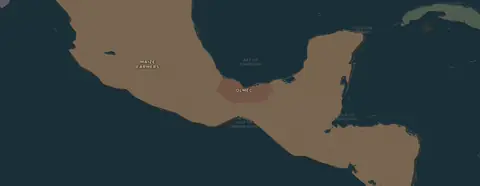
Les Olmèques : des têtes géantes sur la côte du golfe du Mexique
Sur la côte chaude et humide du golfe du Mexique, les Olmèques ont sculpté d’immenses têtes de pierre et bâti les premiers grands centres de la Mésoamérique. Les élèves découvrent San Lorenzo et La Venta, puis débattent : les Olmèques étaient-ils une « culture mère » ?
Olmèque1200-400 av. J.-C.
-
 40
Les Phéniciens : marchands de la mer pourpre
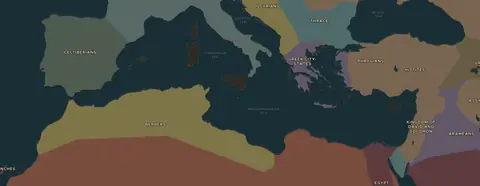
Depuis quelques cités portuaires sur la côte libanaise, les Phéniciens ont parcouru toute la Méditerranée. Les élèves suivent le cèdre, la pourpre et l’argent le long de leurs routes et découvrent les colonies qu’ils ont fondées, de Chypre jusqu’à l’Espagne.
Phénicie1000-700 av. J.-C.
-
 41
L’âge védique et les seize grands royaumes
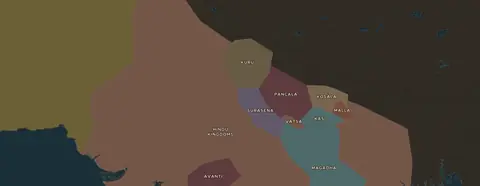
Des hymnes transmis oralement mot à mot pendant des siècles, des haches en fer ouvrant les forêts de la plaine du Gange, et seize États rivaux vers 500 av. J.-C. Les élèves découvrent l’âge védique de l’Inde et comprennent comment l’un de ces seize royaumes, Magadha, a fini par surpasser les autres.
Inde védiquevers 1500-500 av. J.-C.
-
 42
Les Zhou et le Mandat du Ciel
Vers 1046 av. J.-C., les Zhou renversent les rois Shang et justifient leur victoire par une idée puissante : le Ciel accorde le droit de gouverner à un roi juste et le retire à un roi cruel. Les élèves découvrent une idée qui a marqué la politique chinoise pendant près de 3 000 ans.
Dynastie Zhou, Chine1046-771 av. J.-C.
-
 43
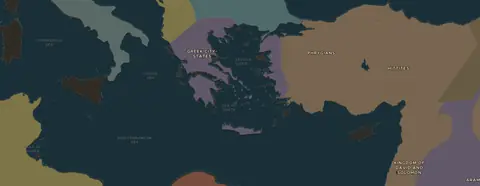
Vingt-deux lettres : comment l’alphabet s’est répandu
L’alphabet phénicien ne comptait que 22 lettres, uniquement des consonnes, et tout le monde pouvait l’apprendre en quelques semaines. Les élèves suivent son parcours depuis Byblos jusqu’en Grèce, où les voyelles furent ajoutées, puis en Italie et jusque dans les lettres que nous utilisons aujourd’hui.
Phénicie et Grèce1050-700 av. J.-C.
-
 44
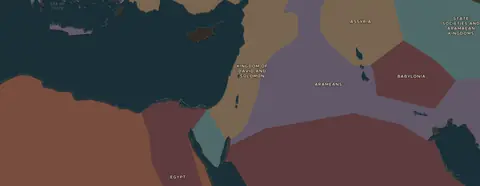
Israël et Juda : deux petits royaumes entre les empires
La Bible raconte l’histoire de David et Salomon ; l’archéologie apporte les preuves matérielles. Suivez les deux royaumes d’Israël et de Juda alors que l’Assyrie se rapproche, et réfléchissez à la façon dont un petit peuple a gardé son identité après la disparition de son État.
Israël antique1000-701 av. J.-C.
-
 45
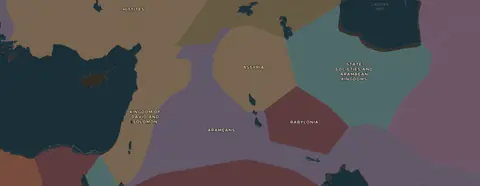
Assyrie : la première superpuissance
Depuis son berceau sur le Tigre, l’Assyrie a bâti le plus vaste empire que le monde ait connu jusqu’alors, de l’Égypte à l’Iran. Les élèves découvrent comment l’empire était gouverné, pourquoi il inspirait la crainte, et comment il s’est effondré en quelques années autour de 612 av. J.-C.
Empire néo-assyrien900-612 av. J.-C.
-
 46
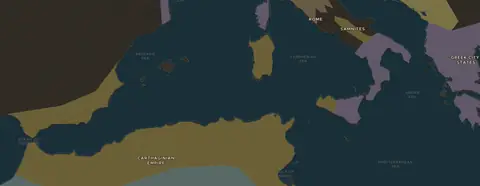
Carthage : un empire commercial sur la mer occidentale
Bien avant d’affronter Rome, Carthage dominait la Méditerranée occidentale grâce à ses navires marchands, et non par ses légions. Les élèves découvrent son double port, ses comptoirs de l’Espagne à la Sicile, et le voyage d’Hannon le long des côtes de l’Afrique de l’Ouest.
Carthage814-300 av. J.-C.
-
 47
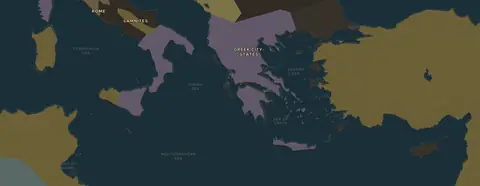
Les Jeux olympiques : une trêve tous les quatre ans
Tous les quatre ans, les Grecs, souvent en conflit, déposaient les armes et se rendaient à Olympie pour honorer Zeus par des courses à pied, de la lutte et des courses de chars. Les élèves découvrent le sanctuaire, apprennent ce que remportait un athlète et réfléchissent à ce que les Jeux apportaient que les traités ne pouvaient pas offrir.
Grèce archaïque et classique776-400 av. J.-C.
-
 48
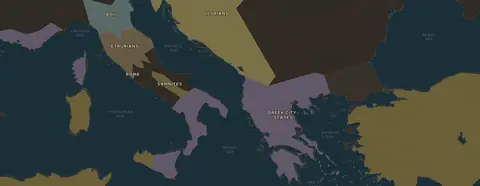
Romulus et Rémus : comment Rome est née
Des jumeaux, une louve et une querelle sur le mont Palatin : la légende de la fondation de Rome est célèbre. Les élèves comparent ce récit à ce que les archéologues ont découvert et s'interrogent sur les raisons qui ont poussé les Romains à raconter cette histoire.
Rome primitive753 av. J.-C.
-
 49
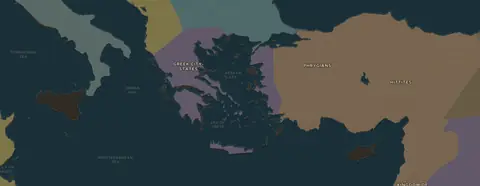
La polis : pourquoi la Grèce comptait des centaines d'États
Les Grecs partageaient une langue, des dieux et les Jeux olympiques, mais ils n'ont jamais formé un seul pays. Les élèves découvrent comment les montagnes et la mer ont morcelé la Grèce en centaines de cités-États, chacune avec ses propres lois, son armée et sa fierté.
Grèce archaïque800-500 av. J.-C.
-
 50
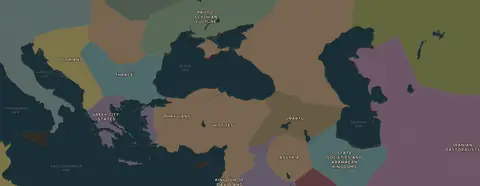
La Phrygie et le roi Midas : un roi réel derrière la légende
Tout le monde connaît le roi dont le toucher transformait tout en or. Mais peu savent que Midas a réellement régné en Anatolie centrale vers 700 av. J.-C., qu’il est mentionné dans les archives assyriennes et que sa capitale, Gordion, abrite un immense tumulus funéraire. Les élèves apprendront à distinguer la légende de la réalité historique.
Phrygie750-690 av. J.-C.
-
 51
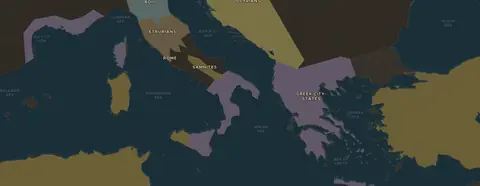
Les colonies grecques : une nouvelle cité au-delà de la mer
En deux siècles, les Grecs ont fondé des centaines de nouvelles cités, de l’Espagne à la mer Noire. Les élèves suivent des colons quittant une cité-mère surpeuplée vers Syracuse, Massalia et Byzance, et se demandent ce qu’une colonie devait à sa patrie d’origine.
Grèce archaïque750-550 av. J.-C.
-
 52
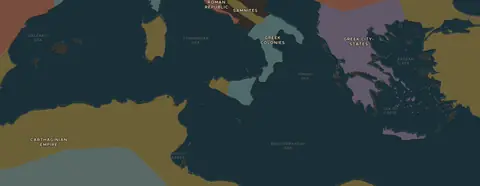
Syracuse : le géant grec de Sicile
La plus riche des cités grecques de l’Occident ne se trouvait pas en Grèce, mais en Sicile. Les élèves découvrent Syracuse, depuis sa fondation par Corinthe jusqu’au tyran Denys, qui fit construire la plus grande forteresse du monde grec et dont les ingénieurs inventèrent la catapulte.
Grande Grèce733-367 av. J.-C.
-
 53
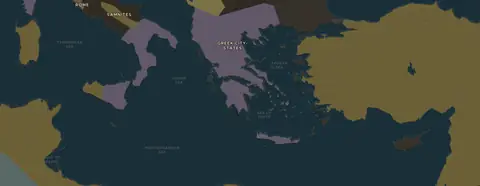
Sparte : une cité bâtie pour la guerre
Sparte n’avait ni murailles, ni monnaie précieuse à voler, mais possédait la meilleure armée de Grèce. Les élèves découvrent comment une cité qui asservissait ses voisins a fait de chaque citoyen un soldat, ce que les femmes spartiates pouvaient faire que les autres Grecques ne pouvaient pas, et pourquoi ce système a fini par s’effondrer.
Grèce archaïque et classique700-371 av. J.-C.
-
 54
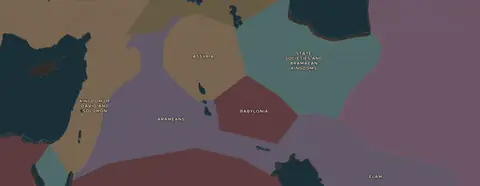
La bibliothèque d'Assurbanipal : un roi collectionneur de savoirs
Le dernier grand roi d’Assyrie savait lire et écrire. Il envoyait des scribes dans tout son empire pour copier tous les textes possibles. Les élèves découvrent sa bibliothèque à Ninive et l’histoire du Déluge de Gilgamesh, retrouvée dans ses ruines.
Empire néo-assyrien668-612 av. J.-C.
-
 55
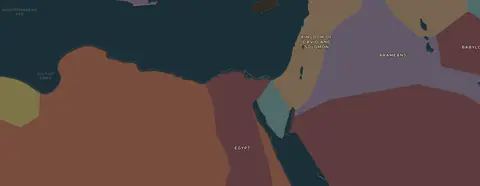
Les derniers pharaons d'Égypte : la renaissance saïte
Après le sac de Thèbes par les armées assyriennes, une famille originaire de Saïs a reconstruit l'Égypte avec l'aide de soldats et de commerçants grecs. Les élèves découvrent un pharaon qui tenta de creuser un canal vers la mer Rouge et envoya des navires faire le tour de l'Afrique, jusqu'à l'arrivée des Perses en 525 av. J.-C.
Égypte de la Basse Époque664-525 av. J.-C.
-
 56
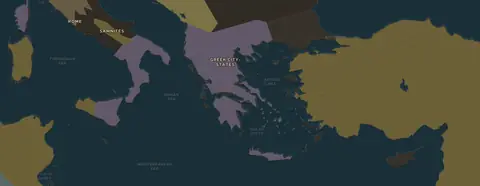
Delphes : l'oracle au nombril du monde
Des rois et des cités, de la Lydie à la Sicile, envoyaient des messagers gravir la montagne pour demander conseil à une prêtresse. Les élèves découvrent Delphes, comprennent le fonctionnement de l'oracle, testent quelques réponses célèbres et se demandent pourquoi un sanctuaire sans défense militaire est resté riche et protégé pendant des siècles.
Grèce archaïque et classique650-279 av. J.-C.
-
 57
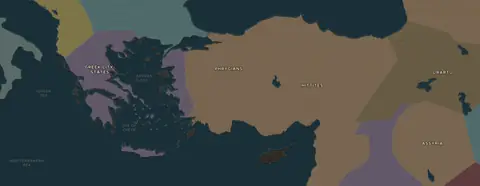
La Lydie et les premières pièces de monnaie
Dans le royaume de Lydie, en Anatolie occidentale, les premières pièces de monnaie furent frappées vers 600 av. J.-C. Les élèves font la connaissance du roi Crésus, « riche comme Crésus », suivent l’or descendu par le fleuve Pactole et assistent à la chute du royaume face à la Perse en 546 av. J.-C.
Lydie650-546 av. J.-C.
-
 58
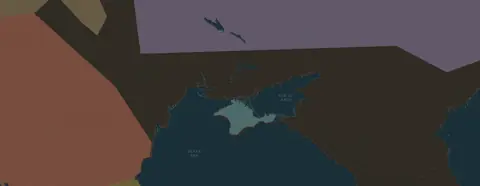
Les Scythes : seigneurs cavaliers de la steppe
Au nord de la mer Noire vivaient des nomades qui combattaient à cheval, enterraient leurs rois sous d’immenses tumulus remplis d’or, et mirent en échec l’Empire perse sans livrer bataille. Les élèves découvrent les Scythes à travers Hérodote et les vestiges de leurs tombes.
Scythie700-300 av. J.-C.
-
 59
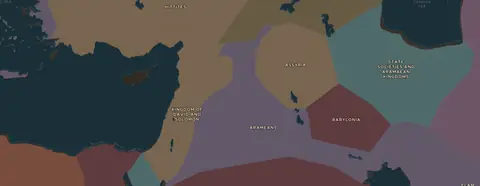
Nabuchodonosor et la splendeur de Babylone
Pendant soixante-dix ans après la chute de l’Assyrie, Babylone fut la plus grande ville du monde. Les élèves découvrent la porte d’Ishtar aux briques bleues et le ziggourat géant de Nabuchodonosor, l’exil du peuple de Juda, et la nuit de 539 av. J.-C. où la cité ouvrit ses portes à la Perse.
Empire néo-babylonien605-539 av. J.-C.
-
 60
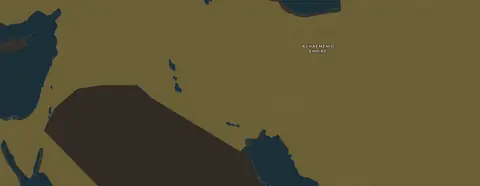
Cyrus le Grand : un empire en trente ans
Un roi d’un petit peuple du sud de l’Iran a conquis les Mèdes, la Lydie et Babylone en une seule vie, bâtissant le plus vaste empire jamais vu à l’époque. Les élèves suivent les conquêtes de Cyrus et se demandent pourquoi il est resté célèbre comme libérateur plutôt que comme destructeur.
Perse achéménide559-530 av. J.-C.
-
 61
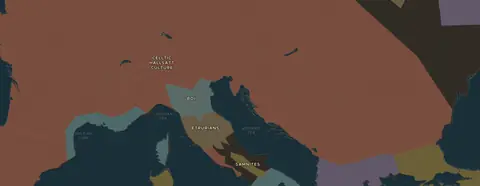
Les Celtes : le sel, le fer et les princes de Hallstatt
Au nord des Alpes, des chefs s’enrichissent grâce au sel et au fer, et sont enterrés avec des chars, de l’or et des vases à vin grecs. Les élèves découvrent les cultures de Hallstatt et de La Tène, les premiers peuples que les Grecs ont appelés Celtes, et suivent leurs guerriers jusqu’à Delphes et l’Anatolie.
L’Europe à l’âge du fer800-279 av. J.-C.
-
 62
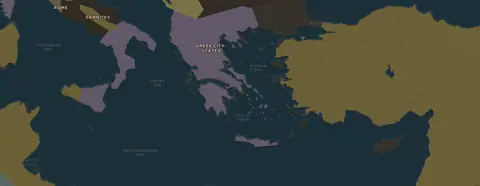
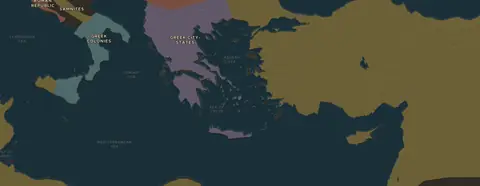
Athènes invente la démocratie
En 508 av. J.-C., les Athéniens lancent une expérience unique : le peuple lui-même va voter les lois, décider de la guerre ou de la paix. Les élèves suivent les étapes de Solon à Clisthène puis à Périclès, découvrent la colline où se réunissaient 6 000 citoyens et s’interrogent sur ceux qui étaient exclus.
Grèce classique594-430 av. J.-C.
-
 63
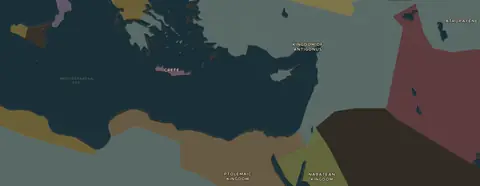
Demander pourquoi : la science et la philosophie grecques
Sur la côte d'Ionie, quelques hommes ont commencé à expliquer le monde sans faire appel aux dieux : eau, nombres, atomes. Les élèves suivent cette idée de Milet à l'école de médecine de Kos, puis aux écoles de Platon et d'Aristote à Athènes, et s'exercent à la méthode grecque qui consiste à toujours demander pourquoi.
Grèce classique585-335 av. J.-C.
-
 64
Les Sept Merveilles du monde antique
À l’époque hellénistique, des voyageurs grecs ont dressé la liste de sept sites à voir absolument. Les élèves retrouvent ces sept merveilles sur la carte, de la pyramide de Gizeh au phare d’Alexandrie, découvrent lesquelles sont encore visibles aujourd’hui et réfléchissent à ce qui fait d’un lieu une merveille.
Monde hellénistique2560-280 av. J.-C.
-
 65
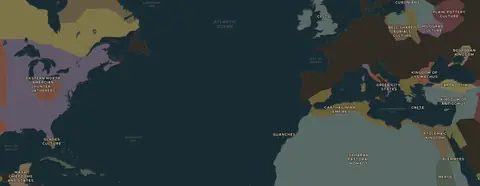
The Roman Republic: consuls, Senate and people
After the last king, Rome split power between two consuls, the Senate and the people's assemblies. Students learn how the Republic worked, and spot its ideas in governments today.
Roman Republic509 BC
-
 66
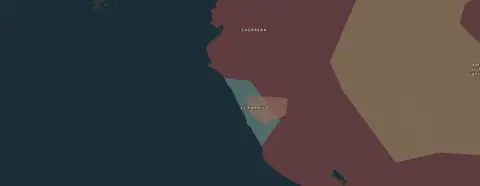
Chavín de Huántar : un temple au cœur des Andes
Perché dans une vallée des Andes, le temple de Chavín de Huántar attirait des pèlerins venus de la côte comme des montagnes. Les élèves vont explorer ses galeries souterraines, l’idole du Lanzón et découvrir comment un même style artistique s’est diffusé dans les Andes bien avant les Incas.
Civilisation de Chavínvers 900-200 av. J.-C.
-
 67
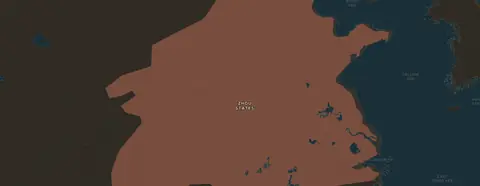
Confucius and the Hundred Schools of Thought
While the Zhou world broke into rival states, thinkers traveled from court to court with advice on how to bring back order. Students meet Confucius, Laozi and the Legalists, and debate which idea would really fix a country in chaos.
Eastern Zhou, China551-221 BC
-
 68
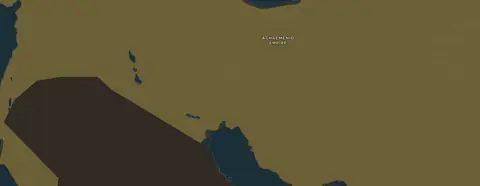
Darius : comment gouverner un empire aux multiples peuples
Darius Ier hérite d’un empire immense, qui s’étend sur trois continents et rassemble des dizaines de langues. Les élèves découvrent les moyens qu’il a utilisés pour maintenir l’unité : provinces et gouverneurs, impôts fixes, monnaie d’or, une nouvelle capitale à Persépolis et une inscription gravée dans la falaise de Behistun.
Perse achéménide522-486 av. J.-C.
-
 69
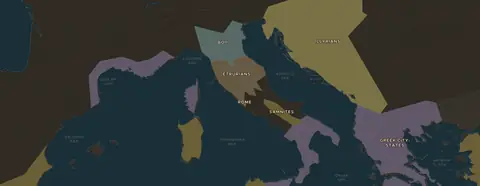
Les sept rois et les Étrusques
La tradition romaine compte sept rois avant la République, dont les trois derniers d'origine étrusque. Les élèves découvrent les puissants voisins du nord de Rome et ce que les Romains ont appris d’eux.
Rome archaïque753-509 av. J.-C.
-
 70
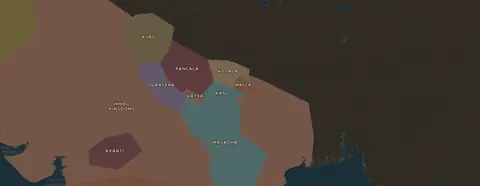
Siddhartha Gautama : le Bouddha et son monde
Un prince quitte son palais pour comprendre pourquoi les êtres humains souffrent. Après des années de recherche, il devient le Bouddha, l’Éveillé, et consacre le reste de sa vie à enseigner dans les royaumes du Gange. Les élèves suivent sa vie sur la carte et découvrent ses idées.
Inde anciennevers 500 av. J.-C.
-
 71
La Route Royale : un message à travers un empire
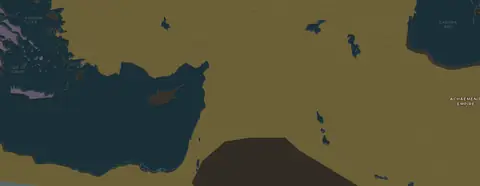
De Sardes, près de la mer Égée, jusqu'à Suse en Iran, la Route Royale s'étendait sur environ 2 700 km, avec des relais à chaque journée de marche. Les élèves vont mesurer cette distance, comparer la rapidité d’un courrier à relais face à une armée, et découvrir pourquoi les routes comptaient davantage que les murailles pour les rois perses.
Perse achéménide500 av. J.-C.
-
 72
Marathon : la Perse aux portes de la Grèce
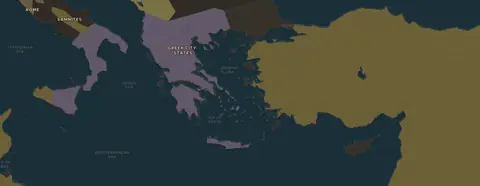
Lorsque les cités grecques d'Ionie se révoltèrent contre l'Empire perse, Athènes envoya vingt navires pour les soutenir. La révolte échoua et, en 490 av. J.-C., le roi Darius lança une expédition pour punir Athènes. Les élèves suivent la chaîne des événements jusqu'à la plaine de Marathon, où une armée de citoyens, pourtant inférieure en nombre, se lança à l'assaut.
Guerres Médiques499-490 av. J.-C.
-
 73
Patriciens et plébéiens : la lutte des ordres
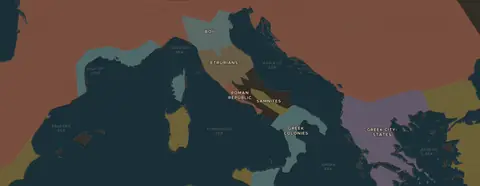
Les citoyens ordinaires de Rome, les plébéiens, se sont mis en grève : ils ont quitté la ville et refusé de combattre. Suivez comment ils ont obtenu des tribuns, des lois écrites et une part du pouvoir.
République romaine494-287 av. J.-C.
-
 74
480 av. J.-C. : Les Thermopyles et Salamine
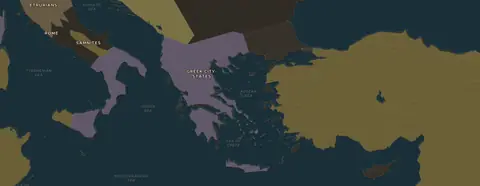
Dix ans après Marathon, Xerxès amena la plus grande armée que les Grecs aient jamais vue à travers l’Hellespont. Suivez son avancée jusqu’au défilé des Thermopyles, assistez à l’évacuation d’Athènes, puis découvrez comment la guerre se décide dans le détroit étroit de Salamine.
Guerres Médiques480-479 av. J.-C.
-
 75
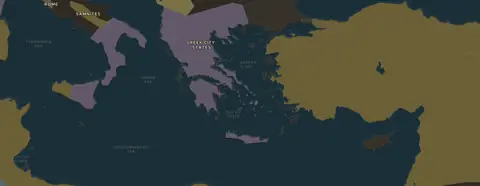
Athènes à son apogée : Périclès et le Parthénon
Après les guerres médiques, Athènes prit la tête d’une alliance de cités insulaires et côtières, qu’elle transforma en empire. Les élèves suivent le trajet du tribut jusqu’à l’Acropole, où le Parthénon fut construit en quinze ans, et s’interrogent sur la justice du financement de cet âge d’or.
Grèce classique478-431 av. J.-C.
-
 76
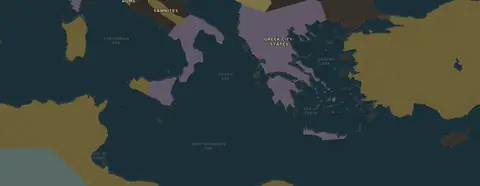
Le théâtre grec : tragédie et comédie pour toute la cité
Chaque printemps, Athènes s’arrêtait de travailler pour un grand festival de pièces en l’honneur de Dionysos. Les élèves visitent le théâtre au pied de l’Acropole, rencontrent Eschyle, Sophocle, Euripide et Aristophane, et découvrent pourquoi une démocratie voulait que ses citoyens assistent ensemble à des tragédies.
Grèce classique472-330 av. J.-C.
-
 77
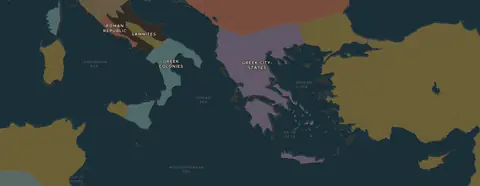
La guerre du Péloponnèse : Athènes contre Sparte
Pendant 27 ans, les deux plus grandes cités grecques se sont affrontées dans une guerre que ni l'une ni l'autre ne pouvait remporter rapidement : Athènes dominait la mer, Sparte la terre. Les élèves suivent la peste, la catastrophe de Sicile et la défaite finale, guidés par l'historien Thucydide.
Grèce classique431-404 av. J.-C.
-
 78
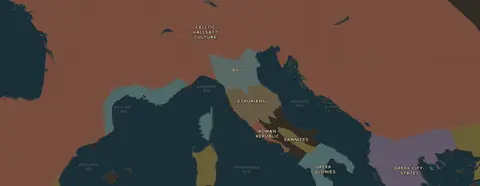
390 av. J.-C. : les Gaulois saccagent Rome
Une armée celtique écrase les Romains à la rivière Allia et pille Rome. Les élèves apprennent à distinguer la légende des faits et découvrent comment ce désastre a poussé Rome à construire une muraille de pierre et à repenser sa défense.
République romaine390 av. J.-C.
-
 79
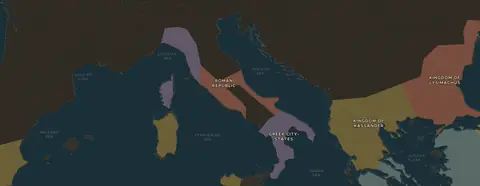
Les guerres samnites : Rome conquiert l’Italie
Dans les montagnes du centre de l’Italie, les Samnites ont combattu Rome pendant près d’un demi-siècle et ont même réussi à piéger toute une armée romaine. Les élèves suivent les guerres sur la carte et découvrent comment Rome a transformé ses ennemis vaincus en alliés.
République romaine343-290 av. J.-C.
-
 80
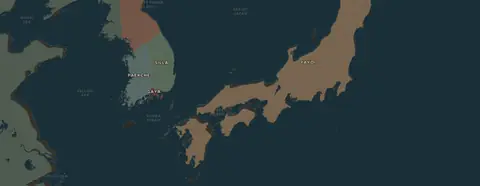
Le Japon Yayoi : le riz, le bronze et la reine Himiko
La riziculture, le bronze et le fer ont traversé la mer depuis la péninsule coréenne et ont transformé le Japon. Des villages entourés de douves sont devenus de petits royaumes, et des textes chinois racontent l’histoire d’une reine nommée Himiko. Les élèves combinent archéologie et sources chinoises pour explorer les débuts du Japon.
Période Yayoi, Japonvers 300 av. J.-C., 250 apr. J.-C.
-
 81
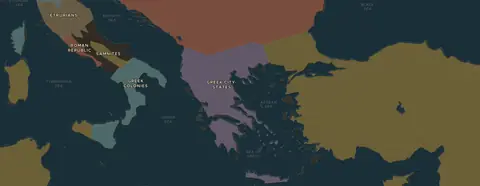
Philippe II : le roi qui a uni la Grèce
Le père d’Alexandre hérite d’un royaume fragile, aux marges du monde grec, et en vingt ans en fait le maître de la Grèce. Les élèves découvrent sa nouvelle armée équipée de longues piques, suivent la richesse issue des mines d’or, et visitent le champ de bataille de Chéronée où les cités libres ont été vaincues.
Macédoine359-336 av. J.-C.
-
 82
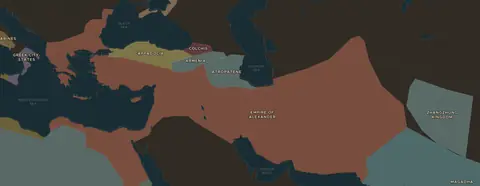
Alexandre : un empire en dix ans
D’un petit royaume grec jusqu’aux portes de l’Inde en une décennie. Les élèves suivent la route de la conquête et découvrent pourquoi l’empire s’est effondré aussi vite qu’il s’est construit.
Monde hellénistique334-323 av. J.-C.
-
 83
Alexandrie : la bibliothèque et le phare
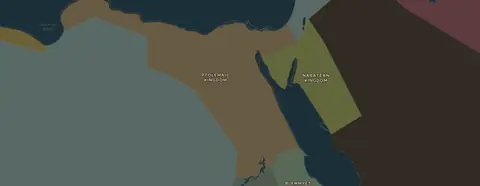
Les Ptolémées ont fondé une cité grecque sur la côte égyptienne et l'ont remplie de tous les livres qu'ils pouvaient trouver. Les élèves découvrent le Musée et la Bibliothèque, le phare de l'île de Pharos, et le savant qui a mesuré la Terre avec un simple bâton et une ombre.
Égypte ptolémaïque331-240 av. J.-C.
-
 84
Après Alexandre : les généraux se partagent le monde
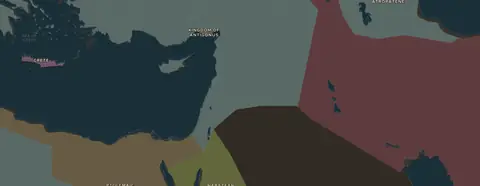
Alexandre meurt à Babylone en 323 av. J.-C. sans avoir désigné d’héritier. Pendant quarante ans, ses généraux se disputent l’empire, jusqu’à ce qu’il ne reste plus que trois royaumes. Les élèves utilisent le curseur temporel pour observer comment un empire devient cinq, puis trois, et s’interrogent sur les raisons de cet éclatement.
Monde hellénistique323-281 av. J.-C.
-
 85
Chandragupta et l’essor de l’Empire Maurya
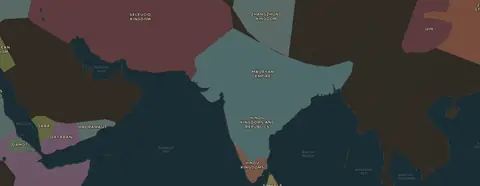
Quelques années après le retrait d’Alexandre de l’Inde, un jeune chef nommé Chandragupta Maurya s’empare du Magadha, chasse les garnisons grecques et échange des territoires contre des éléphants de guerre avec Séleucos. Les élèves vont cartographier la naissance du premier grand empire indien.
Empire Maurya, Indevers 321-297 av. J.-C.
-
 86
La Via Appia : la première grande route et aqueduc de Rome
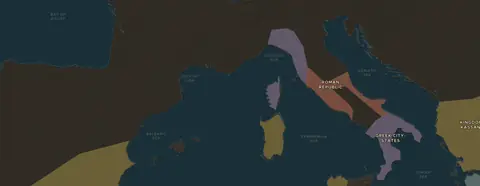
En 312 av. J.-C., un magistrat, Appius Claudius, lança à la fois la première grande route de Rome et son premier aqueduc. Les élèves suivent la Via Appia sur la carte et découvrent comment l’ingénierie romaine a uni un empire.
République romaine312 av. J.-C.
-
 87
L’Égypte ptolémaïque : des rois grecs en pharaons
Pendant près de trois siècles, une famille macédonienne a régné sur l’Égypte, portant la double couronne dans les temples et parlant grec à la cour. Les élèves découvrent comment deux cultures ont partagé un même royaume, des temples d’Edfou à la Pierre de Rosette, gravée en trois écritures en 196 av. J.-C.
Égypte ptolémaïque305-196 av. J.-C.
-
 88
Les Nabatéens : Pétra et la route de l’encens
Au cœur du désert jordanien, des marchands arabes ont creusé une cité de tombeaux dans les falaises roses et se sont enrichis en transportant l’encens d’Arabie jusqu’à la Méditerranée. Les élèves suivent la route de l’encens jusqu’à Pétra, découvrent comment une ville du désert trouvait de l’eau et observent la transformation d’un peuple nomade en royaume.
Royaume nabatéen312-30 av. J.-C.
-
 89
Nok : têtes en argile et premiers fers
Sur les collines du centre du Nigéria, le peuple Nok a façonné de remarquables têtes en argile et maîtrisé la métallurgie du fer il y a plus de 2 000 ans. Les élèves découvrent comment les archéologues reconstituent l’histoire d’un peuple sans écriture.
Culture Nokvers 500 av. J.-C. - 200 apr. J.-C.
-
 90
Pyrrhus et la « victoire à la Pyrrhus »
Un roi grec accompagné d’éléphants de guerre a vaincu deux fois les Romains, mais a perdu tant de soldats que son nom est devenu un mot. Les élèves suivent Pyrrhus à travers le sud de l’Italie et découvrent pourquoi Rome n’a pas pu être épuisée.
République romaine280-275 av. J.-C.
-
 91
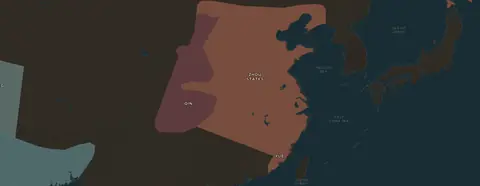
Qin Shi Huang : le Premier Empereur unifie la Chine
En 221 av. J.-C., le roi de Qin conquiert le dernier État rival et se proclame Premier Empereur. En onze ans, il fait de la Chine un seul pays avec une écriture, une monnaie et une loi uniques. Les élèves vont peser ses réalisations face au prix payé par son peuple.
Dynastie Qin, Chine221-210 av. J.-C.
-
 92
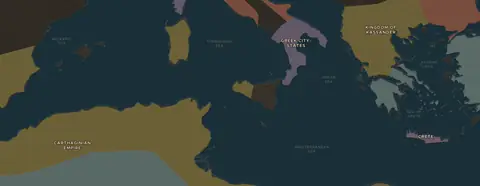
La Première Guerre punique : Rome se lance sur la mer
Rome ne possédait presque pas de marine lorsqu’elle entra en guerre contre Carthage, la grande puissance maritime de l’Occident, pour le contrôle de la Sicile. Les élèves découvrent comment Rome a construit une flotte, surmonté les catastrophes en mer et remporté sa première province.
République romaine264-241 av. J.-C.
-
 93
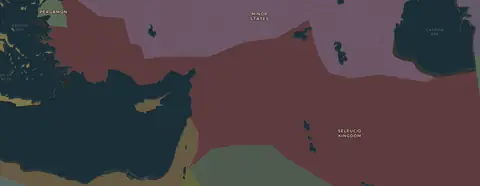
Les Séleucides : des rois grecs de la Syrie à l’Iran
Le plus vaste des royaumes issus d’Alexandre s’étendait de la mer Égée à l’Asie centrale, dirigé par des Grecs gouvernant des dizaines de peuples différents. Les élèves suivent les Séleucides de Babylone à Antioche, observent la fondation de cités grecques à travers l’Asie, puis assistent au rétrécissement du royaume face aux Parthes, aux Romains et aux révoltes.
Monde hellénistique312-140 av. J.-C.
-
 94
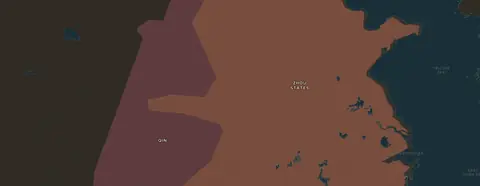
Les Royaumes Combattants : sept royaumes, un vainqueur
Pendant environ 250 ans, sept royaumes se sont disputé le contrôle de la Chine, avec des armes en fer, des arbalètes et d’immenses armées composées de paysans. Les élèves vont situer ces rivaux sur la carte et comprendre pourquoi l’État de Qin, à l’ouest, a fini par l’emporter.
Royaumes Combattants, Chine475-221 av. J.-C.
-
 95
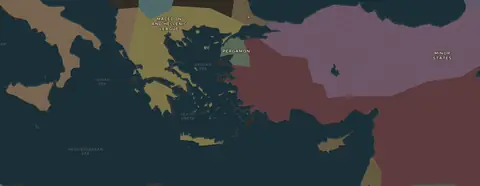
Pergame et Rhodes : petits États, grandes idées
Entre les grands royaumes, une ville perchée et une île sont devenues riches et célèbres. Les élèves découvrent Pergame, avec sa bibliothèque, son autel monumental et le parchemin, ainsi que Rhodes, dont le Colosse surveillait le port pendant seulement 54 ans. Ils se demandent comment de petits États ont survécu au milieu des géants.
Monde hellénistique305-133 av. J.-C.
-
 96
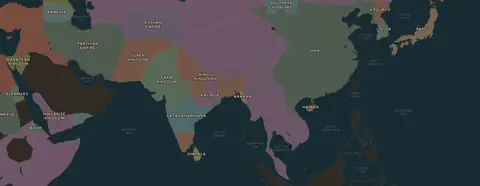
Le bouddhisme traverse l’Asie
Depuis la plaine du Gange, le bouddhisme a voyagé avec des moines et des marchands, franchissant montagnes, déserts et mers : jusqu’au Sri Lanka, en Asie centrale, en Chine, en Corée et au Japon. Les élèves observent cette diffusion sur la carte et découvrent comment une croyance évolue en voyageant.
L’Asie bouddhiste250 av. J.-C., 552 apr. J.-C.
-
 97
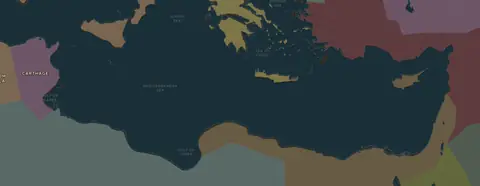
Archimède et les savants hellénistiques
Dans les deux siècles qui suivent Alexandre, des savants grecs mesurent la Terre, proposent qu’elle tourne autour du Soleil et construisent une machine en bronze capable de prédire les éclipses. Les élèves découvrent Archimède à Syracuse, Aristarque et Hipparque, ainsi que le mécanisme d’Anticythère retrouvé dans une épave.
Monde hellénistique300-100 av. J.-C.
-
 98
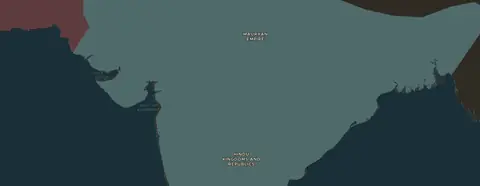
Ashoka : l’empereur qui regretta sa guerre
Après la conquête sanglante de Kalinga, l’empereur Ashoka fit graver dans la pierre son regret et promit de gouverner avec bienveillance. Les élèves lisent ses édits sur la carte, suivent la diffusion du bouddhisme à partir de son empire et débattent s’il mérite le titre de « Grand ».
Empire Maurya, Indevers 268-232 av. J.-C.
-
 99
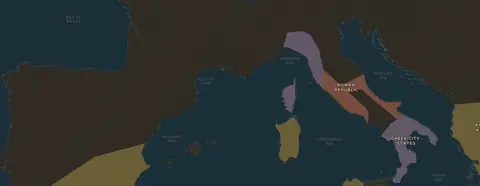
Hannibal franchit les Alpes
En 218 av. J.-C., Hannibal mena une armée accompagnée d’éléphants depuis l’Espagne, franchissant les Pyrénées puis les Alpes pour entrer en Italie. Les élèves suivent son itinéraire, évaluent les pertes subies et découvrent pourquoi cette traversée a tant bouleversé Rome.
République romaine218-217 av. J.-C.
-
 100
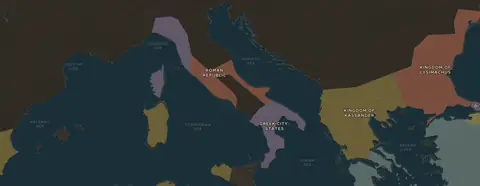
Cannes, 216 av. J.-C. : le jour le plus sombre de Rome
À Cannes, Hannibal a encerclé et anéanti la plus grande armée que Rome ait jamais envoyée au combat. Les élèves étudient la célèbre manœuvre d’encerclement, puis réfléchissent à une question plus vaste : pourquoi Rome n’a-t-elle pas abandonné ?
République romaine216 av. J.-C.
-
 101
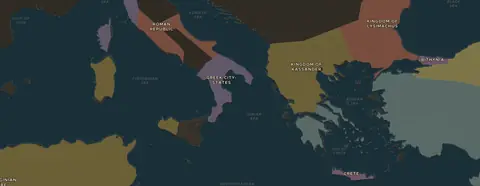
Archimède et le siège de Syracuse
Quand Syracuse passe du côté de Carthage, Rome l’attaque par terre et par mer. Le mathématicien Archimède défend la ville avec ses machines ingénieuses. Les élèves démêlent le vrai du légendaire dans l’un des sièges les plus célèbres de l’histoire.
République romaine214-212 av. J.-C.
-
 102
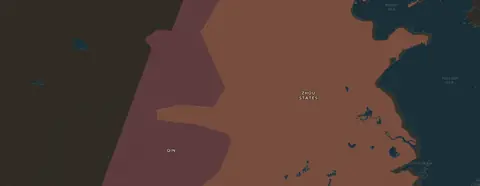
L’armée de terre cuite : des soldats pour l’au-delà
En 1974, des paysans creusant un puits près de Xi’an tombent sur des fragments d’un soldat en argile. Sous leurs pieds reposent des milliers d’autres, veillant sur le tombeau du Premier Empereur. Les élèves découvrent ce que cette armée enfouie révèle sur la puissance, les croyances et l’organisation des Qin.
Dynastie Qin, Chine246-210 av. J.-C.
-
 103
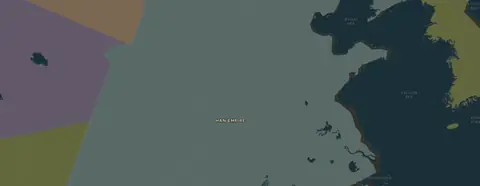
Des Qin aux Han : révoltes et un empereur venu du peuple
Un an après la mort du Premier Empereur, des paysans en retard pour leur service se sont révoltés. En trois ans, la dynastie Qin disparaît, et en 202 av. J.-C., un simple fonctionnaire nommé Liu Bang fonde la dynastie Han. Les élèves découvrent pourquoi une dynastie s’est effondrée si vite et pourquoi la suivante a duré 400 ans.
Dynasties Qin et Han, Chine209-202 av. J.-C.
-
 104
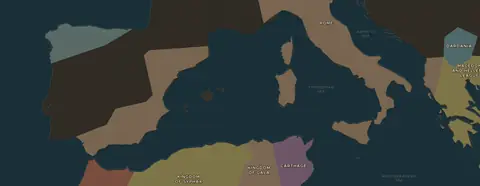
Scipion et Zama : la fin de la guerre d'Hannibal
Un jeune général romain porta la guerre en Hispanie puis en Afrique, et finit par vaincre Hannibal à Zama. Les élèves suivent la stratégie de Scipion et réfléchissent aux conséquences de la paix de 201 av. J.-C.
République romaine210-201 av. J.-C.
-
 105
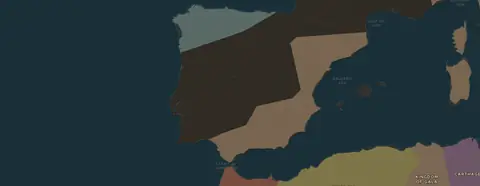
Hispanie : Viriathe et Numance résistent à Rome
Rome a mis près de 200 ans pour conquérir toute la péninsule Ibérique. Les élèves découvrent le chef lusitanien Viriathe et la ville de Numance, et observent la conquête du point de vue des peuples conquis.
République romaine155-133 av. J.-C.
-
 106
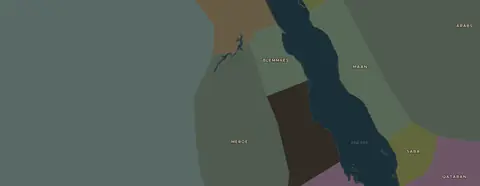
Méroé : pyramides, fer et reines au pouvoir
Au sud de l’Égypte, le royaume de Koush dominait le Nil depuis sa cité royale de Méroé. Les élèves découvrent un royaume aux pyramides élancées, à la métallurgie du fer, à son écriture propre et à ses puissantes reines qui ont même tenu tête à Rome.
Royaume de Koushvers 300 av. J.-C., 350 apr. J.-C.
-
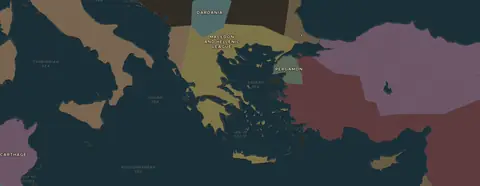 107
Rome conquiert la Grèce, la Grèce conquiert Rome
En moins de 50 ans, Rome vainc la Macédoine et les cités grecques, puis détruit Corinthe en 146 av. J.-C. Pourtant, l’art, les dieux et les idées grecques s’imposent dans la vie romaine. Les élèves se demandent alors : qui a vraiment conquis qui ?
République romaine200-146 av. J.-C.
-
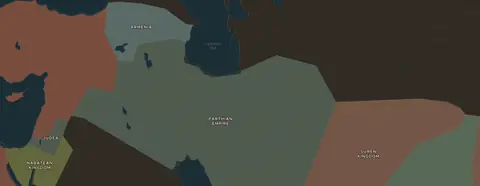 108
Les Parthes : archers à cheval entre Rome et la Chine
Un peuple nomade venu des confins de la steppe a conquis la Perse et la Mésopotamie, et a résisté à Rome pendant près de trois siècles. Les élèves suivent sur la carte l’ascension de la Parthie, découvrent ses archers à cheval et comprennent pourquoi il était si avantageux de se trouver entre Rome et la Chine.
Empire parthe247 av. J.-C. - 224 apr. J.-C.
-
 109
Les Xiongnu : un empire à cheval
Au nord de la Chine, des éleveurs nomades de la steppe ont bâti le premier grand empire de cavaliers. Leur chef Modu a même réussi à piéger le fondateur de la dynastie Han. Les élèves vont comparer deux modes de vie et réfléchir à la façon dont nos sources, écrites par les ennemis Han, influencent le récit.
Xiongnu et Han, la steppe209 av. J.-C., 48 apr. J.-C.
-
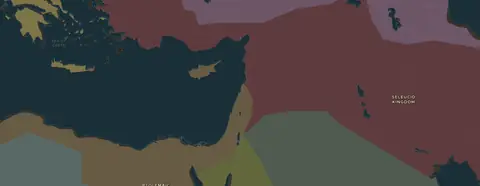 110
Les Maccabées : un petit peuple face à un roi grec
Lorsque le roi séleucide Antiochos IV interdit le culte juif et installa un autel païen dans le Temple, une famille de prêtres d’un village lança la révolte. Les élèves suivent Juda Maccabée, des collines jusqu’à la reconsécration du Temple, commémorée chaque année à Hanoucca.
Judée hellénistique167-140 av. J.-C.
-
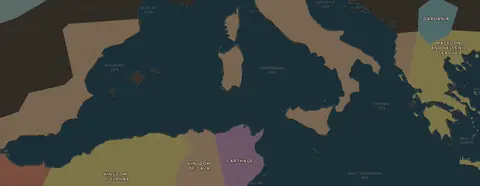 111
146 av. J.-C. : la destruction de Carthage
« Carthage doit être détruite », répétait Caton devant le Sénat. Les élèves vont découvrir pourquoi Rome a attaqué une cité qui ne représentait plus une menace, comment les Carthaginois ont résisté, et comment est née la légende des champs salés.
République romaine149-146 av. J.-C.
-
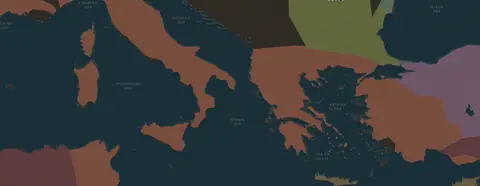 112
Les Gracques : terres, réformes et violence
Tiberius et Caius Gracchus ont tenté de redistribuer des terres aux Romains pauvres, mais tous deux sont morts dans la violence politique. Les élèves découvrent comment les succès de Rome à l'étranger ont provoqué des difficultés à l'intérieur.
République romaine133-121 av. J.-C.
-
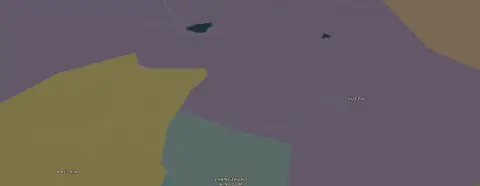 113
Zhang Qian et l’ouverture de la Route de la Soie
Vers 138 av. J.-C., l’empereur Wu envoie Zhang Qian vers l’ouest pour chercher des alliés contre les Xiongnu. Capturé, il réussit à s’échapper et revient treize ans plus tard avec des récits de terres riches inconnues en Chine. Les élèves suivent le voyage qui a ouvert la Route de la Soie.
Dynastie Han, Chine138-101 av. J.-C.
-
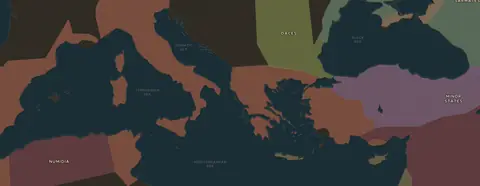 114
Marius et Sylla : des généraux contre la République
Marius a ouvert les rangs de la légion aux citoyens pauvres et fut consul à sept reprises ; son rival Sylla osa marcher avec son armée sur Rome elle-même. Les élèves découvrent comment les soldats sont devenus fidèles à leur général plutôt qu’à l’État.
République romaine107-79 av. J.-C.
-
 115
L’empereur Wudi et l’âge d’or des Han
L’empereur Wudi des Han régna pendant 54 ans. Il forma ses hauts fonctionnaires aux classiques confucéens, lança ses armées dans les steppes et étendit l’empire vers la Corée, le Vietnam et l’Asie centrale. Les élèves vont cartographier ses conquêtes et se demander si ses guerres valaient leur coût.
Dynastie Han, Chine141-87 av. J.-C.
-
 116
La Guerre sociale : l’Italie se bat pour la citoyenneté
Les alliés italiens de Rome avaient combattu dans toutes ses guerres, mais n’étaient pas citoyens romains. En 91 av. J.-C., beaucoup d’entre eux se révoltèrent et fondèrent leur propre État. Les élèves découvrent une guerre que Rome a gagnée militairement mais perdue sur le plan politique.
République romaine91-88 av. J.-C.
-
 117
Spartacus et la grande révolte des esclaves
En 73 av. J.-C., un gladiateur thrace s’évade d’une école à Capoue avec environ 70 compagnons et prend bientôt la tête de dizaines de milliers de personnes. Les élèves découvrent l’esclavage romain à travers le regard des esclaves et suivent la révolte à travers l’Italie.
République romaine73-71 av. J.-C.
-
 118
Pompée le Grand : les pirates et l’Orient
En environ trois mois, Pompée débarrassa la Méditerranée des pirates, puis redessina la carte de l’Orient, de la région du Pont jusqu’à Jérusalem. Les élèves suivent ses campagnes et s’interrogent sur la question : jusqu’où un général peut-il concentrer le pouvoir ?
République romaine67-62 av. J.-C.
-
 119
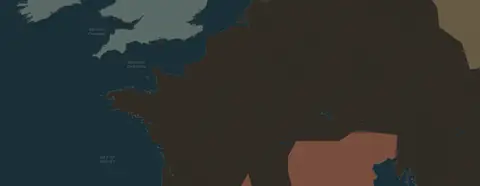
César en Gaule
En huit ans, Jules César conquiert la Gaule, franchit le Rhin et débarque en Bretagne, puis rédige lui-même le récit de ses exploits. Les élèves suivent ses campagnes, rencontrent Vercingétorix et apprennent à questionner une source écrite par le vainqueur.
République romaine58-50 av. J.-C.
-
 120
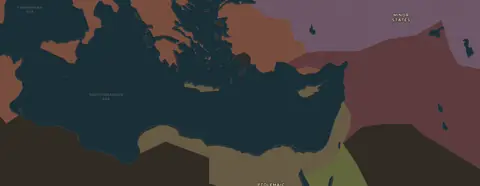
Cléopâtre : la dernière reine d'Égypte
La dernière des Ptolémées gouvernait un royaume riche mais fragile, voisin d'une Rome déchirée par la guerre civile. Les élèves suivent Cléopâtre, de la prise de pouvoir à Alexandrie à ses alliances avec César et Antoine, jusqu'à la bataille navale d'Actium, et s'interrogent sur les choix qui s'offraient vraiment à elle.
Égypte ptolémaïque51-30 av. J.-C.
-
 121
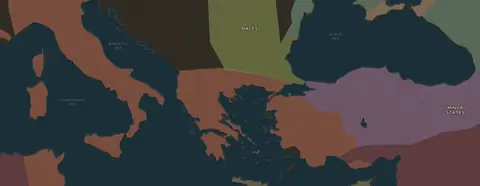
César : du Rubicon aux Ides de Mars
César franchit le Rubicon, vainquit Pompée, devint dictateur à vie et fut poignardé lors d’une séance du Sénat cinq ans plus tard. Les élèves suivent la guerre civile à travers la Méditerranée et débattent des raisons qui ont poussé les conjurés à l’assassiner.
République romaine49-44 av. J.-C.
-
 122
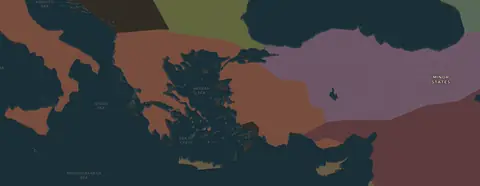
Antoine, Cléopâtre et la bataille d’Actium
Après la mort de César, son héritier Octavien et son général Marc Antoine se partagent le monde romain. Antoine s’allie à Cléopâtre VII d’Égypte, et l’affrontement final a lieu à Actium. Les élèves découvrent l’histoire vue de Rome et d’Alexandrie.
République romaine44-30 av. J.-C.
-
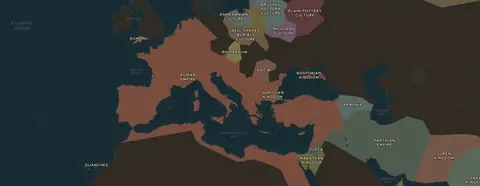 123
Auguste et la Pax Romana
Octavien devient Auguste, premier empereur, tout en affirmant restaurer la République. Les élèves découvrent comment il gouverne, ce que signifie la Pax Romana et qui en supporte le coût.
Empire romain27 av. J.-C. - 14 apr. J.-C.
-
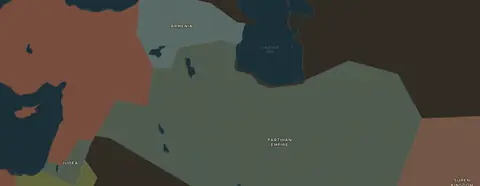 124
Carrhes, 53 av. J.-C. : Rome face à la cavalerie parthe
Crassus, l’homme le plus riche de Rome, entra en Mésopotamie à la recherche de gloire. Sur la plaine ouverte près de Carrhes, une armée parthe plus petite, composée d’archers à cheval, anéantit ses légions. Découvrons pourquoi, et comment Rome a récupéré ses enseignes perdues 33 ans plus tard.
Parthes et Rome53-20 av. J.-C.
-
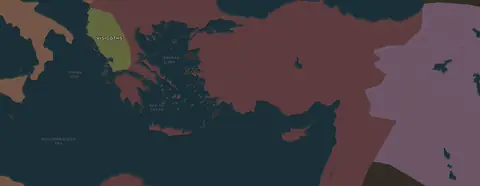 125
Le christianisme : d’une secte persécutée à religion d’État
En environ 350 ans, le christianisme est passé d’un petit groupe en Judée à la religion officielle de l’Empire romain. Les élèves suivent sa diffusion le long des routes et voies maritimes romaines et découvrent pourquoi Rome l’a d’abord persécuté, puis adopté.
Empire romain30-380 apr. J.-C.
-
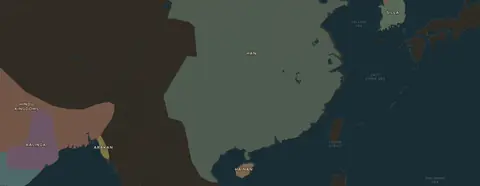 126
Les sœurs Trung : le Vietnam se soulève contre les Han
En 40 apr. J.-C., deux sœurs originaires du delta du fleuve Rouge, Trung Trac et Trung Nhi, rassemblent une armée, chassent le gouverneur Han et gouvernent pendant trois ans. Les élèves cartographient la révolte, comparent les récits chinois et vietnamiens, et se demandent pourquoi les sœurs sont encore aujourd'hui des héroïnes nationales.
Domination des Han au Vietnam40-43 apr. J.-C.
-
 127
La Bretagne romaine et le mur d'Hadrien
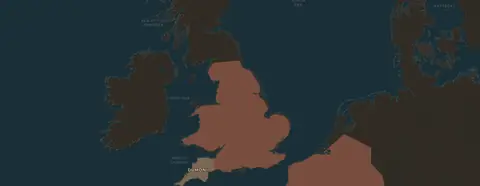
Rome envahit la Bretagne en 43 apr. J.-C., dut faire face à la révolte de Boudica et finit par construire un mur d’un océan à l’autre. Les élèves découvrent la Bretagne romaine, des nouvelles villes du sud jusqu’aux voix des tablettes de Vindolanda sur la frontière.
Empire romain43-410 apr. J.-C.
-
 128
Judée et Rome : les guerres judéo-romaines
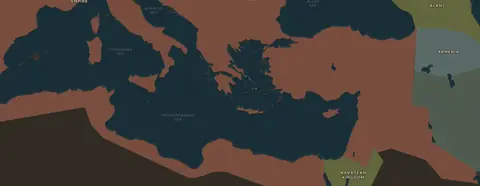
Deux grandes révoltes contre la domination romaine se sont achevées par la destruction du Temple de Jérusalem en 70 apr. J.-C. et la défaite de Bar Kokhba en 135. Les élèves découvrent les causes de ces conflits, ce qui a changé pour le peuple juif, et comment ces événements sont commémorés.
Empire romain66-135 apr. J.-C.
-
 129
Pompéi et le Vésuve, 79 apr. J.-C.
En 79 apr. J.-C., le Vésuve a enseveli Pompéi et Herculanum sous des cendres et des coulées volcaniques brûlantes. À partir des lettres du témoin oculaire Pline le Jeune et du travail des archéologues, les élèves reconstituent une ville romaine et vivent sa dernière journée.
Empire romain79 apr. J.-C.
-
 130
La vie quotidienne dans une ville romaine
Des immeubles d’habitation bondés, des thermes publics, la distribution gratuite de blé et les jeux : les élèves découvrent comment vivaient les gens ordinaires à Rome et dans son port d’Ostie, et qui assurait le fonctionnement d’une ville d’un million d’habitants.
Empire romain1-200 apr. J.-C.
-
 131
Les Kouchans : carrefour de l’Asie
Descendants de nomades chassés de Chine, les Kouchans ont bâti un empire à travers l’Hindou Kouch, reliant à la fois les routes commerciales de Rome, de la Chine des Han et de l’Inde. À travers l’étude de monnaies et de trésors, les élèves découvrent un empire-carrefour méconnu.
Empire kouchanvers 30-250 apr. J.-C.
-
 132
Papier, soie et séismes : les inventions des Han
En 105 apr. J.-C., un fonctionnaire de la cour nommé Cai Lun a présenté une méthode moins coûteuse pour fabriquer du papier. En 132, Zhang Heng a inventé un appareil capable de détecter des séismes lointains. Les élèves découvrent comment les inventions des Han se sont diffusées le long de la Route de la soie et ont transformé le monde.
Han orientaux, Chine25-220 apr. J.-C.
-
 133
Rome à son apogéeGratuit
Sous l’empereur Trajan, l’Empire atteint sa plus grande extension. Les élèves découvrent jusqu’où Rome s’est vraiment étendue et ce qui a permis de maintenir un si vaste ensemble uni.
Empire romain117 apr. J.-C.
-
 134
Les Trois Royaumes : la fin des Han
En 184, des rebelles coiffés de foulards jaunes se soulèvent contre les Han. Les généraux chargés de les écraser deviennent des seigneurs de la guerre, et dès 220, la Chine se divise en trois royaumes : Wei, Shu et Wu. Les élèves cartographient cette division et apprennent à distinguer la véritable histoire du célèbre roman qui s'en inspire.
Fin des Han et Trois Royaumes184-280 apr. J.-C.
-
 135
Le poivre et les moussons : l’Inde du Sud et le commerce romain
Chaque été, des navires grecs et égyptiens profitaient des vents de mousson pour traverser la mer Rouge jusqu’aux ports à poivre de l’Inde du Sud, puis rentraient chez eux avec les vents d’hiver. Les élèves suivent le commerce entre les royaumes tamouls et Rome à travers les vents, les monnaies, la céramique et la poésie.
Royaumes tamouls, Inde du Sudvers 30 av. J.-C., 200 apr. J.-C.
-
 136
Les Sassanides : Shapur Ier et l’empereur captif
En 224, un prince du sud de l’Iran renversa les Parthes et fonda la dynastie sassanide. Son fils, Shapur Ier, vainquit trois empereurs romains et fit prisonnier l’un d’eux. Les élèves découvrent ses victoires gravées dans la pierre et comparent les versions persane et romaine de cette histoire.
Empire sassanide224-272 apr. J.-C.
-
 137
Les légions et le limes : protéger les frontières de Rome
Du Rhin au désert syrien, les légions et les troupes auxiliaires veillaient sur les frontières de l’Empire. Les élèves suivent le limes sur la carte et découvrent qui étaient ces soldats et comment ils vivaient.
Empire romain9-260 apr. J.-C.
-
 138
La crise du troisième siècle
En une cinquantaine d’années, Rome a connu plus de 20 empereurs, a vu l’un d’eux capturé par les Perses et l’Empire s’est divisé en trois parties. Les élèves enquêtent sur les causes de cette crise : guerres civiles, invasions, épidémies et dévaluation de la monnaie, et découvrent comment l’Empire a survécu.
Empire romain235-284 apr. J.-C.
-
 139
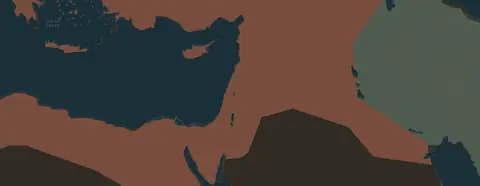
Zénobie, reine de Palmyre
Une cité-caravane du désert syrien est devenue le centre d’un royaume s’étendant de l’Égypte à l’Asie Mineure. Les élèves suivent l’ascension et la chute de la reine Zénobie et s’interrogent sur la manière dont Romains et Syriens ont raconté son histoire.
Empire romain260-273 apr. J.-C.
-
 140
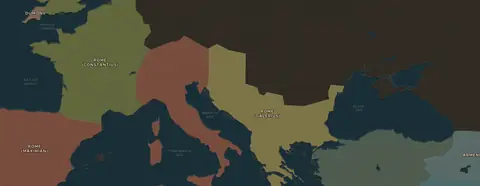
Dioclétien et le gouvernement à quatre
Dioclétien jugeait l’Empire trop vaste pour un seul homme et décida de le partager entre quatre empereurs. Les élèves découvrent sur la carte la Tétrarchie, ses réformes de l’armée, des impôts et des prix, ainsi que sa persécution des chrétiens.
Empire romain284-305 apr. J.-C.
-
 141
Mochica et Nazca : l’art dans le désert
Sur la côte aride du Pérou, deux peuples ont transformé les vallées fluviales en terres agricoles. Les Mochicas ont créé des poteries très réalistes et d’immenses pyramides en adobe ; les Nazcas ont tracé de gigantesques figures sur le sol du désert. Les élèves découvrent ce que leur art révèle sur ces sociétés sans écriture.
Civilisations andinesv. 100-800 apr. J.-C.
-
 142
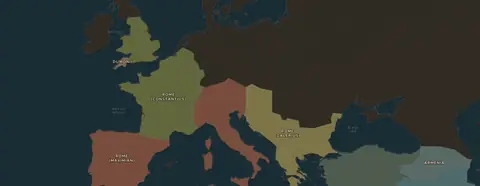
Constantin et la nouvelle Rome sur le Bosphore
Proclamé empereur à York, Constantin s’impose par la force, soutient l’Église chrétienne et fonde Constantinople. Les élèves suivent sa carrière sur la carte et réfléchissent à l’impact durable de ses choix.
Empire romain306-337 apr. J.-C.
-
 143
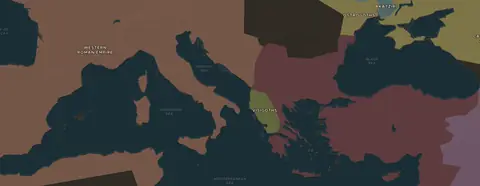
La chute de Rome
En un siècle, l’Empire romain d’Occident s’effondre. Grâce au curseur temporel, les élèves observent la disparition d’une superpuissance et débattent des raisons de cette chute.
Antiquité tardive376-476 apr. J.-C.
-
 144
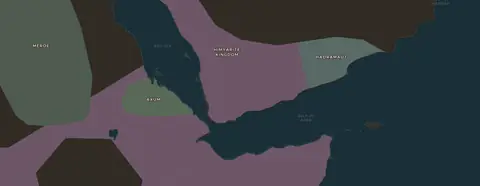
Aksoum : monnaies, obélisques et puissance de la mer Rouge
Depuis les hauts plateaux du nord de l’Éthiopie, les rois d’Aksoum commerçaient à travers la mer Rouge, frappaient des pièces d’or et élevaient d’immenses stèles de pierre. Les élèves découvrent un royaume qu’un auteur perse considérait comme l’une des quatre grandes puissances du monde.
Royaume d'Aksoumvers 100-700 apr. J.-C.
-
 145
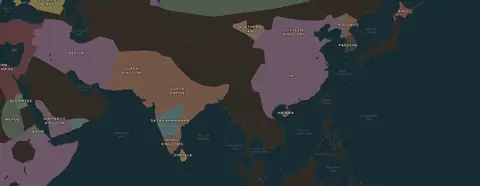
La Chine divisée : le bouddhisme et la route vers 589
Après 316, la Chine se divise entre royaumes du Nord, souvent fondés par des peuples venus des steppes, et dynasties du Sud installées le long du Yangzi Jiang. Dans cette époque de guerres, une foi étrangère, le bouddhisme, conquiert des millions d’adeptes. Les élèves découvrent des temples troglodytes, le voyage d’un pèlerin et la réunification de 589.
Dynasties du Nord et du Sud316-589 apr. J.-C.
-
 146
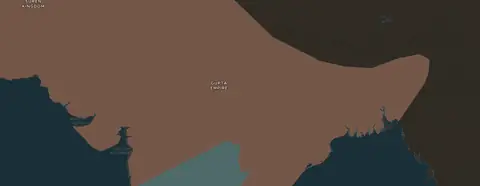
L’Empire Gupta : un âge d’or pour l’Inde ?
Sous les souverains Gupta, des poètes composent des chefs-d’œuvre en sanskrit, des artisans forgent un pilier de fer presque inoxydable, et le monastère de Nalanda attire des étudiants venus de toute l’Asie. Les élèves découvrent ces réalisations et s’interrogent : qui profitait vraiment de cet « âge d’or » ?
Empire Gupta, Indevers 320-550 apr. J.-C.
-
 147
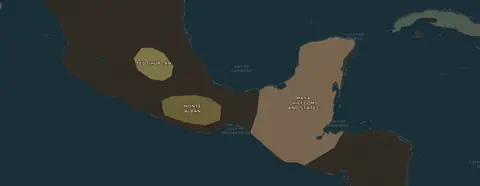
Teotihuacan : la cité des dieux
Vers 500 apr. J.-C., Teotihuacan, située dans la vallée de Mexico, était l’une des plus grandes villes du monde. Les élèves découvrent ses immenses pyramides, ses quartiers de migrants et son influence jusqu’à la cité maya de Tikal.
Teotihuacanvers 100 av. J.-C. - 550 apr. J.-C.
-
 148
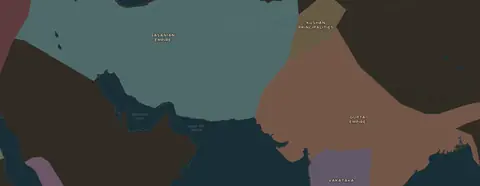
Aryabhata et les chiffres que nous utilisons aujourd'hui
En 499, un jeune astronome de 23 ans nommé Aryabhata termine un ouvrage sur les mathématiques et les étoiles. Les savants indiens inventent aussi le système de numération à valeur de position avec le zéro, que nous utilisons tous les jours. Suivez le voyage de ces chiffres, de l’Inde à Bagdad puis vers l’Europe.
Inde des Gupta499 apr. J.-C.
Middle Ages
-
 149
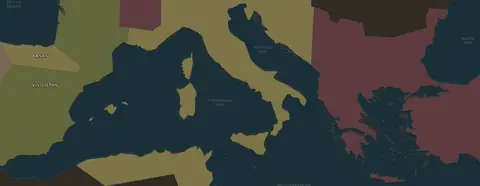
Après Rome : les nouveaux royaumes de l’Occident
En 476, le dernier empereur d’Occident est chassé du trône. Les élèves vont situer sur la carte les royaumes goth, franc, vandale et anglo-saxon qui ont remplacé Rome, et se demander ce qui a vraiment changé pour les habitants de ces terres.
Haut Moyen Âge476-526
-
 150
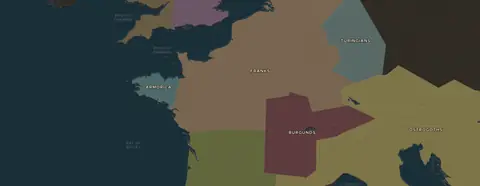
Clovis et l'essor des Francs
Un jeune chef franc transforme un petit royaume du nord de la Gaule en la puissance la plus forte de l’Occident. Les élèves suivent Clovis de Tournai à Paris et discutent de l’importance de son baptême pour la France et l’Église.
Royaume franc481-511
-
 151
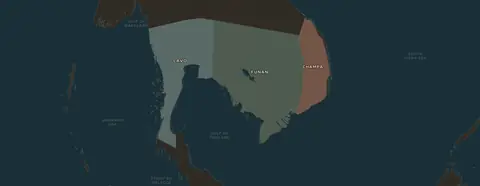
Fou-nan et les premiers royaumes d’Asie du Sud-Est
À mi-chemin entre l’Inde et la Chine, le royaume de Fou-nan s’enrichit grâce aux navires, aux canaux et aux marchés du delta du Mékong. Ses souverains adoptèrent la langue sanskrite et les dieux indiens de leur propre volonté. Les élèves découvrent un port où un médaillon romain, des perles indiennes et des miroirs chinois ont été retrouvés côte à côte.
Fou-nan et Champav. 100-550 apr. J.-C.
-
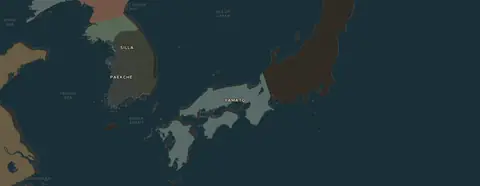 152
Kofun Japan: keyhole tombs and the Yamato kings
Giant keyhole-shaped tombs, ringed by moats and clay figures, rose across Japan as the great kings of Yamato extended their power. Then Buddhism arrived from Korea. Students explore what the tombs reveal and how Japan learned from its neighbors.
Kofun period, Japanc. 250-600 AD
-
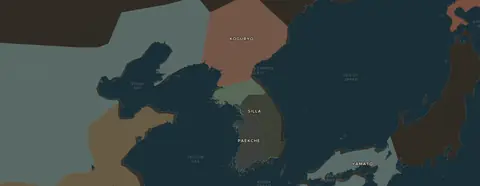 153
Les Trois Royaumes de Corée
Goguryeo au nord, Baekje au sud-ouest et Silla au sud-est se sont affrontés pendant des siècles, tout en transmettant le bouddhisme, l’écriture et le fer au Japon. Les élèves situent les trois royaumes sur la carte, découvrent le roi Gwanggaeto et se demandent ce qui faisait la force de chaque royaume.
Goguryeo, Baekje et Sillavers 300-600 apr. J.-C.
-
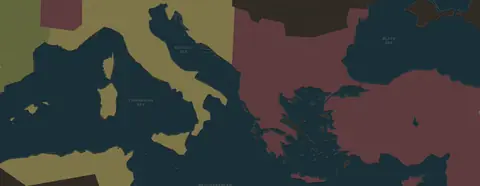 154
Justinien et Théodora
Le neveu d’un paysan et une ancienne actrice gouvernent ensemble l’Empire romain d’Orient. Les élèves découvrent leur code de lois, leurs guerres pour reconquérir l’Occident et l’émeute de 532 qui a failli mettre fin à leur règne.
Empire byzantin527-565
-
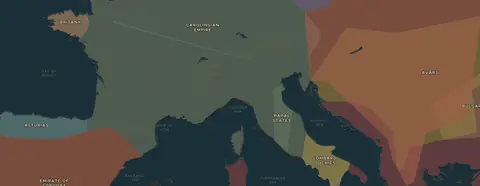 155
Les monastères : vivre selon la règle de saint Benoît
Pourquoi choisirait-on de quitter sa famille et ses biens pour vivre sous une règle stricte de prière et de travail ? Les élèves découvrent la règle de saint Benoît et comment les monastères ont permis de préserver les livres, l’agriculture et le savoir dans l’Europe du début du Moyen Âge.
Haut Moyen Âge529-910
-
 156
La peste de Justinien
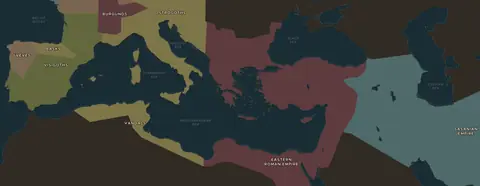
En 536, une étrange brume obscurcit le soleil, et en 541, une nouvelle maladie arrive avec les navires de blé venus d’Égypte. Les élèves suivent la première pandémie de peste connue et réfléchissent à l’impact de cette crise sur l’empire de Justinien.
Empire byzantin536-549
-
 157
Sainte-Sophie : un dôme au-dessus de Constantinople
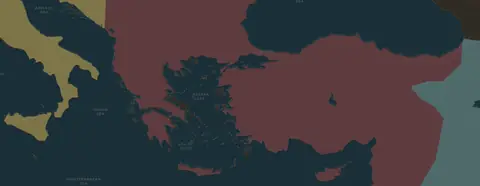
Après qu’une émeute a détruit l’ancienne église, l’empereur Justinien ordonne la construction d’un nouvel édifice, achevé en moins de six ans. Les élèves découvrent comment Sainte-Sophie a été bâtie, pourquoi son dôme a émerveillé le monde et comment elle a survécu à l’empire qui l’a vue naître.
Empire byzantin532-562
-
 158
Khosro Ier : l’âge d’or sassanide
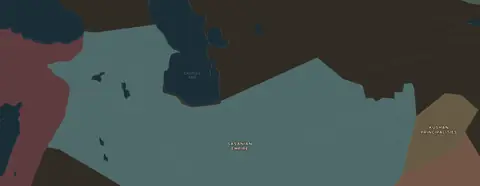
Khosro Ier a réformé les impôts et l’armée de la Perse, mené la guerre puis la paix avec Justinien, écrasé les Hephthalites avec l’aide des Turcs et accueilli des livres, des savants et un nouveau jeu venu d’Inde : les échecs. Les élèves découvrent un empire au carrefour de Rome, de l’Inde et des steppes.
Empire sassanide531-579 apr. J.-C.
-
 159
Les Sui et le Grand Canal
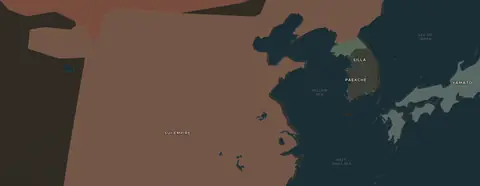
En 589, la dynastie Sui réunifie une Chine divisée depuis des siècles. L’empereur Yang relie ensuite les grands fleuves du pays grâce au Grand Canal. Les élèves suivent le tracé du canal sur la carte et réfléchissent à un projet qui a permis de bâtir la Chine, mais qui a aussi causé la chute de son initiateur.
Dynastie Sui604-618
-
 160
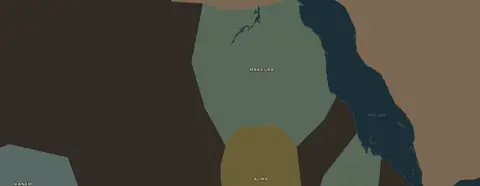
La Nubie chrétienne et le traité du Baqt
Pendant près d’un millénaire, des royaumes chrétiens ont régné sur le Nil au sud de l’Égypte. Les élèves découvrent les archers de Makouria, le traité du Baqt qui a assuré la paix avec l’Égypte musulmane pendant des siècles, et la cathédrale peinte de Faras.
Nubie médiévalevers 550-1500
-
 161
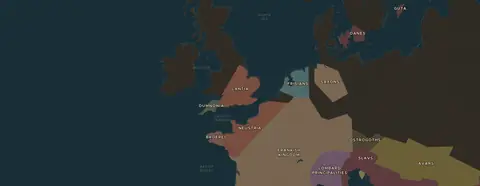
Iona, Cantorbéry et Whitby : les missions auprès des Anglo-Saxons
Deux groupes de missionnaires arrivent chez les Anglo-Saxons païens : des moines irlandais venus du nord et des moines romains venus du sud. Les élèves vont cartographier leurs itinéraires et rejouer la rencontre de Whitby en 664, où un roi dut choisir entre les deux.
L’Angleterre anglo-saxonne563-664
-
 162
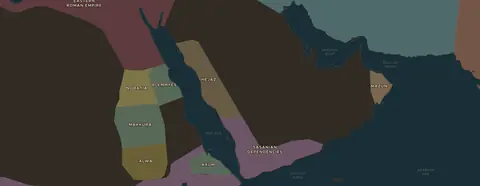
La Mecque avant l'islam : caravanes et la Kaaba
Vers 600, l’Arabie se trouvait entre deux empires épuisés. Les élèves découvrent les villes-oasis, les routes caravanières et le sanctuaire de La Mecque : le monde dans lequel naquit le prophète Mahomet.
Arabie préislamiquevers 500-610
-
 163
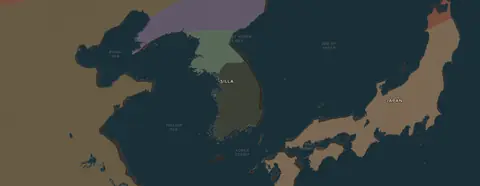
Silla unifie la Corée
Silla, le plus petit des trois royaumes coréens, s’allie à la Chine des Tang, vainc ses rivaux puis repousse les Tang eux-mêmes. Les élèves suivent les guerres sur la carte et découvrent la capitale bouddhique de Silla, Gyeongju.
Silla unifié660-935
-
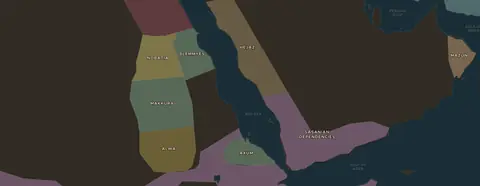 164
Le Prophète Mahomet et l’hégire
En 622, le Prophète Mahomet et ses compagnons quittent La Mecque pour Médine. Les élèves suivent le trajet de l’hégire sur la carte et découvrent pourquoi ce voyage marque l’an un du calendrier musulman.
Débuts de l’islamvers 570-632
-
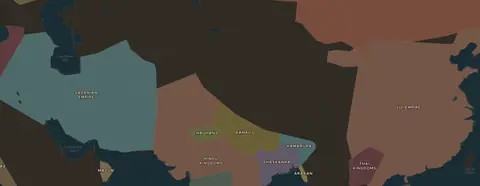 165
Xuanzang : le voyage d’un moine en Inde
En 629, le moine Xuanzang quitte discrètement la Chine pour aller chercher des textes bouddhiques en Inde. Seize ans plus tard, il rentre chez lui en héros. Les élèves suivent son itinéraire à travers déserts et montagnes et découvrent comment les idées circulaient sur la Route de la Soie.
Dynastie Tang629-645
-
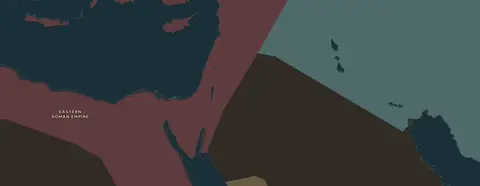 166
Hors d’Arabie : Yarmouk, Qadisiyya et les grandes conquêtes
En moins de vingt ans après la mort du Prophète, les armées arabes conquièrent la Syrie, l’Irak, l’Égypte et l’Iran. Les élèves comparent les empires avant et après ces conquêtes, et examinent les raisons avancées par les historiens pour expliquer une expansion aussi rapide.
Califat des Rachidounes633-651
-
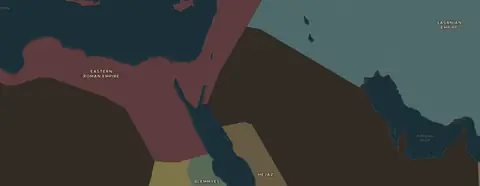 167
Les quatre califes bien guidés
Après la mort du Prophète en 632, quatre califes ont dirigé la communauté musulmane depuis Médine puis Koufa. Les élèves découvrent comment une petite communauté est devenue un grand État, et pourquoi la question du pouvoir a fini par la diviser.
Califat des Rachidoun632-661
-
 168
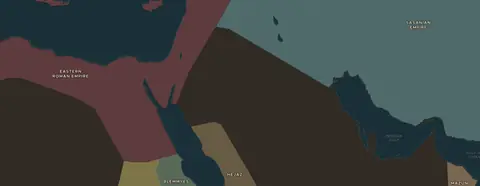
Sunnites et chiites : comment la division a commencé
Un désaccord sur la question de savoir qui devait diriger la communauté musulmane s’est transformé en une division durable entre l’islam sunnite et chiite. Les élèves suivent les événements de 632 jusqu’à Karbala en 680, en abordant avec respect les deux traditions.
Débuts de l’islam632-680
-
 169
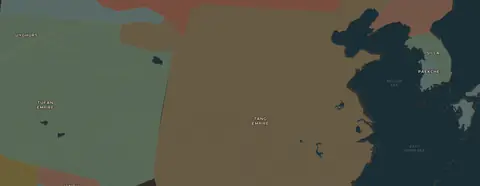
Wu Zetian : la seule femme à avoir régné sur la Chine en tant qu’impératrice souveraine
Wu Zetian est passée du rang de concubine à celui d’impératrice, puis, en 690, elle est devenue la seule femme de l’histoire de la Chine à gouverner en son propre nom comme souveraine. Les élèves examinent son règne et s’interrogent sur les raisons pour lesquelles les historiens postérieurs l’ont jugée si sévèrement.
Dynastie Tang655-705
-
 170
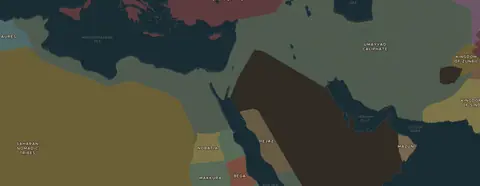
Le Dôme du Rocher
Achevé en 691-692, le Dôme du Rocher à Jérusalem est le plus ancien grand monument islamique encore debout. Les élèves découvrent pourquoi il a été construit, ce qu’il exprime et pourquoi Jérusalem est une ville importante pour trois religions.
Califat omeyyade691-692
-
 171
Wari et Tiwanaku : des empires avant les Incas
Des siècles avant les Incas, deux grandes puissances dominaient les hauts plateaux des Andes : Tiwanaku près du lac Titicaca et Wari dans les montagnes du Pérou. Les élèves vont comparer comment chacune a uni ses territoires et ce que les Incas ont pu apprendre d’elles.
Horizon Moyen andinv. 600-1000
-
 172
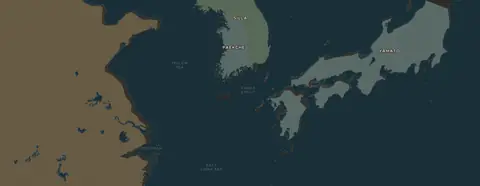
Nara : la première grande capitale du Japon
En 710, le Japon construit sa première grande capitale, Heijō-kyō, en s’inspirant du modèle de Chang’an sous les Tang. Les élèves découvrent comment le Japon a adopté l’écriture chinoise, les lois et le bouddhisme, et pourquoi un empereur a fait ériger un Bouddha de bronze d’environ 15 m de haut.
Japon de Nara710-794
-
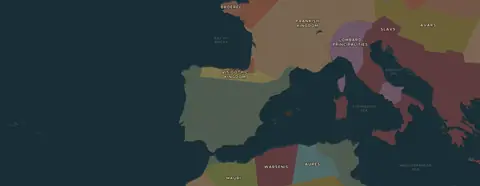 173
711 : de l’autre côté du détroit, en Espagne
En 711, un chef berbère traverse un étroit bras de mer et un royaume s’effondre. Les élèves suivent la conquête de la péninsule Ibérique jusqu’à la bataille de Poitiers en 732, et réfléchissent à la véritable portée de cette bataille.
Califat omeyyade711-732
-
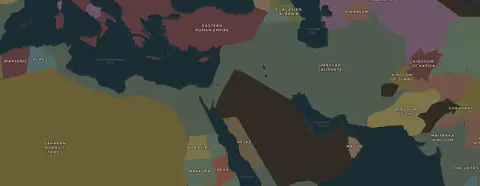 174
Les Omeyyades : un empire gouverné depuis Damas
Depuis Damas, les califes omeyyades ont dirigé des terres allant de l’Espagne à l’Indus. Les élèves découvrent comment ils ont uni un si vaste empire grâce à une capitale, une langue commune, de nouvelles monnaies et de grands monuments.
Califat omeyyade661-750
-
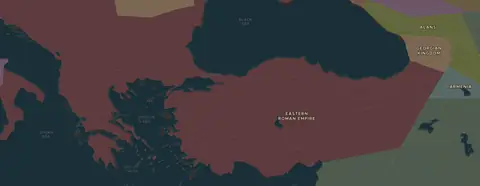 175
Les sièges arabes de Constantinople
À deux reprises, les califes omeyyades ont lancé d’immenses armées contre Constantinople, et à deux reprises ils ont échoué. Découvrons comment les murailles, la mer, le feu grégeois, les alliés et un hiver rigoureux ont stoppé leur avancée.
Califat omeyyade674-718
-
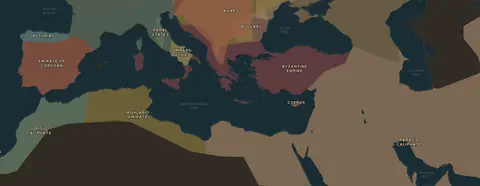 176
La querelle des images à Byzance
Pendant plus d’un siècle, empereurs, moines et impératrices byzantins se sont affrontés pour savoir si les images saintes étaient sacrées ou interdites. Les élèves suivent l’iconoclasme de Léon III à l’impératrice Théodora et discutent des raisons pour lesquelles les images suscitent de si fortes émotions.
Empire byzantin726-843
-
 177
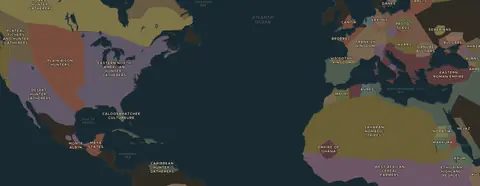
L’écriture, les chiffres et les calendriers mayas
Les Mayas ont inventé le système d’écriture le plus complet de l’Amérique ancienne, comptaient avec le zéro et suivaient le temps en grands cycles. Les élèves apprendront à lire les chiffres mayas, découvriront comment l’écriture a été déchiffrée et réfléchiront à qui devraient appartenir les quatre livres mayas qui ont survécu.
Maya classique250-900
-
 178
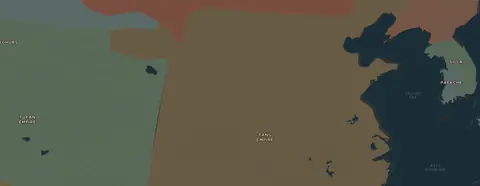
La révolte d’An Lushan : la dynastie Tang ébranlée
En 755, un puissant général de la frontière se retourne contre l’empereur Tang. Huit années de guerre s’ensuivent. Les élèves suivent la progression des rebelles vers les capitales et découvrent comment une dynastie peut survivre à une catastrophe, mais sans jamais redevenir la même.
Dynastie Tang755-763
-
 179
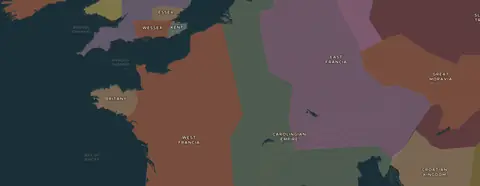
843 : un empire devient trois royaumes
Les petits-fils de Charlemagne se livrent à une guerre civile, puis se partagent son empire en trois. Les élèves comparent les cartes de 800 et de 900 et découvrent comment le traité de Verdun a tracé des frontières qui deviendront plus tard la France, l’Allemagne et les terres disputées entre les deux.
Empire carolingien814-888
-
 180
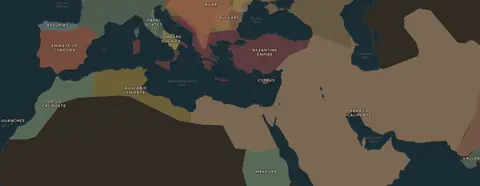
Al-Khwarizmi et la naissance de l’algèbre
Un savant de Bagdad a écrit le livre qui nous a donné le mot « algèbre », et son nom a donné « algorithme ». Les élèves suivent le voyage des chiffres venus d’Inde jusqu’à Bagdad puis en Europe, et résolvent un problème à la manière d’al-Khwarizmi.
Califat abbassidevers 780-850
-
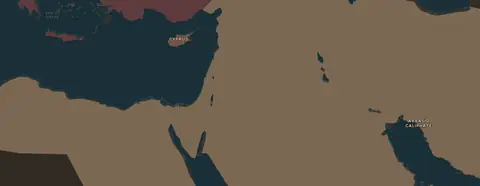 181
Bagdad : la Ville Ronde des Abbassides
En 762, le calife al-Mansur fonde une ville ronde sur le Tigre. Les élèves découvrent pourquoi la nouvelle dynastie abbasside a déplacé sa capitale en Irak et comment Bagdad est devenue l'une des plus grandes villes du monde.
Califat abbasside750-800
-
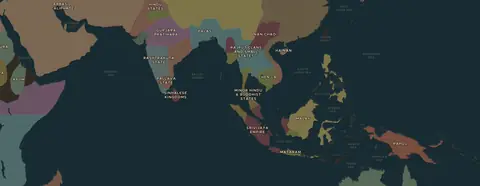 182
Borobudur : une montagne de pierre
Au centre de Java, les rois Sailendra ont construit Borobudur, le plus grand monument bouddhique du monde, avec 504 statues de Bouddha et plus de 2 600 panneaux sculptés. Les élèves découvrent comment il était utilisé et comment le bouddhisme reliait Java à Sumatra et à l’Inde.
Java des Sailendra780-850
-
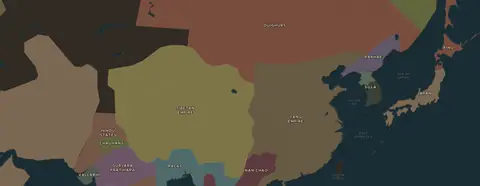 183
Chang'an : capitale du monde Tang
Sous les Tang, Chang'an devint une ville fortifiée d'environ un million d'habitants, située à l'extrémité orientale de la Route de la Soie. Les élèves découvrent son quadrillage de rues, ses marchés animés par des marchands venus de loin, et les villes voisines qui ont imité son plan.
Dynastie Tang618-907
-
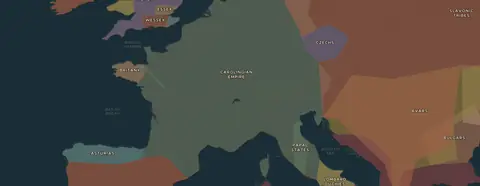 184
Charlemagne : empereur de l’Occident
Le jour de Noël 800, le pape couronne un roi franc empereur à Rome. Les élèves suivent sur la carte les guerres de Charlemagne, découvrent sa capitale à Aix-la-Chapelle et réfléchissent à un souverain qui a fondé des écoles mais a aussi imposé la conversion aux peuples conquis.
Empire carolingien768-814
-
 185
Dunhuang : une oasis sur la Route de la Soie
Aux portes du désert du Taklamakan, Dunhuang accueillait les caravanes et abritait dans la falaise des grottes bouddhiques ornées de peintures. Les élèves découvrent le rôle essentiel d’une oasis pour le commerce et la religion, et pourquoi on y a retrouvé le plus ancien livre imprimé daté au monde.
Route de la Soie600-1000
-
 186
Madagascar et le royaume Merina
Depuis les hautes terres centrales de Madagascar, les rois Merina ont cherché à unifier toute l’île. Les élèves découvrent une île peuplée à la fois depuis l’Asie et l’Afrique, les réformes et les conflits de ses souverains, ainsi que la conquête française de 1895.
Royaume Merina1787-1897
-
 187
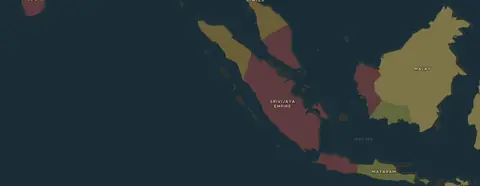
Srivijaya: masters of the straits
From Palembang on Sumatra, the kings of Srivijaya controlled the sea gates between India and China for centuries. Students explore how monsoon winds, ports and Buddhist learning built a sea empire that left few stone ruins.
Srivijaya671-1025
-
 188
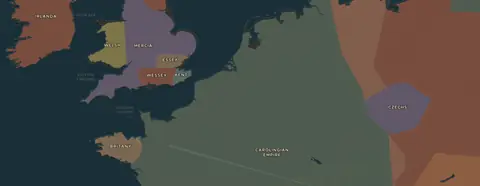
Sutton Hoo and the Anglo-Saxon kingdoms
In 1939 a ship full of treasure is dug out of a field in Suffolk. Students use the Sutton Hoo finds and the map to explore the Anglo-Saxon kingdoms, from a royal burial around 625 to the power of Offa of Mercia.
Anglo-Saxon England600-800
-
 189
Talas 751 et la route du papier
En 751, les armées abbassides et chinoises des Tang se sont affrontées près de la rivière Talas. Les élèves découvrent où ces deux grands empires se sont rencontrés sur la Route de la soie, et comment le papier s’est diffusé vers l’ouest, un événement bien plus marquant que la bataille elle-même.
Califat abbasside751-800
-
 190
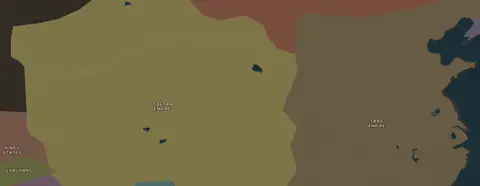
The Tibetan Empire on the roof of the world
From the high plateau around Lhasa, Tibetan kings built an empire that rivalled Tang China and fought it for the Silk Road. Students explore how geography, marriage alliances and Buddhism shaped Tibet between 618 and 842.
Tibetan Empire618-842
-
 191
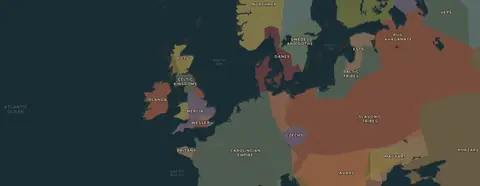
Le début de l'époque viking
En 793, des pillards venus de la mer attaquent le monastère de Lindisfarne. Les élèves découvrent les Vikings en tant que pillards, commerçants et agriculteurs, situent leurs terres d'origine et leurs villes, et se demandent pourquoi ils sont partis à l'aventure sur la mer.
Époque viking793-900
-
 192
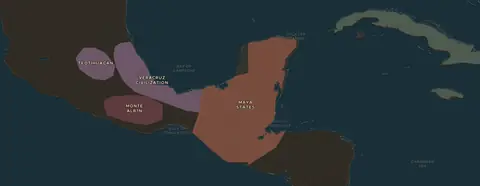
Tikal and Calakmul: rival Maya city-states
The Classic Maya never formed one empire. Dozens of city-states, each with its own holy king, competed, allied and fought. Students follow the great rivalry of Tikal and Calakmul and ask why the southern cities emptied after 800.
Classic Maya250-900
-
 193
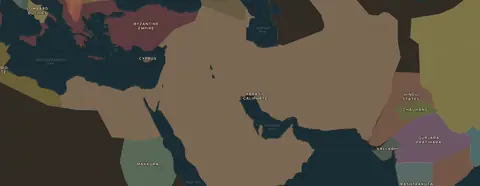
The House of Wisdom
In Abbasid Baghdad, scholars translated Greek, Persian and Indian books into Arabic and added ideas of their own. Students explore the House of Wisdom and how knowledge traveled between cultures.
Abbasid Caliphateabout 800-900
-
 194
Alfred the Great and the Danelaw
In 878 a Danish army surprises the king of Wessex, who escapes into the marshes with a small band. Students follow Alfred's comeback, map the line between Wessex and the Danelaw, and ask how a king on the run became "the Great".
Anglo-Saxon England865-899
-
 195
Chaco Canyon: great houses of the Ancestral Puebloans
In a dry canyon in the American Southwest, Ancestral Puebloans built stone great houses with hundreds of rooms, long straight roads and calendars of light. Students explore Chaco Canyon and Mesa Verde, and why their people moved on rather than vanished.
Ancestral Puebloansc. 850-1300
-
 196
Cyril, Methodius and the Slavic alphabet
In 863 two brothers from Thessalonica set out for Moravia with a brand-new alphabet. Students follow how a script made for one mission led to Cyrillic, the alphabet that hundreds of millions of people use today.
Byzantium and the Slavs863-893
-
 197
From the Baltic to Byzantium: the Varangians
Scandinavian traders row, sail and drag their boats along the rivers of eastern Europe to reach Constantinople and the markets of the Islamic world. Students follow the river roads, trace the silver and the captives that moved along them, and meet the emperor's Varangian Guard.
Viking Age860-1050
-
 198
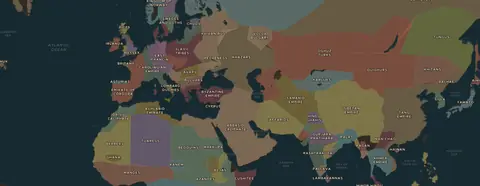
Silver on the Volga: the trade of the Abbasid world
Arab silver coins turn up in buried treasure in Sweden. Students follow the routes north along the Volga and east by sea to China, meet the traveler Ibn Fadlan, and ask who gained and who suffered from this trade.
Abbasid Caliphateabout 800-1000
-
 199
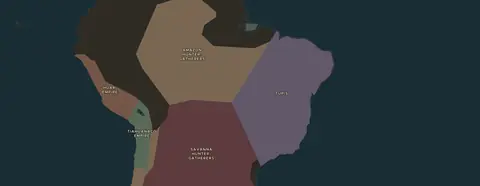
The Amazon: rivers, gardens and the Tupi
For a long time outsiders saw the Amazon as an empty wilderness. Archaeology tells another story: towns, earthworks and soils made fertile by people. Students explore Marajó Island, the Upper Xingu and the Tupi peoples of the Atlantic coast.
Amazoniac. 400-1542
-
 200
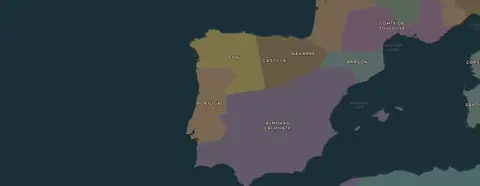
The Reconquista: Christian kingdoms of Iberia
From a mountain valley in Asturias to the edge of Granada, Christian kingdoms push south over five centuries. Students map their growth, meet the people who lived on the frontier, and ask whether "Reconquista" is the right name for it.
Medieval Iberia722-1248
-
 201
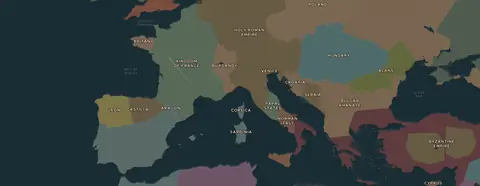
The Normans: from Viking settlers to kings
Viking raiders settle on the Seine, become French-speaking Christians and then conquer England, southern Italy and Sicily. Students follow the Normans across Europe and visit Palermo, where a Norman king ruled Latin, Greek and Arab subjects.
Normans911-1154
-
 202
Otto the Great and the birth of the Holy Roman Empire
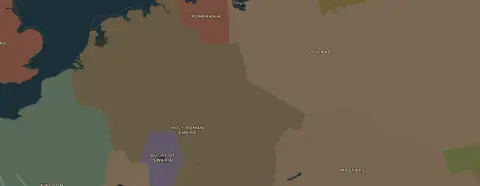
In 955 King Otto defeats the Magyar horsemen near Augsburg, and in 962 the pope crowns him emperor in Rome. Students trace the birth of what was later called the Holy Roman Empire and see how Poland and Hungary joined Latin Christian Europe.
Holy Roman Empire936-1001
-
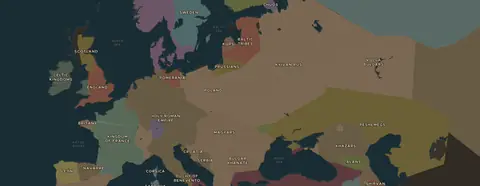 203
988: Kyiv chooses a faith
Around 988 Prince Vladimir of Kyiv is baptized and orders his people into the waters of the Dnieper. Students explore why he chose the Christianity of Constantinople and how that choice shaped Kyivan Rus under his son Yaroslav the Wise.
Kyivan Rus957-1054
-
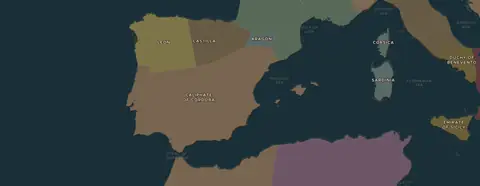 204
Córdoba, jewel of al-Andalus
An Umayyad prince who escaped a massacre founded a new state in Spain. Students explore Córdoba, its Great Mosque and its people of three faiths, and ask how equal life in the caliphate really was.
Al-Andalus756-1031
-
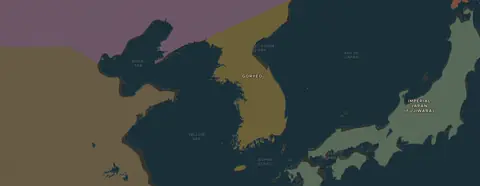 205
Goryeo: celadon, the Tripitaka and metal type
The kingdom of Goryeo gave Korea its name. It survived Khitan and Mongol invasions, made celadon pottery admired in China, carved over 81,000 printing blocks and printed the oldest surviving book made with metal type. Students explore a kingdom of craft under pressure.
Goryeo918-1392
-
 206
Heian Japan: the world of The Tale of Genji
In Heian-kyo, today's Kyoto, court nobles lived for poetry and beauty, and a court lady wrote The Tale of Genji. Students explore Japan's classical age, the families who ruled behind the emperor and the warriors who would end it.
Heian Japan794-1185
-
 207
Ibn Sina, al-Razi and medieval medicine
Two doctors from Persian lands, al-Razi and Ibn Sina, wrote medical books that were used for centuries, even in Europe. Students follow their lives on the map and look at how hospitals worked.
Islamic Golden Ageabout 865-1037
-
 208
Ibn al-Haytham and the science of light
In Fatimid Cairo, a scholar from Basra tested old ideas about light with careful experiments. Students discover how Ibn al-Haytham changed the way we understand seeing, and why testing ideas matters.
Fatimid Caliphateabout 965-1040
-
 209
Iceland, Greenland and Vinland
Norse settlers sail ever further west: to Iceland, to Greenland and, around the year 1000, to the coast of North America. Students follow them island by island, meet the peoples who already lived there, and ask why Vinland was given up.
Viking Age870-1021
-
 210
The Cholas: sea kings of southern India
From the Kaveri delta, Rajaraja I and his son Rajendra I built an empire that reached Sri Lanka, the Ganges and, by sea, the ports of Srivijaya. Students explore their giant temples, bronze art and fleets.
Chola Empire985-1044
-
 211
The Fatimids found Cairo
A Shia dynasty from North Africa conquered Egypt and built a new capital: al-Qahira, Cairo. Students explore Fatimid Cairo, al-Azhar and the trade that made Egypt rich, in a world with three rival caliphs.
Fatimid Caliphate909-1171
-
 212
The Ghana Empire: land of gold
Long before the modern country of Ghana, an empire called Wagadu grew rich at the southern end of the Saharan trade. Students read what an Arab geographer wrote in 1068 and learn how a king controlled gold he did not mine.
Ghana Empireabout 700-1200
-
 213
Tula and Chichen Itza: the Toltec puzzle
Two cities more than 1,000 km apart, Tula in central Mexico and Chichen Itza in the Maya north, share warrior columns and serpent symbols. Students explore both cities and weigh the evidence: conquest, trade or shared ideas?
Toltecc. 900-1150
-
 214
Cnut and the North Sea empire
In 1016 a Danish prince wins the English crown, and soon he rules Denmark and Norway as well. Students map Cnut's empire around the North Sea, examine how a Viking conqueror ruled as a Christian king, and test the famous legend of the waves.
Viking Age1013-1042
-
 215
1054: the split between East and West
In July 1054 papal envoys lay a document of excommunication on the altar of Hagia Sophia. Students explore the differences that had grown between the Latin West and the Greek East, and ask whether 1054 was a sudden break or a slow parting.
Medieval Church1054
-
 216
1066: the year England changed hands
In 1066 three men claim the English crown and two armies invade within weeks. Students follow Harold's race from Stamford Bridge to Hastings, read the Bayeux Tapestry as a source, and see how castles and the Domesday Book tightened Norman rule.
Norman England1066-1087
-
 217
Pope against emperor: the road to Canossa
In January 1077 the king of Germany waits for three days in the snow outside a castle in Italy, begging the pope for forgiveness. Students unpack the struggle over who had the right to choose bishops, and why it shook medieval Europe.
Holy Roman Empire1075-1122
-
 218
Toledo, Averroes and Maimonides
While kings fought over Spain, knowledge crossed the frontier. Students meet the translators of Toledo, the Muslim philosopher Ibn Rushd and the Jewish scholar Maimonides, both born in Córdoba.
Al-Andalus1085-1212
-
 219
The first universities
In Bologna, Paris and Oxford, students and teachers band together into a new kind of community: the university. Students explore what medieval scholars studied, how translations from Arabic changed European learning, and how much of it survives in schools today.
High Middle Ages1088-1300
-
 220
The First Crusade
In 1095 Pope Urban II calls on western knights to march east. Students follow the First Crusade from Clermont to Constantinople and the Holy Land, look at it through the eyes of crusaders, Byzantines, Jews and Muslims, and discuss how it should be remembered.
Crusades1095-1099
-
 221
The Crusades seen from the Muslim side
In 1097 armies from western Europe marched into a divided Middle East. Students look at the First Crusade through the eyes of the people of Syria, and see how rulers like Zengi and Nur al-Din slowly united them.
The Crusades1097-1154
-
 222
Cahokia: the great city on the Mississippi
Around 1100, the largest town north of Mexico stood near the banks of the Mississippi River. Students explore Cahokia's giant mounds, its plaza and its sun calendar, and the Mississippian towns that shared its way of life.
Mississippian culturec. 1050-1350
-
 223
Dai Viet: holding off two empires
In 938 the Viet won independence from China at the Bach Dang River. Over the next five centuries Dai Viet beat back Song, Mongol and Ming armies while borrowing Chinese schools and laws. Students explore how a small kingdom held off giants.
Dai Viet938-1428
-
 224
Jenne-jeno: a city without a king?
On the floodplain of the Niger, a town grew into a busy city long before any famous empire. Archaeologists found crafts, trade goods from far away and no palace. Students weigh the evidence for a city without a king.
Middle Nigerabout 250 BC-AD 1400
-
 225
Jewish life in medieval Europe
Jewish communities lived in the towns of medieval Europe as scholars, merchants and doctors, but also faced growing laws, accusations and expulsions. Students meet Rashi of Troyes, map where communities lived and were forced to leave, and discuss how this history should be remembered.
Medieval Europe1000-1400
-
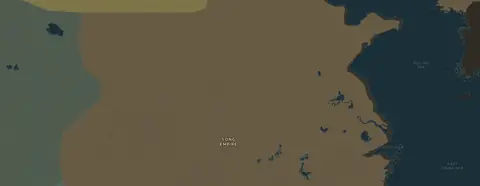 226
Kaifeng and the first paper money
The Northern Song capital Kaifeng was a city of canals, night markets and printers. In 1024 the Song printed the first government paper money. Students explore how money made of paper worked, and what happened when the city fell in 1127.
Song dynasty960-1127
-
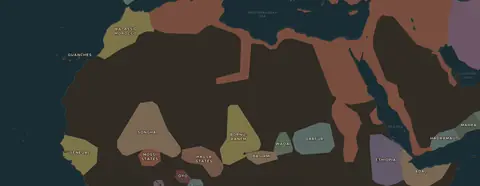 227
Kanem-Bornu: a kingdom around Lake Chad
One royal family ruled around Lake Chad for more than 700 years. Students follow the kingdom of Kanem-Bornu as it turned to Islam, moved its heartland across the lake and bought muskets through Ottoman Tripoli.
Kanem-Bornuabout 1085-1600
-
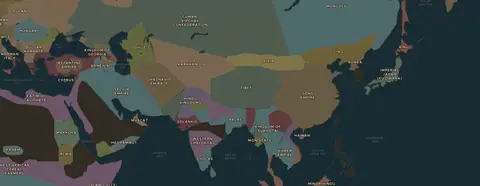 228
Song China: printing, compass and gunpowder
Under the Song dynasty, China printed books with movable type, steered ships by compass and wrote down the first recipe for gunpowder. Students explore the inventions and ask why they changed the world so slowly.
Song dynasty960-1279
-
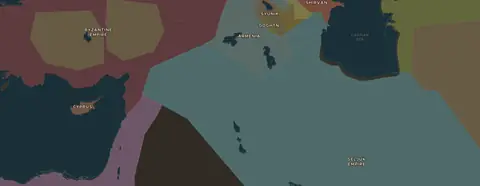 229
The Seljuks and Manzikert
Turkish horsemen from Central Asia took over the heart of the Islamic world and beat a Byzantine emperor at Manzikert in 1071. Students explore how this opened Anatolia to the Turks and led to the Crusades.
Seljuk Empire1037-1092
-
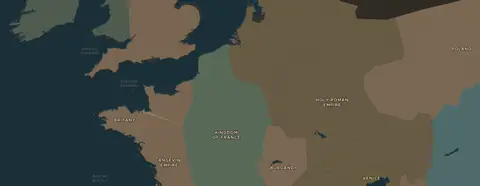 230
Reaching for heaven: the Gothic cathedrals
Around 1140 an abbot near Paris rebuilds his church with pointed arches and walls of colored glass. Students explore the new Gothic style, learn how flying buttresses let walls rise higher, and ask why towns spent generations building cathedrals.
High Middle Ages1140-1250
-
 231
Saladin and the road to Jerusalem
A Kurdish officer united Egypt and Syria, won the Battle of Hattin and took Jerusalem in 1187. Students follow Saladin on the map and play his hardest decisions in Rule History.
Ayyubid Sultanate1169-1193
-
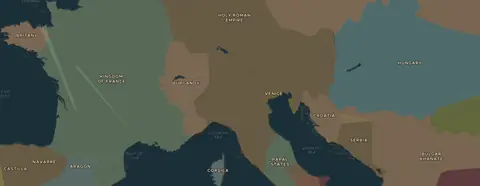 232
Barbarossa and the cities of Italy
Emperor Frederick Barbarossa marches into Italy to make its rich cities obey him, and they band together against him. Students map the Lombard League, replay the battle of Legnano in 1176 and discuss why self-governing cities mattered for Europe.
Holy Roman Empire1152-1190
-
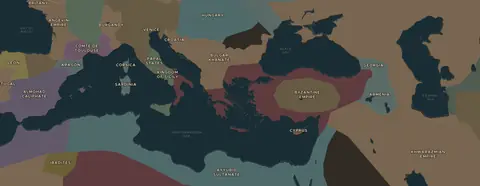 233
Richard the Lionheart and the Third Crusade
After Saladin takes Jerusalem in 1187, the kings of England and France and the German emperor set out to win it back. Students follow the Third Crusade by land and sea, meet Richard and Saladin through the sources, and ask why it ended in a truce.
Crusades1187-1192
-
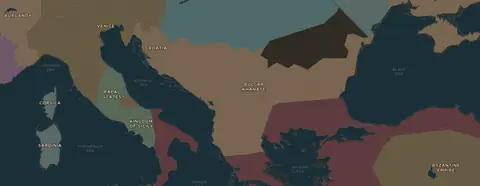 234
1204: the crusade that sacked Constantinople
A crusade meant for Egypt ends with crusaders looting the greatest Christian city in the world. Students trace the money, the ships and the decisions that led the Fourth Crusade to Constantinople in 1204, and follow the Byzantine states that fought back.
Crusades1202-1261
-
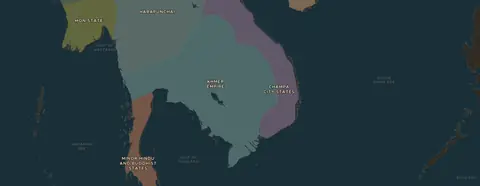 235
Angkor: city of the Khmer kings
For six centuries Khmer kings ruled mainland Southeast Asia from Angkor, beside the great lake Tonle Sap. Students explore Angkor Wat and Angkor Thom, the water that fed the city, and the debate over why it was left behind.
Khmer Empire802-1431
-
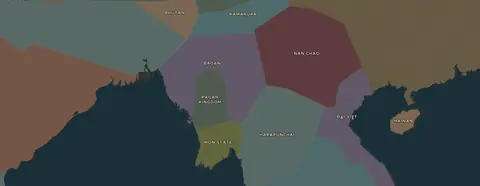 236
Bagan: the kingdom of temples
On a dry plain by the Irrawaddy River, the kings and people of Bagan built more than 10,000 temples and pagodas. Students explore how Theravada Buddhism shaped the first great Burmese kingdom and why it broke apart after the Mongol invasions.
Pagan Kingdom1044-1287
-
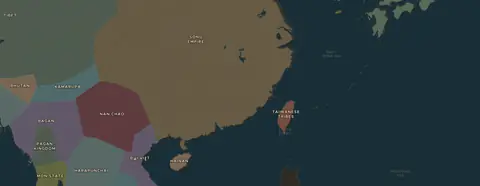 237
Hangzhou and the Southern Song
After losing the north in 1127, the Song rebuilt their state in the south around Hangzhou, sea trade and China's first permanent navy. Students see how the Southern Song thrived for 150 years and how the Mongols finally ended it.
Song dynasty1127-1279
-
 238
Knights of the cross: crusader states and military orders
After 1099 four small crusader states cling to the coast of the eastern Mediterranean, defended by monk-knights such as the Templars and Hospitallers. Students locate the states and their castles, and follow the orders after the last crusader city fell in 1291.
Crusades1099-1291
-
 239
Konya, Rumi and the Sultanate of Rum
In the heart of Anatolia, Seljuk sultans built roads, inns and mosques, and a refugee poet named Rumi wrote verses still read worldwide. Students explore the Sultanate of Rum and its capital Konya.
Sultanate of Rum1077-1308
-
 240
Life on the manor: those who prayed, fought and worked
Around the year 1030 a French bishop wrote that society had three orders: those who pray, those who fight and those who work. Students step into a medieval village, follow the farming year and ask how much freedom a peasant really had.
High Middle Ages1000-1300
-
 241
Magna Carta: the king under the law
In June 1215 King John seals a charter in a meadow beside the Thames, promising to rule by the law. Students explore why the barons forced him, read the most famous clauses and ask who Magna Carta really protected.
Medieval England1199-1225
-
 242
Sundiata and the founding of Mali
A boy who could not walk grew up to unite the Mande peoples and found the Mali Empire. Students hear the epic of Sundiata as the griots tell it and ask how much oral history can tell us about the past.
Mali Empireabout 1235-1255
-
 243
The Delhi Sultanate
For three centuries five dynasties of sultans ruled northern India from Delhi. A former slave-soldier founded the sultanate, a woman ruled it, and its armies held off the Mongols. Students explore a state where Persian, Turkic and Indian cultures met.
Delhi Sultanate1206-1526
-
 244
The samurai take power: the Kamakura shogunate
After the Genpei War, Minamoto no Yoritomo set up a warrior government in Kamakura, far from the emperor's court. Students explore how the samurai came to rule Japan for almost 700 years, and why the first shogunate fell in 1333.
Kamakura Japan1180-1333
-
 245
Genghis Khan unites the steppe
A boy from a broken family on the Mongolian steppe became Genghis Khan, ruler of all the Mongols, in 1206. Students follow his rise on the map, look at how he built an army unlike any other, and weigh how different peoples remember him.
Mongol Empire1162-1227
-
 246
The Mongols in Eastern Europe
Between 1237 and 1242 Mongol armies under Batu Khan sweep through the Rus principalities and into Poland and Hungary, then suddenly turn back. Students follow the campaign on the map, weigh why the Mongols withdrew, and see how the Golden Horde ruled the Rus for two centuries.
Mongol Empire1237-1242
-
 247
Ain Jalut: the Mamluks stop the Mongols
In 1260 the Mamluks of Egypt, soldiers who had once been enslaved boys, defeated a Mongol army at Ain Jalut. Students explore who the Mamluks were and why this battle is called a turning point.
Mamluk Sultanate1250-1291
-
 248
Marco Polo: the road to Kublai Khan
In 1271 a 17-year-old Venetian set out with his father and uncle for the court of Kublai Khan. Students follow Marco Polo's journey on the map, look at Yuan China through his eyes and ask how far we can trust his famous book.
Yuan dynasty1271-1295
-
 249
Kamikaze: the Mongol invasions of Japan
Twice Kublai Khan sent fleets across the sea to conquer Japan, and twice they failed. Students look at the strait, the defences of Hakata Bay and the storms the Japanese called kamikaze, the divine wind.
Kamakura Japan1274-1281
-
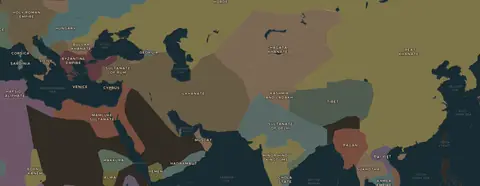 250
1258: the fall of Abbasid Baghdad
In 1258 a Mongol army took Baghdad and ended five centuries of Abbasid rule there. Students explore what was lost, what survived, and how historians remember a disaster whose death toll is still uncertain.
Mongol Empire1253-1261
-
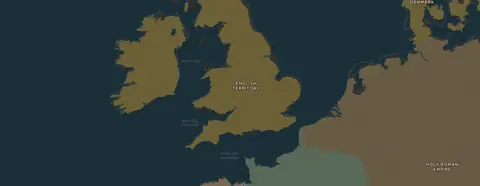 251
Castles: Edward I and the conquest of Wales
Between 1277 and 1295 King Edward I rings north Wales with some of the mightiest castles ever built. Students see how castles grew from earth and timber mounds into stone fortresses, and look at the conquest through Welsh as well as English eyes.
Medieval Britain1277-1295
-
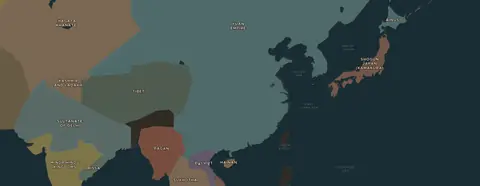 252
Kublai Khan and the Yuan dynasty
Genghis Khan's grandson Kublai conquered the Song and became the first Mongol to rule all of China. Students explore his two capitals, his failed wars at sea and why the Yuan dynasty lasted less than a century.
Yuan dynasty1260-1368
-
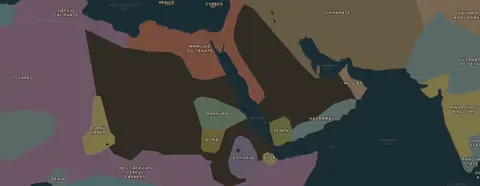 253
Lalibela: churches carved from rock
High in the Ethiopian mountains, King Lalibela had eleven churches cut down into solid rock. Students find out how they were made, why a king might build a new Jerusalem in Africa, and why pilgrims still come today.
Zagwe Ethiopiaabout 1180-1270
-
 254
The Mongol Empire: the largest land empire
Within 70 years of Genghis Khan's rise, his heirs ruled from Korea to eastern Europe. Students explore the largest land empire in history, how relay stations and passports held it together, and why it split into four khanates.
Mongol Empire1227-1294
-
 255
The Swiss Confederacy: an alliance of valleys
In 1291 three Alpine valleys promise to help each other against anyone who attacks them. Students see how a pass through the Alps made the valleys important, how farmers beat Habsburg knights, and how to tell the history from the legend of William Tell.
Late Middle Ages1291-1415
-
 256
1453: the city falls
The conquest of Constantinople ends one empire and announces another. Students watch the Ottoman rise on the map and weigh what 1453 changed for Europe.
Ottoman Empire1300-1683
-
 257
Gold for salt: crossing the Sahara
Camel caravans crossed the largest hot desert on Earth to trade West African gold for Saharan salt. Students follow the caravans, meet the people who guided them and see how goods, faith and writing travelled together.
Trans-Saharan tradeabout 300-1600
-
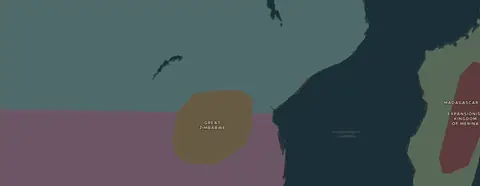 258
Great Zimbabwe: the city of stone
On a granite plateau in southern Africa, the ancestors of the Shona built huge walls of stone without mortar. Students explore a city that grew rich on cattle and gold, and the colonial myths that tried to deny who built it.
Great Zimbabweabout 1100-1450
-
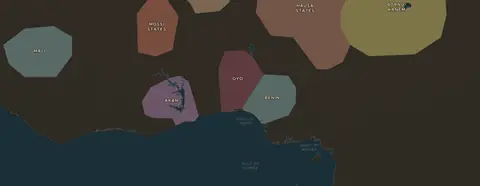 259
Ife and Oyo: the Yoruba kingdoms
Ife, the sacred city of the Yoruba, produced some of the finest metal sculpture in the world. Later Oyo built a cavalry empire with a council that could depose its king. Students explore art, power and checks on power.
Yoruba kingdomsabout 1100-1836
-
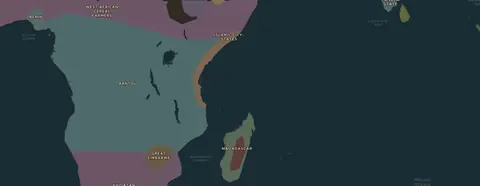 260
Kilwa and the Swahili coast
Stone towns along the East African coast traded gold, ivory and cloth across the Indian Ocean on the monsoon winds. Students visit Kilwa, which Ibn Battuta called one of the most beautiful towns in the world.
Swahili city-statesabout 1000-1505
-
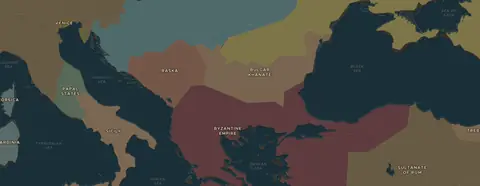 261
Kosovo 1389: battle and memory
On the Field of Blackbirds in 1389 a Serbian-led army meets the Ottoman sultan Murad I, and both leaders die. Students place the battle in the Ottoman advance into the Balkans and explore how one battle became a powerful story of memory.
Medieval Balkans1371-1389
-
 262
Poland-Lithuania: a union of crowns
In 1385 the pagan Grand Duke of Lithuania agrees to be baptized and to marry the young queen of Poland. Students follow how this union created one of Europe's largest states and how it defeated the Teutonic Knights at Grunwald in 1410.
Late Middle Ages1385-1410
-
 263
The Hanseatic League: merchants of the North
From Lübeck, German merchant towns build a trading network that stretches from London and Bruges to Bergen and Novgorod. Students follow the Hanseatic trade route, load a cog with herring, furs and grain, and see how merchants without a king could beat a kingdom.
Hanseatic League1159-1400
-
 264
Towns, markets and guilds
After 1100 towns grow fast across Europe. Students visit the cloth towns of Flanders and the great fairs of Champagne, join a guild as an apprentice, and ask why a medieval saying linked town life with freedom.
High Middle Ages1100-1300
-
 265
Venice and Genoa: rival sea republics
Two merchant republics without kings compete for the trade of the Mediterranean and the Black Sea. Students map the colonies of Venice and Genoa, follow Marco Polo from Venice, and replay the war of Chioggia that settled their long rivalry.
Italian sea republics1100-1381
-
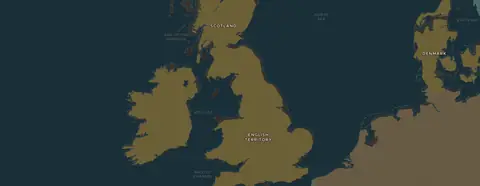 266
Wallace, Bruce and Scottish independence
In 1296 Edward I of England invades Scotland and carries off the stone on which its kings were crowned. Students follow William Wallace and Robert the Bruce from Stirling Bridge to Bannockburn and read the Declaration of Arbroath as an early statement of a people's freedom.
Medieval Scotland1296-1328
-
 267
Avignon and the Great Schism of the West
For almost 70 years the popes live in Avignon, and then for almost 40 years there are two popes, and finally three. Students map which kingdoms followed which pope and see how a church council in Constance ended the split in 1417.
Late Middle Ages1309-1417
-
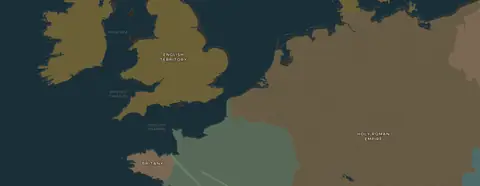 268
The Great Famine of 1315-1317
In 1315 the rain will not stop. For three years harvests rot in the fields across northern Europe, and then a cattle plague follows. Students link weather, food and power, and ask how a society copes when the harvest fails.
Late Middle Ages1315-1322
-
 269
Mamluk Cairo: mother of the world
Under the Mamluks, Cairo became the greatest city of the Islamic world, rich from the spice trade between India and Venice. Students explore its markets, the visit of Mansa Musa, the Black Death and the Portuguese threat.
Mamluk Sultanate1250-1517
-
 270
Mansa Musa's journey to Mecca
In 1324 the ruler of Mali crossed the Sahara on pilgrimage with so much gold that its value fell in Cairo. Students follow the most famous royal journey of the Middle Ages and ask what Mali gained from it.
Mali Empire1324-1325
-
 271
Ibn Battuta: 29 years on the road
A young scholar from Tangier set out for Mecca in 1325 and spent most of the next 29 years on the road, from China to West Africa. Students follow Ibn Battuta's journey on the map and test his story like historians.
Medieval Islamic world1325-1354
-
 272
From Osman to Bayezid: the first Ottomans
Around 1300 the Ottomans were one small Turkish state among many. Within a century they ruled lands on two continents. Students trace this rise on the map and weigh the reasons historians give for it.
Ottoman Empire1299-1402
-
 273
Ibn Khaldun and the rise and fall of dynasties
Born in Tunis and shaped by the Black Death, Ibn Khaldun asked why dynasties rise and fall. Students follow his life from Tunis to Cairo, meet his idea of group solidarity and test it on empires they know.
Medieval North Africa1332-1406
-
 274
The Hundred Years' War
For more than a century the kings of England claim the crown of France. Students follow the war from Sluys and Crécy to Agincourt, see why longbows mattered, and ask who really paid the price of a war fought mostly on French soil.
Late Middle Ages1337-1453
-
 275
The Black Death
In 1347 ships from the Black Sea bring plague to Sicily, and within five years it has crossed all of Europe. Students watch the Black Death spread on the map, trace it along the trade routes and weigh how it changed the lives of the survivors.
Late Middle Ages1346-1353
-
 276
Majapahit: an island empire
Founded in 1293 by a prince who outwitted a Mongol fleet, Majapahit grew from East Java into the greatest power of the islands under its chief minister Gajah Mada. Students explore a sea empire of rice, spices and court poetry.
Majapahit1293-1527
-
 277
Zhu Yuanzhang: from beggar monk to Ming emperor
A peasant boy who lost his family to famine joined a rebellion against the Mongol Yuan and became the first Ming emperor in 1368. Students trace his rise on the map and weigh a ruler who rebuilt China's farms and purged his own officials.
Ming dynasty1351-1398
-
 278
When peasants rose: 1358 and 1381
After the Black Death, the survivors want better pay and more freedom, and the lords want the old ways back. Students compare the French Jacquerie of 1358 with the English Peasants' Revolt of 1381 and ask what the rebels wanted and what they won.
Late Middle Ages1358-1381
-
 279
Granada and the Alhambra
For 250 years the small kingdom of Granada survived as the last Muslim state in Iberia. Students explore the Alhambra, the surrender of 1492, and what happened to the Muslims and Jews of Spain afterwards.
Nasrid Granada1238-1492
-
 280
Jan Hus and the Hussites
A Prague preacher criticizes the wealth of the Church and preaches in Czech. Burned at Constance in 1415, Jan Hus becomes the hero of a movement that beats five crusades. Students follow the Hussites and ask what makes people fight for their beliefs.
Late Middle Ages1402-1436
-
 281
Timur and the blue domes of Samarkand
Timur conquered from Delhi to Ankara and filled his capital Samarkand with domes and gardens built by craftsmen from many lands. His grandson Ulugh Beg made it a city of science. Students weigh a conqueror who built one city by ruining others.
Timurid Empire1370-1449
-
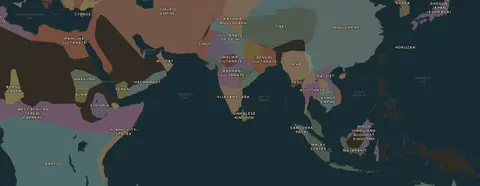 282
Zheng He's treasure fleets
Between 1405 and 1433 the admiral Zheng He led seven huge Ming fleets across the Indian Ocean, as far as Arabia and East Africa. Students follow the voyages on the map and ask why China then turned its back on the sea.
Ming dynasty1405-1433
-
 283
The Forbidden City: Beijing becomes the capital
The Yongle emperor moved the Ming capital north to Beijing and built the Forbidden City at its heart. Students explore why an emperor would put his capital close to the frontier, and how the Grand Canal kept it fed.
Ming dynasty1402-1424
-
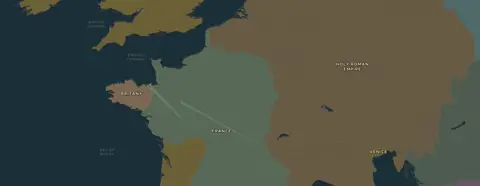 284
Joan of Arc
A teenage farm girl from Domrémy says saints have told her to save France. Students follow Joan from her village to Orléans and Reims, examine her trial through the records, and discuss why so many different people have claimed her as their heroine.
Late Middle Ages1412-1431
Early modern
-
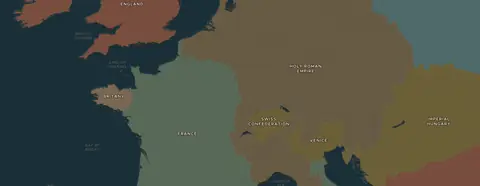 285
Gutenberg and the printing press
In Mainz, a metalworker combines movable metal type, oil-based ink and a press. Within fifty years printers work in more than two hundred towns. Students watch printing spread across the map and ask what changes when books become cheap.
Renaissance Europe1450-1500
-
 286
Sejong the Great and Hangul
King Sejong of Joseon gave Korea its own alphabet in 1446, so that ordinary people could read and write. Students explore the new dynasty and its capital, Sejong's scientists and the debate over Hangul at his court.
Joseon Korea1392-1450
-
 287
Around the world in three years
Columbus sails west, Magellan's crew circles the globe. Students follow the journeys layer and discover how the world map itself was the discovery.
Age of Exploration1492-1522
-
 288
Fort Jesus and the Swahili coast
After Vasco da Gama, Portugal tries to control the old trading cities of the East African coast. Students follow the struggle from Malindi and Mombasa to Mozambique Island, and see how Swahili towns, Omani sailors and Portuguese soldiers fought over the coast for two centuries.
Portuguese Empire1498-1698
-
 289
Portugal's sea empire in Asia
Portugal builds an empire of forts and sea lanes rather than land, from Mozambique to Goa, Malacca and Macau. Students map the chain of bases, meet the Asian rulers and merchants who already ran Indian Ocean trade, and ask how a small kingdom held it.
Portuguese Empire1505-1641
-
 290
Brazil and sugar: a plantation colony
Portuguese ships reached the coast of Brazil in 1500. Within a century the colony was the world's leading producer of sugar, grown on plantations worked first by enslaved Indigenous people and then by enslaved Africans. Students explore the Tupi, the sugar mills and Dutch Brazil.
Portuguese Brazil1500-1654
-
 291
Hispaniola: the Taíno and the first Spanish colony
The Taíno of the Caribbean were the first people in the Americas to live under Spanish rule. Students explore Taíno society, the forced-labour system that devastated it, the Taíno leaders who resisted, and the friar who changed his mind.
Spanish Caribbean1492-1542
-
 292
Jamestown and Plymouth: colonies on Native land
The first lasting English colonies in North America were built in the homelands of the Powhatan and the Wampanoag. Students explore how both sides first needed each other, why relations broke down, and how the first Thanksgiving is remembered in different ways.
English colonies1607-1676
-
 293
Malacca: the port of the monsoon winds
Around 1400 a prince from Sumatra founded Malacca on the narrow strait between the Indian Ocean and the South China Sea. Within a century it was one of the greatest ports in the world, until a Portuguese fleet took it in 1511.
Malacca Sultanate1400-1511
-
 294
The Haudenosaunee: the Great Law of Peace
Before Europeans arrived, five nations south of Lake Ontario agreed to stop fighting and govern together under the Great Law of Peace. Students explore how the Haudenosaunee Confederacy worked, the power of clan mothers, and its place in American history.
Haudenosaunee Confederacybefore 1600-1722
-
 295
The Pueblo Revolt of 1680
In August 1680, Pueblo peoples across New Mexico rose together and drove out the Spanish colonists. Students explore why towns with different languages united, how knotted cords set the date, and what changed when the Spanish returned in 1692.
Spanish New Mexico1598-1692
-
 296
The long Maya resistance, 1524-1697
The Aztec capital fell in two years, but the conquest of the Maya took more than 170. Students explore why many small Maya kingdoms were so hard to conquer, from the highlands of Guatemala to the last free Maya city on Lake Petén Itzá.
Spanish conquest1524-1697
-
 297
1521: the fall of Tenochtitlan
How did a few hundred Spaniards bring down the Aztec capital? Students follow the campaign of 1519-1521 and discover that it was won largely by Indigenous armies and by smallpox, and they read the conquest through Nahua eyes.
Spanish conquest1519-1521
-
 298
Coffee and the coffeehouse
Coffee began as a drink of Sufis in Yemen and became a worldwide habit. Students follow the bean from the Red Sea to Istanbul and London, and find out why rulers both loved and feared the coffeehouse.
Ottoman Empireabout 1450-1700
-
 299
Erasmus and the northern Renaissance
The most famous writer in Europe has no country and no palace: Erasmus of Rotterdam moves between printers, universities and friends. Students map his life and discuss his belief that education, not war, makes a good society.
Northern Renaissance1500-1536
-
 300
Guru Nanak and the Sikh Gurus
In the Punjab, Guru Nanak taught that there is one God and that all people are equal. Over ten Gurus, Sikhism grew a holy book, the Golden Temple and the Khalsa. Students explore a new faith in the land of five rivers.
Sikhism1469-1708
-
 301
Leonardo, Michelangelo and Raphael
Three artists, three cities, one generation. Students follow Leonardo to Milan and France, Michelangelo to Florence and Rome, and Raphael into the Vatican, and discuss who paid for this art and why.
Italian Renaissance1495-1520
-
 302
Malinche: the woman who spoke for two worlds
An enslaved Nahua girl, handed to the Spaniards in 1519, became the most important interpreter of the conquest of Mexico. Students follow Malinche's journey, see how Indigenous painters showed her, and debate how she should be remembered.
Spanish conquest1519-1521
-
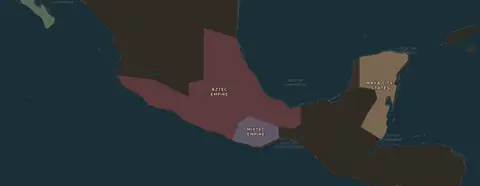 303
Moctezuma II: an emperor meets strangers
In 1519 Moctezuma II ruled the most powerful state in Mesoamerica when a few hundred Spaniards landed on his coast. Students play his choices in Rule History, compare Spanish and Mexica accounts, and test a famous story many historians now doubt.
Aztec (Mexica)1502-1520
-
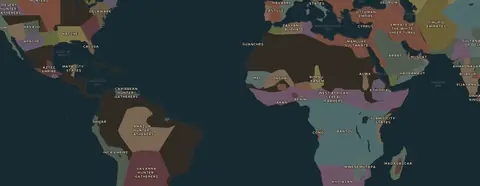 304
Qhapaq Ñan: the Inca road system
Roads of some 30,000 to 40,000 km tied the Inca Empire together, across deserts, mountain passes and gorges. Students follow the roads, the relay runners who raced along them and the grass bridges that are still rebuilt every year.
Inca Empire1438-1533
-
 305
Queen Njinga of Ndongo and Matamba
For four decades Queen Njinga fought, negotiated and made alliances to keep her people free from Portuguese rule. Students follow one of the great leaders of African history and ask why she is remembered so differently.
Ndongo and Matamba1622-1663
-
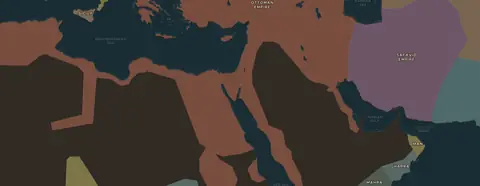 306
Selim I takes Cairo, Mecca and Medina
In two short campaigns Sultan Selim I destroyed the Mamluk Sultanate and made the Ottomans masters of Syria, Egypt and the holy cities of Islam. Students compare the map before and after 1517.
Ottoman Empire1516-1517
-
 307
Shah Ismail and the Safavid revolution
In 1501 a fourteen-year-old leader of a Sufi order was crowned shah in Tabriz and made Shia Islam the faith of his state. Students explore how Ismail changed Iran for centuries and why he clashed with the Ottomans.
Safavid Empire1501-1524
-
 308
Songhai: the great empire of the Niger
From its capital Gao, Songhai grew into one of the largest empires in African history. Students meet Sunni Ali and Askia Muhammad and find out how an army that crossed the Sahara with guns brought the empire down in 1591.
Songhai Empire1464-1591
-
 309
Tawantinsuyu: the Inca Empire
In less than a century, the Inca built the largest empire of the Americas, stretching about 4,000 km along the Andes. Students explore how Tawantinsuyu was run from Cusco without money or writing, and why Machu Picchu survived.
Inca Empire1438-1533
-
 310
Tenochtitlan: a city built on a lake
The Mexica founded Tenochtitlan on an island in Lake Texcoco in 1325. Two centuries later it was one of the largest cities in the world, linked to the shore by causeways and fed by fields built in the lake. Students explore how a city on a lake worked.
Aztec (Mexica)1325-1519
-
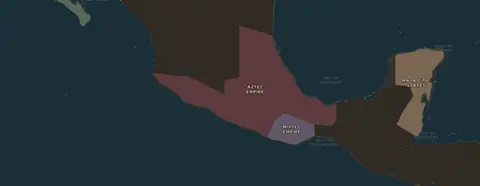 311
The Aztec Empire: tribute and the Triple Alliance
In 1428 three lake cities joined forces and built an empire on tribute. Students explore how the Triple Alliance controlled hundreds of towns without governing them directly, what tribute lists reveal, and which neighbours were never conquered.
Aztec (Mexica)1428-1519
-
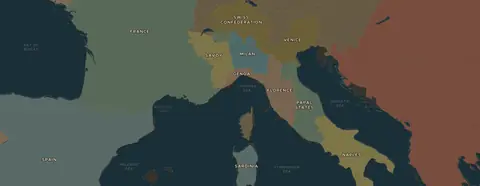 312
The Italian Wars and Machiavelli
France and Spain fight over Italy for more than sixty years. In Florence an out-of-work official writes The Prince, a handbook on how rulers keep power. Students follow the armies on the map and test Machiavelli's advice.
Italian Renaissance1494-1559
-
 313
The Ming Great Wall
The Great Wall most people picture today was built by the Ming after a Mongol army captured their emperor in 1449. Students follow the wall from the desert to the sea and judge whether walls kept the Ming safe.
Ming dynasty1449-1644
-
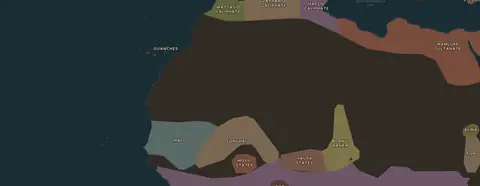 314
Timbuktu: a city of books
At the edge of the Sahara, Timbuktu became a city of scholars, mosques and private libraries. Students discover what its manuscripts contain, who wrote them and how families kept them safe for centuries.
Mali and Songhaiabout 1325-1591
-
 315
Vijayanagara: the City of Victory
For more than two centuries the empire of Vijayanagara ruled southern India from a great city among the boulders of Hampi. Students explore it through the eyes of foreign visitors and ask how one battle in 1565 could empty a capital.
Vijayanagara Empire1336-1565
-
 316
Babur and the birth of the Mughal Empire
Babur became a king at 11, lost his homeland, took Kabul and in 1526 won northern India at Panipat. He also wrote one of the great memoirs of history. Students follow his road from Central Asia to Delhi and Agra.
Mughal Empire1494-1530
-
 317
Luther and the Reformation
A monk in a small Saxon town challenges the most powerful institution in Europe. Students follow Luther from Wittenberg to Worms and the Wartburg, and see how printing turned one man's protest into a movement that split the Western Church.
Reformation1517-1530
-
 318
The great dying: epidemics in the Americas
Smallpox, measles and other diseases from Europe and Africa met people in the Americas who had never faced them. Together with war and forced labour, they caused one of the largest population collapses in history. Students explore how and why, with care.
Columbian Exchange1518-1620
-
 319
The German Peasants' War of 1525
Inspired partly by Reformation ideas, peasants across southern and central Germany demand an end to serfdom. Students read their Twelve Articles, follow the rising on the map and discuss why Luther turned against them.
Reformation1524-1525
-
 320
Mohács and the first siege of Vienna
In 1526 the Ottomans destroyed the Hungarian army at Mohács; in 1529 they stood before Vienna. Students follow the long march up the Danube and ask why the siege failed.
Ottoman Empire1526-1529
-
 321
Charles V and the Habsburg world
Born in Ghent in 1500, Charles inherits Spain, the Low Countries, Austria, southern Italy and new lands in the Americas, and is then elected emperor. Students map the largest inheritance in European history and see why it was so hard to rule.
Habsburg Empire1519-1556
-
 322
Ethiopia and Adal: war in the Horn
In 1529 the Sultanate of Adal invaded the Christian Ethiopian Empire, and for fourteen years the Horn of Africa was at war. Ottoman muskets and Portuguese soldiers joined in. Students look at the war from both sides.
Ethiopia and Adal1529-1543
-
 323
Florence and the Medici
A family of bankers runs a republic without ever being crowned. Students explore how Medici money paid for artists and builders, and why Florence became a cradle of the Renaissance.
Italian Renaissance1434-1494
-
 324
Henry VIII and the English Reformation
A king wants a son and a new marriage; the pope says no. Students follow how Henry VIII broke with Rome, closed the monasteries and made himself head of the Church of England, and what that meant for ordinary people.
Tudor England1527-1547
-
 325
Janissaries: the sultan's soldiers
The Ottoman sultans took Christian boys from their families, converted and trained them, and made them soldiers, architects and viziers. Students look at the devshirme from the side of the families and of the empire.
Ottoman Empireabout 1380-1826
-
 326
Kongo: an African Christian kingdom
When Portuguese ships reached the Congo river, the kingdom of Kongo chose to become Christian and to trade. Students read the letters of King Afonso I, who protested against the slave trade in 1526, and follow Kongo to its defeat at Mbwila.
Kingdom of Kongo1483-1665
-
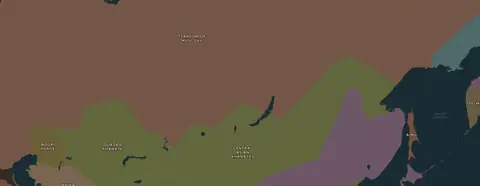 327
Russia crosses Siberia
In less than sixty years Cossacks and fur traders cross Siberia from the Urals to the Pacific. Students watch Russia grow on the map, learn why furs drove the expansion, and meet the Indigenous peoples who paid the price.
Russian Empire1582-1689
-
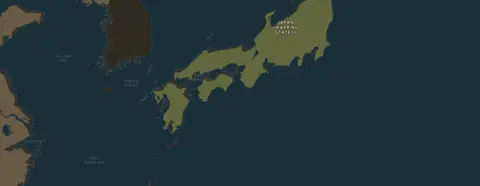 328
Sengoku: Japan's age of warring states
After 1467 Japan broke apart into domains ruled by warring lords. Portuguese guns arrived in 1543, and Oda Nobunaga and Toyotomi Hideyoshi fought their way to unity by 1590. Students follow a century of war and the rise of a new order.
Sengoku Japan1467-1590
-
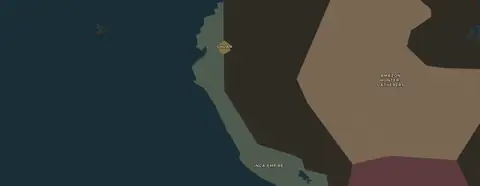 329
Cajamarca 1532: Atahualpa and Pizarro
In November 1532 the Inca ruler Atahualpa, fresh from winning a civil war, met fewer than 200 Spaniards at Cajamarca and was taken prisoner. Students explore why the empire was so vulnerable, and how an Andean artist later drew the conquest.
Inca Empire1532-1533
-
 330
Manco Inca and the free state of Vilcabamba
The conquest of Peru did not end in 1533. Manco Inca rose against the Spaniards, besieged Cusco and won a battle at Ollantaytambo, then ruled a free Inca state in the forests of Vilcabamba. Students follow 36 years of Inca resistance.
Inca resistance1536-1572
-
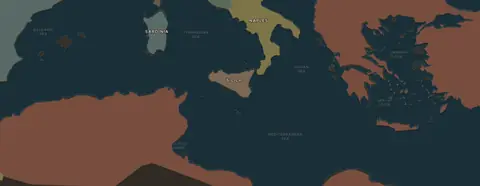 331
Barbarossa, Malta and Lepanto
For forty years Ottoman and Christian fleets fought for the Mediterranean. Students follow the corsair-admiral Barbarossa, the siege of Malta and the great galley battle of Lepanto, and ask who really won.
Ottoman Empire1533-1573
-
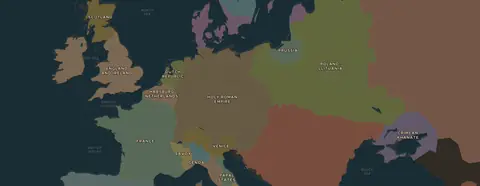 332
Copernicus, Galileo and a Sun-centred universe
A Polish church official puts the Sun at the centre of the universe; an Italian professor points a telescope at the sky and finds moons circling Jupiter. Students follow the new astronomy across Europe and discuss Galileo's trial in 1633.
Scientific Revolution1543-1642
-
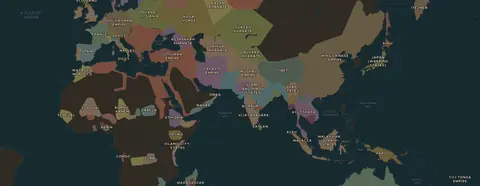 333
The Counter-Reformation
The Catholic Church answers the Protestants with reforms of its own. Students follow the bishops to the Council of Trent and the first Jesuits from Rome to India and Japan, and ask how a worldwide church renewed itself.
Catholic Reformation1540-1600
-
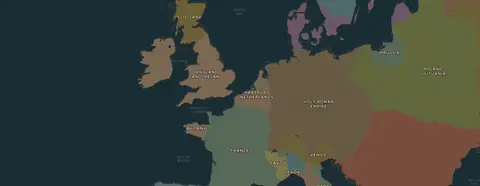 334
Calvin's Geneva
A French refugee turns a small city on Lake Geneva into a training school for Protestants from all over Europe. Students map how Calvin's ideas travelled to France, Scotland and the Netherlands, and debate life in a city with strict rules for everyone.
Reformation1536-1564
-
 335
Akbar the Great
Akbar became emperor at 13 and turned the Mughal state into a great empire. He won allies among the Rajputs, abolished a tax on non-Muslims and invited scholars of every faith to debate at his court. Students weigh his policy of "peace with all".
Mughal Empire1556-1605
-
 336
William of Orange and the Dutch Revolt
The Low Countries rise against Philip II of Spain over taxes, old freedoms and faith. Students follow William of Orange from nobleman to rebel leader, see Leiden saved by flooding the land, and ask why he is called the father of the Dutch nation.
Dutch Revolt1566-1584
-
 337
The French Wars of Religion
For 36 years Catholics and Protestant Huguenots fight over France. Students follow the wars from Paris to La Rochelle and Nantes and judge the Edict of Nantes, which allowed two faiths in one kingdom.
Reformation France1562-1598
-
 338
Suleiman the Magnificent and Sinan
Europe called him "the Magnificent", his own people "the Lawgiver". Students explore the reign of Suleiman, his campaigns from Belgrade to Baghdad, and the buildings of his architect Sinan.
Ottoman Empire1520-1566
-
 339
Elizabeth I and the Spanish Armada
In 1588 Philip II sends a great fleet to carry an army to England. Students follow the Armada from Lisbon up the Channel to Gravelines and home around Scotland and Ireland, and ask what decided its fate: English ships, Spanish plans or the weather.
Tudor England1558-1603
-
 340
The Imjin War and Admiral Yi Sun-sin
In 1592 Toyotomi Hideyoshi sent a huge army into Korea on its way to conquer Ming China. Korea's armies collapsed, but Admiral Yi Sun-sin won battle after battle at sea. Students follow a seven-year war and ask how it shaped three countries.
Joseon Korea1592-1598
-
 341
Benin: the Oba's kingdom and its brass plaques
In the forest of southern Nigeria, the Obas of Benin ruled a walled capital and kept a royal guild of brass casters. Students read the history told by Benin's plaques and debate where the artworks taken in 1897 belong today.
Kingdom of Beninabout 1440-1897
-
 342
Shah Abbas and Isfahan, half the world
Shah Abbas rebuilt the Safavid army, won back lost lands and made Isfahan one of the most beautiful cities on earth. Students explore his great square, his silk trade and the people who paid the price of his plans.
Safavid Empire1588-1629
-
 343
Shakespeare's London
A glover's son from Stratford becomes the most famous playwright in the world. Students explore the crowded London of the Globe Theatre, where courtiers, apprentices and pickpockets watched the same plays, and ask why theatre was so popular.
Elizabethan England1590-1616
-
 344
The Columbian Exchange: a world of new foods
After 1492, plants, animals and people crossed the oceans in both directions. Potatoes and maize fed Europe, Africa and Asia; horses and cattle changed the Americas. Students trace the exchange on the trade routes and in the food on their own plates.
Columbian Exchange1492-1700
-
 345
The Eighty Years' War and the Peace of Münster
After William's death the revolt nearly collapses, then a young republic fights Spain to a standstill. Students follow a long war of sieges, from the fall of Antwerp to the peace signed at Münster in 1648, and see how the Low Countries split in two.
Dutch Revolt1585-1648
-
 346
The Hausa cities: Kano, Katsina and Zazzau
Walled cities with busy markets, dye pits and scholars grew up across northern Nigeria. Students explore the Hausa city-states, their trade across the Sahara, and the warrior queen Amina whom history remembers but cannot pin down.
Hausa city-statesabout 1400-1800
-
 347
The Polish-Lithuanian Commonwealth
In 1569 Poland and Lithuania join to form one of the largest states in Europe, where nobles elect their king. Students map the Commonwealth, explore its religious tolerance and its noble democracy, and ask what made it strong and what made it fragile.
Polish-Lithuanian Commonwealth1569-1683
-
 348
Tokugawa Ieyasu and the Battle of Sekigahara
When Hideyoshi died in 1598, Tokugawa Ieyasu waited, made deals and won the Battle of Sekigahara in 1600. Students follow his path to power and see how his shogunate kept Japan at peace for about 250 years.
Tokugawa Japan1598-1616
-
 349
The Thirty Years' War begins
In 1618 Protestant nobles throw two royal officials out of a window of Prague Castle. Students follow how a revolt in Bohemia grew into a war that drew in much of Europe and devastated the German lands.
Thirty Years' War1618-1629
-
 350
1644: from Ming to Qing
In 1644 rebels took Beijing, the last Ming emperor died, and the Manchus rode through the Great Wall to found the Qing dynasty. Students trace the collapse on the map and weigh the choices of rebels, generals and conquerors.
Qing dynasty1616-1683
-
 351
Gustavus Adolphus and Sweden at war
In 1630 the king of Sweden lands in Germany with a modern army. Students follow Gustavus Adolphus from the Baltic coast to victory at Breitenfeld and death at Lützen, and discuss what the war meant for the people in its path.
Thirty Years' War1630-1635
-
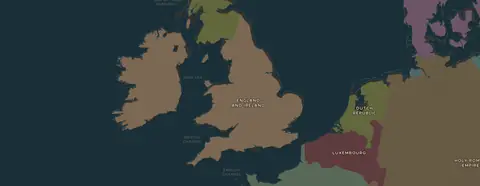 352
The English Civil War
King and Parliament go to war over money, religion and who holds power. Students follow the Civil War from Nottingham to Naseby, the trial and execution of Charles I, and the years when England had no king.
Stuart England1642-1660
-
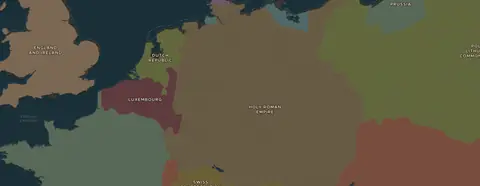 353
The Peace of Westphalia
Envoys from across Europe spend years negotiating in two towns in Westphalia. Students map the peace that ended the Thirty Years' War, recognised two independent states and changed the rules of the empire, and discuss why it became so famous.
Thirty Years' War1643-1648
-
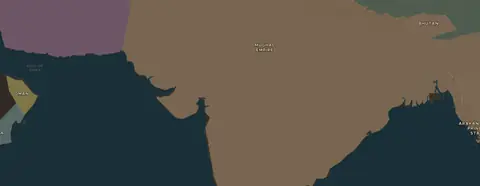 354
Aurangzeb, Shivaji and the Deccan wars
Under Aurangzeb the Mughal Empire reached its greatest size, yet the Maratha leader Shivaji built a kingdom of hill forts that the emperor could never defeat. Students compare two famous rivals and ask why the biggest empire was also overstretched.
Mughal Empire1658-1707
-
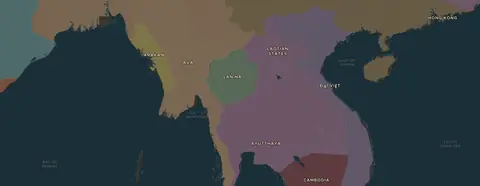 355
Ayutthaya: Siam's island capital
For four centuries Ayutthaya, an island city ringed by rivers, was the capital of Siam and one of the great trading cities of Asia. Students explore its rivers, its foreign quarters and its fall in 1767, and see how Siam recovered.
Ayutthaya Kingdom1351-1767
-
 356
Lhasa and the Dalai Lamas
A Mongol khan gave the title Dalai Lama to a Tibetan teacher in 1578. Within a century the Dalai Lamas ruled Tibet from the Potala Palace. Students explore how religion and politics joined on the roof of the world, between Mongols and the Qing.
Tibet1578-1793
-
 357
New France and the fur trade
In 1608 Samuel de Champlain founded Quebec on the St. Lawrence River. New France lived from the fur trade, which depended on alliances with First Nations such as the Wendat, Algonquin and Innu. Students follow the canoe routes, the wars over furs and the Great Peace of 1701.
New France1608-1701
-
 358
New Spain: life in a colonial society
From 1535 a Spanish viceroy ruled from Mexico City, built on the ruins of Tenochtitlan. Students explore a society of Indigenous towns, Spaniards, Africans and people of mixed ancestry, with its silver mines and printing presses, and a nun who fought for the right to learn.
Viceroyalty of New Spain1535-1700
-
 359
Palmares: a free kingdom in the hills of Brazil
For almost a century, people who escaped slavery built Palmares, a network of free villages in the hills of north-east Brazil. Students explore how it lived and defended itself, the choice between Ganga Zumba and Zumbi, and why 20 November is a national day in Brazil.
Portuguese Brazilc. 1605-1695
-
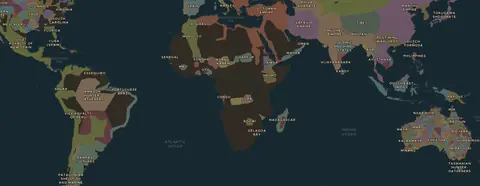 360
Potosí: the mountain of silver
In 1545 a mountain of silver was found high in the Andes. Potosí became one of the largest cities in the world, built on the forced labour of Indigenous miners, and its silver flowed to Spain, Europe and China. Students follow the silver and ask who paid for it.
Viceroyalty of Peru1545-1650
-
 361
Shah Jahan and the Taj Mahal
When his wife Mumtaz Mahal died in 1631, the emperor Shah Jahan began the Taj Mahal, a white marble tomb on the Yamuna River. Students explore how and why it was built, and weigh the glory and the cost of Mughal building.
Mughal Empire1628-1658
-
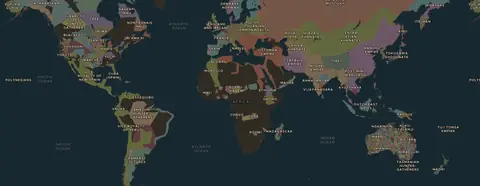 362
The Dutch Golden Age
A small republic becomes a world power through water, trade and ships. Students trace the trade network and discuss both the wealth and its dark side.
Dutch Republic1588-1672
-
 363
London's plague and Great Fire, 1665-1666
In two years London suffers its last great plague and a fire that destroys most of the old city. Students use Samuel Pepys's diary, find the village of Eyam that shut itself off to protect others, and see how London was rebuilt in brick and stone.
Stuart England1665-1666
-
 364
Newton and the age of experiment
In London a club of curious men meets to test ideas by experiment. Students explore the Royal Society, Isaac Newton's laws of motion and gravity, and how the new science travelled from Cambridge and Greenwich across Europe.
Scientific Revolution1660-1727
-
 365
The Little Ice Age in Europe
Colder winters freeze the Thames, the Baltic and the lagoon of Venice. Students use the Weather of History layer to explore frost fairs, failed harvests and a volcano in Iceland, and ask how climate shaped wars, food and daily life between 1600 and 1789.
Early modern Europe1600-1789
-
 366
The Glorious Revolution of 1688
A Dutch prince sails to England with a large fleet and an army, and the king flees. Students follow William of Orange from Hellevoetsluis to Torbay and discuss the Bill of Rights, which limited royal power for good.
Stuart England1688-1689
-
 367
Edo Japan: a closed country?
From the 1630s the Tokugawa shoguns banned Christianity, expelled the Portuguese and kept the Dutch on a tiny island at Nagasaki. Students test the idea of a "closed country" on the map, and explore Edo, a city of about a million people.
Tokugawa Japan1633-1800
-
 368
Karlowitz, tulips and the first Ottoman press
After losing Hungary in 1699, the Ottoman court looked anew at Europe: envoys went to Paris, tulip gardens bloomed and the first press printing in Ottoman Turkish opened in Istanbul. Students explore an empire adapting.
Ottoman Empire1699-1730
-
 369
Louis XIV and Versailles
The Sun King turns his father's hunting lodge into the most famous palace in Europe and keeps the nobles close. Students explore how Louis XIV used buildings, ceremony and war to show absolute power, and what it cost France.
Bourbon France1643-1715
-
 370
Peter the Great and St Petersburg
A very tall young tsar travels to Holland and England to learn shipbuilding, then builds a new capital on the marshes of the Baltic. Students follow Peter's journey and wars, and weigh the cost of his reforms for the people who built his city.
Russian Empire1682-1725
-
 371
The Atlantic slave trade and the Americas
Over more than three centuries, about 12.5 million Africans were forced onto ships bound for the Americas. Students look at where they came from and where they were taken, the plantations their labour built, and the many ways enslaved people resisted and kept their cultures alive.
Atlantic world1500s-1700s
-
 372
The East India Company in India
A London trading company arrives in Mughal India asking for permission to trade, and about 160 years later it rules Bengal. Students follow the Company from Surat, Madras and Calcutta to the battlefield of Plassey, and ask how traders became rulers, and at what cost.
East India Company1600-1785
-
 373
The Seven Years' War: a war around the world
Britain and France fight in Europe, North America, the Caribbean, West Africa and India at the same time. Students follow the war from the Ohio valley to Quebec and Plassey, and see how the Peace of Paris of 1763 redrew the map of empires.
Global empires1756-1763
-
 374
The War of the Spanish Succession
When the childless king of Spain dies in 1700, he leaves his empire to a grandson of Louis XIV. Much of Europe goes to war to stop France and Spain from joining. Students follow the war from Blenheim to Gibraltar and Barcelona, and see who gained what at Utrecht in 1713.
Age of Louis XIV1701-1714
-
 375
The partitions of Poland
In 23 years three neighbours divide one of Europe's largest states among themselves until it vanishes from the map. Students compare the borders of 1700 and 1800, meet the reformers of the Constitution of 3 May 1791 and Kościuszko's rising, and ask how a country can disappear.
Polish-Lithuanian Commonwealth1772-1795
-
 376
Asante and the Golden Stool
Around 1701 Osei Tutu united Akan chiefdoms into the Asante kingdom, bound together by the sacred Golden Stool. Students explore a forest empire of gold, roads and brass weights that defeated a British army in 1824.
Asante Empire1701-1874
-
 377
The American Revolution
Thirteen British colonies go to war with their king and declare that "all men are created equal". Students follow the war from Lexington to Saratoga and Yorktown, and ask what independence meant for Loyalists, enslaved people and Native nations as well as for the new United States.
American Revolution1775-1783
-
 378
The Atlantic slave trade seen from Africa
Over more than three centuries about 12.5 million Africans were forced onto ships bound for the Americas. Students look at the trade from the African side: the states and ports involved, the people taken, and those who resisted.
Atlantic slave tradeabout 1500-1867
-
 379
The Cape frontier and the Xhosa wars
A Dutch supply station at the Cape grew into a colony that pushed east onto the lands of the Khoikhoi, San and Xhosa. Students follow a hundred years of frontier wars from the side of the people who resisted.
Cape frontier1652-1879
-
 380
Drawing a border: Ottomans and Safavids
For 125 years the Sunni Ottomans and the Shia Safavids fought over Iraq, Azerbaijan and the Caucasus. Students follow the wars, see how the Treaty of Zuhab drew a lasting line, and compare it with today's border.
Ottoman and Safavid empires1514-1639
-
 381
Frederick the Great and the rise of Prussia
A young king who loves flute music and French books seizes Silesia and turns Prussia into a great power. Students follow Frederick from Potsdam to the battlefields, and weigh the "enlightened" ruler against the man who started wars.
Kingdom of Prussia1740-1786
-
 382
Maria Theresa and Habsburg Austria
At 23 Maria Theresa inherits the Habsburg lands, and enemies attack at once. Students follow how she held her lands together, won the support of Hungary, reformed schools and government, and why she never forgave Frederick for Silesia.
Habsburg Monarchy1740-1780
-
 383
1754-1763: the war that redrew North America
France and Britain fought for control of North America, and Native nations fought for their own lands between them. Students follow the war from the Ohio valley to Quebec, the peace of 1763 that removed France from the continent, and Pontiac's War that followed.
Seven Years' War1754-1763
-
 384
Sugar, plantations and the triangular trade
Sugar turns small Caribbean islands into some of the richest colonies on Earth, built on the forced labour of enslaved Africans. Students follow the triangle of trade, see how sugar changed European diets, and meet the Maroons who fought for their freedom in the mountains.
Atlantic world1640-1789
-
 385
The Middle Passage and the Atlantic slave trade
For more than three centuries, about 12.5 million Africans were forced onto ships bound for the Americas. Students map where captives came from and where they were taken, hear the voices of those who survived, and ask how this history should be remembered.
Atlantic world1500s-1860s
-
 386
The Lisbon earthquake of 1755
On All Saints' Day 1755 an earthquake, a tsunami and fires destroy much of Lisbon. Students follow the waves across the ocean, see how the city was rebuilt with earthquake-resistant buildings, and discuss why the disaster shook Europe's thinkers.
Enlightenment1755
-
 387
Resistance and the first abolitionists
Enslaved people never accepted slavery: they revolted, ran away and went to court. By the 1780s they had allies among Quakers, writers and a new campaign in London. Students follow the struggle from Jamaica to Philadelphia and London and ask who really ended the slave trade.
Atlantic world1760-1789
-
 388
The Enlightenment: reason, rights and the Encyclopédie
In Paris salons, Edinburgh clubs and coffee houses across Europe, writers ask whether reason can improve society. Students meet Montesquieu, Voltaire, Rousseau, Beccaria and Kant, follow the Encyclopédie and ask which of their ideas still shape our laws.
Enlightenment1748-1784
-
 389
Catherine the Great
A German princess seizes the Russian throne from her husband and rules for 34 years. Students follow Catherine from St Petersburg to the Black Sea, read about her letters with French thinkers, and face the Pugachev rebellion that showed the anger of Russia's serfs.
Russian Empire1762-1796
-
 390
James Cook and the Pacific
In three voyages James Cook charts more of the Pacific than any European before him. Students follow his ships from Tahiti to New Zealand, Australia and Hawai'i, meet the Pacific navigators and Indigenous peoples he encountered, and ask what these meetings meant for both sides.
Pacific encounters1768-1779
-
 391
Dahomey: the kingdom of Abomey
From its inland capital Abomey, Dahomey fought its way to the coast, paid tribute to Oyo and grew rich and powerful through the slave trade. Students meet its women soldiers and King Behanzin, who fought the French army.
Kingdom of Dahomeyabout 1650-1894
-
 392
India in the 1700s: new powers rise
After Aurangzeb died in 1707, the Mughal Empire broke into many states. Marathas, Afghans, Mysore and a British trading company fought for India. Students follow the century on the map and ask how a company came to rule Bengal.
India1707-1799
-
 393
Napoleon: from Corsica to emperor
An artillery officer from Corsica becomes a general at 24, conquers Italy, invades Egypt and crowns himself emperor. Students follow Napoleon's rise on the map and ask how a revolution produced an emperor.
Napoleonic France1793-1804
-
 394
The High Qing: Kangxi to Qianlong
Under Kangxi, Yongzheng and Qianlong the Qing became the largest and richest state in Asia, and its population roughly doubled. Students explore the empire at its height and why Qianlong told a British envoy in 1793 that China needed nothing from Britain.
Qing dynasty1661-1799
-
 395
Australia: from penal colony to nation
In 1788 a British fleet lands convicts on the land of the Eora people. Over a century, colonies spread across a continent that had been home to Aboriginal and Torres Strait Islander peoples for tens of thousands of years. Students follow colonisation, gold and federation, and ask whose story it is.
British Empire in the Pacific1788-1901
Age of revolutions
-
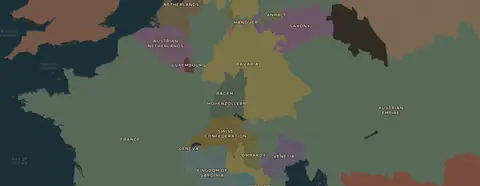 396
1789: France in revolution
A bankrupt king calls an old assembly, and within months Paris storms the Bastille and a National Assembly declares the rights of man. Students explore how a money crisis turned into a revolution.
French Revolution1789-1791
-
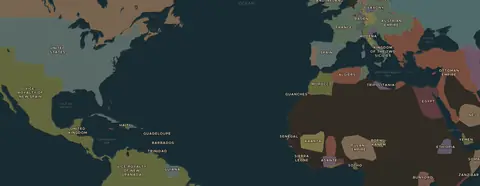 397
Haiti: the revolution of the enslaved
In France's richest colony, enslaved people rise up, defeat the armies of three empires and found Haiti, the first nation born from a successful revolt of the enslaved. Students follow Toussaint Louverture and Dessalines.
Atlantic revolutions1791-1804
-
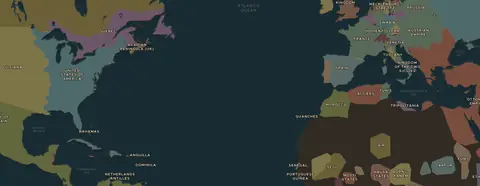 398
The Republic and the Terror
At war with half of Europe, revolutionary France abolishes its monarchy, executes its king and turns to terror against its own citizens. Students trace how fear, war and big ideas pushed the Revolution to extremes.
French Revolution1792-1794
-
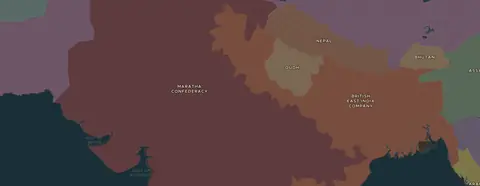 399
1857: rebellion in India
In May 1857 Indian soldiers of the East India Company rise up, and the revolt spreads across northern India. Princes, soldiers and farmers fight the Company until 1858. Students follow the rebellion, meet Rani Lakshmibai and ask what the events should be called.
Company rule in India1857-1858
-
 400
Canada: Confederation and the Métis
In 1867 four colonies unite as the Dominion of Canada and set out to stretch from sea to sea. Students follow the railway west, meet Louis Riel and the Métis, and ask who was included in the new country.
British North America1867-1885
-
 401
Cottonopolis: Manchester and the factory age
Steam engines, cotton mills and coal turn a small English town into the world's first great industrial city. Students follow cotton from the plantations of the American South to the mills of Manchester and weigh the progress and the misery of the factory age.
Industrial Revolution1780-1850
-
 402
Ending the Atlantic slave trade
Campaigners in Britain, formerly enslaved writers and rebels in the Caribbean all fought the slave trade. Students follow the struggle from the first petitions to the end of slavery in the British colonies, and ask whose actions mattered most.
Age of abolition1787-1838
-
 403
Mexico: from Hidalgo's cry to independence
On 16 September 1810 a village priest rings his church bell and calls for revolt. Eleven years later Mexico is independent, won by poor farmers, priest-generals and a royalist officer who changed sides. Students trace the long road on the map.
Latin American independence1810-1821
-
 404
Simón Bolívar, the Liberator
Born rich in Caracas, Simón Bolívar loses battle after battle, crosses the Andes and helps free five future nations from Spain. Then he watches his dream of one great republic fall apart. Students follow his campaigns and weigh his legacy.
Latin American independence1810-1830
-
 405
The Louisiana Purchase and Lewis and Clark
In 1803 the United States doubles in size by buying Louisiana from Napoleon. Lewis, Clark, Sacagawea and their companions then travel to the Pacific and back through the lands of many Native nations. Students ask what was really bought.
Early United States1803-1806
-
 406
Napoleon's Europe: Austerlitz to Tilsit
Beaten at sea at Trafalgar, unbeatable on land at Austerlitz and Jena: by 1807 Napoleon dominates the continent and an empire of 800 years disappears. Students map Napoleon's Europe and ask how it was held together.
Napoleonic Wars1805-1810
-
 407
Brazil: from colony to empire to republic
Brazil takes a path unlike its neighbours: a European court moves to Rio, a prince declares independence and becomes emperor, and slavery lasts until 1888. Students trace how Brazil became independent with little fighting and why freedom came so late.
Empire of Brazil1808-1889
-
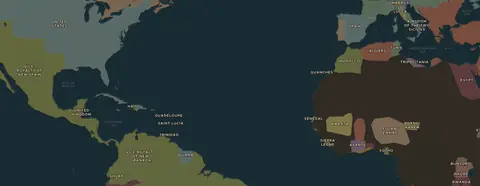 408
Spain and Portugal against Napoleon
Napoleon's armies march into Portugal and Spain, the Portuguese court flees to Brazil, and Spaniards rise up in a "little war" that gives the world the word guerrilla. Students see how a war in Iberia shook two empires.
Napoleonic Wars1807-1814
-
 409
1812: the march on Moscow
In June 1812 the largest army Europe had ever seen crosses into Russia. Six months later only a small part of it comes back. Students follow the road to Moscow and back, and weigh why the campaign failed.
Napoleonic Wars1812
-
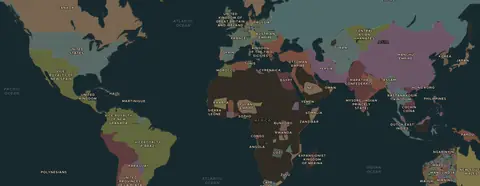 410
From Leipzig to Waterloo: Napoleon falls
Beaten at Leipzig, exiled to Elba, back for a Hundred Days and finally defeated at Waterloo: students follow Napoleon's last campaigns across the map and ask why all of Europe turned against him.
Napoleonic Wars1813-1815
-
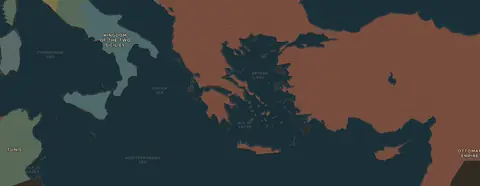 411
Greece breaks free
In 1821 Greeks rise against Ottoman rule. Poets, painters and volunteers across Europe take up their cause, and in 1827 three great powers destroy the Ottoman fleet. Students follow the birth of the first fully independent state carved out of the Ottoman Empire in Europe.
Ottoman Europe1821-1832
-
 412
New Zealand and the Treaty of Waitangi
In 1840 Māori chiefs and the British Crown sign the Treaty of Waitangi. But the English and Māori texts say different things, and within a generation war and land confiscation follow. Students ask what was promised and why the treaty still matters.
British Empire in the Pacific1840-1893
-
 413
San Martín crosses the Andes
In 1817 José de San Martín leads an army over the high passes of the Andes to free Chile, then sails north to Lima. Students follow one of the boldest marches in history and meet a general who walked away from power.
Latin American independence1810-1822
-
 414
Shaka and the rise of the Zulu kingdom
In about twelve years Shaka turned a small chiefdom into the most powerful kingdom of south-east Africa. Students look at his army reforms, the wars and migrations of the time, and why historians still argue about him.
Zulu kingdom1816-1828
-
 415
Texas and the Mexican-American War
Texas breaks away from Mexico in 1836 and joins the United States in 1845. A year later the two countries are at war, and by 1848 Mexico has lost about half its land. Students compare how Americans and Mexicans remember the war.
US expansion1836-1848
-
 416
The Congress of Vienna redraws Europe
After 20 years of war, emperors, kings and diplomats meet in Vienna to redraw the map of Europe. Students compare the borders before and after, and judge a peace that lasted, but ignored what peoples wanted.
Restoration Europe1814-1815
-
 417
The Sokoto Caliphate and Nana Asma'u
In 1804 the scholar Usman dan Fodio led a jihad that overthrew the Hausa kings and created one of the largest states in Africa. Students meet him and his daughter Nana Asma'u, poet and teacher of women.
Sokoto Caliphate1804-1903
-
 418
Java: Diponegoro and the Cultivation System
A Javanese prince leads a five-year war against Dutch rule. Then the Dutch force Javanese villages to grow coffee and sugar for export, and the profits flow to the Netherlands. Students explore the Java War, the Cultivation System and the novel that exposed it.
Dutch East Indies1825-1870
-
 419
The Trail of Tears
The Cherokee had a written language, a newspaper and a constitution, and they won their case in the Supreme Court. They were still forced from their homeland. Students follow the removal of the south-eastern nations and ask how it should be remembered.
Indian Removal1830-1839
-
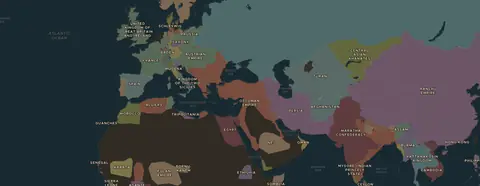 420
The railway age
In 1825 a steam locomotive pulls the first public train. Within fifty years railways cross continents from Britain to India, North America and Japan. Students trace the spread of the railway and how it changed time, travel and trade.
Industrial Revolution1825-1872
-
 421
The Opium Wars
Britain wants Chinese tea and pays with opium grown in India. When China tries to stop the drug trade, British warships force it open. Students follow the Opium Wars from Canton to Hong Kong and Shanghai, and see why China calls this the start of a "century of humiliation".
Qing China1839-1860
-
 422
The Suez Canal
In ten years, tens of thousands of Egyptian workers dig a canal between the Mediterranean and the Red Sea. The sea route from Europe to Asia shrinks by thousands of kilometres, and Egypt falls into debt and foreign control. Students ask who really gained from the canal.
Age of empire1859-1882
-
 423
The Great Famine in Ireland
When blight destroys the potato crop from 1845, about a million people in Ireland die and more than a million leave. Students follow the famine from the fields to the emigrant ships and ask why a disaster inside the world's leading industrial power was so deadly.
Victorian Britain and Ireland1845-1852
-
 424
1848: the springtime of peoples
In 1848 revolution spreads from Palermo and Paris to Vienna, Berlin, Milan and Budapest. Kings flee, parliaments meet, serfs are freed, and within two years most of the old rulers are back. Students map a year of revolutions and ask what changed.
Revolutions of 18481848-1849
-
 425
Bismarck and the making of Germany
Through three short wars in seven years, Prussia's Otto von Bismarck turns dozens of German states into one empire, proclaimed in the palace of the French kings. Students follow "blood and iron" on the map and ask whose Germany it was.
German unification1862-1871
-
 426
Italy united: Cavour, Garibaldi and the Risorgimento
In 1848 Italy is a patchwork of kingdoms, duchies and Austrian provinces. By 1871 it is one kingdom with Rome as its capital. Students follow Cavour's diplomacy, Garibaldi's Thousand and the popular votes that made Italy.
Risorgimento1848-1871
-
 427
Escaping slavery: the Underground Railroad
Thousands of enslaved people escaped north, some helped by a secret network of Black and white "conductors". Students follow the routes from the slave states to the free states and Canada, and meet Harriet Tubman, Frederick Douglass and William Still.
Antebellum United States1830-1861
-
 428
The Taiping Rebellion
A failed exam candidate who believes he is the younger brother of Jesus founds a "Heavenly Kingdom" and conquers much of southern China. Students follow one of the deadliest wars in history and ask why so many people followed Hong Xiuquan.
Qing China1850-1864
-
 429
Black ships: Japan opens up
For over 200 years Japan has kept most foreigners out. Then, in 1853, American steam warships sail into Edo Bay and demand trade. Students follow the "black ships" and see how fifteen years of crisis ended the rule of the shoguns.
Tokugawa Japan1853-1868
-
 430
The Crimean War
Russia, the Ottoman Empire, Britain and France go to war over the Black Sea. It is one of the first wars reported by telegraph and photographed, and the war of Florence Nightingale and Mary Seacole. Students explore why it began and what it changed.
Russian and Ottoman empires1853-1856
-
 431
Russia frees its serfs
After defeat in the Crimean War, Tsar Alexander II frees more than 20 million serfs in 1861. Students explore what serfdom was, why the tsar acted, why many peasants were disappointed, and why the "Tsar Liberator" was assassinated.
Russian Empire1855-1881
-
 432
1863: Emancipation and Gettysburg
In 1863 the Civil War becomes a war against slavery. The Emancipation Proclamation takes effect, Black soldiers join the Union army, and Gettysburg and Vicksburg turn the tide. Students ask how freedom and victory became linked.
American Civil War1863
-
 433
The Meiji Restoration
In 1868 a group of young samurai put the emperor back at the head of Japan and set out to build a "rich country, strong army". In one generation Japan gains railways, schools, a constitution and an empire. Students ask how, and at what cost.
Meiji Japan1868-1912
-
 434
A nation divided: the Civil War begins
Abraham Lincoln is elected, eleven Southern states leave the Union to protect slavery, and guns fire on Fort Sumter. Students map the divided country, compare the two sides and see why both expected a short war.
American Civil War1860-1862
-
 435
Victory, assassination and Reconstruction
The Union wins, Lincoln is murdered and four million people are free. For twelve years the country tries to rebuild the South with new rights for Black Americans, until those rights are taken away again. Students ask why Reconstruction is called an unfinished revolution.
Reconstruction1864-1877
-
 436
The Plains wars and Little Bighorn
Treaties promised the Lakota the Black Hills. Then gold was found. Students follow the struggle for the Great Plains from Fort Laramie to Little Bighorn, see what the end of the bison meant, and ask how the story looks from the Plains nations' side.
US expansion1851-1890
-
 437
Isandlwana 1879: the Zulu kingdom fights back
In January 1879 Britain invaded the Zulu kingdom, and at Isandlwana a Zulu army defeated a British force armed with rifles and cannon. Students follow King Cetshwayo's war from the ultimatum to the fall of Ulundi.
Anglo-Zulu War1879
-
 438
1898: Cuba, the Philippines and the end of Spain's empire
Cubans and Filipinos fight for independence from Spain. In 1898 the United States joins in, wins a short war and takes Spain's last colonies. Students ask whether 1898 brought liberation or a new kind of empire.
Age of empire1868-1902
-
 439
Gold rush and the railroad west
Gold in California brings people from every continent in 1849. Twenty years later a railroad joins the Atlantic and the Pacific. Students follow the forty-niners and the railway builders and ask who paid the price for the race west.
US expansion1848-1869
-
 440
Hawaii: from kingdom to US territory
For most of the 1800s Hawaii is an independent kingdom with a palace, a constitution and treaties with the great powers. Then sugar planters overthrow its queen. Students ask how a nation lost its independence without a war.
Pacific kingdoms1810-1898
-
 441
Moshoeshoe and the mountain kingdom
In a time of war, Moshoeshoe gathered refugees on a flat-topped mountain and built the Basotho nation. Students follow a leader who used diplomacy as much as force, and see how his kingdom became today's Lesotho.
Basotho kingdom1824-1870
-
 442
Samori Toure: resistance to French conquest
For sixteen years Samori Toure fought French armies in West Africa, buying modern rifles, making his own and even moving his whole state east. Students weigh the strategy and the costs of one of Africa's longest resistance wars.
Wassoulou Empire1882-1898
-
 443
The Aceh War
In 1873 the Netherlands attacks the independent sultanate of Aceh in northern Sumatra. The Dutch take the capital within a year, but the Acehnese fight on for three decades. Students study the longest war in Dutch colonial history and how it is remembered.
Dutch East Indies1873-1904
-
 444
The British Raj and the rise of Indian nationalism
After 1858 India is ruled by a British viceroy, with railways, famines and a small number of British officials governing hundreds of millions of people. Students follow the birth of the Indian National Congress and the protests against the partition of Bengal.
British Raj1858-1911
-
 445
The Ottoman Empire: reform and retreat
Called "the sick man of Europe" by its rivals, the Ottoman Empire tries to save itself with sweeping reforms, a constitution and railways, while it loses land in the Balkans. Students follow the Tanzimat, the crisis of 1878 and the Young Turk revolution of 1908.
Ottoman Empire1839-1908
-
 446
The Scramble for Africa and the Berlin Conference
In 1880 most of Africa is ruled by Africans. By 1914 only Ethiopia and Liberia are independent. Students compare the maps, look at the Berlin Conference, where no African was present, and at resistance such as the Ethiopian victory at Adwa.
Age of empire1881-1914
-
 447
1911: the end of imperial China
An accidental bomb blast in Wuhan sparks an army mutiny, and within months more than 2,000 years of rule by emperors is over. Students follow the revolution of 1911, meet Sun Yat-sen and the last emperor, Puyi, and ask what kind of China came next.
Republic of China1911-1912
-
 448
Across the ocean: the great migration
Between 1880 and 1914 tens of millions of Europeans cross the oceans in steamships to the Americas and beyond, while Asian migrants face new barriers. Students follow emigrants from village to port to Ellis Island and Buenos Aires, and ask why people leave home.
Age of mass migration1880-1914
-
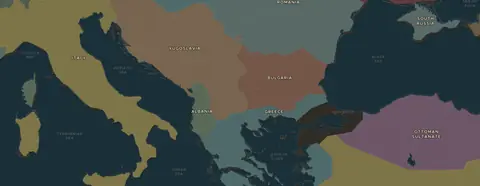 449
The Balkan Wars
In 1912 four Balkan states join forces and drive the Ottoman Empire almost out of Europe. A year later they fight each other over the spoils. Students map the wars, the birth of Albania and the road to the shots in Sarajevo in June 1914.
Balkans1912-1914
-
 450
The Boxer Uprising
Hungry, angry young men in North China blame foreigners and Christians for their troubles. In 1900 the Boxers besiege the foreign legations in Beijing, and eight nations send armies. Students weigh the causes and the high price China paid.
Qing China1899-1901
-
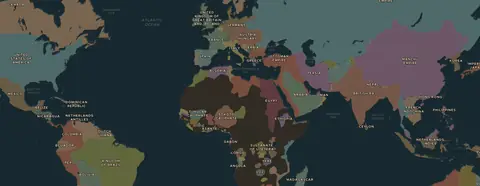 451
The Congo Free State
For 23 years King Leopold II of Belgium owns the Congo as his private state. Forced rubber collection brings him a fortune and brings terror and death to the Congolese. Students learn how the system worked and how one of the first international human rights campaigns exposed it.
Age of empire1885-1908
-
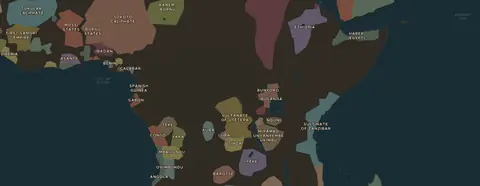 452
Yaa Asantewaa and the War of the Golden Stool
In 1900 a British governor demanded the sacred Golden Stool of the Asante. Yaa Asantewaa, queen mother of Ejisu, led the rising that followed. Students find out why the Asante lost the war but kept the stool.
Asante resistance1900
-
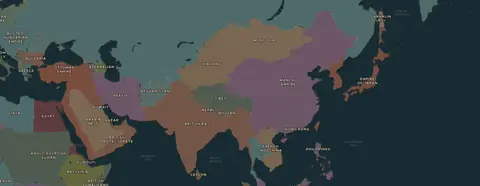 453
Russia against Japan, 1904-1905
Two empires clash over Manchuria and Korea. Japan attacks Russia's fleet at Port Arthur, wins on land at Mukden and destroys a Russian fleet that sailed halfway round the world. Students ask why this victory shook the world.
Meiji Japan1904-1905
-
 454
Maji Maji: the rising against German rule
In 1905 villagers in southern Tanzania pulled up the cotton they were forced to grow, and a rising spread across more than twenty peoples. Students learn why it began, how it was crushed and how Tanzania remembers it.
German East Africa1905-1907
-
 455
The Mexican Revolution begins
After about 30 years of rule by Porfirio Díaz, Mexico explodes. Madero, Zapata, Villa and Huerta fight over power and land. Students follow the first years of the revolution and ask why its leaders turned on each other.
Mexican Revolution1910-1914
Twentieth century
-
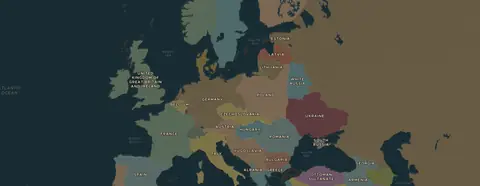 456
1914: how Europe went to war
On 28 June 1914 two shots in Sarajevo set off a chain reaction. Within six weeks the great powers of Europe were at war. Students trace the alliances on the 1914 map and ask why one murder became a world war.
First World War1914
-
 457
1917-1918: how the Great War ended
In 1917 the United States joined the war and Russia left it. In 1918 Germany made one last great attack, then collapsed. Students follow the final year to the armistice of 11 November 1918, signed in a railway carriage near Compiègne.
First World War1917-1918
-
 458
1917: revolution in Russia
In 1917 Russia had two revolutions. In February the tsar fell; in October Lenin's Bolsheviks seized power in Petrograd. A civil war followed, and in 1922 the Soviet Union was born. Students use the 1914 and 1920 maps to see how the empire broke apart and was rebuilt.
Russian Revolution1917-1922
-
 459
A world war: Africa, Asia and the Middle East
The First World War was not only fought in Europe. African soldiers and carriers fought in East Africa, Japan seized a German port in China and Arab forces rose against Ottoman rule. Students follow the war across the 1914 map of empires.
First World War1914-1918
-
 460
Adwa 1896: Ethiopia defeats Italy
On 1 March 1896 the army of Emperor Menelik II and Empress Taytu crushed an Italian invasion at Adwa. Students find out how a mistranslated treaty led to war and why the victory became a symbol for Africans everywhere.
Ethiopian Empire1889-1896
-
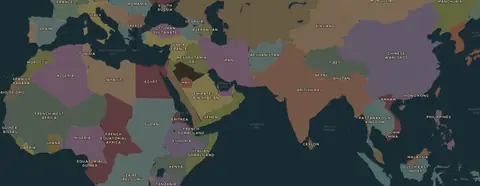 461
Gallipoli 1915: the battle for the straits
In 1915 Britain and France tried to force the Dardanelles and knock the Ottoman Empire out of the war. Eight months later they gave up. Students see why the narrow straits mattered and why Turkey, Australia and New Zealand still remember Gallipoli.
First World War1915-1916
-
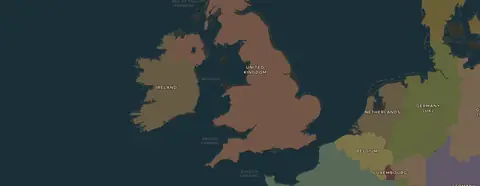 462
Ireland 1916-1922: from Easter Rising to Free State
At Easter 1916 rebels in Dublin proclaimed an Irish Republic. Six years later most of Ireland was a self-governing Free State, while six counties in the north stayed British. Students compare the 1914 and 1938 maps and weigh the hopes of nationalists and unionists.
Irish independence1916-1922
-
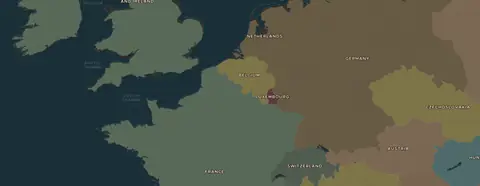 463
The Western Front: four years in the trenches
After the Battle of the Marne in September 1914 the armies dug in. A line of trenches ran from the Belgian coast to the Swiss border. Students follow the front on the map and meet the soldiers who lived in it.
First World War1914-1918
-
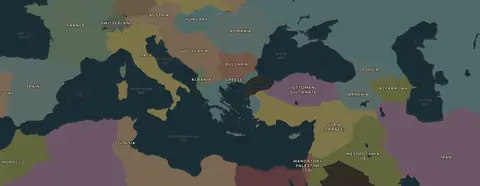 464
The end of the Ottoman Empire
The Ottoman Empire entered the First World War in 1914 and did not survive it. Britain and France divided its Arab lands into mandates, and from the ruins rose new states. Students compare the 1914 and 1920 maps of the Middle East and test the promises made during the war.
Ottoman Empire1914-1923
-
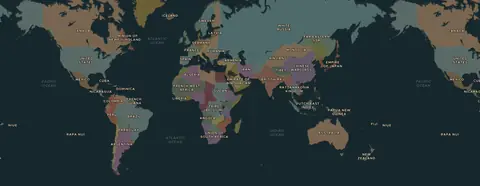 465
Votes for women
In 1900 women could vote in national elections almost nowhere. Within a few years of the First World War they could in much of Europe and North America, but some countries took until 1971 and later. Students map the struggle and compare the methods of campaigners.
Twentieth century1918-1971
-
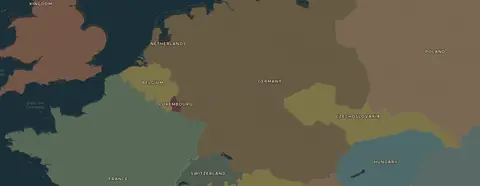 466
How Hitler took power in Germany
Germany's first democracy, the Weimar Republic, survived revolts and hyperinflation. Then the Depression struck. Students follow the Nazi party from a failed putsch in Munich to power in Berlin, and ask how a democracy can be destroyed from within.
Interwar years1919-1934
-
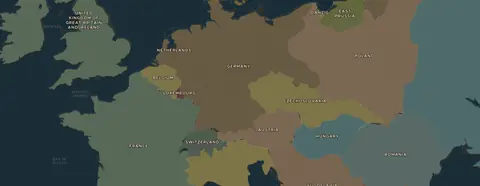 467
Versailles 1919 and the new map of Europe
In 1919 the winners met in Paris to make peace. Three empires had fallen, and new states filled the map from Finland to Yugoslavia. Students compare the 1914 and 1920 borders and judge whether the peacemakers built a lasting peace.
Interwar years1919-1920
-
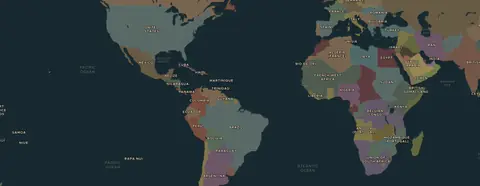 468
1929: the crash and the Great Depression
In October 1929 share prices on Wall Street crashed. Within three years factories, banks and farms failed around the world, and millions lost their jobs. Students follow the crisis from New York to Berlin and Brazil, and compare how governments responded.
Interwar years1929-1939
-
 469
1948: Israel and the Palestinian Nakba
In 1947 the United Nations proposed to divide British Palestine into a Jewish and an Arab state. In May 1948 Israel declared independence, and war followed. For Israelis 1948 means independence; for Palestinians it is the Nakba, the catastrophe. Students study both stories with the map.
Middle East1947-1949
-
 470
China divided: the Long March
In the 1920s and 1930s China was split between warlords, Chiang Kai-shek's Nationalists and the Communists. In 1934 the Communists broke out of a trap in the south and retreated thousands of kilometers to the north. Students trace the Long March and ask how a retreat became a legend.
Republic of China1927-1936
-
 471
Gandhi and the Salt March
In March 1930 Mohandas Gandhi set out to walk about 385 km to the sea to make salt, which British law forbade. Millions followed his example. Students trace the march on the map and explore how nonviolent protest challenged an empire.
Indian independence1930-1931
-
 472
Mussolini and Fascist Italy
In 1922 Benito Mussolini became prime minister of Italy and soon ruled as a dictator. He promised order and the glory of ancient Rome, and in 1935 he invaded Ethiopia. Students explore how fascism took power and why the League of Nations failed to stop it.
Interwar years1922-1936
-
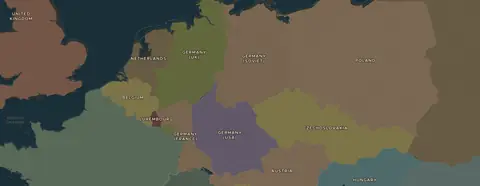 473
1939-1940: Blitzkrieg and the fall of France
In September 1939 Germany and the Soviet Union crushed Poland. In May 1940 German tanks broke through the Ardennes and reached the Channel in days, and France fell in six weeks. Students follow the fast campaigns on the map and ask why the Allies were caught by surprise.
Second World War1939-1940
-
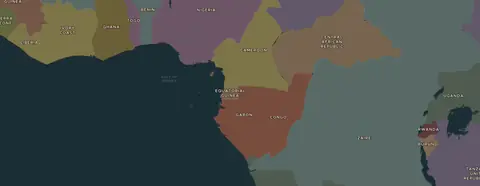 474
Africa's wave of independence, 1957-1960
In 1957 Ghana became independent. Three years later, in the "Year of Africa", seventeen more countries followed. Students compare the 1938 and 1960 maps of Africa and meet leaders such as Kwame Nkrumah and Patrice Lumumba.
Decolonization1957-1960
-
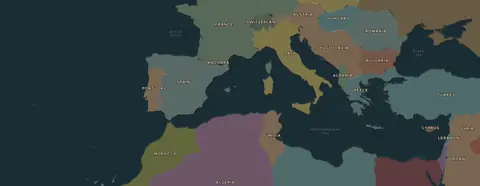 475
Algeria's war of independence
France saw Algeria not as a colony but as part of France itself. In 1954 Algerian nationalists rose in revolt, and an eight-year war followed that toppled a French government and ended in independence in 1962. Students compare the views of Algerians, French settlers and people in France.
Decolonization1954-1962
-
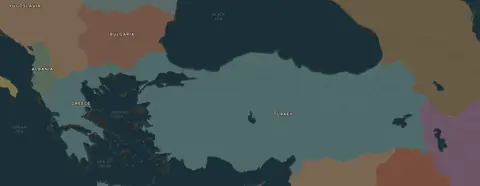 476
Atatürk and the new Turkish Republic
Out of the defeated Ottoman Empire, Mustafa Kemal built a new state. After a war of independence the Republic of Turkey was proclaimed in 1923, with Ankara as its capital. Students follow the war on the map and weigh his sweeping reforms.
Turkish Republic1919-1938
-
 477
Barbarossa to Stalingrad: the war in the east
On 22 June 1941 Germany invaded the Soviet Union along a front from the Baltic to the Black Sea. It reached Leningrad and the edge of Moscow, but at Stalingrad the tide turned. Students follow the largest land war in history and its enormous human cost.
Second World War1941-1943
-
 478
D-Day and the liberation of western Europe
On 6 June 1944 Allied armies landed on five beaches in Normandy. Within three months Paris and Brussels were free; by spring 1945 the Allies crossed the Rhine. Students locate the beaches, follow the liberation on the map and weigh its cost.
Second World War1944-1945
-
 479
El Alamein and the war in North Africa
For three years armies fought back and forth along the coast of North Africa, with the Suez Canal as the prize. At El Alamein in 1942 the British Eighth Army stopped Rommel, and American landings trapped the Axis in Tunisia. Students follow the desert war on the map.
Second World War1940-1943
-
 480
Indonesia: independence and the Dutch
On 17 August 1945 Sukarno and Hatta proclaimed the independence of Indonesia. The Netherlands tried to restore its rule, and four years of war followed before the Dutch transferred sovereignty in December 1949. Students locate the key places on Java and compare Indonesian and Dutch memories.
Decolonization1945-1949
-
 481
Japan's empire in Asia, 1931-1941
In 1931 the Japanese army seized Manchuria. Six years later Japan went to war with China, and by 1941 it looked south to the oil of Southeast Asia. Students compare the 1930 and 1938 maps and follow the path that led Japan to war with the United States.
Interwar years1931-1941
-
 482
Pearl Harbor and the war in the Pacific
On 7 December 1941 Japanese planes attacked the US fleet at Pearl Harbor. In six months Japan conquered a huge area, from Burma to the Dutch East Indies. Then the tide turned at Midway. Students follow the war across the largest ocean on Earth.
Second World War1941-1945
-
 483
Stalin's Soviet Union
Joseph Stalin set out to turn the Soviet Union into an industrial power in ten years. New steel towns rose in the Urals, while peasants were forced onto collective farms and millions died in famine and terror. Students weigh progress against its human cost.
Soviet Union1928-1939
-
 484
The Battle of Britain and the Blitz
In the summer of 1940 Germany tried to win control of the skies over Britain before an invasion. The RAF, helped by radar and pilots from many nations, held on. Then came the Blitz on Britain's cities. Students explore the Channel on the map and life under the bombs.
Second World War1940-1941
-
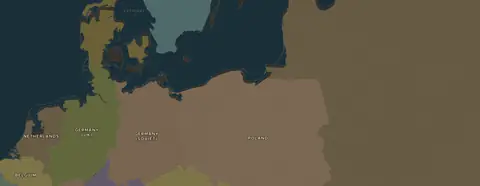 485
The Holocaust: persecution, rescue and resistance
Between 1933 and 1945 Nazi Germany moved step by step from excluding Jews to murdering about six million of them. Students learn how persecution grew, and use the map to find places where people resisted and rescued. Written with care for students aged 13 and older.
Second World War1933-1945
-
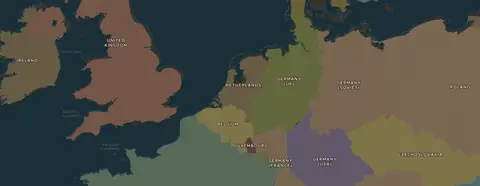 486
The Netherlands under occupation
In May 1940 Germany conquered the Netherlands in five days. Five years of occupation followed: persecution, adaptation, collaboration and resistance, the Hunger Winter and finally liberation. Students locate key places on the map and explore the choices ordinary people faced.
Second World War1940-1945
-
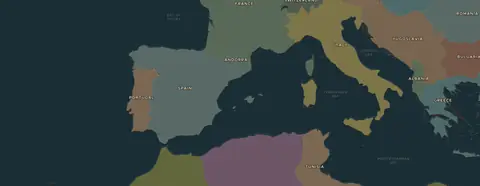 487
The Spanish Civil War
In July 1936 army officers rose against Spain's elected government. For three years Spaniards fought Spaniards, while Germany, Italy and the Soviet Union sent weapons and volunteers came from across the world. Students locate the war on the map and ask why Europe cared so much.
Interwar years1936-1939
-
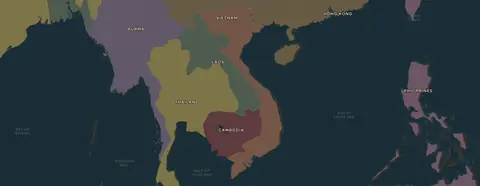 488
The Vietnam War
After defeating France in 1954, Vietnam was split in two. The United States sent more than half a million soldiers to stop communism in the South, and still lost. Students follow the war from Dien Bien Phu to the fall of Saigon and ask why it divided opinion around the world.
Cold War1954-1975
-
 489
The road to war, 1936-1939
Step by step, Hitler broke the Treaty of Versailles: the Rhineland, Austria, the Sudetenland, Prague. Britain and France gave way until 1939. Students follow each step on the 1930 and 1938 maps and debate whether appeasement could have worked.
Interwar years1936-1939
-
 490
1945: Yalta, Berlin and the end of the war in Europe
In February 1945 Roosevelt, Churchill and Stalin met at Yalta to plan the peace. By May, Soviet troops held Berlin and Germany surrendered. The 1945 map shows Germany cut into four zones. Students see how the end of one war set the stage for the next conflict.
Second World War1945
-
 491
1945: the atomic bombs and Japan's surrender
In August 1945 the United States dropped atomic bombs on Hiroshima and Nagasaki, and the Soviet Union declared war on Japan. Japan surrendered weeks later. Students trace the secret Manhattan Project and the path to surrender, and listen to the voices of survivors.
Second World War1942-1945
-
 492
1945: the founding of the United Nations
Before the Second World War had even ended, delegates from 50 countries met in San Francisco to found the United Nations. Students locate the UN's main cities, test how the Security Council works and read the Universal Declaration of Human Rights of 1948.
Postwar world1945-1948
-
 493
1949: Mao and the People's Republic of China
After Japan's defeat, China's civil war broke out again. In 1949 the Communists won, and on 1 October Mao Zedong proclaimed the People's Republic in Beijing, while the Nationalists fled to Taiwan. Students follow the end of the war on the map and see why there are still two Chinese governments.
Chinese Revolution1945-1950
-
 494
The Berlin Airlift, 1948-1949
In June 1948 the Soviet Union cut all land links to West Berlin. For almost a year American and British planes flew in food and coal for more than two million people. Students find Berlin inside the Soviet zone and follow the air corridors that kept the city alive.
Cold War1948-1949
-
 495
The Korean War, 1950-1953
In June 1950 North Korea invaded the South. UN troops, among them Dutch soldiers, and later Chinese armies joined the fighting, and the front swept up and down the peninsula. Three years later it ended close to where it began. Students follow the war on the map and ask why it never officially ended.
Cold War1950-1953
-
 496
1947: independence and the partition of India
In August 1947 British rule in India ended and two states were born: India and Pakistan. A new border cut through Punjab and Bengal, and millions of people fled in both directions. Students compare the 1938 and 1960 maps and hear the voices of those who had to move.
Decolonization1947-1948
-
 497
1956: Suez and Hungary
In the same weeks of 1956, Britain, France and Israel attacked Egypt over the Suez Canal, and Soviet tanks crushed a revolution in Hungary. Students follow both crises on the map and discover what they revealed about the real superpowers.
Cold War1956
-
 498
1968: the Prague Spring
In 1968 Czechoslovakia's new leader Alexander Dubček promised "socialism with a human face": free speech, open borders, honest news. In August, tanks from the Soviet Union and four allies rolled in. Students follow the Prague Spring on the map and ask what freedom was allowed behind the Iron Curtain.
Cold War1968
-
 499
1979: the Iranian Revolution
In 1979 huge protests drove the Shah of Iran from his throne, and Ayatollah Khomeini returned from exile to build an Islamic republic. Students trace the story back to the coup of 1953, follow the revolution on the map and see how the hostage crisis changed Iran's relations with the West.
Middle East1953-1981
-
 500
1989: revolutions across eastern Europe
In a single year communist rule ended in Poland, Hungary, East Germany, Czechoslovakia, Bulgaria and Romania. Most of it happened peacefully, with candles and keys; in Romania it ended in gunfire. Students follow the domino run of 1989 from Budapest to Prague and Timișoara.
Cold War1989
-
 501
9 November 1989: the Wall comes down
In the summer of 1989 Hungary opened its border, East Germans fled through it, and crowds marched every Monday in Leipzig. On the evening of 9 November a confused press conference opened the Berlin Wall. Students follow the chain of events and the road to a united Germany in 1990.
Cold War1989-1990
-
 502
Apartheid in South Africa
From 1948 South Africa's government built a system of laws to separate people by race: apartheid. Students see how it worked, follow resistance from the Freedom Charter to Soweto, and find the island where Nelson Mandela spent 18 of his 27 years in prison.
Twentieth century1948-1976
-
 503
China's Cultural Revolution
In 1966 Mao Zedong called on China's young people to attack "old ideas" and anyone who stood in the way of revolution. Schools closed, Red Guards roamed the cities, and millions of young people were later sent to the countryside. Students explore ten years that China still finds hard to discuss.
People's Republic of China1966-1976
-
 504
From coal and steel to the euro: the European Union
Six countries that had just fought a war began in 1951 by sharing coal and steel. Half a century later, hundreds of millions of Europeans crossed open borders and paid in euros. Students follow the growth of the European Union on the map, from Maastricht to the big enlargement of 2004.
Post-Cold War1951-2004
-
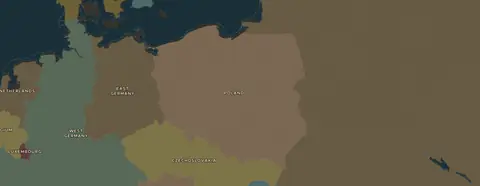 505
Solidarity: Poland's road to 1989
In August 1980 shipyard workers in Gdańsk went on strike and won the right to a free trade union: Solidarity. Within a year it had ten million members. Banned under martial law, it came back to win Poland's first partly free election in 1989. Students follow the first crack in the Soviet bloc.
Cold War1980-1989
-
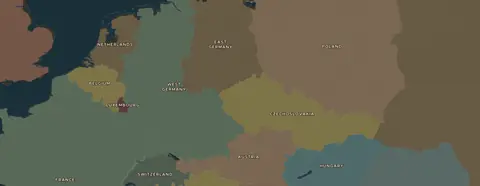 506
The Berlin Wall goes up
In the night of 12-13 August 1961 East German soldiers rolled out barbed wire through the middle of Berlin. Within days a wall cut the city in two. Students find Berlin inside East Germany, follow the border and hear how the Wall split families for 28 years.
Cold War1961-1963
-
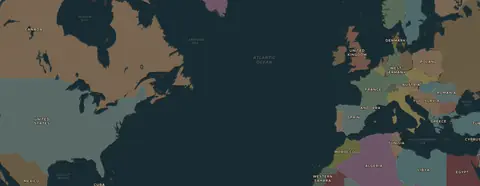 507
The Iron Curtain and the Marshall Plan
In 1946 Churchill warned that an "iron curtain" had come down across Europe. America answered with the Marshall Plan and NATO; the Soviet Union with its own bloc and the Warsaw Pact. Students draw the line on the map and see how Europe split in two.
Cold War1946-1955
-
 508
The civil rights movement in the United States
In the southern United States, Black Americans were kept apart by law and often kept from voting. From the Montgomery bus boycott to the Selma march, students follow a movement that changed the law without taking up arms, and meet Rosa Parks, Martin Luther King Jr. and the students of Little Rock.
Twentieth century1954-1968
-
 509
The space race
In 1957 the Soviet Union launched Sputnik, the first satellite. Twelve years later two Americans walked on the Moon. Students find the launch sites on the map, keep score of the "firsts" and ask how a Cold War rivalry pushed people into space.
Cold War1957-1969
-
 510
Thirteen days: the Cuban Missile Crisis
In October 1962 American spy planes found Soviet nuclear missiles on Cuba, about 150 km from Florida. For thirteen days the world stood close to nuclear war. Students follow the crisis on the map and take the decisions that Kennedy and Khrushchev faced.
Cold War1959-1962
-
 511
1991: the end of the Soviet Union
Mikhail Gorbachev tried to reform the Soviet Union with glasnost and perestroika. Instead, the Baltic republics demanded independence, a coup failed in Moscow, and on 25 December 1991 the Soviet flag came down over the Kremlin. Students compare the 1960 and 1994 maps and find fifteen new states.
Cold War1985-1991
-
 512
Mandela and the end of apartheid
On 11 February 1990 Nelson Mandela walked out of prison after 27 years. Four years of talks, violence and hope followed, and on 27 April 1994 South Africans of all races voted together for the first time. Students follow the road from prison to presidency and ask how a divided country made peace.
Twentieth century1990-1994
-
 513
Rwanda 1994: genocide, and those who did not look away
In about 100 days in 1994, Hutu extremists murdered an estimated 800,000 Tutsi and moderate Hutu in Rwanda, while the world looked on. Students learn how the genocide was prepared, why the UN pulled back, and meet the people who sheltered and rescued others. Written with care for students aged 14 and older.
Post-Cold War1994
-
 514
The wars in Yugoslavia, 1991-1999
After Tito's death, Yugoslavia broke apart. Slovenia left after ten days; Croatia and Bosnia saw years of war, the siege of Sarajevo and the genocide at Srebrenica. Students compare the 1960 and 1994 maps and ask how neighbors became enemies and how the wars were stopped.
Post-Cold War1991-1999
-
 515
China opens up: from Deng to the 2008 Olympics
From 1978 Deng Xiaoping opened China to markets and the world. Fishing villages became megacities and hundreds of millions escaped poverty, while the party kept control, as the crackdown of June 1989 showed. Students follow China's rise on the map from Shenzhen to the Beijing Olympics.
People's Republic of China1978-2008
-
 516
A connected world: globalisation, 1990-2010
Shipping containers, the internet and open markets tied the world together as never before. A phone designed in California, built in China and sold in Rotterdam became normal. Students follow goods, money and ideas across the 2010 map and weigh who gained and who lost.
Post-Cold War1990-2010
Aucune leçon trouvée. Essayez un autre nom, lieu ou une autre année, ou proposez-nous votre sujet.
Historia magistra vitae est.
History is life's teacher. Cicero, De Oratore
Cinquante minutes, tout est prêt.
Chaque leçon suit le même rythmea0: après la première, vos élèves savent comment avancer, et vous pouvez vous concentrer sur l'essentiel.
- i.
Explorer la carte
Trois activités, chacune ouvrant la carte à la bonne année, au bon endroit et au bon zoom.
- ii.
Discuter
Cinq questions pour comprendre les faits et leur importance.
- iii.
Jouer
Une manche de Rule History où les élèves prennent les décisions du dirigeant.
- iv.
À l'écrit
Une fiche A4 à imprimer, avec lignes pour écrire et un espace pour dessiner la carte.
- v.
Ou en séance interactive
Le tableau au vidéoprojecteur, la classe sur leurs téléphonesa0: ils cherchent les lieux sur la carte et placent leurs marqueurs ensemble.
Toutes les fiches, pour toutes vos classes.
Un abonnement pour un enseignant et toutes ses classesa0: toutes les leçons en direct, sans pub, jeux à assigner et priorité sur les nouveautés.
Toutes les fiches, diapos et séances interactives débloquées, aujourd'hui et pour chaque nouvelle leçon.
Vous hésiteza0? Essayez d'abord la leçon gratuite